How to Choose an AI Agent Development Course? 5 Practical Screening Criteria to Avoid Common Pitfalls

5 practical criteria to help you choose an AI Agent course that produces real projects and career value.
With AI Agent courses varying wildly in quality, this article outlines 5 practical screening criteria: a complete delivery pipeline (API → RAG → deployment), projects strong enough for your resume, real engineering challenges addressed, active update frequency, and meaningful feedback mechanisms. Ideal for career changers looking to break into AI application development.
From Mechanical Engineering to LLM Roles: Lessons from a Career Pivot
Lately, many people have been asking the same question: with AI Agent development tutorials varying wildly in quality, how do you find a course that actually produces project output you can put on your resume? Behind this question lies a deeper trend — AI application development is becoming a popular career transition path for people with traditional technical backgrounds, yet the learning landscape is remarkably chaotic.
One person who made this transition shared that after graduating with a mechanical engineering degree, their options were either factory floor work with rotating shifts or low-paying jobs with limited upward mobility. After encountering real-world examples of LLM applications, AI assistants, and automated office workflows, they came to a critical realization: many AI applications that seem impressive are, at their core, just connecting a model's API and wrapping it in engineering scaffolding to ship a working product.
What is an AI Agent? An AI Agent (intelligent agent) is an AI system capable of perceiving its environment, making autonomous decisions, and executing actions. What distinguishes it from a regular conversational model is its ability to use tools and perform multi-step planning. Architecturally, a typical Agent consists of four core modules: a Large Language Model (LLM) as the reasoning engine, a set of Tools for interacting with the external world, a Memory module for maintaining context state, and a Planning module for task decomposition and execution path selection. This is why Agent development is fundamentally software engineering — not just prompt writing.
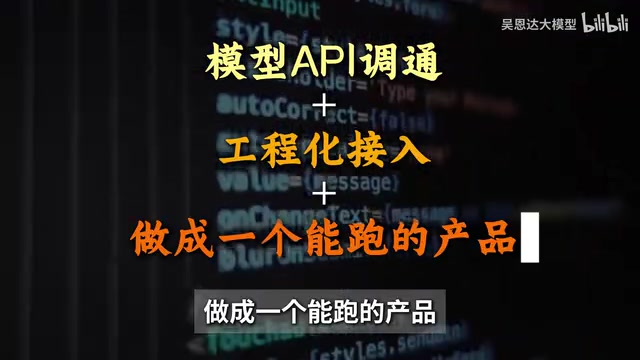
This insight is crucial. It means that for people with engineering backgrounds who are good at logical decomposition and delivering processes, AI application development is a low-cost career transition — the only real gap is a clear learning path.
Learning Without Actually Learning: The Trap of Scattered Tutorials
This same person candidly admitted to making plenty of mistakes during their self-study phase. After watching countless public videos, they understood a heap of concepts — Prompt, Agent, Function Calling — yet still couldn't build a meaningful project. Following scattered tutorials, they'd build a chat interface one day, connect a database the next, then get stuck on deployment, and end up with nothing coherent to show on their resume.
This state of "kind of learned it, but not really" is the biggest trap of fragmented learning. Disconnected knowledge points don't automatically assemble into a complete, deliverable project. For job seekers, without demonstrable work to show, landing internships or making a career switch becomes extremely difficult.
Effective learning should walk through the complete pipeline — from API calls and business integration to building intelligent applications — ultimately producing real-world work that can go on a resume and be submitted to employers.
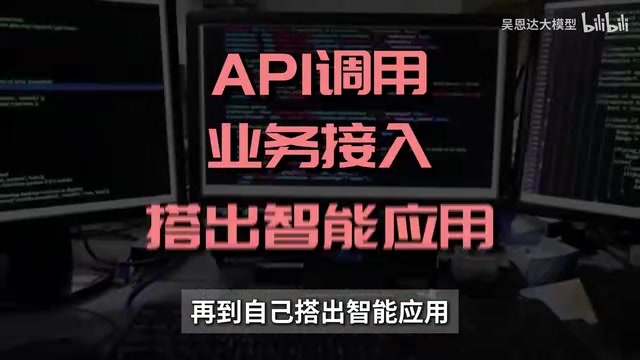
5 Criteria for Choosing a High-Quality AI Agent Course
Based on the experience above, here is a practical set of screening criteria to help you avoid common pitfalls when choosing a course.
1. Check for a Complete Delivery Pipeline
A high-quality AI Agent course is never just about teaching you to write prompts. At a minimum, it should cover the following complete pipeline:
- Requirements decomposition
- Model selection
- API calls
- Tool use (Function Calling / Tools)
- RAG retrieval
- Memory and state management
- Evaluation and monitoring
- Deployment and release
The way to check is straightforward: look for these keywords in the course outline — Function Calling, Tools, RAG, evaluation and observability, production deployment. If a course only teaches you how to write prompts and make a model play a character, it's more of a prompt-writing course than a real Agent development course.
Function Calling / Tools — Technical Background: Function Calling was introduced by OpenAI in June 2023 for GPT-3.5/GPT-4, allowing models to output structured JSON-formatted function call instructions that are executed by the host program, with results returned to the model. This mechanism fundamentally solves the "last-mile" connectivity problem between LLMs and external systems (databases, APIs, file systems). Major model providers quickly followed suit, giving rise to what is now the standardized interface paradigm broadly known as "Tools." Mastering Function Calling/Tools means being able to bridge a model's language understanding capabilities with real business systems — a core technical threshold that distinguishes Agent development from simple chat applications.
RAG — Retrieval-Augmented Generation Explained: RAG (Retrieval-Augmented Generation) is currently one of the most widely adopted implementation patterns for enterprise AI applications, first systematically proposed in a 2020 paper from Meta AI. The core idea is: before the model generates a response, retrieve the most relevant document snippets from an external knowledge base and feed them as context to the model — thereby overcoming two major limitations: training data cutoff dates and knowledge hallucinations. A complete RAG system involves multiple engineering steps: document chunking, vectorization (Embedding), vector database storage, similarity retrieval, reranking (Rerank), and generation. High-frequency use cases such as enterprise knowledge base Q&A, intelligent customer service, and internal document assistants almost universally use RAG as their technical foundation.
2. Check Whether Projects Can Go on a Resume
A genuinely valuable course project should have three characteristics:
- Clear inputs and outputs: What the user inputs and what the system outputs should have well-defined boundaries.
- A tool chain: At least one real tool should be integrated — retrieval, a database, an API, spreadsheets, web pages, or an enterprise system.
- Quantifiable metrics or a closed loop: Accuracy, hit rate, response time, cost — even the most basic metrics count.

For example, an "Enterprise Knowledge Base Q&A Agent" (RAG + full-text search + citation tracing + backend management), or a "Multi-Tool Office Agent" (reading emails, parsing spreadsheets, generating weekly reports, auto-archiving) — both demonstrate real engineering ability. By contrast, if a project only builds a chatbot and pairs it with theoretical lectures on "what intelligent agent planning and reflection means," its practical value is very limited.
Current Mainstream Agent Development Frameworks for Reference: Over the past two years, AI Agent development frameworks have proliferated explosively. LangChain, the earliest widely adopted framework, provides complete Chain, Agent, Memory, and Retriever abstractions but has drawn criticism for being "hard to debug" due to excessive abstraction. LangGraph builds on this by introducing a directed acyclic graph (DAG) structure, better suited for complex multi-step workflows. AutoGen (Microsoft) focuses on multi-Agent collaboration paradigms, while CrewAI excels at role-based multi-Agent orchestration. Framework selection itself has become a judgment skill Agent developers need to have — when evaluating a course, check whether it explains the underlying logic of framework selection, rather than just walking through one framework by rote.
3. Check for a Genuine Development Perspective
The real challenge in Agent development isn't "getting it to run" — it's "getting it to run reliably." Moving an LLM from a "working demo" to "production-ready" involves a series of engineering challenges the industry calls the "last-mile problem." A credible course should address the following real-world engineering issues:
- How to control Token costs: Every API call is billed by token usage, and complex Agents with multiple rounds of inference can cost dozens of times more than a single query. Careful prompt compression and caching strategies are required.
- How to manage context and state: LLM context windows are finite. As conversation turns accumulate, mechanisms like memory compression and summary archiving are needed to prevent information overflow or runaway costs.
- How to handle tool call failures: Models may output malformed instructions or call non-existent functions, requiring robust parameter validation, retry logic, and fallback strategies.
- How to ensure data security: When enterprise data is fed into models, requirements around sensitive data masking, permission isolation, and audit logging must be addressed for compliance.
The course doesn't need to go deep on all of these, but it should at least give you a heads-up on "where the landmines are" — otherwise, your project will hit one problem after another the moment it goes into production.
4. Check Update Frequency
Large models iterate extremely fast, and outdated courses can become obsolete almost immediately after completion. Focus on two things: whether the course outline includes recently added content (e.g., new tool-calling methods, framework updates, evaluation methodology revisions), and whether there is a continuously maintained codebase and assignments — not a one-and-done release.
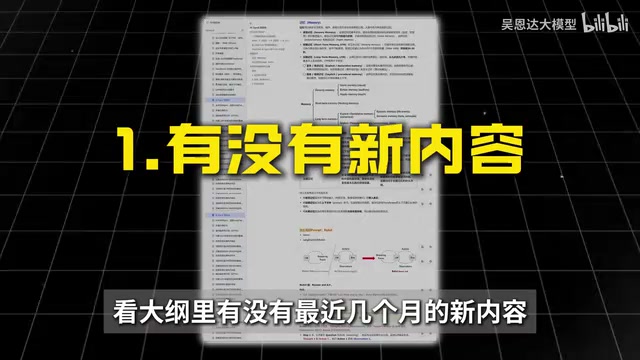
To put this in concrete terms: OpenAI's Function Calling specification underwent multiple interface changes between 2023 and 2024; LangChain introduced numerous breaking changes between versions 0.1 and 0.3; and Anthropic's Claude series progressively introduced entirely new tool-use paradigms such as Computer Use. A course that stops being maintained may have code examples that fail to run within three to six months.
5. Check for Ongoing Support and Feedback Mechanisms
People making career transitions rarely lack videos to watch — what they lack is "someone to pull them out of a hole." Prioritize courses that offer assignment reviews, project Q&A, and community support. Ideally, they should also provide resume advice and project framing guidance to help you convert your learning into real competitive advantage in the job market.
A Final Note: A Clear Path Matters More Than Pure Effort
For anyone looking to get started in AI Agent development, the biggest obstacle is usually not a lack of effort — it's unclear direction, scattered resources, and insufficient feedback. Rather than anxiously feeling your way forward, use the five criteria above to filter out a learning path that can genuinely produce project output.
One important note: the material in this article is drawn from personal experience sharing, and any specific course recommendations it may imply carry inherent limitations. Readers should exercise independent judgment and keep their focus on the two core criteria: "does it have a complete delivery pipeline" and "can the projects go on a resume."
The technology keeps evolving — from Function Calling to Computer Use, from single-Agent to multi-Agent collaboration, from RAG to GraphRAG, with new paradigms emerging every few months. But the underlying logic of "complete engineering capability from requirements to deployment" will not change — and that is the core competitive edge career changers truly need to build.
Key Takeaways
Related articles
Xi Jinping Proposes Open Source AI Cooperation Zone Among BRICS Nations
Xi Jinping proposed an open source AI cooperation zone at the BRICS summit. Analyzing the strategic intent, open source rationale, and global AI governance implications.
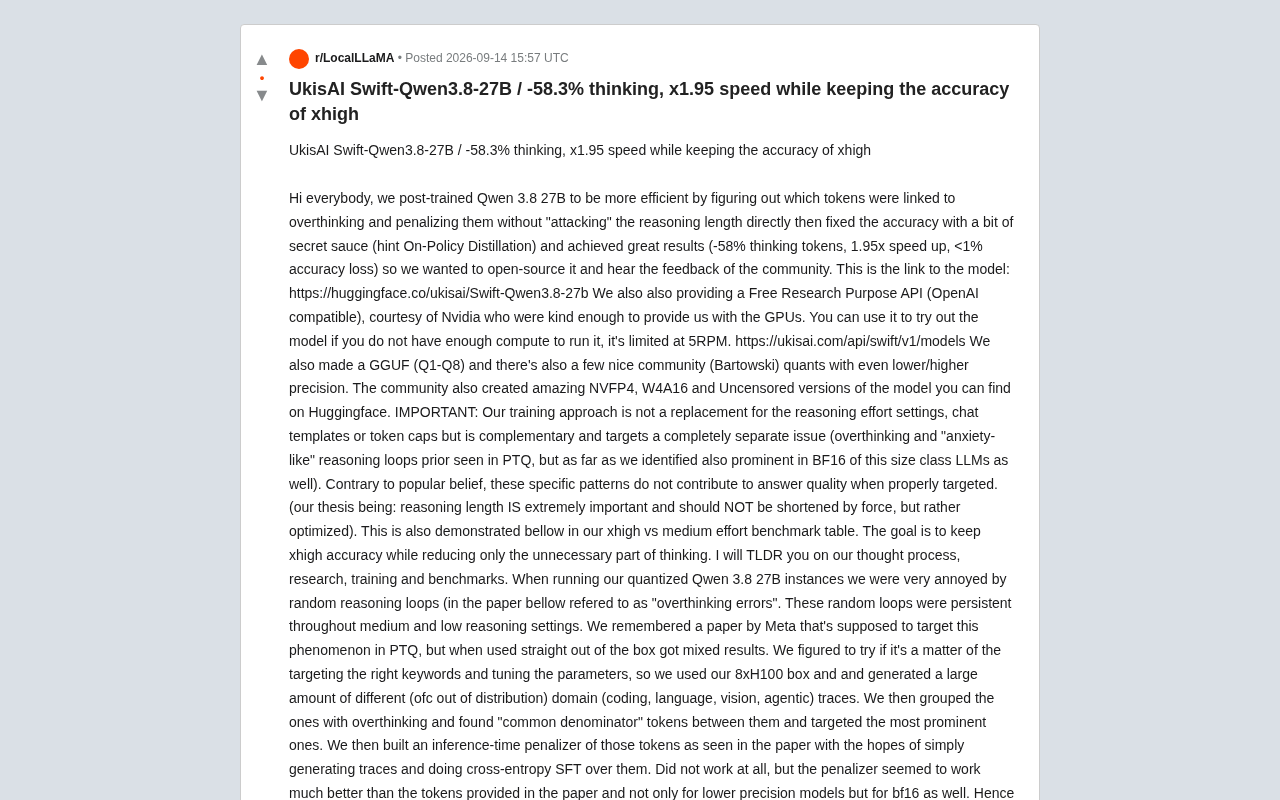
Swift-Qwen3.8-27B: 58% Fewer Thinking Tokens, Nearly 2x Faster Inference
UkisAI open-sources Swift-Qwen3.8-27B, cutting thinking tokens by 58% and boosting inference speed 1.95x via overthinking token penalties and on-policy distillation — with under 1% accuracy loss.

Netflix Partners with Sega: Crazy Taxi Movie and New Sonic Animated Series on the Way
Netflix announces three Sega game adaptations: a Crazy Taxi movie, a new Sonic animated series with edge, and a live-action film based on RGG Studio's Stranger Than Heaven.