How to Defend Against AI Scams: Three Essential Strategies Every Person Should Know

Three low-tech strategies to outsmart AI scams when deepfake detection alone isn't enough.
AI face-swapping and voice cloning have slashed the cost of fraud to near zero, and even top detection algorithms struggle against modern deepfakes. This article traces the evolution of GAN and diffusion model technology, explains why technical detection methods have a fatal weakness, and offers three practical human-centered tactics — dynamic passphrases, callback verification, and live video tests — to verify identity without relying on any algorithm.
When the Cost of Faking Approaches Zero
You've probably scrolled past a video where a celebrity says something they never actually said. The comments section erupts — some swear it's real, others say it's AI. You replay it several times and still can't tell.
Most people assume the biggest harm from AI face-swapping and voice cloning is fabricating celebrity gossip. But the real threat is far closer to home: a scammer takes photos from your friend's social media, generates a real-time video, and uses it to impersonate them while asking your family for money.
So how did this toolkit — one that gives scammers such a terrifying advantage — come to exist?
From Bar Conversation to Fraud Weapon: The Evolution of Deepfake Technology
How Generative Adversarial Networks Were Born
The origin of this technology is a framework called a Generative Adversarial Network (GAN). In 2014, researcher Ian Goodfellow came up with the architecture during a bar argument about a technical problem.
The idea is to pit two neural networks against each other: one generates fakes, the other tries to detect them. Think of a counterfeiter and a currency inspector locked in the same room — the forger keeps improving their craft, the inspector keeps spotting flaws. Through this back-and-forth, the fakes become increasingly convincing, while the inspector grows ever more perceptive.
A GAN consists of two neural networks — a Generator and a Discriminator — engaged in a zero-sum game during training. The Generator's goal is to produce data convincing enough to pass as real, starting from random noise. The Discriminator's goal is to distinguish real data from generated data. Through iterative training, both sides evolve until they reach a Nash equilibrium — where the Generator's output is indistinguishable from reality. GAN's breakthrough was that it required no large-scale human-labeled datasets; instead, it self-evolved through this adversarial mechanism, quickly becoming the dominant tool for image generation, style transfer, and face synthesis.
The problem: once the generator is trained to be powerful enough, it can "go out on its own." That's the fundamental reason GAN eventually became a weapon in scammers' hands.
How the Barrier to Faking Collapsed
In late 2017, a Reddit user named DeepFake swapped Hollywood actresses' faces onto explicit videos. Within a month, a desktop tool called FakeApp appeared — no coding required, just a few clicks to generate face-swap videos. The barrier dropped from "must know programming" to "must know how to turn on a computer."
The real turning point came when three things converged over a few years, completely collapsing the cost of faking:
- DALL·E 2 brought image generation to commercial quality
- Stable Diffusion went open-source, making it freely available to anyone
- ChatGPT pushed AI into mainstream public conversation

It's worth noting that during this period, the dominant technology for image generation had already shifted from GANs to Diffusion Models. Diffusion models work by simulating a physical diffusion process: gradually adding random noise to a real image until it becomes pure noise, then training a neural network to reverse this process — denoising from pure noise back to a clear image. Both DALL·E 2 and Stable Diffusion are built on this principle. Compared to GANs, diffusion models offer more stable training, greater diversity, and richer detail. It was the mass open-sourcing of these models that truly obliterated the barrier to high-quality image generation.
What used to take professional equipment several minutes to produce one convincing fake image can now be done in seconds on a consumer GPU, at near-zero cost. Voice cloning matured in parallel — ElevenLabs launched a product that could replicate a person's tone, cadence, and even characteristic pauses and verbal tics from just a few minutes of audio input.
The core of modern voice cloning technology is the combination of Speaker Embedding and Neural Vocoders: the system first extracts a voice fingerprint feature vector from audio samples of the target person — capturing timbre, resonance characteristics, and pronunciation habits — then synthesizes any text through a text-to-speech engine and applies style transfer using the voice fingerprint. Zero-shot cloning technology used by platforms like ElevenLabs can complete voice modeling from just seconds to minutes of audio. A scammer only needs to grab a short video of the target from social media to extract sufficient voice data.
To put it plainly: cloning someone's voice and face used to be like running a counterfeiting factory — you needed equipment, expertise, and a team. Now it's like taking a photo on your phone. The barrier shifted from "you need a professional team" to "you just need internet access."
It's important to emphasize that these technologies are inherently neutral. The film industry, game companies, and virtual influencers all use face-swapping and voice cloning. The issue isn't whether the technology can do it — it's how ordinary people can protect themselves when the cost of faking becomes absurdly low.
Why It's Getting Harder for Ordinary People to Tell Real from Fake
The Naked Eye Has Already Failed
People didn't worry much about AI fakes before because they were easy to spot: robotic voices, plastic-looking faces, flickering edges, mismatched lip sync.

But things have changed. University College London ran a test where participants tried to identify AI-synthesized videos. Their accuracy was roughly 50% — about the same as flipping a coin. In Facebook's global Deepfake Detection Challenge, the winning algorithm achieved just over 80% accuracy.
What's more sobering: immediately after the competition, researchers discovered that these top models saw their detection rates plummet when tested on slightly compressed video — the kind of quality you get after sending a clip through WeChat once. This reflects the classic "arms race" effect in deepfake detection: once a detection model is published, forgers use it as adversarial training feedback to specifically optimize their fakes against the detection features. Academics call this Adversarial Attack: by overlaying imperceptible perturbations onto synthesized video — invisible to the human eye — detection model accuracy can drop from 80% to near-random levels. This is why competition-winning algorithms perform far worse in real-world scenarios than on competition datasets — real-world fakes are constantly evolving to counter the latest detection methods.
Can Technology Detect Deepfakes? Yes — But With a Fatal Weakness
Voice Authentication: The Machine's "Factory Signature"
AI-synthesized speech leaves regular high-frequency traces on spectrogram analysis. Human voices produced by vocal cord vibration follow anatomical patterns; machine-generated voices are too "neat."
Think of a singer versus an electronic keyboard mimicking their voice: the singer's high notes have rich textural complexity with subtle vibrato, while the keyboard's simulation is smooth but cold — like the evenly spaced teeth of a comb. That's the machine's "factory signature." Human ears can't hear it, but spectral analysis sees it instantly.
Face Authentication: AI Can't Fake Blood Flow
The core approach to face authentication is remarkably clever: don't look at expressions — look at blood.

This technique is called Remote Photoplethysmography (rPPG). Hemoglobin in human skin periodically absorbs and reflects specific wavelengths of light. Each heartbeat causes minute changes in the light reflectance of the skin surface — variations between 0.1% and 1%, completely invisible to the naked eye, but present in the RGB channel data captured by ordinary cameras. Detection algorithms extract heart rate signals by analyzing the time-series pixel intensity changes in the facial regions of a video. A real face shows regular fluctuations consistent with physiological heart rate; an AI-synthesized face lacks real blood flow, so pixel fluctuations in those regions are either random or nearly constant. To the algorithm, a real face looks like a heatmap with rhythmic pulses — a fake face is a dead silence.
There are subtler tells as well: when a real person speaks, the orbicularis oculi, frontalis, and neck muscles move in coordination. AI face-swaps frequently exhibit a bug where "the mouth is moving frantically while the cheeks stay frozen" — like a flag flapping in the wind while the flagpole stands completely still. Along the jawline, ear edges, and hairline — the seam areas — pixel-level blending artifacts also appear. Detection tools act like meticulous quality inspectors, flagging the swapped regions in red.
The Analog Retransmission Attack: The Scammer's Workaround
Yet all detection methods share a common Achilles' heel: scammers don't need to attack your algorithm. They simply play the synthesized audio through one real phone and record it with another — the room's ambient reverb washes out the spectral fingerprint.
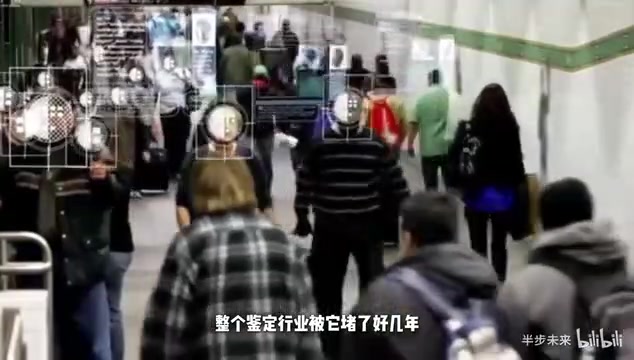
The same applies to face-swapping: record the fake video by pointing one real phone at another phone's screen. The image quality degrades slightly, but the microvascular signals and spectral fingerprints get completely "laundered" away. This is called analog retransmission, and it has stymied the entire detection industry for years. It's also why professional detection tools currently live on bank and large platform servers — ordinary people's phones simply can't run them.
The Ordinary Person's Defense: Bypass the AI, Don't Try to Detect It
Here's the critical mental shift: defending against AI scams isn't about learning to detect AI — it's about learning to bypass the AI and verify whether the person on the other end is actually real.
What truly determines whether you can stay protected isn't technology. It's whether you've established a verification channel between yourself and the people who matter most to you — one that doesn't depend on any algorithm, doesn't pass through any server, and doesn't need an internet connection to update.
Here are three concrete things you can do:
1. Establish a Dynamic Passphrase
Agree on a secret phrase with your family — but not a birthday, ID number, or anything stored in a phone. Instead, use a shared memory, like "What was the name of that new park you took our dog to last week?" Scammers can clone voices and faces, but they can't clone a memory that only the two of you share.
2. Proactively Call Back on the Real Number
If you receive a suspicious call or video, hang up immediately, then dial back using the number saved in your own contacts. Scammers can spoof caller ID, but they can't intercept a call you initiate yourself.
3. Require "Wave and Turn" During Live Video
If you're on a live video call, ask the other person to wave their hand in front of their face or quickly turn their head. In the moment when the hand overlaps the face and separates again, AI face-swap rendering often flickers or shows misalignment artifacts.
None of these tactics are high-tech — and that's exactly the point. They sidestep all the technological traps and return to the most primitive form of verification between human beings.
Closing Thoughts
When the cost of faking approaches zero, we can't stop the spread of the technology — but we can rebuild anchors of trust. The technological arms race may never end, but the shared memories and unspoken understanding between people are precisely what AI finds hardest to replicate. After reading this, consider reaching out to someone close to you and agreeing on a passphrase that belongs only to the two of you.
Key Takeaways
Related articles
Alibaba Launches Happy Shrimp: AI-Powered One-Click Complete Song Generation
Alibaba launches Happy Shrimp, an AI music generation tool that creates complete songs with lyrics, melody, arrangement, and vocals from natural language descriptions. In-depth analysis of its core features, differentiation from competitors like Suno, and industry impact.

GPT Sol Ultra vs Grok 4.6: Real-World Task Completion Benchmark in Reasoning Mode
Developer benchmark reveals GPT Sol Ultra completes draw.io scientific diagrams in one iteration while Grok 4.6 fails to converge despite maximum reasoning mode, exposing that reasoning depth ≠ task delivery capability.
OpenAI Authorship Dispute: The Battle Over Academic Boundaries in the AI Era
OpenAI disputes authorship with mathematician Tristan Buckmaster over Navier-Stokes research, raising ethical questions about AI involvement in science.