How to Trust AI-Generated Code: A Practical Verification Framework for Developers

A practical framework for developers to verify and trust AI-generated code before shipping to production.
As AI coding tools like GitHub Copilot and Cursor generate code faster than ever, developers face a growing trust crisis — they can't confidently deploy what they didn't fully write. This article examines the root causes of AI code unreliability, identifies the two core developer demands at stake, and presents a systematic verification methodology covering static analysis, test coverage, token efficiency, and hands-on practice to help developers truly command AI-generated code.
The Developer's Biggest Pain Point: Not Trusting AI Code
As AI-assisted coding tools have proliferated — from GitHub Copilot to Cursor to various AI Agents — these tools can now help developers generate large volumes of code at remarkable speed. This evolution has followed a clear generational arc: first-generation tools (like Copilot) were essentially "line-level/function-level" suggestion systems built on code completion, powered by OpenAI's Codex model and trained on massive amounts of open-source code for context-aware suggestions. Second-generation tools (like Cursor and Windsurf) evolved into "conversational code editors" with multi-file context understanding and natural language-driven refactoring. AI Agents represent the third stage — autonomous systems capable of breaking down tasks, calling tools, and executing multi-step programming workflows independently. Yet the more powerful these tools become and the more code they generate, the greater the cognitive burden of manual review — and that's the root cause of the growing trust problem.
A glaring contradiction is emerging: the faster the code gets written, the less confident developers feel deploying it to production.
A veteran content creator with 10 years of AI research experience, 83K GitHub stars on tutorial repositories, and over 40,000 newsletter subscribers recently surveyed their developer audience. The responses were strikingly consistent: when using AI for programming, the biggest pain point is "trust" — developers can't be sure whether AI-generated code is reliable, secure, or genuinely production-ready.
The "untrustworthiness" of AI-generated code isn't accidental — it has deep technical roots. Large language models are fundamentally statistical text prediction systems; they don't truly "understand" program semantics, business logic, or security constraints. Common risks include: hallucinated API calls (referencing nonexistent or deprecated functions), security vulnerabilities (SQL injection, improper hardcoding of secrets), missing edge case handling (insufficient coverage of null values, concurrency, and exception paths), and compatibility issues introduced by outdated dependencies. A 2023 Stanford study found that approximately 40% of code generated by GitHub Copilot contains potential security vulnerabilities. This finding is sobering — it exposes a core blind spot in current AI coding tools: they solve the efficiency problem of generation, but not the trust problem of verification. In real-world product development, the latter often matters more.
Two Core Demands Behind the Trust Crisis
Based on survey findings, developers using AI for programming typically have two clear goals — and the trust problem is the obstacle standing between them and both.
Goal 1: Ship Real, Working Products
Developers aren't satisfied using AI for toy projects or demos. They want to actually use AI-generated code in production to deliver real, user-facing products. But as long as code quality is in doubt, this goal is out of reach — no one dares push code they don't understand or trust to a live environment.
Goal 2: Stay Competitive in the AI Era
The other, more immediate anxiety is this: "Every day or two, some major company announces another round of mass layoffs." Against this backdrop, developers urgently want to master AI programming capabilities to maintain a competitive edge and avoid being left behind.
These two demands together send a clear signal: developers aren't lacking AI coding tools — what they're missing is a systematic methodology that allows them to genuinely trust and command AI-generated code.
The Core Framework: From "Generation" to "Trusted Verification"
Relying on tools alone cannot solve the trust problem, because trust fundamentally comes from verifiable processes, not from a tool's output. A systematic verification workflow — including static code analysis, unit test coverage checks, and dedicated Code Review standards for AI-generated code — is more fundamental than any single tool. This systematic methodology emphasizes several key dimensions:
- Systematic verification workflows: Rather than blindly accepting AI output, establish a repeatable set of review and testing standards that let developers judge whether code is trustworthy.
- Token efficiency optimization: While maintaining code quality, pay attention to cost control in LLM interactions. Tokens are the basic units by which large language models process text — roughly corresponding to 0.75 English words or about 1.5 Chinese characters. Major APIs charge by token: GPT-4o input costs approximately $2.50 per million tokens, with output around $10 per million. In complex feature development, a single complete conversation can consume tens of thousands to hundreds of thousands of tokens. Through techniques like trimming context, optimizing System Prompt design, and using few-shot examples — prompt engineering best practices — you can reduce token consumption for equivalent-quality output by 30–60%. This is an easily overlooked but critical dimension in real engineering work, one that directly impacts project economic viability in high-frequency use cases.
- Practical, hands-on orientation: The methodology doesn't stay theoretical — it's paired with hands-on labs so developers can actually practice what they learn.
This "methodology-first" approach stands in sharp contrast to the dominant "tool-first" mindset in the market. It hints at a possible trend: the gap in AI programming capability will no longer be determined by which tools you use, but by whether you've mastered a systematic method for commanding those tools.
Product Format: Course + Hands-on Labs + AI Assistant
To deliver this methodology to developers, educational products in this space typically include a representative free module — a design pattern worth examining as a model for technical education products.
A Three-Part Learning Design
- Visual short-form video lectures — explain core concepts intuitively to lower the comprehension barrier.
- Hands-on Labs — allow learners to internalize the methodology through practice rather than passive listening. This aligns with the "learning by doing" principle fundamental to technical education.
- An AI assistant installable via npm — this is the most notable component. npm (Node Package Manager), as the package manager for JavaScript/Node.js, hosts over 2 million open-source packages and is the world's largest software registry. Packaging an AI assistant as an npm package means developers can integrate it into their local development environment with a single
npm install, with no extra account setup or switching to an external platform. Technically, such tools typically run as a CLI (command-line interface) or VSCode extension, calling a remote LLM API from the local environment while reading the project's file structure as context. The core advantage of this distribution model is seamless integration with developers' existing toolchains — eliminating the cognitive friction of "context switching" and allowing AI-assisted guidance to happen directly in real coding scenarios.
Embedding an AI assistant directly into the learning workflow is itself an elegant demonstration of "using AI to learn how to trust AI" — letting learners experience the methodology in a real programming environment, not just on paper.
Three Key Takeaways for Developers
Beyond any specific course product, this topic offers several points worth reflecting on across the industry:
First, the next battleground in AI programming is "trust." As code generation becomes cheap, the ability to verify, review, and trust AI code will become the core competitive differentiator. Developers should proactively build their own code verification workflows rather than accepting AI output wholesale.
Second, methodology outlasts tools. Tools will keep iterating and changing, but a solid working methodology can be reused across tools. Investing in learning methodology yields longer-lasting returns.
Third, "AI-accompanied learning" is becoming a new paradigm. Installable AI assistants that support hands-on practice represent the evolution of technical education from "watching videos" to "having an AI tutor guide you through the whole process."
Note: This article is based on publicly available creator-stated content. Descriptions of specific courses carry some promotional character — readers are encouraged to form their own judgment by trying any available free modules. That said, the core question of "how to trust AI-generated code" is a genuine and pressing challenge in today's AI programming landscape.
Key Takeaways
Related articles
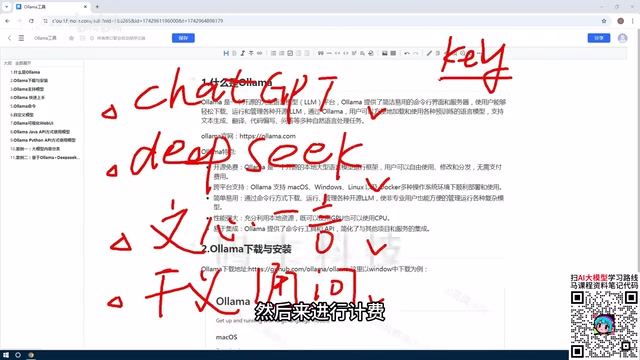
Getting Started with Ollama: The Go-To Tool for Running Open-Source LLMs Locally
Ollama is a free, open-source tool for managing and deploying open-source LLMs like DeepSeek locally. Learn what it is, its cross-platform support, CPU/GPU features, and key use cases.
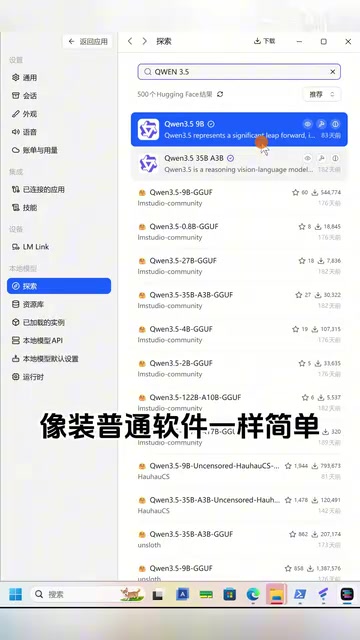
LM Studio vs Ollama vs vLLM: A Deep Dive into Local LLM Deployment Tools
LM Studio, Ollama, and vLLM compared: ease of use, performance, and ideal use cases. Beginners pick LM Studio, developers use Ollama, enterprises go with vLLM.
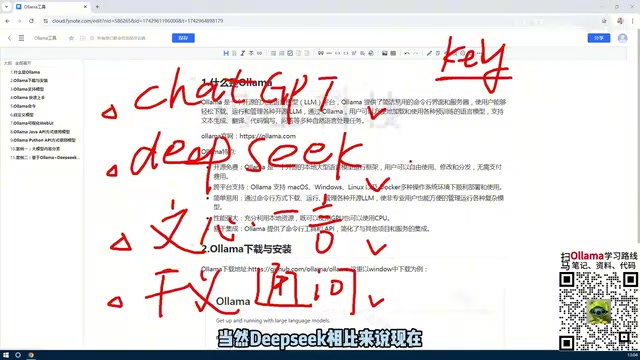
Getting Started with Ollama: The Essential Tool for Local Open-Source LLM Deployment
Learn what Ollama is and why it matters: a free, open-source tool for deploying LLMs like DeepSeek locally, with GPU/CPU support, cross-platform compatibility, and API access for private AI apps.