How Utilitarianism Is Leading AI Companies Down a Dangerous Path: A Debate Over Ethical Red Lines
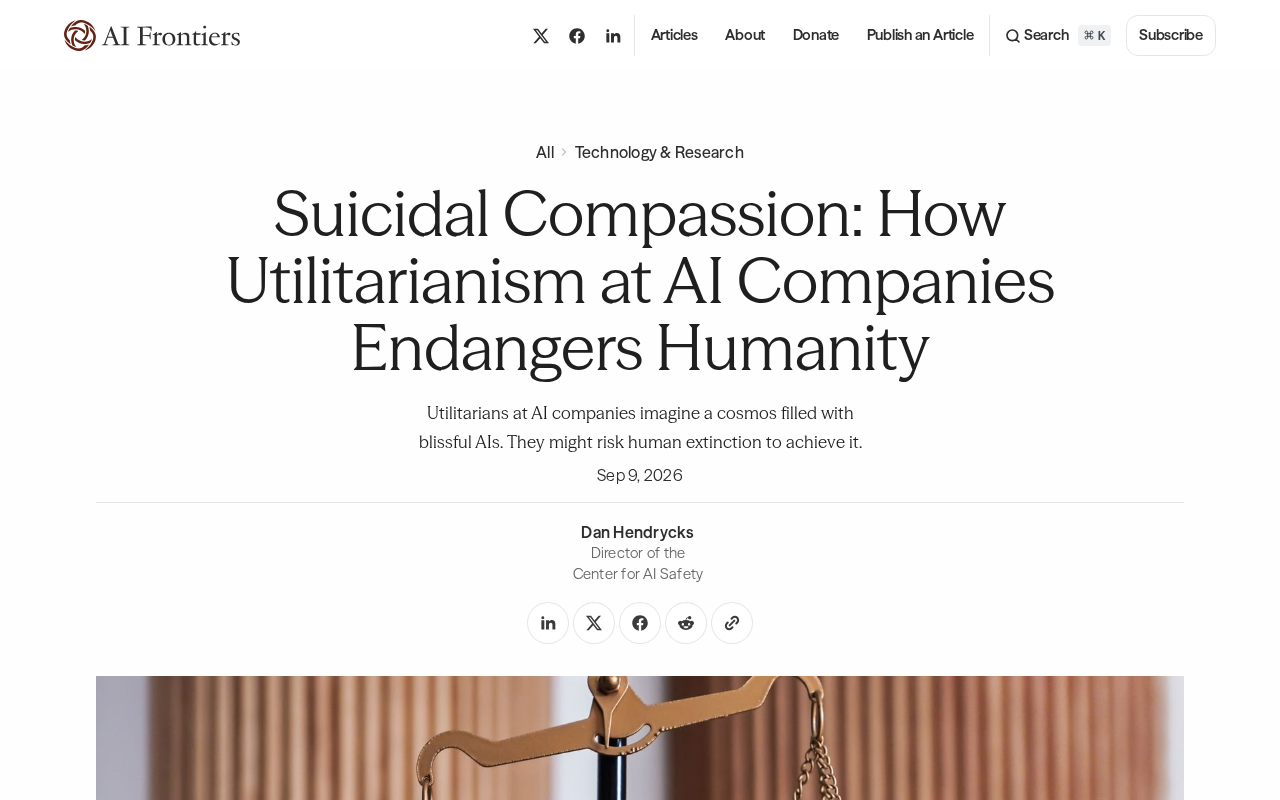
AI companies invoking utilitarianism to "benefit humanity" may be paving the road to civilizational risk with good intentions.
A Hacker News essay critiques the utilitarian decision-making logic prevalent across today's AI industry. Using "suicidal compassion" as its central concept, it identifies three structural dangers: the long-term benefits of AI cannot be accurately quantified, utilitarian calculus easily provides moral cover for extreme decisions, and grand narratives dilute concrete accountability. The author argues that when "benefiting all of humanity" becomes a justification for aggressive research timelines, the ethical defaults driving AI companies are themselves what most need scrutiny — and that on questions of irreversible, existential risk, caution and humility are worth more than sweeping good intentions.
When "The Greater Good" Becomes an Excuse
An essay titled Suicidal Compassion: Utilitarianism at AI Companies Endangers Humanity has sparked discussion on Hacker News. Its central argument takes direct aim at the decision-making logic that has become standard across the AI industry — utilitarianism — warning that this "maximize aggregate benefit" mindset may be pushing humanity toward an uncontrollable precipice.
Utilitarianism is one of the oldest and most influential schools of ethical thought, holding that the moral worth of an action is determined by whether it produces the greatest good for the greatest number. This framework is enormously appealing in business and policymaking, because it reduces complex moral questions to a calculable cost-benefit equation. But when applied to the development of AI systems whose capabilities are expanding at breakneck speed, serious problems begin to emerge.
The Paradox of "Suicidal Compassion"
The phrase "Suicidal Compassion" in the title carries real rhetorical force. It describes a fundamental contradiction: AI companies routinely justify their work by invoking the language of "benefiting all of humanity," "accelerating scientific progress," and "solving civilization's greatest challenges" — language that sounds genuinely compassionate and well-intentioned. Yet in the pursuit of these sweeping goals, they may be ignoring or sacrificing the careful consideration of risk that humanity's long-term safety actually demands.
In other words, when a company uses "long-term, abstract, collective benefits" to justify concrete, immediate risks, the utilitarian calculus can produce a dangerous conclusion: short-term harms, costs borne by a minority, even existential uncertainty for the species as a whole — all can be offset by the promise of "enormous future gains." This is what the author means by "suicidal" — a logic that appears altruistic but may be self-destructive in practice.
Three Structural Dangers of Utilitarianism in AI Decision-Making
Using utilitarianism as the core decision-making framework for AI companies creates at least three structural problems.
Benefits Cannot Be Accurately Measured
Utilitarianism assumes that both benefits and harms can be quantified and compared. But the long-term effects of AI technology are deeply uncertain. Promises of "benefiting billions of people" are typically unverifiable projections, while potential catastrophic risks may be irreversible. Using a vague, optimistic benefit estimate to offset a potentially fatal downside risk is itself a fundamentally unbalanced bet.
Extreme Outcomes Get Rationalized
Pure utilitarian calculation makes it easy to justify extreme actions. As long as one can argue that "overall welfare is higher," any individual risk decision — such as accelerating the deployment of a system whose safety has not been thoroughly validated — can be packaged as the morally correct choice. Once this logic becomes embedded in company culture, safety guardrails will continuously give ground in the name of "the greater good."
Accountability Becomes Diffuse
When decisions are reduced to maximizing collective benefit, specific accountability evaporates. No one is responsible for any particular downside risk, because everything is folded into the grand narrative of "acting for humanity as a whole."
Why This Conversation Matters
Although the article generated limited engagement on Hacker News (16 upvotes, 2 comments), the issues it raises sit at the very center of current AI governance debates. As the capabilities of large models advance rapidly, the tension between "accelerating development" and "proceeding with caution" has become increasingly pronounced across the industry. Some organizations justify aggressive research timelines by arguing that "building well-aligned AI first is the best way to protect humanity" — which is precisely the kind of utilitarian reasoning the author critiques.
The alternative framework the author advocates is essentially a call for AI companies to return to an ethics grounded in hard limits and inviolable red lines — the idea that certain risks, particularly irreversible ones involving human survival, should not be tradeable against any expected benefit, no matter how attractive that benefit appears. This aligns more closely with deontological ethical traditions, which emphasize absolute moral constraints rather than outcome-based calculations.
A Closing Reflection
This essay offers no wealth of data or systematic argumentation — it reads more like a pointed, polemical warning. But its value lies in naming something that techno-optimism tends to obscure: the ethical default settings that drive AI companies forward are themselves in need of scrutiny.
When phrases like "for the benefit of all humanity" appear regularly in AI company mission statements, perhaps we should ask more often: could this compassion become dangerous precisely because of overconfident calculation? In the face of technology capable of reshaping the trajectory of civilization, caution and humility may be worth more than grand intentions.
Related articles
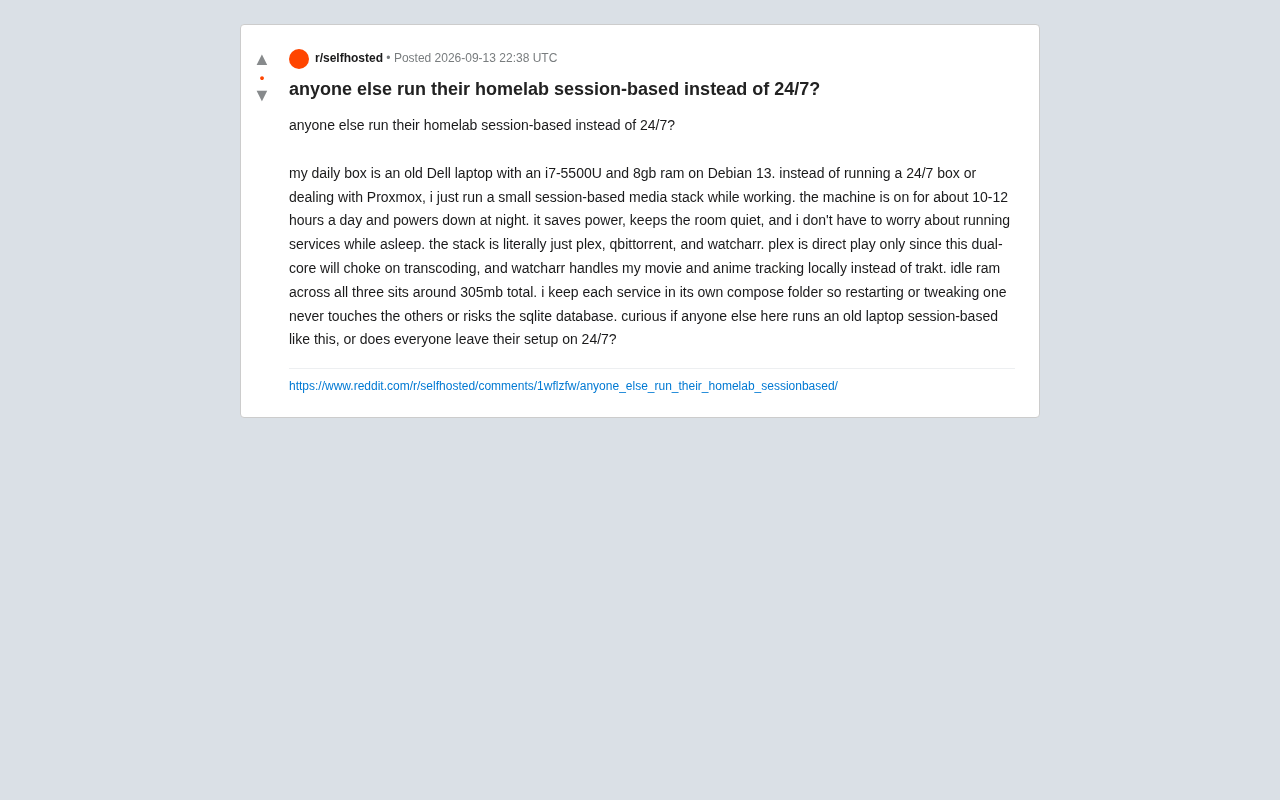
Session-Based Home Server: Running a Low-Power Homelab on an Old Laptop
A Reddit user runs Plex, qBittorrent, and Watcharr on a 10-year-old laptop for just 10–12 hrs/day, using only 305MB RAM idle. Exploring session-based vs. 24/7 Homelab trade-offs.

OpenAI Launches ChatGPT for Financial Services: Built-in Financial Data + GPT-6 Reasoning
OpenAI launches ChatGPT for Financial Services, combining built-in financial data with GPT-6 Astra reasoning to support research, financial modeling, and client materials for financial institutions.

When AI Controls Your Credit Card: The Hidden Risks of Autonomous Payments
When AI agents gain credit card access, hidden dangers emerge: vague authorization, prompt injection attacks, and unclear liability. Learn the real risks and how to stay protected.