How Will the Russia-Ukraine War End? A Geopolitical Expert Analyzes the Ceasefire Dilemma and the Path to Peace
Experts judge that comprehensive peace is unlikely; a partial ceasefire could be a starting point, but may become a window for Russia to rearm.
This article is based on a conversation with a geopolitical expert on the Lex Fridman podcast. The core judgment is that a comprehensive peace agreement is extremely unlikely in the short term, but a partial "compartmentalized ceasefire" (such as stopping strikes on energy facilities or Black Sea shipping) may serve as a trust-building starting point for a political process. The expert notes that Putin is waiting for the effects of winter strikes and European spring election results, and that Russia currently lacks genuine willingness to negotiate. More alarming is the ceasefire trap: if Ukraine demobilizes without security guarantees, a ceasefire could become a window for Russian rearmament, leading to a third iteration of the war. The article also explains the war's roots through cognitive bias and the structural perspective of "Russia's failed imperial transition," arguing that this is not Putin's war alone. On the postwar period, the expert is cautiously optimistic about Ukraine's survival but stresses it depends on Europe's security commitments.
In a recent conversation on the Lex Fridman podcast, a geopolitical expert who has long studied the Russia-Ukraine conflict offered a sobering assessment: the possibility of reaching a comprehensive peace agreement immediately is extremely low, but a partial ceasefire may serve as a starting point. The conversation did not stop at recounting battlefield developments, but instead delved into the traps of a ceasefire, Putin's calculations, and the deeper imperial transition failure behind the war.
Partial Ceasefire: A Possible Breakthrough, Not an Endpoint
The expert noted that negotiations are not entirely absent, but Russia lacks genuine willingness to negotiate. One realistic possible path is a "partially compartmentalized ceasefire"—for example, both sides stopping strikes on energy infrastructure, or halting attacks on Black Sea shipping (the latter has clearly escalated this year).
"I think this is possible. The problem is that Russia's position remains: fighting is the preferred alternative to negotiation."
The significance of such a partial ceasefire lies not in resolving the conflict, but in creating a verifiable starting point of trust for a subsequent political process. The expert emphasized that it is usually necessary to begin with a ceasefire lasting several days, one or two weeks, or even a month, so that both sides can demonstrate commitment to engaging in a political process. But at present Russia is unwilling to accept such an arrangement; its position is: first resolve all complex issues, then talk about a ceasefire.
What Is Putin Waiting For? Winter Strikes and European Elections
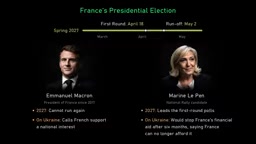
The expert analyzed that Putin is most likely waiting for the outcome of two key variables. The first is the effect of the winter strike campaign—he hopes to weaken Ukraine's negotiating position in the cold winter through sustained strikes on energy facilities. The second is the results of European spring elections, such as the French election, to see whether the overall situation will become more favorable to Russia.
There is an easily overlooked perspective here: winter is certainly difficult for soldiers at the front, but those who truly bear the greatest pressure are civilians. The expert reminded that a country is not just front lines on a map, but also its economy, cities, and people—that is what the war is truly fighting over.
At the same time, Ukraine's frontline performance this year has been clearly better than Russia's, and the Russian army has no prospect of significant progress in almost any direction. But the expert also acknowledged that Russia still has the resources and will to sustain the war until 2027, and so do Ukraine and Europe. European countries will most likely continue to fund Ukraine when necessary, and while U.S. military support has recently been threatened, it has not yet truly been cut off.
The timing context of European spring elections deserves attention: French presidential elections usually hold two rounds of voting in April, and Hungary, the Czech Republic, and other countries also mostly hold parliamentary elections in spring. In the context of the Russia-Ukraine conflict, these elections are regarded by Russian decision-makers as key variables affecting the sustainability of European aid to Ukraine. If right-wing or Eurosceptic forces advocating dialogue with Russia make breakthroughs in the elections, Russia may judge that European unity will loosen, thereby obtaining more favorable conditions at the negotiating table. In addition, although European Parliament elections were held in May 2019 and June 2024, the "election cycle" itself constitutes an important reference point for Russia's strategic endurance—it means Moscow is not in a hurry to reach an agreement before winter, but is willing to use time as a bargaining chip and wait for the uncertainty brought by Western electoral politics.
The judgment on Ukraine's frontline performance needs to be understood in the context of the 2023 counteroffensive and the 2024 battlefield situation. Ukraine's large-scale counteroffensive in 2023 failed to break through Russia's multi-layered defenses, exposing Ukraine's limitations in ammunition, air cover, and the ability to breach minefields; but since 2024, the Russian army has made only slow tactical progress in the Donetsk direction, at extremely high costs in personnel and equipment. What the expert means by "Ukraine's frontline performance has been better this year" is that under conditions of unequal resources, the Ukrainian army can still maintain a stable defense line, carry out long-range strikes against the Russian rear, and in the Black Sea direction force restrictions on the activities of Russia's Black Sea Fleet. This "performance" is more reflected in defensive resilience and asymmetric warfare capabilities rather than territorial recovery, but it does indeed constitute the foundation of Ukraine's bargaining chips in potential negotiations.
The Ceasefire Trap: Why a Piece of Paper Could Lead to a Third War
The most insightful part of the conversation was the challenge to the intuition that "a ceasefire means peace." The expert presented a pessimistic but worthy warning: a ceasefire is often merely a window for rearmament.

The specific mechanism is this: after a ceasefire is signed, Ukraine will eventually need to demobilize large numbers of men from the front, who want to return to their families and lives. Russia's forces are largely contract soldiers, who may not be demobilized. If six to eight months after the ceasefire is signed there are no genuine security guarantees from the United States or other parties, Ukraine will be in a very vulnerable position—Russia will have gained an opportunity to rearm, fighting will reignite, and this time Russia's position will be much more favorable.
This is not alarmism. The expert reminded that this war began in 2014, and the previous two Minsk agreements both failed to bring a political settlement. Those familiar with this history both long for a ceasefire and worry that a ceasefire is merely a piece of paper with the word "ceasefire" written on it.
"What I worry about is that we may see a third iteration of this war—one whose ending leads us to the next war."
The expert cited the India-Pakistan conflict, the Arab-Israeli conflict, and the multiple wars between Armenia and Azerbaijan as references, showing that this kind of "ceasefire—restart" cycle is not rare.
The Minsk agreements were ceasefire and political settlement agreements reached in Minsk, Belarus, by the "Normandy Four" composed of Russia, Ukraine, France, and Germany after the 2014 Ukraine crisis. They consist of the Minsk Agreement of September 2014 and Minsk II of February 2015. Their core contents include a ceasefire, withdrawal of heavy weapons, monitoring by the OSCE, restoration of Ukraine's control over the eastern border, and limited autonomy for the Donbas region in exchange for "special status." However, the agreements contained fundamental disagreements on key provisions: Russia regarded itself as a mediator rather than a party, Ukraine viewed "special status" as an erosion of sovereignty, and the two sides interpreted the security provisions in opposite ways. After the agreements were signed, large-scale fighting cooled somewhat, but sporadic shelling, reconnaissance, and proxy clashes never stopped, and the political provisions were never implemented. For this reason, the Minsk agreements are often regarded as a model of "frozen conflict" rather than conflict resolution, and they are also a key historical reference for understanding the fragility of current ceasefire initiatives.
The Root of Miscalculation: Putin's Perception and Objective Reality
When asked about the probability of successful negotiations, the expert's judgment was that the probability is not high in the short term. He pointed to a key problem: Putin's perception of the situation differs from that of the United States, and to some extent also deviates from objective reality.

This cognitive bias directly affects Russia's negotiating calculations. In Putin's view, fighting is still a better choice than negotiation. Ukraine currently has considerable bargaining chips—its frontline performance has been better this year, and Russia lacks prospects for progress in almost any direction. But turning bargaining chips into negotiating outcomes requires the other side to be willing to sit at the table.
The Deeper Logic of the War: Russia's Failed Imperial Transition
The second half of the conversation turned to longer-term structural analysis. The expert proposed a framework: this war is in some sense caused by the continuation of the "imperial collapse process" that was the dissolution of the Soviet Union. The dissolution of the Soviet Union was not merely an event but a process—not only the collapse of the Soviet Union, but also the collapse of the Russian empire beneath it.
"This is essentially an imperialist war, launched by a state and an elite, a leader, who cannot see any other way or vision for Russia's existence."
The expert particularly emphasized that this is not Putin's war alone. Many among the Russian elite are bewildered by this war, but a considerable proportion of the population still supports it or acquiesces, and hundreds of thousands of Russian men have signed contracts to fight. This is Russia's first large-scale conventional war, in which very few personnel were mobilized, and many are in essence taking money to sign contracts and go to the battlefield.

The core of the problem was summarized as "Russia's failed imperial transition": Russia has not become a post-imperial European nation-state. Regardless of its political system, the state has not stopped being a revisionist, revanchist empire in Europe. But the expert does not believe this is deterministic or eternal—Europe was once covered with imperial powers, and they did not give up empire easily either, but in the end they all completed the transition.
The concept of "imperial transition" originates from comparative politics and historical sociology and is used to describe the process by which empires redefine their national identity and borders after losing formal colonies or peripheral territories. A successful transition usually means that imperial elites accept the framework of the "nation-state," contract their identity to the core homeland, and integrate society through citizenship rather than the hierarchical distinctions within the empire—Austria after the dissolution of the Habsburg Empire, and Turkey after the dissolution of the Ottoman Empire, both underwent long and painful reshaping. A failed transition manifests as elites being unable to give up the imagination of spheres of influence and "historical territories," treating the loss of empire as a humiliation that must be reversed, and thus continuously using external intervention to maintain internal legitimacy. Placing Russia within this framework can explain why, after the dissolution of the Soviet Union, Russia has always found it difficult to accept the independent choices of Ukraine, Georgia, and other countries, and also shows why the motives of this war are not solely the personal will of a certain leader, but are closely related to the structural dilemma of Russian state-building.
Ukraine's Future: Dependent on Europe's Security Commitments
Regarding the postwar period, the expert was cautiously optimistic about Ukraine's state survival. This depends on how the war ends, but more importantly on what kind of support European countries can give Ukraine. If major European countries regard Ukraine as part of Europe and as an indispensable member of European security, they will work with Ukraine to ensure its success—Ukraine will have to rely on them for some time.
As for Russia's future, the expert acknowledged that this is a harder question, because Russia's problem is not one person's problem. This war will leave lasting damage to both Russia and Ukraine. The expert finally turned his gaze to the long arc of history: this is not Europe's first destructive war, and in the history of Ukraine and Russia, this land has already experienced too many battles. Witnessing large-scale conventional war still in the 2020s is itself a tragedy.
But the conversation ended with a glimmer of cautious hope: all of this will eventually pass. Ukraine will ultimately be judged as successful in defending its independence, despite the enormous cost. And Russia's imperial transition is not impossible to complete—it just requires time, as well as sustained pressure and engagement from the outside world.
One-line Summary
Experts judge that comprehensive peace between Russia and Ukraine is unlikely, and a partial ceasefire could be a starting point, but a ceasefire may become a window for Russia to rearm.
Paragraph Summary
This article is based on a conversation with a geopolitical expert on the Lex Fridman podcast. The core judgment is that the possibility of reaching a comprehensive peace agreement immediately is extremely low, but a partial "compartmentalized ceasefire" (such as stopping strikes on energy facilities or Black Sea shipping) may serve as a starting point of trust for a political process. The expert points out that Putin is waiting for the effects of winter strikes and the results of European spring elections, and that Russia currently lacks genuine willingness to negotiate. More worthy of vigilance is the ceasefire trap: if Ukraine demobilizes and lacks security guarantees, a ceasefire may become a window for Russia to rearm, leading to a third iteration of the war. The article also explains the root of the war from the structural perspectives of cognitive bias and "Russia's failed imperial transition," arguing that this is not Putin's war alone. Regarding the postwar period, the expert is cautiously optimistic about Ukraine's survival but emphasizes that it depends on Europe's security commitments.
Related articles
How the Grok Team Hits 11,000 PRs a Month: Replacing Manual Review with Deterministic Constraints
Inside the Grok team's formula for 11,000 monthly PRs at a 0.5% rollback rate: Lint rules, type systems, and formal verification as deterministic constraints.

Is Spacetime Made of Something? Six Possible Answers from Quantum Gravity
Is spacetime made of something? This article surveys the main candidate answers from quantum gravity: spacetime may be fundamental, geometry quantized, causal relations prior to distance, spacetime an emergent state of matter, geometry derived from string theory, or no spacetime atoms needed at all.

After GTA 6, Where Does the Game Industry Go?
The Vergecast talks with Game File's Stephen Totilo about GTA 6's impact on gaming: billion-dollar budgets, console market struggles, cloud gaming tests, and the future of microtransactions—and whether it marks the end of an era.