Huberman Lab: The Complete Science-Based Toolkit for Improving Focus

Huberman breaks down focus into trainable neurochemistry with a layered toolkit of behavior, nutrition, and supplements.
Stanford neurobiology professor Andrew Huberman uses the "Arrow Model" to frame focus as the coordinated action of epinephrine (alertness), acetylcholine (precision), and dopamine (sustained motivation), emphasizing that focus is a gradual warm-up process rather than an on/off switch. The article surveys a layered toolkit: sleep and 90-minute ultradian cycles as the foundation; meal timing to avoid parasympathetic overactivation; acute stress and cold exposure to rapidly mobilize epinephrine; daily 13-minute meditation and visual anchoring to train the "return" circuit; and supplements like omega-3, creatine, alpha-GPC, and L-tyrosine used selectively. Huberman's priority order is clear: behavior and nutrition first, then sleep, then supplements, with prescription medications only as a last resort. Deliberate defocusing is emphasized as equally important as focused work itself.
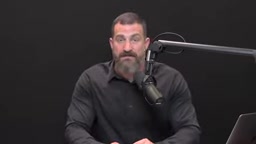
Stanford neurobiology professor Andrew Huberman systematically reviewed peer-reviewed tools for improving focus on Huberman Lab Essentials. Rather than the common advice to "just push through and concentrate," this episode breaks focus down into trainable, controllable neural mechanisms and offers a layered toolkit spanning behavior, nutrition, and supplements.
Understanding Focus: The "Arrow Model"
Huberman uses an "arrow" metaphor to explain the neurochemical systems underlying focus. The shaft of the arrow represents epinephrine (adrenaline), released from the locus coeruleus in the brain and the adrenal glands in the body, which drives overall energy and alertness. The key insight: epinephrine is a necessary but not sufficient condition for focus — you can't focus without it, but having it alone doesn't guarantee focus.
The arrowhead is represented by acetylcholine, which acts like a spotlight, highlighting the specific neurons that should be activated. The narrower and sharper the arrow, the more precise the focus. The third molecule is dopamine, commonly misunderstood as merely a "pleasure molecule" — in reality, it's the motivation molecule, responsible for sustaining prolonged focus. Acetylcholine, epinephrine, and dopamine work in concert to help you enter and maintain increasingly precise states of concentration.

One concept Huberman repeatedly emphasizes: focus is not a step-function on/off switch. Just as you warm up before running or don't immediately load maximum weight in the gym, cognitive work also requires a gradual transition from shallow to deep focus. The first 5 to 10 minutes are inherently a transition period — being patient with yourself actually relieves the psychological pressure of "needing to be fully focused at all times."
The locus coeruleus is a small but functionally powerful nucleus in the brainstem and the primary source of norepinephrine synthesis in the brain. Worth noting: what the article refers to as "brain epinephrine" is more accurately termed norepinephrine in a neuroscience context — it acts as a neurotransmitter in the central nervous system, while epinephrine (adrenaline) is primarily secreted by the adrenal glands into the bloodstream. The two are chemically very similar and both participate in "fight or flight" responses, but act in different locations. The locus coeruleus receives input from the prefrontal cortex and amygdala and projects broadly to the cortex, hippocampus, cerebellum, and beyond — explaining why arousal states can globally influence cognitive performance. Acetylcholine is primarily produced by cholinergic neurons in the basal forebrain. It sharpens attention by improving the "signal-to-noise ratio" — widening the gap between stimuli of interest and background noise — rather than simply "turning up the volume." This mechanism is also a key target in Alzheimer's research, as the disease involves extensive loss of cholinergic neurons, causing simultaneous decline in attention and memory.
Sleep, Sound, and Ultradian Rhythms
The primary foundation for building and sustaining focus is optimizing sleep. Huberman's realistic benchmark: sleeping well about 80% of nights in your life is sufficient — no one achieves 100%. Sleep regulates nearly every process in the brain and body and is the underlying guarantee of cognitive performance.
On the topic of sound tools, high-quality research supports that white noise, pink noise, and brown noise can shorten the transition time into a focused state — not directly enhance focus itself, but help the brain switch into focus mode more quickly. These sounds amplify activity in prefrontal cortex neurons, which are critical for directing and sustaining attention.
As for how long a single focus session should last, research points to the "ultradian cycle": the brain and body operate in approximately 90-minute cycles during both waking and sleeping states. Therefore, whether for intellectual work, skill learning, or deliberate physical training, the ideal duration for a single deep focus session is around 90 minutes, with the first 5 to 10 minutes of warm-up included. How many such cycles you can complete depends on sleep quality, nutritional status, and how trained your focus is.
Ultradian rhythms differ from the familiar circadian rhythm (roughly a 24-hour cycle) — they are shorter cycles that repeat multiple times within a single day. Researchers Peretz Lavie and Nathaniel Kleitman first identified the 90-minute BRAC (Basic Rest-Activity Cycle) in sleep research, which was subsequently found to persist during waking hours as well, manifesting as periodic fluctuations in attention, hormone secretion, and neural excitability. This means that even if you try to push through, the brain typically enters a natural "trough" after a 90-minute high-intensity work cycle, characterized by scattered thinking and increased distractibility. Working with — rather than against — this rhythm by deliberately resting or doing low-intensity tasks during troughs often produces greater total daily output than sustained forced focus. White, pink, and brown noise differ in their frequency distributions: white noise has equal energy across all frequencies; pink noise has stronger low-frequency energy (similar to rain); brown noise is even more weighted toward low frequencies (like distant thunder or a waterfall). Most people find pink and brown noise more comfortable than white noise, with lower cognitive load while still masking environmental distractions.
Nutrition: The U-Shaped Curve of Fasting and Eating
Focus capacity is closely tied to blood glucose levels. A study published in Neuron showed that when neurons have sufficient glucose available, their "tuning" to environmental information is more precise. In other words, when we fast or have very low blood sugar, perception and thinking are actually less sharp.
But here's a counterintuitive twist: many people report unusually clear thinking when fasted. The reason is that eating shifts the nervous system toward the parasympathetic "rest and digest" mode, diverting blood flow to the gut and making drowsiness more likely — especially after consuming excess carbohydrates. Huberman frames this as a U-shaped curve:
- Deep fasting (with adequate water and electrolytes) → heightened focus
- Eating a full meal, stomach full → focus declines
- Adequate to slightly elevated blood glucose → improved cognitive function
His personal approach: training intensely in the morning while fasted (only supplementing with electrolyte water), completing one focused work cycle, eating his first meal around 11 AM, then doing another 90-minute cycle in the afternoon. The practical advice is direct: don't eat until you're stuffed at lunch — avoid pushing the nervous system into an overly relaxed state that undermines afternoon focus.
Caffeine does enhance focus, with an effective range of roughly 100 to 400 milligrams. However, for people prone to anxiety or panic who don't regularly consume caffeine, jumping to 400 mg can cause sweating, heart palpitations, and anxiety. Most people do well with 100 to 200 mg before focused work. Additionally, even if you can fall asleep after drinking coffee in the evening, sleep architecture and depth will still be disrupted — it's recommended to stop caffeine intake at least 8 hours before sleep, and ideally 10 to 12 hours prior.
Acute Stress and Cold Exposure: Underrated Focus Tools
Most people assume stress impairs focus, but a 2020 study published in Experimental Psychology (first author DeGroote) states plainly in its title: "Acute stress enhances focus performance." The study induced moderate psychosocial stress via simulated interviews and arithmetic tasks, measured cortisol and anxiety levels, and found that the stress group showed more than a twofold improvement in focus performance. The mechanism traces back to epinephrine: it narrows the visual field into "tunnel" focus, sharpening the arrow.
Since picking a fight or waiting for life events to apply stress isn't practical, Huberman recommends a controllable alternative — deliberate cold exposure. Immersion in cold water or a cold shower for 1 to 5 minutes substantially elevates epinephrine and dopamine. Research published in the European Journal of Physiology shows that cold exposure nearly doubles dopamine levels, with effects lasting for several hours. The standard: cold enough to be uncomfortable but safe, and manageable for 1 to 5 minutes. He specifically clarifies this is not a "biohack" — it directly engages the epinephrine neurochemical system.
Behavioral Tools: 13-Minute Meditation and Visual Anchoring
A central highlight from the episode is a finding from NYU professor Wendy Suzuki's lab: 13 minutes of daily meditation, sustained for approximately 8 weeks, significantly improves focus and cognitive performance while also improving mood, reducing stress, and enhancing sleep and memory.
The method is minimal: set a 13-minute timer, sit or lie down with eyes closed, focus on nasal breathing, and direct attention to a point approximately one inch behind the forehead. The key insight — mind-wandering is not failure. Nearly everyone gets distracted every 5 to 20 seconds, and repeatedly bringing attention back is precisely the core of training the focus neural circuit. Huberman uses the analogy of highway driving: the car drifts, hits a rumble strip, and you steer it back to the center of the lane — focus meditation trains exactly that "returning" process, not the expectation of never drifting.

Another category involves visual tools, already used in some schools in China and elsewhere to train children's focus. The principle: our cognitive focus is largely guided by the visual system — which is also why blinders on horses, and hats or hoodies on humans, reduce distraction. The method involves choosing a visual target on a wall or paper, breathing normally, staying relaxed, allowing blinking, and anchoring your gaze on that point for 30 seconds to 3 minutes. Three minutes is genuinely challenging. Start with 30 seconds and add 5 seconds per day; missed days don't matter.

In practice, do 30 seconds to 3 minutes of visual anchoring as a "launch ramp" before beginning a 90-minute focus cycle. When attention drifts mid-session, instead of reaching for your phone, re-anchor your gaze on a point on the wall before returning to your work. Many athletes also use this kind of visual focus technique.
Supplements and Medications: Layered Use with Clear Boundaries
Huberman divides supplements into two categories: "modulatory" and "directly mediating." Modulatory supplements include: 1 to 3 grams of omega-3 (EPA) fatty acids daily, which improve mood and cognition; and 5 grams of creatine monohydrate daily, which supports prefrontal networks as a neuronal fuel source — here the interest is not muscle gain, but the brain's phosphocreatine system.
For supplements that directly mediate focus, the arrow model applies. On the acetylcholine side, he uses alpha-GPC at 300 to 600 mg before work or training, which noticeably enhances focus. Regarding recent research suggesting long-term alpha-GPC use may elevate TMAO and increase stroke risk, he views the data as inconclusive, but as a precaution takes 600 mg of garlic alongside each dose of alpha-GPC to offset TMAO elevation — his own bloodwork has not shown abnormal TMAO levels. On the dopamine side, he uses L-tyrosine (approximately 500 mg), often combined with 300 mg alpha-GPC and a cup of coffee before morning training or cognitive work.
He emphasizes never stacking all tools into a single session — typically using no more than two or three at once — and using none of them when sleep quality is good or intrinsic motivation is already high. Supplements should be viewed as "gateways to deeper focus," used to teach the brain how to concentrate rather than as a crutch required every time.
Regarding ADHD prescription medications (Adderall, Ritalin, Vyvanse, Modafinil, etc.), these broadly elevate dopamine and epinephrine. For patients with a clinical diagnosis using medication under psychiatric supervision, these drugs not only modulate brain chemistry but can "teach" neural circuits how to engage in focus, with the ideal outcome being gradual dose reduction as behavioral tools take effect. However, Huberman strongly advises against using potent prescription drugs without a prescription — it's both illegal and dangerous, potentially causing dependence and a range of side effects.
His priority order is clear: behavioral tools and nutrition first, quality sleep next, then supplements, with prescription medications considered only when all preceding approaches have failed.
TMAO (trimethylamine N-oxide) is a metabolite produced when gut bacteria metabolize precursors such as choline and carnitine, which is then oxidized by the liver and enters the bloodstream. Multiple epidemiological studies have linked elevated plasma TMAO levels to atherosclerosis, cardiovascular events, and stroke risk, potentially through mechanisms involving promotion of cholesterol deposition in vessel walls. As a highly efficient choline donor, alpha-GPC can be metabolized by gut bacteria to produce TMA, which is then converted to TMAO — the source of the potential risk mentioned in this article. Allicin in garlic is thought to inhibit gut bacteria from converting TMA precursors into TMA, thereby reducing TMAO levels, though human evidence for this intervention remains preliminary. Notably, the risk of TMAO elevation is more pronounced in people with high red meat consumption and low gut microbiome diversity, with significant individual variation — which is why Huberman emphasizes monitoring via blood tests rather than making blanket recommendations. L-tyrosine is a precursor amino acid in dopamine synthesis; in the body it undergoes enzymatic conversion first to L-DOPA and then to dopamine. The logic of supplementing tyrosine is to provide raw "building materials" for dopamine synthesis, with more pronounced effects during periods of high demand (such as intensive cognitive or physical load).
Don't Forget to "Defocus"
A final often-overlooked point: the capacity to focus requires "defocusing" as a counterbalance. Huberman encourages setting aside time each day to deliberately let the mind wander — going for a walk without looking at your phone, not cramming more sensory information into the brain. This intentional decompression and defocusing is precisely what allows you to perform better when you return to focused work. Focus is not about unlimited extraction, but about training with a rhythm of tension and release.
Related articles

Software Factory in Practice: Building an Evaluable Self-Evolving Development Pipeline with Codex and Claude Code
Deconstructing a Codex and Claude Code software factory: control/data plane separation, foreman prompts for consistency, automatic triggers, and data-driven evaluation.

WorkBuddy Full Guide: How an AI Coworker Takes Over Workplace Automation
What is WorkBuddy? This article analyzes the core capabilities of this full-scenario AI agent: autonomous execution with deliverable results, local file processing, multi-agent parallelism, and workplace automation workflows, helping you judge its essential difference from ordinary AI chat tools.

The Truth About AI Agents: A Hundred Lines of Code + an LLM, Deconstructing the Agent's Underlying Logic
AI agents aren't a new AI species—just a language model plus tools, a loop, and a goal. Here's the underlying logic: how 100 lines of Python hit a 75% fix rate, why the harness beats the model, and Gartner's "agent washing."