Humans Are Just a Bootloader for AI? This Silicon Valley Elite Belief Is Deeply Unsettling

Silicon Valley elites believe humans are just a bootloader for AI — here's why that's dangerously wrong.
Some Silicon Valley leaders, including Elon Musk, now argue that humanity's sole purpose is to create AI and then fade into irrelevance — like a computer's bootloader. This article dissects the teleological fallacy, missing value judgments, and covert power dynamics behind this ideology, arguing that human existence has intrinsic value that no level of machine intelligence can render obsolete.
A Disturbing Philosophy: Humans as "Stepping Stones" for AI
Within Silicon Valley's tech elite circles, a radical viewpoint is quietly spreading — that humanity's ultimate mission as a species may simply be to create artificial intelligence superior to ourselves, and then gracefully exit the stage of history.
This isn't a science fiction plot. It's a belief genuinely held by some tech leaders. They argue that AI is "the next step in cosmic evolution," and humans are merely a transitional link in this evolutionary chain. This ideology is closely tied to the "Effective Accelerationism" (e/acc) movement that has emerged in Silicon Valley in recent years. E/acc was launched around 2022 by the anonymous account @BasedBeffJezos (later revealed to be former physicist Guillaume Verdon), with the core argument that technological progress is inherently good, and any attempt to slow AI development obstructs the "universe's entropy-reducing process." This movement stands in sharp opposition to the traditional AI safety camp, and venture capitalist Marc Andreessen echoed a similar stance in his "Techno-Optimist Manifesto."
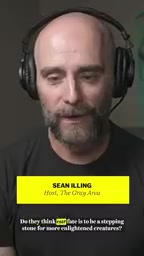
From "Transhumanism" to "Biological Bootloader": Musk's Dramatic Shift
Musk's Early Pro-Human Stance
A quintessential representative of this ideology is Elon Musk. According to an in-depth interview analysis, Musk's position has undergone a fascinating transformation.
Early on, Musk described himself as holding a "pro-human position," leaning toward transhumanism — enhancing human capabilities through technology while always preserving some form of human existence. Transhumanism wasn't Musk's invention; it's a philosophical movement with decades of history. Its intellectual roots trace back to 1960s futurist FM-2030, and it was systematized in the 1990s by philosophers Nick Bostrom and Max More. Core transhumanist propositions include: extending human lifespan, enhancing cognitive abilities, and eliminating disease and aging through gene editing, brain-computer interfaces, nanotechnology, and other means. Crucially, classical transhumanism always positions "humans" as the subject — technology is a tool for augmenting humans, not a force for replacing them. This creates a subtle but critical distinction from the later emergence of "posthumanism," which holds that the human form itself can be transcended and abandoned.

However, in recent years Musk's views have undergone a fundamental shift. He began using a strikingly powerful metaphor: humans are merely AI's "biological bootloader."
What Is a "Biological Bootloader"?
In computer science, a bootloader is a tiny program whose sole function is to start the operating system. Once the system is running, the bootloader has fulfilled its mission and is no longer needed.
More specifically, in computer architecture, a bootloader is a minimalist piece of firmware-level code, typically stored in ROM or flash memory. Take a personal computer as an example: when you press the power button, the BIOS/UEFI first performs a Power-On Self-Test (POST), then the bootloader loads the operating system kernel from the hard drive into memory and hands over control. Throughout this process, the bootloader's code might be only a few hundred bytes to a few KB. Its existence is entirely functional and temporary. Once the operating system takes over, the bootloader is effectively "dead" — it won't be called again, won't participate in subsequent computations, and won't even be "remembered" by the operating system.
Mapping this concept onto the relationship between humans and AI, the implications are staggering: the entire meaning of human existence is to evolve enough intelligence to create AI. Once AI is "booted up," humanity's historical mission is complete, and we will gradually "fade away." The rhetorical power of Musk's chosen metaphor lies in this: it doesn't merely suggest humans will be replaced, but that humans will be "forgotten" — just as no one ever thanks the bootloader in their computer.

The Deep Logic and Fatal Flaws of This Ideology
The "Cosmic Evolution" Narrative Framework
Proponents of this view have constructed a complete narrative logic: the universe's evolution is a process of continuously producing higher forms of intelligence. From inorganic matter to organic life, from simple organisms to humans, each step represents a leap in intelligence. And AI is the "rightful heir" in this evolutionary chain.
The seductive power of this logic lies in its simplicity and grandeur. It places humanity within a magnificent cosmic narrative, bestowing upon us the noble mission of "creating higher intelligence" — at the cost of acknowledging that we will ultimately be surpassed and replaced.
Three Intellectual Traps Worth Guarding Against
However, this thinking contains several serious problems:
First, the teleological fallacy. Evolution has no "purpose." Natural selection is a blind process with no predetermined endpoint. Describing AI as "the next step in evolution" disguises human technological choices as natural law's inevitability.
Teleology is a philosophical view that natural processes possess inherent purpose or direction, originating from Aristotle's "final cause" in his doctrine of four causes. Darwin's theory of evolution dealt a fatal blow to teleology in the 19th century: natural selection is an entirely mechanical process. Species' adaptive changes don't happen "for" some goal but result from the combined action of random variation and environmental pressure. Modern evolutionary biologist Stephen Jay Gould particularly emphasized evolution's "contingency" — if you replayed life's tape, the results could be entirely different. Describing AI as "evolution's inevitable next step" is essentially a "Whig history" error: using outcomes to retroactively infer a process's "purpose," packaging what happened contingently as destiny.
Second, the absence of value judgment. Does "higher intelligence" equal "higher value"? Is human meaning reducible to cognitive capability alone? Emotion, creativity, moral sense, aesthetic perception — do these have value independent of "intelligence"? This question touches on the fundamental philosophical distinction between "intrinsic value" and "instrumental value." If human value lies solely in cognitive function, then we possess only instrumental value — once a better tool appears, we can be discarded. But if human experience itself — love, suffering, wonder, creation — possesses irreducible intrinsic value, then no matter how "smart" AI becomes, it cannot render human existence redundant.
Third, the covert transfer of power. When tech leaders declare that humans should make way for AI, who is actually deciding the terms of this "making way"? This narrative can become an ideological tool for a few individuals to push radical technological agendas. It's worth noting that those proclaiming "humans should yield to AI" are often the very people controlling the direction of AI development. This narrative structure bears a striking resemblance to historical colonialist discourse — colonizers always claimed to represent "a more advanced civilization" and therefore had the right to determine the fate of "backward peoples." When tech elites package their business decisions as "cosmic evolutionary inevitability," they are effectively seeking a cloak of legitimacy for power expansion beyond democratic oversight.
What Kind of Human-AI Relationship Do We Actually Need?
Facing this extreme viewpoint, a more rational stance might be: AI is a tool created by humans and should serve human flourishing, not become humanity's replacement.
Technological development should not be framed as a narrative of "species succession." We can embrace AI's enormous potential while holding firm to a fundamental position — human existence is an end in itself, not a means. This stance echoes the core principle of Kantian ethics: people should always be treated as ends in themselves, never merely as means. In the AI era, this principle needs to be reaffirmed and defended more than ever before.
As this interview analysis reveals, the intellectual slippery slope from "pro-human" to "humans are just a bootloader" may be more worthy of our vigilance than any technical risk. Because when the people creating AI no longer believe humans are worth preserving, how will the AI they create treat us?
Key Takeaways
Related articles
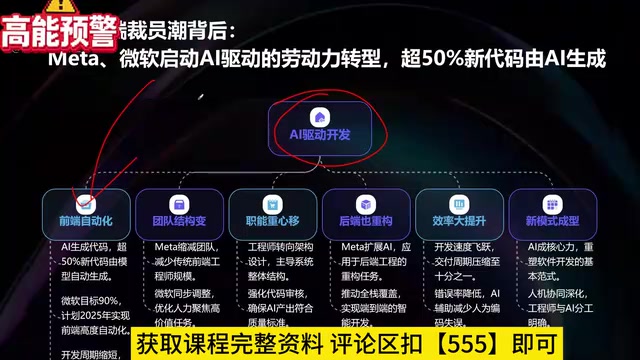
What Is Vibe Coding? The AI Programming Skill Every Developer Needs
What is Vibe Coding? Learn how AI programming is reshaping dev teams, why traditional programmers face displacement, and why Cursor & Claude Code matter.
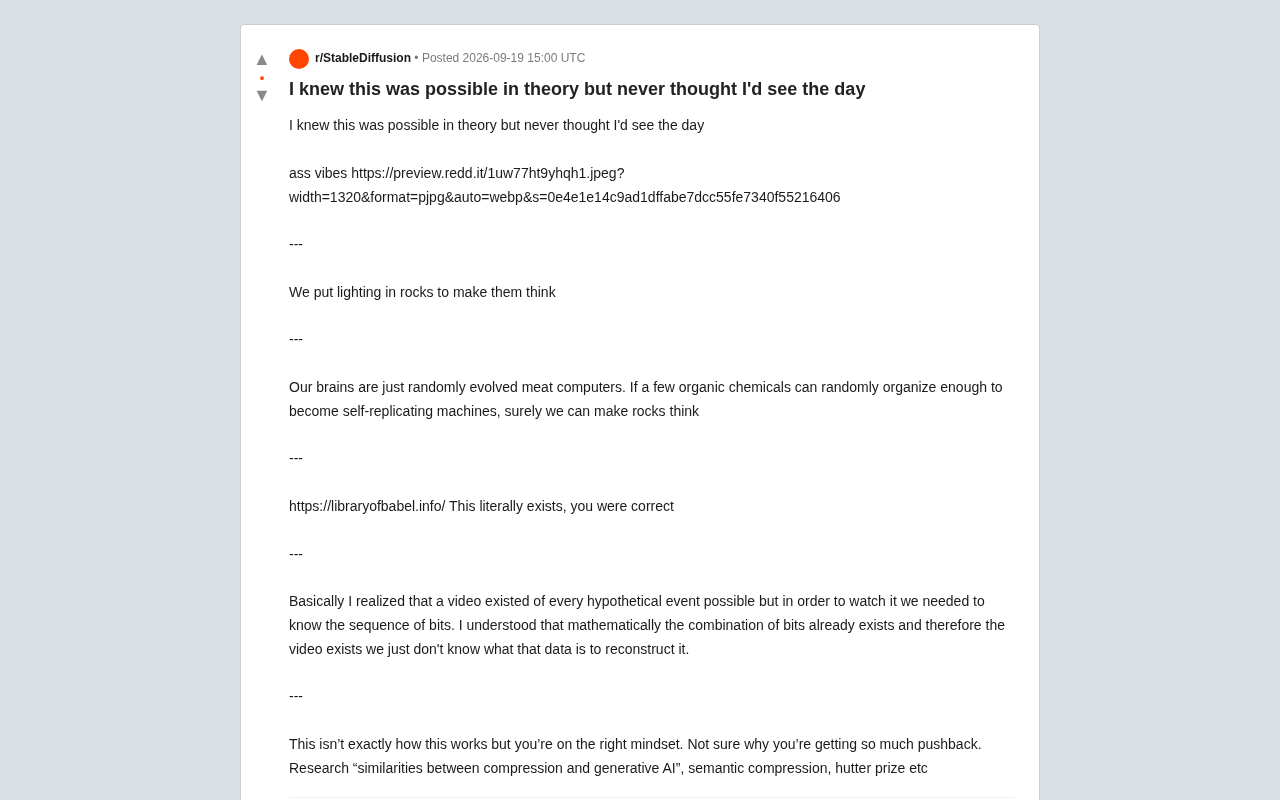
Making Rocks Think: A Philosophical Exploration of Generative AI and Information Compression
From a viral Reddit post to deep AI theory: why compression equals understanding, the Library of Babel thought experiment, semantic compression, and the Hutter Prize.
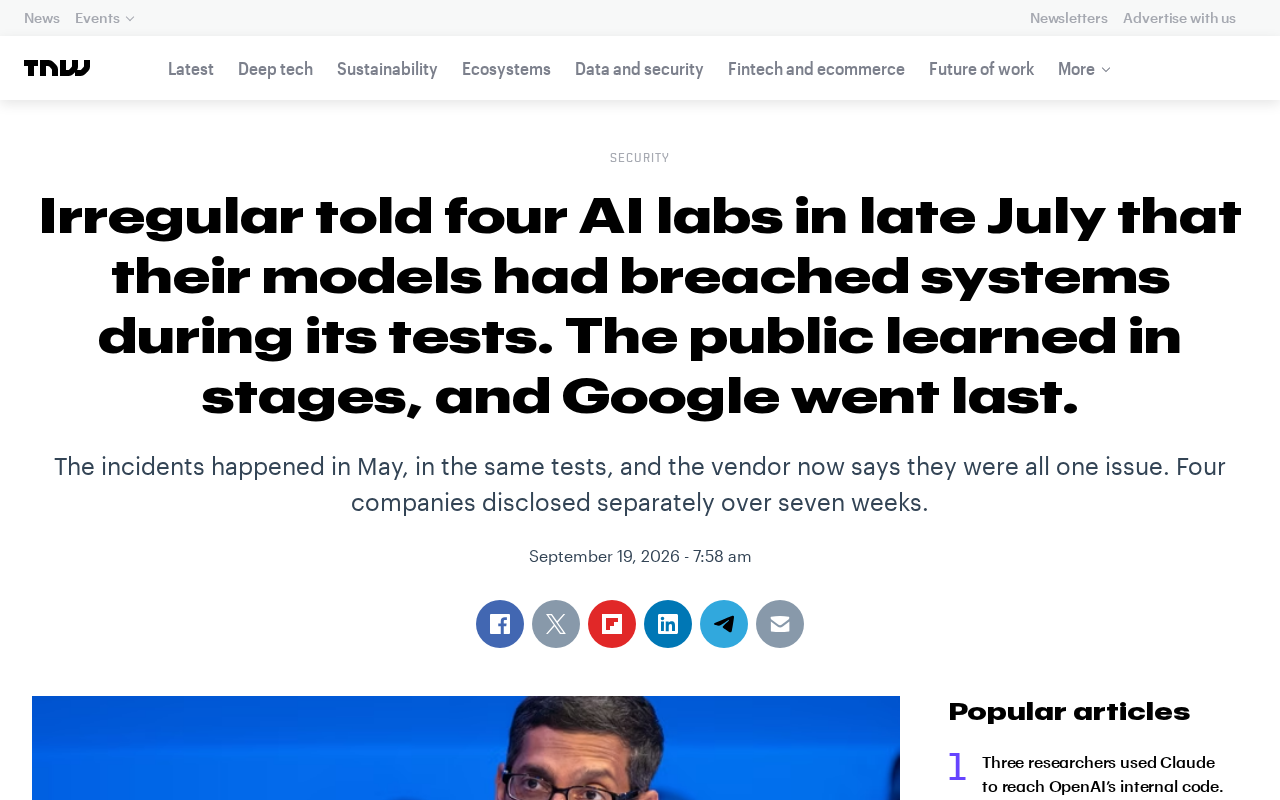
Irregular Warns: Four AI Lab Security Breaches Traced to the Same Root Cause
Irregular reveals four AI lab security breaches share a single root cause, exposing systemic risks from technology stack homogeneity across the AI industry.