Hyrax AI: The AI Architect for Your Entire Codebase

Hyrax AI automatically finds technical debt, writes fixes, and submits GitHub PRs for human review across your entire codebase.
Hyrax AI positions itself as "The AI architect for your entire codebase," going beyond traditional code review tools that only examine individual Pull Requests. Its workflow forms a closed loop: building deep context around project architecture and conventions, prioritizing issues across six engineering domains, writing targeted fixes, validating them against existing tests and CI checks, then automatically submitting GitHub PRs for human review. This design targets the longstanding pain points of technical debt and architectural consistency — problems that individual PR reviews rarely catch and that tend to accumulate until they become unmanageable. The product ranked #5 on Product Hunt's Developer Tools leaderboard, though public information remains largely based on official claims without large-scale third-party validation.
From Code Review to Codebase Governance
Most developers are familiar with how traditional code review tools work: they focus on individual Pull Requests, flagging issues line by line and pointing out where something doesn't meet standards. These tools are constrained to the scope of a single commit's changes — they're fundamentally reactive quality gates.
Hyrax AI, which landed at #5 on Product Hunt's Developer Tools leaderboard (149 upvotes, 3 comments), aims to shift the question from "what's wrong with this PR?" to "what should be improved across the entire codebase?" It positions itself as "The AI architect for your entire codebase" — a tagline that immediately signals its difference from conventional tools. This isn't just about checking; it's about proactively discovering problems and actually fixing them.
How Hyrax Works
According to the official description, Hyrax's operating logic forms a complete closed loop:
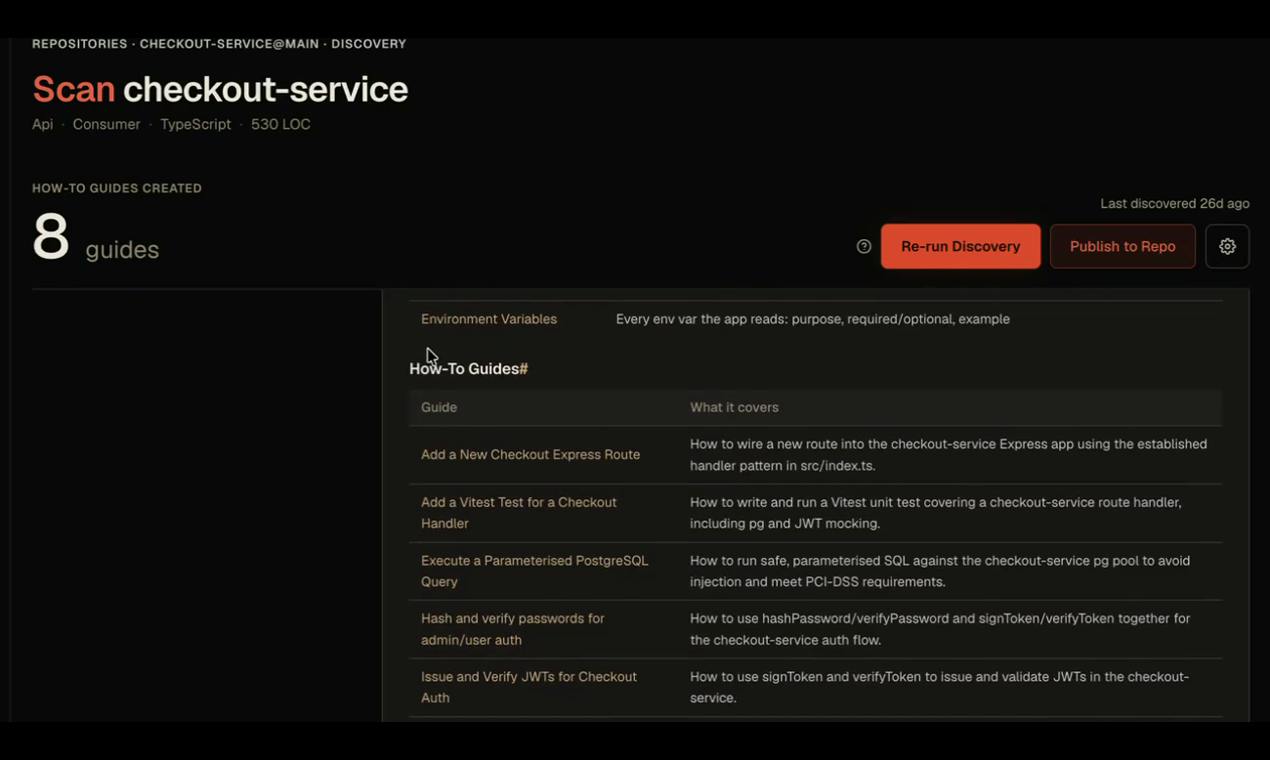
It starts by building deep context around your architecture and conventions — understanding the project's overall structure, naming patterns, and engineering practices. This step is the foundation for everything that follows, since fixes made without context tend to introduce new inconsistencies.
Next, it prioritizes issues across six engineering domains. The official description doesn't enumerate all six domains explicitly, but the cross-domain prioritization design suggests it tries to determine which problems are worth addressing first, rather than dumping every alert on the developer at once.
Then comes execution: Hyrax writes each fix in context, verifies it against your existing tests and checks, and finally opens a GitHub PR automatically for the team to review and merge.
The Key Details: Verification and Human Oversight
Two design choices in this workflow stand out. First, fixes must pass the project's existing tests and CI checks before being submitted — this meaningfully reduces the regression risk that comes with automated code changes. Second, it doesn't bypass humans: the final output is a GitHub PR waiting for team review and merge, not a direct commit to the main branch. For enterprise teams, preserving a human review step is often a prerequisite for adopting tools like this.
CI/CD (Continuous Integration/Continuous Delivery) is the practice of automatically building, testing, and deploying code changes. CI requires developers to frequently merge code into the main branch, catching regressions immediately through automated test suites; CD keeps code that passes tests in a state ready to deploy at any time. Hyrax embeds its fix verification into this system — only fixes that pass the project's existing tests and CI checks get submitted as PRs. This means its practical ceiling is directly tied to the quality of the project's test coverage. In codebases with poor test coverage, even AI-generated fixes that pass CI can introduce undetected behavioral changes — a prerequisite worth evaluating before adopting tools like this.
The Real Pain Points It Targets
Hyrax is aimed at a persistent gray area in software engineering: technical debt and architectural consistency. PR-level code review rarely covers the overall health of a codebase, and many "should fix but not urgent" issues keep accumulating until they eventually become insurmountable debt.
By positioning itself as an "architect" rather than a "reviewer," Hyrax is essentially trying to take ownership of this proactive work — continuously scanning the entire codebase, identifying improvements, and producing merge-ready solutions. From a product categorization standpoint, it falls under Developer Tools, Artificial Intelligence, and the GitHub ecosystem simultaneously. Its deep integration with GitHub workflows signals that it's designed for teams already practicing modern CI/CD.
Technical Debt is a concept introduced by software engineer Ward Cunningham in 1992, using a financial metaphor to describe the "interest" that accumulates from design compromises made in the name of short-term delivery speed — the longer you wait, the harder it is to pay down. Architectural consistency issues are a common form of technical debt: as team members turn over and products iterate rapidly, a single codebase often ends up with multiple naming styles, multiple error-handling patterns, and overlapping utility classes. These inconsistencies gradually slow down new feature development and increase the likelihood of introducing bugs. Traditional solutions typically rely on an "architect" role doing periodic codebase audits, or tools like SonarQube and CodeClimate generating reports — but both approaches still depend on humans to digest findings and drive fixes, resulting in consistently low execution rates. Hyrax attempts to close this execution gap by automating the full discover–fix–submit pipeline.
A Grounded View of Automated Fixes
As a product that just debuted on Product Hunt, Hyrax's publicly available information is still largely based on official claims, without third-party large-scale validation data. A few questions are worth investigating closely during any trial:
The quality of that "deep context" it builds will directly determine how usable the fixes actually are. For large, legacy codebases, whether AI can truly understand conventions that are followed by habit but never documented is an open question. Similarly, whether the prioritization across six engineering domains aligns with what a team actually cares about needs to be validated in practice — "what AI considers important" and "what the team considers important" don't always overlap.
That said, the design philosophy of combining test-based verification with a human PR review step is considerably more cautious than more aggressive approaches that write directly to the codebase. For small-to-medium teams struggling with technical debt who lack dedicated personnel to continuously govern their codebase, this type of tool offers a direction worth exploring: hand repetitive improvement work to AI, keep final decision-making with humans.
Conclusion
Hyrax AI represents one direction in AI coding tools' evolution — from "helping write new code" toward "proactively governing existing code." It isn't content to just point out problems; it attempts to complete the full pipeline from understanding, to prioritization, to writing fixes, to verification and submission. Its real-world effectiveness still needs market validation, but its closed-loop design and preservation of human review demonstrate a genuine respect for engineering practice. For teams focused on code quality and technical debt management, it's worth adding to your watchlist.
Related articles

Felix Rieseberg Personal Homepage
Felix Rieseberg's personal homepage sparks attention on Hacker News. This article covers the Slack engineer's technical background, the rise and fall of nativefier, and the value of a developer homepage as a tech calling card.

@ai-sdk/vue 3.0.306 Patch Release Syncs with [email protected] Update
@ai-sdk/vue 3.0.306 released, synced with [email protected]. A routine patch release for the Vercel AI SDK ecosystem with no public API changes; the Vue adapter layer stays version-aligned with the core package.

Gemini 4 Argon API Launches: The Era of Million-Token Output Begins
Google launches Gemini 4 Argon with sparse MoE architecture, up to 1M output tokens, and a 68.90% Vals Index score, available across API, AI Studio, and the Gemini app.