Iceland's Treble Raises $18M to Bet on Voice Simulation Platform

Iceland's Treble raises $18M to provide acoustic simulation infrastructure for voice AI, wearables, and robotics.
Icelandic tech company Treble has closed an $18M funding round for its voice simulation platform, which uses numerical modeling of physical acoustic environments to help developers generate diverse acoustic test data cheaply and efficiently. The platform serves three customer segments — voice AI model developers, AI wearable manufacturers, and robotics companies — all struggling with the high cost and impracticality of real-world acoustic data collection. The raise signals that in the voice AI boom, foundational toolchain infrastructure holds significant commercial value alongside the models and applications it supports.
Iceland's Treble Raises $18M in Funding
Treble, a tech company headquartered in Iceland, has announced the close of an $18 million funding round. The company specializes in developing a voice simulation platform that serves voice AI model developers, AI wearable device manufacturers, and robotics companies.
As voice AI continues to evolve rapidly, acoustic environment modeling and simulation are becoming an underappreciated yet critically important piece of the puzzle. This funding round reflects sustained investor interest in the underlying infrastructure powering voice technology.
What Treble Does
Treble offers a voice simulation platform whose core value lies in helping developers model and test voice interaction scenarios before real-world deployment. For voice AI models, training and validation typically need to cover a wide range of acoustic environments — from quiet indoor spaces to noisy streets, from near-field microphones to far-field pickup.
Traditionally, collecting this kind of diverse real-world acoustic data is expensive and time-consuming. Simulation platforms address this by generating or replicating acoustic scenarios at a lower cost and with greater control, accelerating model iteration and optimization.
Three Core Customer Segments
Based on publicly available information, Treble's platform currently serves three main customer types:
- Voice AI model developers: Organizations that need to train and evaluate speech recognition, speech synthesis, and related models across diverse acoustic conditions.
- AI wearable device companies: These devices typically operate in complex, mobile environments with extremely demanding requirements for voice pickup and noise cancellation.
- Robotics companies: Robots need to accurately understand human voice commands in real-world settings, and acoustic simulation helps improve the reliability of that interaction.
What all three segments have in common is the challenge of exhaustively covering real-world acoustic environments — a challenge that simulation provides a scalable path to solving.
The technical core of voice simulation is numerical modeling of physical acoustic phenomena, primarily through two approaches: geometry-based Ray Tracing and wave-based Finite Element / Boundary Element Methods (FEM/BEM). Ray Tracing is computationally efficient and well-suited for simulating reflections and reverberation in large spaces, while FEM/BEM offers higher accuracy at a significantly greater computational cost. Modern simulation platforms typically combine both approaches and incorporate Room Impulse Response (RIR) generation — convolving simulated RIRs with clean speech to synthesize audio that sounds as if it were recorded in a given space. This synthetic data can be used directly for data augmentation in speech recognition model training, or as a benchmark for testing hardware microphone array designs. Treble's Icelandic roots are relevant here: Iceland has a strong tradition in acoustic engineering research, and that academic foundation underpins the company's technical capabilities.
Why Voice Simulation Deserves Attention
As voice assistants, AI hardware, and service robots become more widespread, the quality of voice interaction directly determines the user experience. Yet voice models that perform well in lab settings often fail to transfer cleanly to complex real-world scenarios. Noise, reverberation, overlapping speakers, and variation in device microphones can all significantly degrade recognition accuracy.
Voice simulation platforms are designed to bridge exactly this gap. By modeling physical acoustic environments, developers can generate large volumes of realistic test data in virtual settings — reducing data collection costs while making robustness validation far more systematic.
For emerging hardware categories like AI wearables and robots, this capability is especially critical. Their use cases are highly varied and difficult to predict, making manual data collection practically infeasible.
Reverberation and noise are the two primary challenges facing voice AI in real-world deployment. Reverberation is caused by sound reflecting multiple times off surfaces in enclosed spaces and is measured using RT60 (the time for sound pressure level to decay by 60 dB). It causes temporal blurring of speech signals, significantly raising the Word Error Rate (WER) of speech recognition models — a problem especially acute in far-field voice interaction scenarios like smart speakers and conferencing systems. Traditional solutions rely on microphone array beamforming and speech enhancement algorithms, but these algorithms themselves need to be validated across a wide range of real acoustic conditions. Simulation platforms allow developers to parametrically control variables such as room dimensions, material absorption coefficients, source position, and background noise type — systematically generating test sets that cover extreme edge cases in ways that would be nearly impossible with purely real-world recordings.
The Industry Signal Behind the Funding
An $18 million funding round is a meaningful sum for a specialized technology company based in Iceland. It signals that amid the voice AI boom, the underlying toolchain that enables these technologies to reach production carries real commercial value — not just the end applications and the large models themselves.
The lesson from the large language model era is clear: data quality and testing infrastructure are often the invisible thresholds that determine whether a product succeeds or fails. The market position Treble has chosen is a classic "picks and shovels" play — not serving consumers directly, but providing essential development tools to the entire voice AI ecosystem.
As AI hardware continues to diversify — from smart earbuds to humanoid robots — demand for high-quality voice simulation is expected to keep growing. This creates long-term headroom for companies like Treble that are focused on acoustic simulation.
Summary
Treble's $18 million raise is a noteworthy development in the voice AI infrastructure space. While publicly disclosed details are limited, the fact that its platform spans voice models, wearables, and robotics suggests that voice simulation — as a general-purpose foundational capability — is increasingly in demand across AI teams. As voice interaction continues to penetrate a wider range of devices, this niche segment is likely to attract growing capital and technical investment.
Related articles
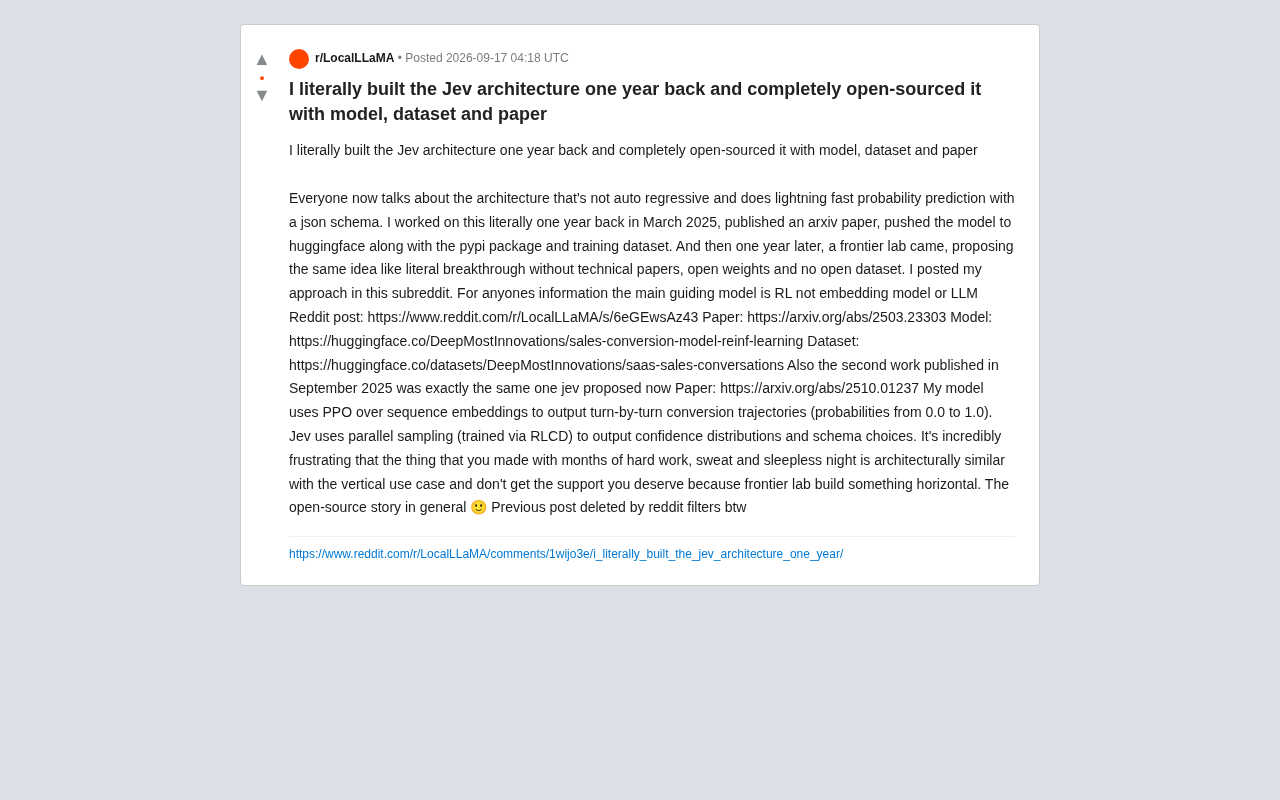
The Open Source Dilemma: A Non-Autoregressive Architecture Pioneer Overshadowed by Frontier Labs
An indie developer claims a frontier lab repackaged his year-old open-source non-autoregressive RL architecture as a breakthrough. We compare PPO sequence embeddings vs. RLCD parallel sampling and examine open source attribution gaps.
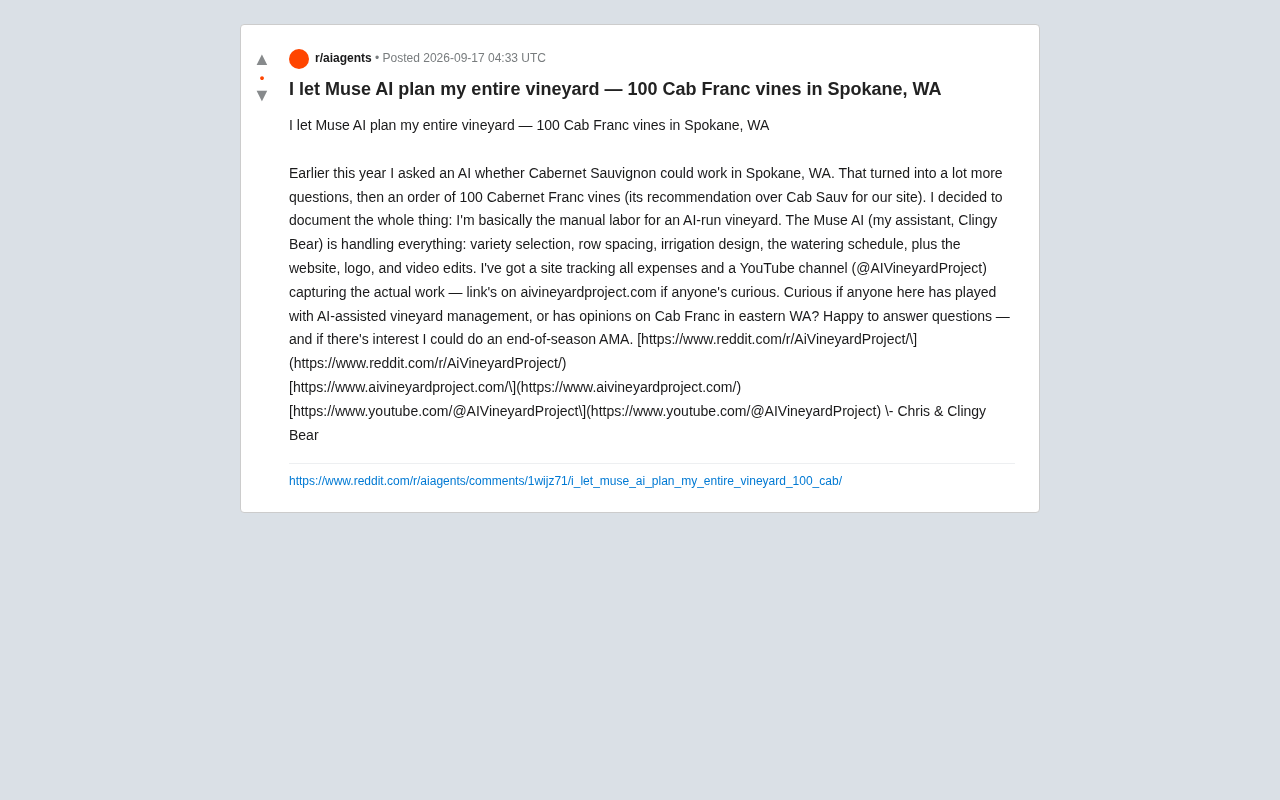
AI Plans an Entire Vineyard: A Real-World Experiment with 100 Grapevines
A Spokane hobbyist let Muse AI plan his entire vineyard — variety, spacing, irrigation, even the logo. He planted 100 Cabernet Franc vines and is documenting everything publicly.
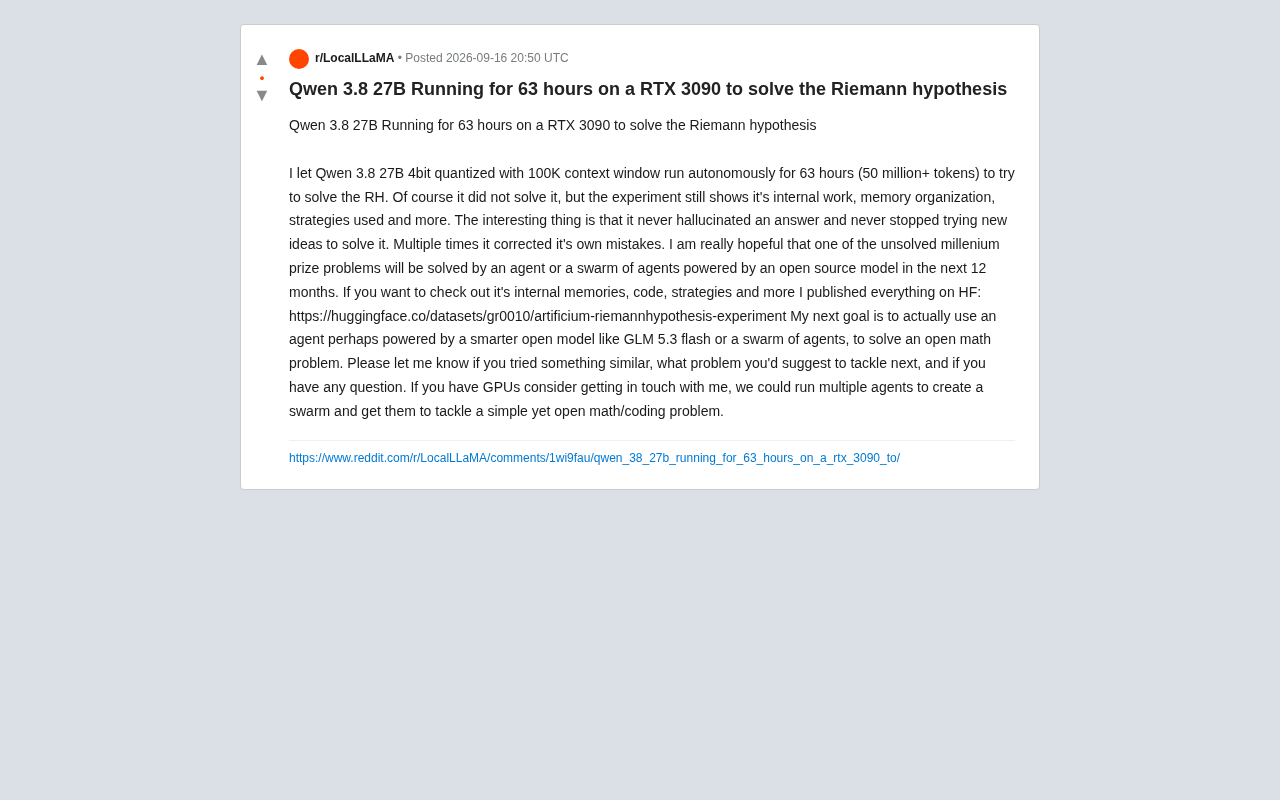
Running Qwen for 63 Hours to Tackle the Riemann Hypothesis: An Open-Source Model Autonomous Reasoning Experiment
A developer ran Qwen 3.8 27B autonomously on an RTX 3090 for 63 hours, generating 50M tokens in an attempt to prove the Riemann Hypothesis. The findings reveal open-source LLM reasoning stability.