If The Office Premiered in 2026, Would It Survive Six Episodes?
Streaming logic that decides renewals based on immediate ROI is killing creative works that need time to grow.
Using the history of The Office season one nearly being canceled, the article discusses the current tendency of streaming platforms to decide renewals based on immediate data feedback and return on investment. In 2004, NBC executive Kevin Reilly overcame opposition and insisted on renewal, which gave the show the chance to become a classic. Today platforms have granular data such as completion rates and first-week watch time, but when these tools are treated as the sole basis for decisions, they systematically eliminate slow-burn works. The author argues that creativity sometimes needs humans to make decisions based on belief rather than data, and that applying efficiency logic to narrative art will shrink the entire creative ecosystem's room for error.
When a Classic Meets the Logic of Immediate Returns
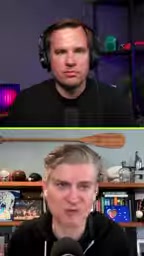
Imagine that the first six episodes of The Office season one aired and received the same lukewarm reviews they got back then. If the show were placed in today's streaming environment, it would almost certainly not be allowed to survive—it would likely be canceled after six episodes. Yet it was precisely this show, which nearly died young, that went on to become one of the most beloved and successful sitcoms in television history. This was the core discussion in a recent episode of Vergecast: we are killing the room for creative evolution with "tech-bro-style efficiency."
This hypothetical is not alarmist. It points to a structural contradiction: content platforms increasingly rely on immediate data feedback to make renewal decisions, while creative works—especially comedies—often need time to find their rhythm and their audience.
The Office was adapted from the 2001 British series of the same name, developed by Greg Daniels and starring Steve Carell. It premiered on NBC in March 2005, with a first season of only six episodes and about 11 million viewers for its debut, but critical reception was cold, with reviewers saying it failed to escape the shadow of the British version and that its tone was too cringey. NBC at one point considered canceling the show, but ultimately renewed it for a second season, expanded to 22 episodes. After that, the show gradually adjusted its style, strengthened character relationships and romantic storylines, and its ratings and reputation continued to climb. It ran for nine seasons and 201 episodes, becoming NBC's flagship comedy and winning multiple Emmy Awards.
Creative Legs Cut Off by "ROI Anxiety"
The point made on the show was incisive: we no longer give ideas enough tolerance and freedom to evolve. Many projects are terminated just as they get started, before they have produced any "immediate return," for a blunt and simple reason—the return on investment does not meet the bar. This mindset was directly called "a curse on the whole concept of creativity."

Creativity is not a linear growth curve. The first few episodes of a series may seem mediocre because the characters have not yet taken hold and the tone is still being figured out, but that is precisely part of the creative process. Using the logic of measuring retention for a SaaS product to evaluate a sitcom is essentially forcing two completely different things into the same mold.
The Man Who Said "I Don't Care" Later Rewrote History
The show specifically mentioned one key figure: Kevin Reilly. In 2004, at NBC, he overcame opposition and insisted on renewing The Office, even though the reviews at the time were not good. His attitude can be summed up in one sentence: "I don't care, I believe in it, I think it's good, and I'm going to keep it on the air."
This was not blind gambling. Reilly's judgment was based on trust in the creative team and intuition about the work's potential. The show also acknowledged that this kind of persistence "does not necessarily succeed—it might still fail in the end." But without decision-makers willing to bear uncertainty, those legendary series that ultimately reach Mount Rushmore status would be filtered out by data reports from the very beginning.
Kevin Reilly is a veteran television executive who served as president of NBC Entertainment around 2004, responsible for prime-time programming. He led the renewal of The Office despite poor reviews at the time, and supported shows such as 30 Rock and Parks and Recreation. Reilly later became chairman of Fox Entertainment, where he championed shows including Glee, and afterward ran TNT and TBS. In interviews he has repeatedly emphasized that data can only assist judgment and cannot replace trust in the creative team. His career is known for a willingness to give creators space and to value long-term value rather than first-week data.
The Double-Edged Sword of Algorithmic Recommendations and Data Dashboards
Today's platforms have far more granular data capabilities than in 2004: completion rates, first-week watch time, social media discussion heat—each can generate a report within hours. These tools themselves are not wrong; the problem is that they have been treated as the sole basis for decisions.
The criticism on the show points to a culture: equating "no immediate return" with "not worth continuing to invest in." This logic may hold in the tech industry—a feature whose conversion rate misses the target after launch should be taken down—but applied to narrative art, it systematically eliminates slow-burn works. Word of mouth needs time to ferment, a character's appeal needs time to build, and canceling after six episodes amounts to turning over the soil to check before the seed has sprouted.

Instant data metrics commonly used by streaming platforms include completion rate (how many viewers watch an entire episode), first-week watch time, viewing completion curves, social media discussion volume, and user retention. These metrics can generate reports within hours of launch, helping platforms quickly assess content performance. However, they favor quantifiable, short-cycle behavior and struggle to measure a series' cultural influence, the speed at which word of mouth builds, or long-term IP value. Therefore, deciding renewal solely on first-week data easily ignores the growth curve of slow-burn works and easily leads creators to sacrifice narrative depth to cater to metrics.
In the Creative Room, You Need a Person
The conclusion the show offered was plain but powerful: creativity sometimes needs a human being sitting in the room making a decision based on belief rather than data. This is not a rejection of data, but an acknowledgment that data cannot cover every dimension of judgment. A series' cultural value, the team's execution potential, the lag in audience taste—these are hard to reduce to numbers on a dashboard.
The reason The Office's story keeps being brought up is precisely that it is a counterexample—a work that by efficiency logic should have been eliminated but ultimately proved itself. If today's decision-making system cannot accommodate the next The Office, what is lost is not just one show, but the entire creative ecosystem's room for error.
In an environment of excess content supply and extremely scarce attention, it is understandable that platforms pursue efficiency. But where the boundary of efficiency lies deserves serious thought from every content decision-maker. After all, the greatest works in history are rarely the ones that delivered beautiful numbers in the first week.
One-line Summary
Streaming logic that decides renewals based on immediate ROI is killing creative works that need time to grow.
Paragraph Summary
Using the history of The Office season one nearly being canceled, the article discusses the current tendency of streaming platforms to decide renewals based on immediate data feedback and return on investment. In 2004, NBC executive Kevin Reilly overcame opposition and insisted on renewal, which gave the show the chance to become a classic. Today platforms have granular data such as completion rates and first-week watch time, but when these tools are treated as the sole basis for decisions, they systematically eliminate slow-burn works. The author argues that creativity sometimes needs humans to make decisions based on belief rather than data, and that applying efficiency logic to narrative art will shrink the entire creative ecosystem's room for error.
Related articles
Moral Dilemmas at 30,000 Feet: Can Flying Make Us Better People?
From the moral landscape of first class versus economy, we explore how the flying environment mirrors everyday moral dilemmas—and whether mastering coexistence in flight can make us better moral people.

Muse 2 Pro vs DJI Pocket 4P: Image Quality Nearly Indistinguishable, But You Can't Buy It in the US
Muse 2 Pro vs DJI Pocket 4P pocket gimbal camera comparison: 10bit X-Log 3, handle rotation design, tripod mount differences. Image quality is nearly indistinguishable, but Muse 2 Pro isn't sold in the US—the key barrier for buyers.

How to Detect Timestomping? A DFIR Interviewer Explains Core Forensic Methods
DFIR interviewer Jessica Hyde explains how to detect timestomping: from MFT records, Shell Bags, and event logs to EXIF comparison, with answer differences across junior to senior engineers and practical forensic methods.