iFlytek T30 Lite Learning Tablet Deep Review: Does AI-Powered Weakness Detection Actually Work?

iFlytek T30 Lite uses dual AI models to pinpoint student weaknesses and deliver animated concept explanations.
The iFlytek T30 Lite learning tablet combines Spark and DeepSeek large models to offer precision weakness diagnosis, multimodal animated explanations, and intelligent question recommendations. This review uses an 8th-grade atmospheric pressure problem as a real-world test case to objectively evaluate the tablet's AI tutoring effectiveness, hardware specs, and content ecosystem.
The Home Tutoring Dilemma, Illustrated by One Physics Problem
The pressure unit in 8th-grade science is often students' first major stumbling block. Take a classic problem about a straw drawing water and how air pressure changes from point M to point N — students frequently guess that "lower altitude means higher pressure" and get it wrong.
This kind of mistake isn't random. Atmospheric pressure is a quintessentially counter-intuitive concept in middle school physics. Our senses can't directly perceive the weight of air, which leads to widespread misconceptions like "air pressure increases with altitude" or "a straw sucks water up by suction rather than pressure difference." Cognitive science research shows that students arrive in the classroom with pre-scientific concepts built from everyday experience — concepts that often contradict physical principles and are remarkably stubborn. Simply telling students the correct answer doesn't fix them; students need to actively reconstruct their understanding through experimental observation and logical reasoning. This explains why parents who know the right answer still find themselves saying "no matter how I explain it, my kid just doesn't get it" — the problem isn't the answer itself, but the child's lack of systematic understanding of experimental principles.
This scenario represents a universal pain point in home education: parents want to help, but lack the pedagogical methods and analytical skills to break concepts down effectively. Rather than casting parents as "substitute teachers," the better approach is finding an AI learning companion that genuinely understands teaching logic. The iFlytek AI Learning Tablet T30 Lite is designed precisely for this need.
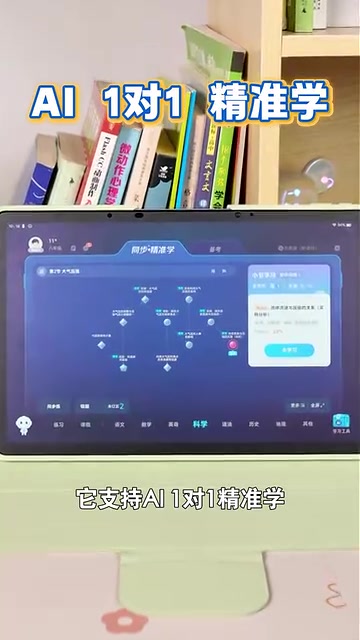
AI One-on-One Precision Tutoring: Find Weaknesses First, Then Target Them
The T30 Lite runs dual AI large models — Spark and DeepSeek. This architecture reflects the current trend of "multi-model collaboration" in AI hardware products. The Spark model deeply integrates iFlytek's strengths in speech recognition and Chinese educational corpus, with targeted optimizations for Chinese language and oral assessment scenarios. DeepSeek, on the other hand, excels in reasoning capability, performing particularly well in logic-heavy subjects like math and physics. The dual-model architecture matters because it dynamically routes to the most appropriate model based on the type of question, maintaining high answer quality and explanation accuracy across different subjects.
The T30 Lite's core selling point is precision weakness detection. The biggest inefficiency in traditional tutoring is indiscriminate drilling — children spend enormous time on concepts they've already mastered while their real weak spots are never identified.
Precise Diagnosis: Seeing the Problem Clearly
Taking the pressure problem as an example: after the child completes a "precision weakness detection" assessment, the system delivers specific feedback — not only does the student struggle with questions about "estimation experiments for atmospheric pressure," but their overall grasp of related concepts is below par. Weaknesses become immediately visible, and the tutoring direction follows naturally.
This reflects a broader shift in AI education products from "drilling through massive question banks" to "data-driven learning." The application of Knowledge Graphs in education combines Cognitive Diagnostic Assessment theory with graph database technology. The system breaks subject knowledge into an interconnected network of nodes, maps each question to one or more nodes, and updates the probability of mastery for each node with every student response. Unlike simple right/wrong tallying, this approach can detect surface-level mastery — where a student gets the right answer without understanding the principle — and identify where dependency chains between knowledge points have broken down. Leading algorithms include the DINA model and IRT (Item Response Theory), which continuously calibrate each student's personalized knowledge state using accumulated answer data. This transforms the vague notion of "not doing well" into quantifiable, locatable knowledge nodes, giving both parents and students a clear picture of where to focus their efforts.

Multimodal AI Explanations: Animations Turn Abstract Concepts Concrete
Identifying the problem is just the first step — being able to explain it clearly is what really matters. The T30 Lite introduces multimodal AI explanations at this stage, using animated demonstrations paired with narration to visualize abstract physics concepts.
One Minute of Animation Beats Thirty Minutes of Dry Explanation
The effectiveness of multimodal learning has a solid cognitive science foundation. Richard Mayer's Multimedia Learning Theory states that humans process information through two parallel channels — visual and auditory. When animation (visual) and narration (auditory) are presented together, they reduce cognitive load and improve memory retention by approximately 89% compared to text-only descriptions. For abstract physics concepts like pressure, animation can make invisible changes in air pressure visible as forces and displacements, helping students build an accurate mental model.
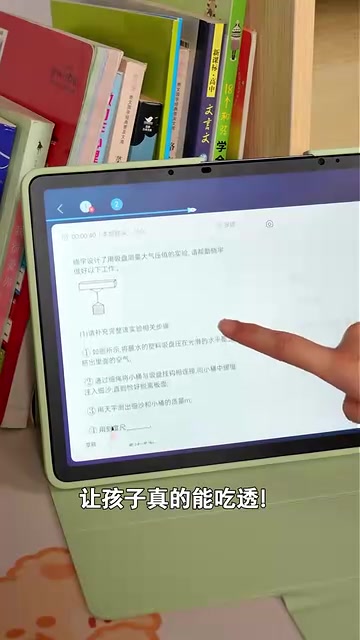
When explaining a pressure problem, the learning tablet doesn't just give the answer — it breaks down the specific sources of experimental error, like the often-overlooked detail that "friction exists between the syringe plunger and the cylinder wall." By animating the process of measuring atmospheric pressure, children gain an intuitive understanding of the experimental principle and its conclusions, rather than memorizing formulas. What's particularly notable is that the tablet guides children to think actively while watching micro-lessons rather than passively receiving information — this Socratic teaching style meaningfully deepens comprehension.
Applying Knowledge: Truly Mastering the Concept
After the explanation, the system pushes similar and extension questions to help children consolidate and transfer their knowledge. In practice, the child's approach to pressure problems noticeably changed: instead of mechanically applying formulas, they now check the experimental setup first, then calculate atmospheric pressure from the spring scale reading. This shift from "plugging into formulas" to "understanding the logic" is the core value of conceptual learning.
Hardware and Content Ecosystem: Large Eye-Friendly Screen with Ongoing Updates
As a learning tablet designed for students, the T30 Lite features hardware that reflects its purpose. The 12.5-inch eye-care display paired with 8GB of RAM provides a comfortable viewing experience and smooth performance during extended study sessions. The larger screen size is especially well-suited for watching animated explanations and working through problems, reducing the fatigue from constantly scrolling on a small screen.
Continuously Updated Question Bank: Better Long-Term Value
The long-term value of an AI learning tablet depends heavily on whether its content ecosystem keeps improving. The T30 Lite emphasizes continuous question bank updates, with resources covering the full learning journey from primary school through the gaokao. For families, a single purchase provides long-lasting utility without worrying about content becoming outdated — making the overall value proposition reasonably strong.
A Realistic Assessment: The Limits of Tools and the Nature of Education
A note worth adding: the material in this article originates from brand marketing content, and real-world results will vary. Parents should make purchasing decisions based on their child's actual learning habits.
AI learning tablets should be positioned as assistive tools — a conclusion well-supported by educational technology research. A central debate in the field has long been whether technology "replaces" teachers and parents or "augments" human educational capacity. Current mainstream research leans toward the augmentation view: AI excels at high-frequency, rule-based tasks like error diagnosis, personalized question recommendations, and concept explanation, while emotional support, motivation, and values guidance still depend heavily on human relationships. A report from Stanford's HAI institute notes that AI educational tools work best when they free teachers and parents from repetitive tasks, allowing them to invest more energy in high-value emotional support and higher-order thinking guidance.
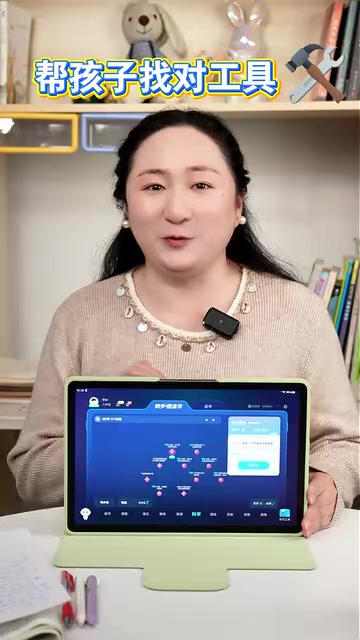
As one insightful perspective puts it: "Home education isn't about parents becoming teachers — it's about helping children find the right tools." The value of an AI learning tablet lies in freeing parents from the anxiety of "not being able to explain it," using professional methods to achieve precision — reducing time wasted on ineffective drilling and concentrating effort on genuine weak points.
Who Should Buy It — and Who Shouldn't
The iFlytek T30 Lite represents a defining direction for current AI education hardware: using large models as the foundation, and building a complete loop from "identifying problems" to "solving problems" through precision diagnosis, multimodal explanations, and intelligent question recommendations.
For families where children have hit a wall in conceptual subjects like science and physics, and where parental tutoring capacity is limited, this kind of tool genuinely offers a viable "targeted treatment" path. But a tool is still a tool — ultimately, how much students benefit depends on how well they engage and work with it.
Key Takeaways
Related articles
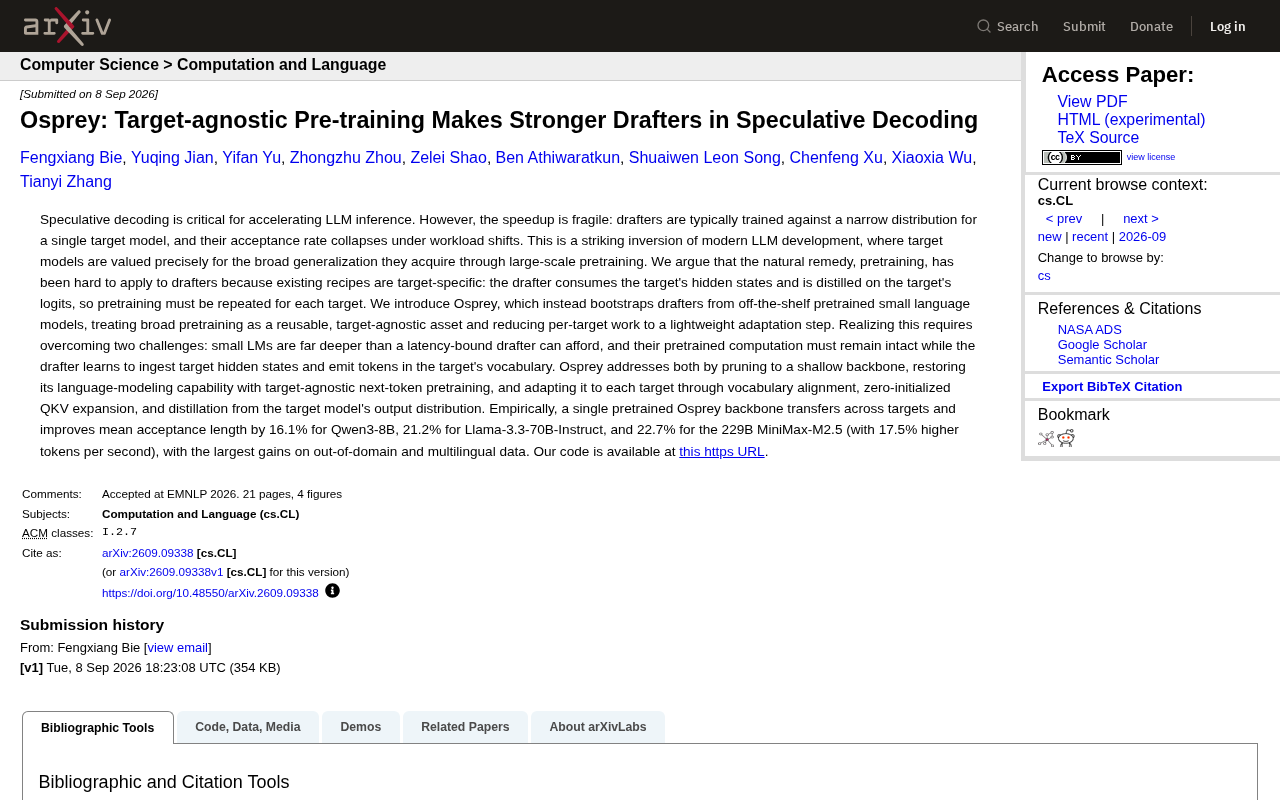
Osprey: General-Purpose Pretraining Makes Speculative Decoding Draft Models More Efficient
Osprey treats pretraining as a reusable, target-agnostic asset. Through pruning and lightweight adaptation, a single draft model transfers across multiple LLMs, boosting mean acceptance length by 16%-22%.
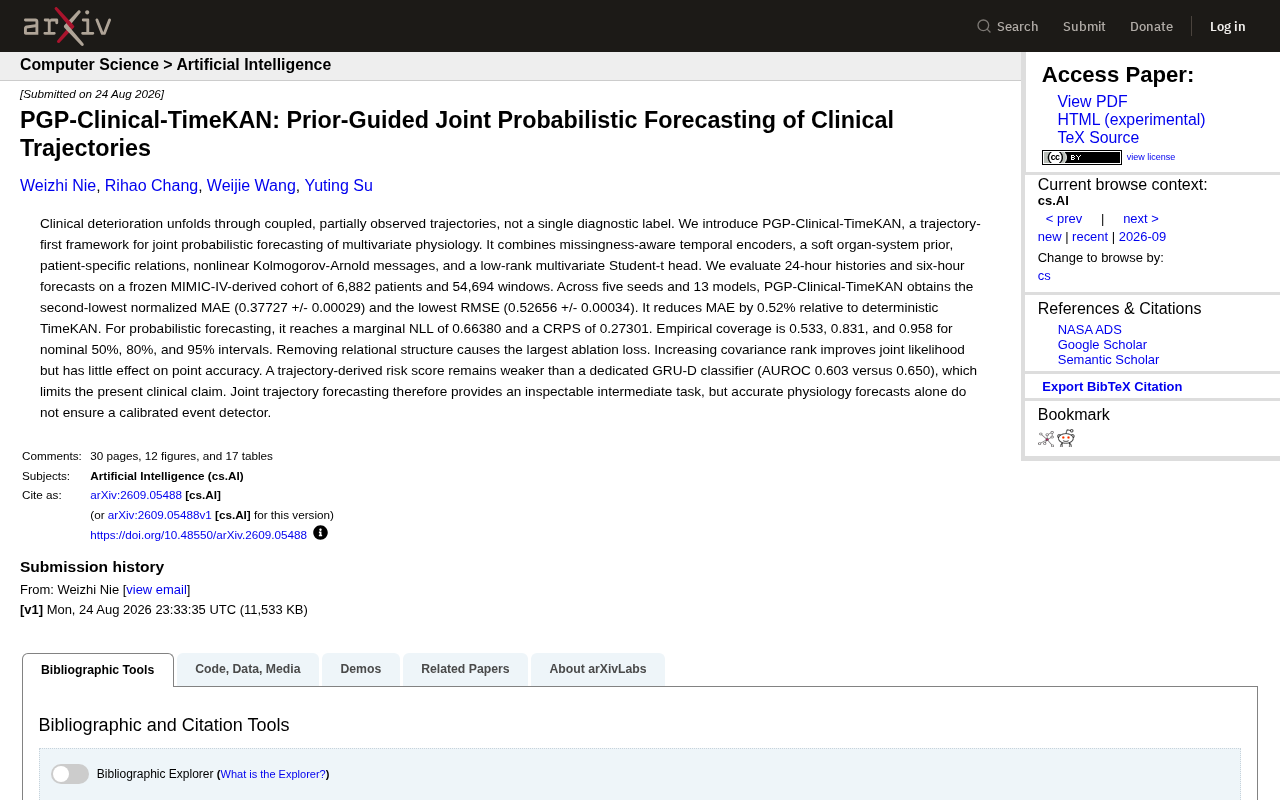
PGP-Clinical-TimeKAN: A Detailed Guide to the Multivariate Physiological Indicator Joint Prediction Framework
An in-depth analysis of the PGP-Clinical-TimeKAN framework for joint probabilistic prediction of multivariate physiological indicators, covering trajectory-first paradigm, KAN message passing, MIMIC-IV validation, and ablation studies.
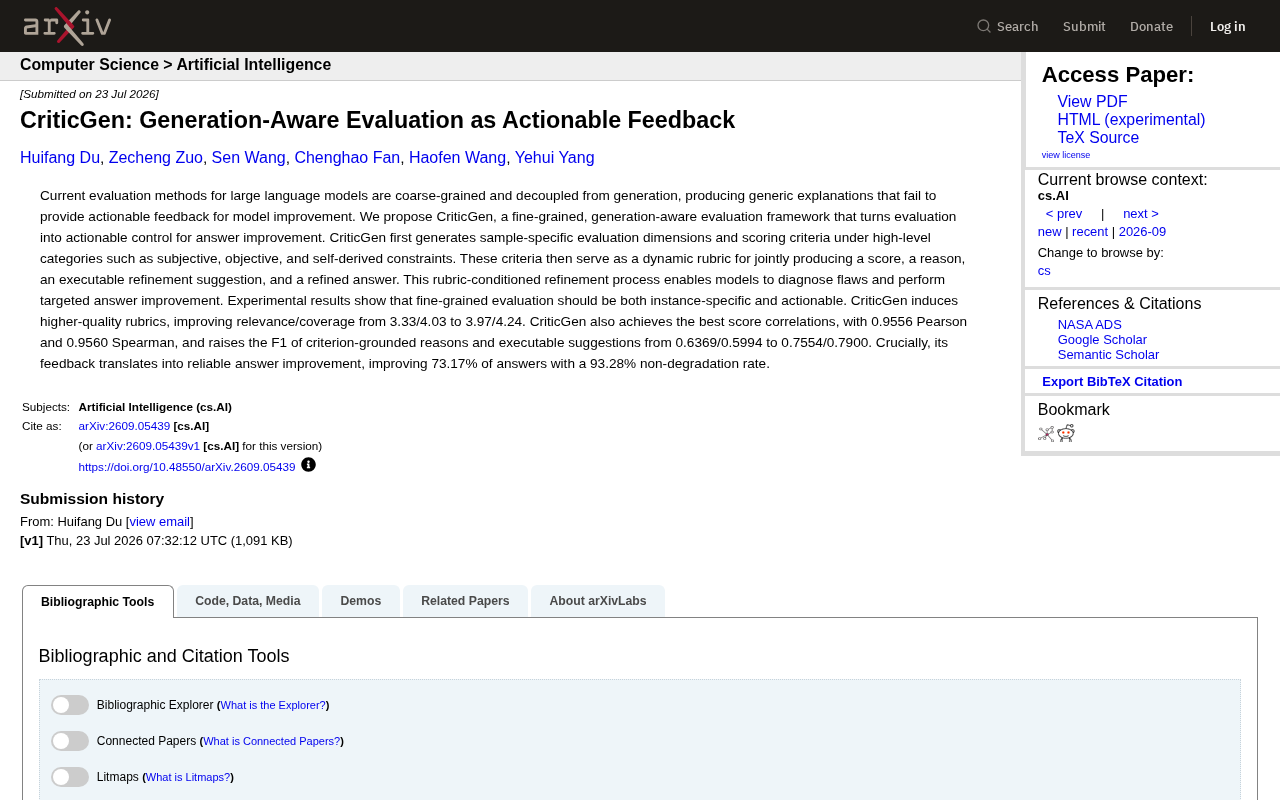
CriticGen: A New Framework That Transforms AI Evaluation into Actionable Improvement Feedback
CriticGen proposes a generation-aware evaluation framework that transforms AI assessment from passive scoring to an active optimization loop, achieving 73.17% answer improvement and 93.28% non-degradation rate.