In-Depth Analysis of 'Hostile Planet': Animal Survival Strategies Under Climate Change

An analysis of how climate change reshapes wildlife survival in grasslands and jungles, as shown in 'Hostile Planet'.
This article provides a deep analysis of National Geographic's documentary 'Hostile Planet,' examining how animals in grassland and jungle ecosystems face unprecedented survival challenges due to climate change. From wolf-bison dynamics on the frozen Great Plains to cordyceps-infected ants in tropical jungles, the documentary reveals how rising temperatures, unpredictable rainfall, and expanding wildfires push highly specialized species toward their limits.
The National Geographic documentary Hostile Planet takes the grassland and jungle ecosystems as its entry point, using stunning cinematography to record the survival struggles of animals in Earth's most vulnerable environments. This work is not only a visual feast but also a serious report on how climate change is reshaping the fate of wildlife. This article summarizes its core content and explores the ecological insights behind it.
Grassland Ecology: A Seemingly Gentle Yet Brutal Battlefield
Grasslands cover one-quarter of Earth's land surface, supporting the planet's largest animal communities and most massive herds. Grassland ecosystems (including tropical savannas, temperate grasslands, and alpine meadows) are the second-largest terrestrial ecosystem after forests. They serve not only as habitats for large herbivores but also perform crucial carbon sequestration functions—global grassland soils store approximately 34% of the terrestrial ecosystem's carbon reserves. Unlike forests, grassland carbon is primarily stored underground in root systems and soil organic matter, enabling rapid recovery after fires. However, changes in precipitation patterns caused by climate change are threatening the stability of this ecosystem, with many regions experiencing desertification or shrub encroachment.
This seemingly bountiful land actually conceals deadly dangers. The documentary opens with a startling statistic: On the African savanna, one-third of all young don't survive their first year.
The fate of grassland life depends entirely on the growth of grass beneath their feet. And the flourishing or withering of grass depends on increasingly unpredictable weather cycles—floods, famine, bitter cold, and wildfires taking turns. When climate becomes unpredictable, the grasslands drag their inhabitants into a crucible.
The fate of bison herds on the North American Great Plains is particularly poignant. The American bison (Bison bison) was once the most iconic species of the North American continent, with historically 60 million bison thundering across these plains. In the latter half of the 19th century, due to commercial hunting, railroad construction fragmenting habitats, and the U.S. government's policy-driven slaughter aimed at undermining the survival foundation of indigenous peoples, bison numbers plummeted to just over one thousand. After more than a century of conservation efforts, the total North American bison population has recovered to approximately 500,000, but the vast majority are commercial herds raised on private ranches. Truly wild populations with free-ranging migratory capacity number only about 30,000, distributed across a few protected areas including Yellowstone National Park. Bison remain rare today, and the mega herds of the past are gone forever. This detail reminds us that human activity has long since profoundly altered the original face of grassland ecology.
The Double Stranglehold of Harsh Winters and Wolf Packs
In the deep winter of the North American Great Plains, with temperatures dropping to minus 40 degrees and record snowfall, bison must dig through accumulated snow to find food—but all they can eat is dead grass with the nutritional value of cardboard. Even consuming 23 pounds per day isn't enough to sustain survival, and hunger gradually erodes the herd.
At this point, the world's largest wolf packs (up to 25 individuals) become a deadly threat. Wolves (Canis lupus) are highly social apex predators whose hunting success depends on complex group cooperation. A typical wolf pack consists of 6-10 individuals led by a breeding pair; the 25-member super pack mentioned in the documentary is extremely rare, usually occurring in areas with abundant prey. Wolf pack hunting strategy follows the "test-chase-isolate" pattern: first approaching the prey herd to assess individual health conditions and identify the old, weak, sick, or injured; then wearing down prey stamina through long-distance pursuit; and finally isolating the target from the group. Research shows wolf pack hunting success rates are typically only 10-20%.
The documentary precisely identifies the wolf pack's hunting logic: bison can protect themselves through sheer strength as long as they hold their ground, but wolves create panic, forcing bison to run toward trees—which break up the herd formation and expose the vulnerable. A separated calf becomes easy prey. This narrative vividly demonstrates the tension between collective defense and individual vulnerability.
Drought and Wildfire: The Ultimate Survival Test for Grassland Animals
As the dry season deepens, grassland life enters its most difficult phase. Grass loses its nutrition, and large animals like elephants must walk hundreds of miles daily to find food, which in turn leads them into lion hunting territories.
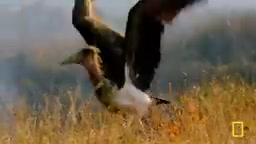
One extreme consequence of drought is wildfire. The documentary provides stunning data: The area burned by wildfire in Africa each year equals half the size of the United States, with flames sweeping across plains at 40 miles per hour and temperatures reaching 800 degrees. Approximately 350-400 million hectares of African savanna burn annually, accounting for about 70% of global biomass burning. Notably, wildfire in African grassland ecosystems is not purely destructive—it is a natural disturbance mechanism maintained for millions of years. Regular burning suppresses woody plant invasion, promotes herbaceous plant sprouting, releases soil nutrients, and maintains open landscapes. However, climate change is altering the natural rhythm of fires: extended dry seasons lead to increased fuel accumulation, and both fire intensity and frequency are rising. Additionally, approximately 95% of African grassland fires are human-caused, disrupting the long-evolved coexistence balance between the ecosystem and fire.
As the climate warms, wildfire extent will expand further. Interestingly, fires also bring opportunities—rollers and bee-eaters prey on fleeing insects, while storks known as "undertaker birds" clean up the aftermath. The grass itself, with roots hidden deep underground untouched by flames, waits quietly for the rains to return.
Water Source Competition and "War" in Animal Societies
The sharpest conflict during drought manifests in water source competition. The documentary records a scene where two baboon troops erupt into conflict over a waterhole, offering an observation rich with human social metaphor: "This is how wars start." Here, the best survival strategy is to form a "super troop" larger than the opponent. The winners seize females from the losing side to strengthen their numbers, while the losers grow ever weaker.
Even more heart-wrenching, as humans extract more water for irrigation, animal living space is further compressed. Hippos crowd into the only remaining waterhole, and young elephants die during famine because their mothers cannot produce enough milk. These images starkly reveal the compounding effects of climate change and human activity.
Jungle Ecology: The Most Species-Rich Yet Most Intensely Competitive "War Zone"
The other half of the documentary focuses on the jungle—an ecosystem with the world's highest species diversity, yet described as a "wildlife war zone" rather than an "animal Eden." When rainfall, the lifeblood of the jungle, becomes increasingly unpredictable, the competition for survival intensifies.
The core contradiction of jungle survival lies in the precise contest for resources. The vertical structure of tropical rainforests is typically divided into four layers: the emergent layer (giant trees exceeding 45 meters), the canopy layer (25-35 meters, forming a continuous "green roof"), the understory layer (shade-tolerant species at 15-25 meters), and the forest floor layer (shrubs, herbs, and saplings from ground level to 15 meters). The canopy intercepts approximately 95-98% of incoming sunlight; on the forest floor, only 2% of sunlight penetrates. This extreme light competition has driven astonishing evolutionary innovation: epiphytes grow directly on high branches, lianas use host tree structures to climb to the canopy, and a single hectare of tropical rainforest may contain over 300 tree species.
What limits life on the ground is not water but light—only one out of every 100,000 seeds survives. Plants fight back against herbivores with thorns and toxins, and poisoned animals must risk being hunted by leopards, jaguars, and pumas to seek an unexpected antidote: mineral and salt-rich clay to neutralize the toxins.
Mineral licks are critical ecological nodes in tropical rainforests. Research in Peru and Ecuador shows that macaws, monkeys, tapirs, and deer regularly consume clay rich in kaolin and montmorillonite, serving three primary functions: first, the minerals in clay can adsorb and neutralize alkaloid toxins from plant secondary metabolites; second, they supplement essential minerals like sodium and calcium that are extremely scarce in rainforest fruits and leaves; third, the physical adsorption properties of clay help alleviate digestive tract ailments. During the dry season, mineral lick exposure is greatest and animal demand highest, but these are simultaneously the best ambush points for predators—forming a classic "risk-reward trade-off" ecology case study. The longer the dry season, the more frequently they must risk visiting these sites.
The Evolutionary Advantage and Survival Fragility of Super-Specialized Species
The extreme specialization of jungle animals is a double-edged sword. Orangutans need years to build complex "mental maps" remembering when and where food can be found; hummingbirds possess Earth's fastest metabolism, with some species needing to visit 2,000 flowers daily, potentially dying from just two hours without food.
Hummingbirds (family Trochilidae, approximately 340 species) possess the most extreme metabolic characteristics among vertebrates: resting heart rate can reach 500-600 beats per minute, rising to 1,200 during flight; wing beat frequency ranges from 12-80 beats per second. To maintain such a high metabolic rate, hummingbirds must consume nectar equivalent to 1.5-3 times their body weight daily, supplemented by substantial insect protein. Due to extremely low energy reserves, most hummingbirds enter "torpor" at night, dropping their heart rate to 50 beats per minute, body temperature to around 18°C, with metabolic rate at just 1/15th of normal levels—thereby avoiding death from energy depletion during fasting periods. This extreme specialization makes hummingbirds highly sensitive to changes in flowering periods—climate change-induced earlier or shortened flowering may cause "phenological mismatch," threatening their survival.
The documentary also reveals the terrifying mechanism of cordyceps, a parasitic fungus: it invades ant muscles, manipulates the brain with chemical compounds, forces the ant to climb to a location with suitable humidity, bite down on a leaf and die, then grows from the corpse to release spores that infect more ants. The genus Cordyceps (now largely reclassified under Ophiocordyceps) is a group of obligate insect-parasitic fungi, with the most well-studied zombie ant fungus having a fossil record dating back 48 million years. Research in 2011 revealed that the fungal hyphae don't directly invade the brain after penetrating the ant's exoskeleton, but instead grow between muscle fibers and secrete specific neuroactive compounds to hijack the ant's motor control system. Infected ants climb at solar noon to a height of approximately 25 centimeters above ground, beneath a leaf at about 25°C and 95% humidity, and bite down on the leaf vein to die—this precise microenvironment is optimally suited for fungal fruiting body growth and spore release. Ant colonies have evolved defensive behaviors to identify infected individuals and expel them from the nest. Over 600 species of cordyceps exist globally, mostly distributed in jungles. This content showcases the complexity and brutality of jungle food webs.
The Profound Impact of Climate Change on Wildlife: The Documentary's Core Warning
If Hostile Planet has a unifying theme, it is the profound impact of climate change on wildlife. The documentary cites a series of alarming trends:
- Temperature increases on the North American Great Plains are three times the global average, spawning massive numbers of blood-sucking flies that cause each bison to lose up to a pint of blood daily;
- Rainfall patterns in jungles are becoming increasingly extreme, often falling in shorter, more intense bursts;
- Amazon River floods are breaking records, while simultaneously experiencing devastating low water levels—drought has become the greatest natural threat facing the world's jungles.
The most shocking case comes from Australia. This land that once possessed jungles larger than the Amazon now retains less than 1% of its rainforest. Australia had rainforest covering most of the continent approximately 50 million years ago (Eocene), when the Australian plate had just separated from Antarctica and the climate was warm and humid. As the plate continued drifting northward into the subtropical high-pressure belt, combined with global cooling and aridification caused by Antarctic ice sheet formation around 15 million years ago, rainforest area shrank dramatically. After humans arrived in Australia approximately 65,000 years ago, the frequent use of fire-based hunting strategies further accelerated rainforest retreat. Today Australia's tropical rainforest survives only as remnants along a narrow coastal mountain strip in northeastern Queensland, and the 2019-2020 "Black Summer" bushfires burned into these rainforest fragments for the first time in history.
The little red flying fox (Pteropus scapulatus) struggles at 104°F (40°C), and just 4 more degrees would cause death from heat stroke. Flying foxes cannot cool down by sweating; they primarily rely on wing membrane blood vessel dilation, wing fanning, and licking their body surfaces. When ambient temperature exceeds approximately 40°C, these cooling mechanisms reach their limits. During a heatwave in January 2014, over 45,000 flying foxes died from heat stroke across Queensland roosts in just two days. They are forced to risk being preyed upon by freshwater crocodiles to drink at riverbanks. The documentary predicts: Within the next 50 years, it may become too hot and dry here for the entire population to survive. Climate models predict that by 2050, the number of extreme heatwave days exceeding 42°C in eastern Australia will increase 2-4 fold. As critical pollinators and seed dispersers, the collapse of flying fox populations would trigger cascading effects on Australia's forest ecosystems. This question strikes at the documentary's ultimate inquiry—could this be the future of all the world's jungles?
Conclusion: Fragile Ecosystems Coexisting with the Hope of Survival
The value of Hostile Planet lies not only in its world-class cinematography but in its transformation of the abstract concept of climate change into specific, vivid life stories. These super-specialized species are evolutionary masterpieces in stable environments, but they are extraordinarily fragile in the face of rapid change.
Yet the documentary does not sink entirely into pessimism. Experienced elephant matriarchs know how to lead their families through hard times, and both young and elderly members continue to stand strong. This "resilience, unwavering determination, and hope that better times will return" is perhaps the documentary's most profound message for viewers: these forests and grasslands that create oxygen and rain and nourish the Earth—their fate is intimately connected to each of us.
Key Takeaways
Related articles

Is the Agent Harness Dead? Cursor's Early Engineer Breaks Down the Real Architecture of AI Coding Agents
Cursor early engineer Jediah breaks down the real architecture of the agent harness: why "the harness is dead" is only half right, how the data flywheel lets the harness obsolete itself, and how Grokbot, software factories, and primitive design open new frontiers for agents.

Python Visitor Pattern and Better Alternatives Explained
A deep dive into Python's visitor pattern and four alternatives: method pattern, pattern matching, dictionary mapping, and functools.singledispatch. Choose the best decoupling design by change frequency.

357 Days of Deep Experience: Why Omarchy Made Me Stop Distro-Hopping
A 357-day deep dive into Omarchy: 59-second install, out-of-the-box audio and GPU support, the Quattro QuickShell rewrite migration pains, and why Arch users should try it.