In-Depth Review of ByteDance's Trae: The Strengths and Limitations of a Free AI-Native IDE

ByteDance launches Trae, a free AI-native IDE with a three-layer engine architecture and Builder Mode.
Trae is ByteDance's AI-native IDE that, unlike traditional IDEs that treat AI as a plugin, is built from the ground up around AI capabilities. Its architecture comprises three layers: an intent parsing engine, an AI decision hub, and a context awareness engine, supporting natural language to task tree conversion, multi-modal input, and intelligent cross-file dependency tracking. Its core innovation, Builder Mode, enables full-stack development via natural language and connects to external tool ecosystems through the MCP protocol. With completely free model access, Trae is reshaping how development teams are organized.
Introduction
The AI coding tools space has become fiercely competitive in 2025, and ByteDance's AI-native IDE — Trae — has quickly sparked heated discussion in the developer community with its free pricing strategy and unique technical architecture. Unlike competitors such as Cursor and Windsurf, which carry multi-billion-dollar valuations, Trae isn't positioned as a simple "AI-assisted coding" plugin. Instead, it's a complete development environment designed from the ground up around AI capabilities.
The fundamental difference between an AI-native IDE and a traditional IDE lies in design philosophy: traditional IDEs (like VS Code and IntelliJ IDEA) treat AI as a plugin or add-on feature, with their underlying architecture still centered on file management, syntax highlighting, and debuggers. An AI-native IDE, by contrast, embeds AI reasoning capabilities into every interaction layer from the very start of its architectural design. This means that code completion, error detection, project building, and other features are all driven by large model inference rather than rule engines — AI is no longer an "assistant" but a first-class citizen of the system. This shift in design philosophy is the fundamental dividing line between Trae and most "IDE + AI plugin" solutions on the market.
This article will break down Trae's core competitive advantages and current shortcomings from three dimensions — technical architecture, feature experience, and industry impact — to help you decide whether it's worth adding to your daily development toolchain.
Trae's Technical Architecture: How Three Engine Layers Achieve AI-Native Design
Trae's technical architecture can be broken down into three core layers, each designed around the goal of "deeply involving AI in the entire development workflow."
Intent Parsing Engine: Transforming Natural Language into Task Trees
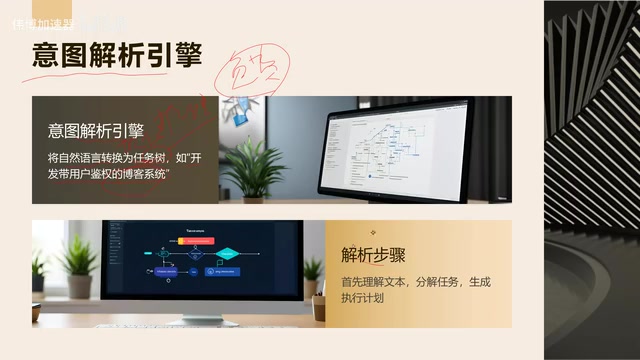
The first layer is the intent parsing engine. Its core capability is converting users' natural language descriptions into a structured Task Tree. A task tree is a data structure that recursively decomposes complex goals into executable subtasks, widely used in the AI planning domain. In the era of large models, this approach combines with Chain-of-Thought and Tree-of-Thought reasoning methods, enabling models to transform vague natural language requirements into hierarchical engineering tasks — a process that traditionally requires collaboration between product managers and architects, taking days or even weeks. For example, when you input "develop a podcast system with user permissions," Trae acts like an experienced product manager, automatically breaking the requirements down into independent modules such as frontend UI, backend logic, database design, and permission management.
On the model side, the domestic Chinese version of Trae primarily integrates Doubao 1.5 Pro and DeepSeekAd, while the international version connects to GPT and Claude. A key differentiator is that these model calls are completely free for users. Compared to Cursor's $20/month Pro subscription, this strategy directly lowers the barrier to entry for AI coding tools.
AI Decision Hub: Project Decomposition with Multi-Modal Input Support
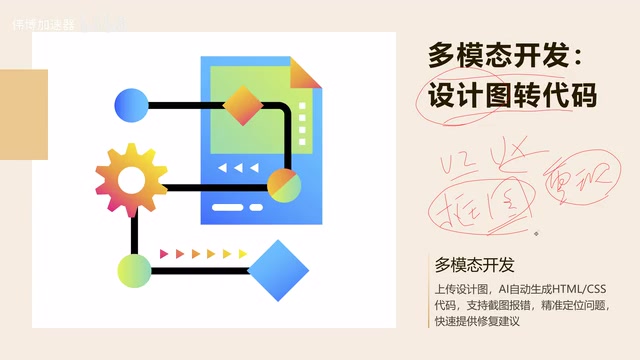
The second layer is the AI decision hub, responsible for converting parsed intents into concrete execution plans. Trae demonstrates a highly competitive feature at this layer — multi-modal input support. It can understand not only text descriptions but also directly parse flowcharts, UI design mockups, and even architecture diagrams from research papers.
In practice, you can drag Figma design files, Visio flowcharts, or algorithm architecture diagrams from a paper directly into Trae, and it will automatically convert the visual information into executable code structures. For researchers, this can noticeably improve the efficiency of paper reproduction.
Context Awareness Engine: Intelligent Cross-File Dependency Tracking
The third layer is the context awareness engine, which is also Trae's most prominent differentiating capability compared to Cursor and Windsurf. It can analyze dependency relationships among all code files in a project in real time, achieving cross-file variable tracking and consistency maintenance.
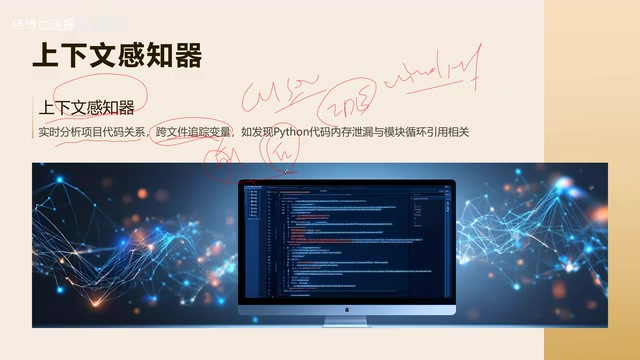
The underlying support for this capability is a Multi-Agent System. A single AI model faces context window limitations when processing large codebases — even GPT-4o's 128K token window is insufficient for large projects. The multi-agent architecture achieves parallel processing and specialized division of labor by assigning different responsibilities to dedicated Agents (such as a frontend Agent, backend Agent, and testing Agent). These Agents coordinate state through shared memory or message passing, with a coordinating Agent ultimately integrating the results — a pattern highly similar to how human development teams divide and collaborate on work. A typical web project usually includes multiple modules such as frontend, backend, and configuration files. Through this mechanism, Trae can understand the data flow between frontend and backend, ensuring that interface definitions and variable naming remain consistent throughout the entire project. This is especially valuable in medium to large-scale projects.
Builder Mode Explained: Trae's Most Disruptive Feature
Trae's most groundbreaking innovation is Builder Mode. It's not simply code completion or snippet generation — it's a complete project building experience.
Full-Stack Development with Natural Language
Builder Mode supports completing the entire workflow from project initialization to deployment through natural language conversation. It can automatically scaffold a Node.js + Express framework, handle dependency installation, configure Redis caching, and even complete script deployment. Throughout the process, the developer's role is more like a "director" — describing the desired outcome in words while leaving the actual implementation to AI.
MCP Protocol Integration: Connecting to the External Tool Ecosystem
Builder Mode deeply supports MCP (Model Context Protocol). MCP is a standardized protocol proposed and open-sourced by Anthropic in late 2024, designed to address the fragmentation of integration between large models and external tools and data sources. Before MCP, every AI application needed to write custom integration code for different tools (databases, APIs, file systems), resulting in extremely high maintenance costs. MCP uses a unified Client-Server architecture to allow models to invoke any external tool in a standardized way, similar to how the USB interface unified the hardware ecosystem. Trae's deep support for MCP means developers can seamlessly integrate hundreds of tools — including GitHub, Jira, databases, and cloud services — into their development workflow, making Trae not just a code editor but an extensible AI development platform.
Generating Frontend Code Directly from Design Mockups
Multi-modal capabilities are fully leveraged in Builder Mode. Converting UI/UX design mockups directly into frontend code and transforming paper diagrams into algorithm implementations — these capabilities move Trae one step forward from a "coding tool" toward a "creative realization tool."
Trae's Impact on Development Teams and Real-World Challenges
Development Team Structures Are Changing
The emergence of AI-native IDEs like Trae is redefining how development teams collaborate. A development team that previously required 10 people may now need only 1-2 individuals with strong overall planning skills to accomplish the same workload. The key role is shifting from "code implementer" to "creative planner."
Related articles
 Product Reviews
The Programmer's Desk Setup Guide: Building a Workspace That Feels Like Home
Discover how programmers build productive, comfortable workspaces. From multi-monitor setups to ergonomic design, explore the desk philosophy that drives focus and flow.
 Product Reviews
Qoder vs Cursor Real-World Comparison: Which $20/Month AI IDE Is Better?
Hands-on comparison of Qoder vs Cursor AI IDEs: Agent autonomy, human interaction count, and architecture decisions. Qoder needed only 2 interactions vs Cursor's 8.
 Product Reviews
Cursor Cloud Agent Demo: Eliminating Bottlenecks Across the Entire Software Development Lifecycle
Deep analysis of Cursor's Cloud Agent demo showing how cloud VMs, automated test artifacts, and a full-chain control plane systematically eliminate human bottlenecks across the software development lifecycle.