In-Depth Testing of GPT-5.6's Three Models: A Full Analysis of Soul/Terra/Luna Capabilities and Experience

Hands-on testing of GPT-5.6's three models: powerful capabilities held back by a buggy new Work app.
OpenAI launched GPT-5.6 as three models—flagship Soul, balanced Terra, and budget Luna. Soul impressed with a Vision Pro drum kit and reviving an old tablet, and the series excels in token efficiency and cost. But the simultaneously released online Work app was plagued by errors and export failures, severely hurting the experience.
GPT-5.6: One Launch, Three Models
OpenAI's approach to launching GPT-5.6 is rather unusual—it's not the iteration of a single model, but rather three independent models released simultaneously under the unified GPT-5.6 branding. According to hands-on analysis by tech reviewer Bijan Bowen, these three models target different use cases and budgets:
- Soul: The new flagship version, most powerful and most expensive;
- Terra: A balanced model positioned for everyday work;
- Luna: The most cost-effective entry-level model.
In its official blog post, OpenAI detailed the access privileges corresponding to each subscription tier. This "one name, multiple models" strategy essentially uses a single naming system to cover the full spectrum of needs, from individuals to enterprises.
Industry Context for Multi-Model Tiering Strategies: OpenAI's "one name, multiple models" approach is not an isolated case, but rather a product paradigm that has gradually taken shape across the entire large-model industry throughout 2024-2025. Anthropic's Claude series (Haiku/Sonnet/Opus) and Google's Gemini series (Flash/Pro/Ultra) both adopt a similar three-tier architecture: flagship models chase the performance ceiling, mid-tier models balance performance and cost, and entry-level models focus on high-frequency, low-complexity tasks. The engineering logic behind this tiering typically comes from Distillation techniques—compressing the "knowledge" of a large model into a smaller one—as well as the Mixture of Experts (MoE) architecture, which allows models to dynamically invoke sub-modules of different scales based on task complexity. For enterprise customers, this tiering means they can fine-tune cost control based on business scenarios, rather than paying flagship prices for all queries.
The pricing structure is also worth noting. The flagship Soul is priced at $5 per million input tokens and $30 for output; Terra is exactly half, at $2.5 input and $15 output; while Luna drops further to $1 input and $6 output. There's also GPT-5.6 Soul Pro for professional and enterprise users—the reviewer speculates it may not be a new pricing tier, but more likely a high-intensity operating mode that consumes more tokens.
Token Efficiency: An Underestimated Core Competitive Edge
Tokens are the basic unit of measurement large language models use to process text. In English, one token corresponds to roughly 3/4 of a word; in Chinese, due to higher character density, one token usually corresponds to 1-2 characters. When we talk about "$X per million tokens" pricing, we're essentially measuring the compute cost of the model processing and generating information. Input tokens (prompts) and output tokens (completions) are typically billed separately, because generating text consumes more compute than reading it—the model must predict the probability distribution of the next token one at a time. For developers, token efficiency isn't just about cost; it also affects response speed: if the same task can be completed with fewer tokens, it means lower latency and higher concurrency limits.
When interpreting benchmark data, the reviewer specifically highlighted a dimension that's easy to overlook—the actual cost of completing an equivalent task. Across multiple tests, the GPT-5.6 series was able to achieve performance levels equal to or even higher than competitors (such as Opus 4.8 and Fable 5) at significantly lower cost.
The continuous improvement in token efficiency was the core enhancement of GPT-5.5 over 5.4, and GPT-5.6 continues this trend. For developers and individual users footing the bill themselves, this translates into real, tangible savings—even in scenarios where its performance surpasses Opus 4.8, Soul's cost remains significantly lower than Cloud Fable 5's maximum-effort mode.
Impressive Capabilities: From Operating Systems to Mixed Reality
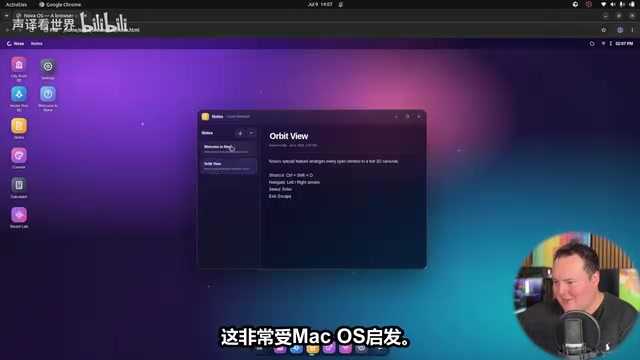
The reviewer's first test was BrowserOS V2.5, using Soul's maximum-effort mode (run via Cursor, since the model was first made available on Cursor). The generated "NovaOS" desktop environment was quite complete: a macOS-style Dock, top menu bar, right-click menus, Ctrl+K search, and even a built-in auto-playing sequencer called the "Sound Lab." Its GTA clone game, drawing app (with a canvas that scales with the window), and calculator all worked normally. The reviewer described this as "a very impressive result," with the unexpected keyboard sequencer earning extra points.
Vision Pro Apps: A Shock That Exceeded Expectations
The Apple Vision Pro officially launched in early 2024, with its core development frameworks being RealityKit and the visionOS SDK. Unlike traditional iOS/macOS development, visionOS introduces the concept of "Spatial Computing," requiring developers to handle entirely new dimensions such as 3D scene graphs, hand tracking, and collision detection. Automatically generating a drum kit app with sensitivity adjustment, 3D positioning, and interactive response means the model must simultaneously master the SwiftUI/RealityKit APIs, the principles of 3D audio spatialization, and the window management mechanisms of visionOS.
What truly amazed the reviewer was the Apple Vision Pro test. He gave a simple prompt—create a virtual drum kit app that can be tapped with hands in mixed reality. The model not only generated a photorealistic 3D drum kit, but also added adjustment options for sensitivity and drumhead height, and even placed an actual app icon.
The reviewer flatly stated he "absolutely did not anticipate this level of quality," describing the experience as "pretty much the feeling of sitting in front of a real drum kit." Compared to earlier attempts at Vision Pro content using GPT-5.5 and CodeX, this was "simply night and day." Developing this kind of "spatial app" is far more difficult than an ordinary 2D app, because incorrect depth estimation or gesture mapping can directly lead to uncomfortable sensory experiences—the industry typically requires professional teams with XR development experience to achieve high-quality implementations.
The Hardcore Challenge: Getting a Discontinued Network Tablet Back Online
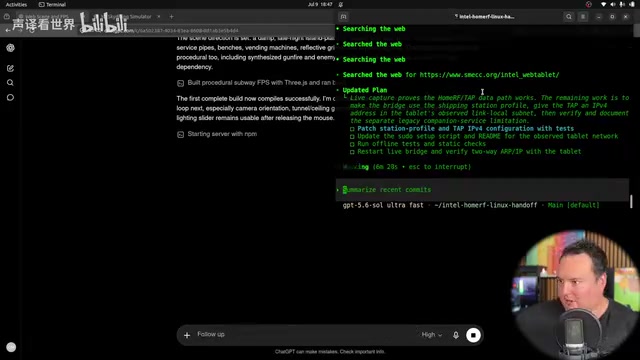
The case that best demonstrates the model's "autonomous problem-solving ability" was an extreme one: getting an early-2000s Intel network tablet (a demo unit that was never publicly sold, with no drivers and no manual) working online again.
The model demonstrated an impressive chain of reasoning: confirming that the original software only supported Windows 98/ME → planning to run an x86 virtual machine using UTM (a QEMU-based emulator) with USB passthrough → after failing to find the original installation media, pivoting to brute-force writing a userspace driver to circumvent the Apple kernel extension signing barrier.
Background on UTM and QEMU Virtualization Technology: UTM is a macOS/iOS virtualization tool built on the QEMU open-source virtual machine framework. Through dynamic binary translation, QEMU (Quick Emulator) can emulate the x86 instruction set on modern ARM chips (such as Apple Silicon), making it possible to run legacy operating systems like Windows 98/ME. Since macOS 10.15, Apple has gradually deprecated the kernel extension (kext) mechanism in favor of the more secure System Extension framework, which directly prevents many legacy drivers that rely on low-level hardware access from running on modern macOS. The model's choice to write a driver in userspace as a workaround essentially avoids Apple's kernel signing verification—this reasoning path showcases the large model's ability to perform complex reasoning on system-level engineering problems, comprehensively weighing operating system security policies, hardware compatibility, and real-world constraints.
Ultimately, the base station adapter successfully turned green and began blinking—a state the reviewer had never seen before, indicating substantial progress, even though the tablet itself was not yet fully connected.
The Maddening Experience: The New "Work App" Is the Biggest Failure
However, this test was also, in the reviewer's words, "one of the most frustrating tests." The problems were almost entirely concentrated in the brand-new online "Work" interface OpenAI released simultaneously, and he clearly stated that "releasing them at the same time was a terrible decision."
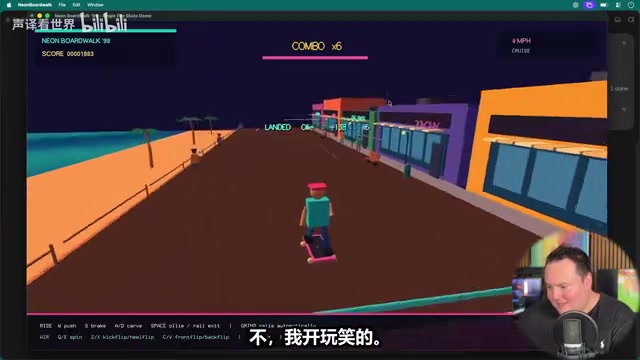
Multiple front-end projects (a skateboarding simulator, a skydiving simulator, a zombie FPS, and a low-poly beat-'em-up game) ran into trouble after generation: preview connections dropped, the cloud browser was unusable, files didn't land in the output directory, and clicking preview returned server errors. The reviewer repeatedly asked to "just give me the files," yet the model kept generating large amounts of redundant files used only for its own preview.
The Productization Challenges of Cloud Development Environments: OpenAI's newly launched online "Work" interface falls into the category of cloud IDEs (Integrated Development Environments), with similar products including GitHub Codespaces, StackBlitz's WebContainers, and Replit. The core technical challenge of such products lies in seamlessly integrating the code execution environment, file system, preview server, and AI generation pipeline within a single browser session, while handling engineering issues like network interruptions, session timeouts, and sandbox security isolation. The problems mentioned in the article—"dropped preview connections," "unusable cloud browser," and "files not landing in the output directory"—are all typical technical debt for such products at initial launch. In contrast, local AI code editors like Cursor naturally sidestep cloud state synchronization issues by directly operating on the local file system, but they sacrifice cross-device access and collaboration capabilities. This trade-off reflects that current AI-assisted development tools have yet to find the optimal balance between "usability" and "reliability."
Results That Couldn't Be Verified, Doubling the Frustration
The most typical case was the watch company front-end—the model insisted on displaying it within its own built-in preview, yet the reviewer "couldn't get past the login" and couldn't access the final site.
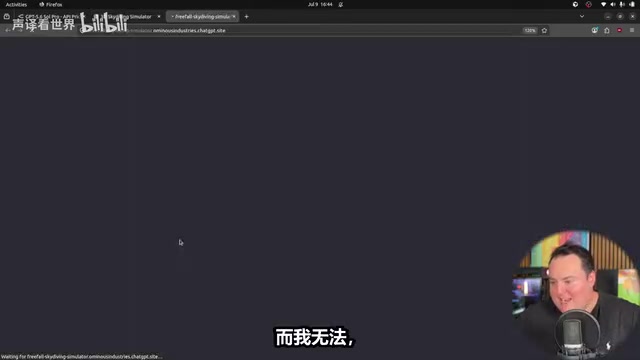
Even more intriguing, the output quality of one watch design was actually worse than a version from a few weeks earlier that was "supposedly GPT-5.5," leading the reviewer to suspect it may have been a hidden early test of 5.6. And the last hastily generated "street brawl" low-poly beat-'em-up game—while its scene was complete and playable (you could hit pigeons, cars, and pedestrians)—continuously bogged down Firefox, and even after switching machines and clearing the cache, it still couldn't be played normally.
Conclusion: Powerful Model Capabilities, Held Back by the Product Experience
Bijan Bowen's core assessment can be distilled into one sentence: The GPT-5.6 model itself may be excellent, but it's severely dragged down by the simultaneously launched Work app.
At the model level, GPT-5.6 shows standout performance in token efficiency, cost control, 3D and mixed-reality content generation, and long-chain problem solving. The Vision Pro drum kit and the resurrected old tablet cases demonstrate powerful autonomous execution and creative capabilities. But when it came to fine front-end details, 5.6 running via Cursor's max mode didn't fully meet the reviewer's expectations, and a few results were even worse than the previous generation.
At the experience level, it's a different story. The new online Work interface was logically chaotic, error-prone, and produced results that were hard to export and verify, nearly nullifying the practical value of the testing. The reviewer admitted this test was "extremely draining," and during editing he had to cut out a great deal of footage of himself losing his temper.
Advice for the average user: GPT-5.6 is worth looking forward to, but to truly unlock its potential, it's currently more advisable to access it through mature third-party tools like Cursor, rather than the hastily launched official Work app. The advances in multi-model tiering and token efficiency represent OpenAI's continued push in cost competition; but polishing productization maturity will still take time.
Key Takeaways
Related articles

Felix Rieseberg Personal Homepage
Felix Rieseberg's personal homepage sparks attention on Hacker News. This article covers the Slack engineer's technical background, the rise and fall of nativefier, and the value of a developer homepage as a tech calling card.

@ai-sdk/vue 3.0.306 Patch Release Syncs with [email protected] Update
@ai-sdk/vue 3.0.306 released, synced with [email protected]. A routine patch release for the Vercel AI SDK ecosystem with no public API changes; the Vue adapter layer stays version-aligned with the core package.

Gemini 4 Argon API Launches: The Era of Million-Token Output Begins
Google launches Gemini 4 Argon with sparse MoE architecture, up to 1M output tokens, and a 68.90% Vals Index score, available across API, AI Studio, and the Gemini app.