India Delays Digital Payment Fees: New UPI Policy Faces Retailer Backlash

India's NPCI postpones the UPI 0.4% fee plan, highlighting the contradiction between universal access and sustainability in digital payments.
The National Payments Corporation of India (NPCI) announced the postponement of the UPI transaction 0.4% fee plan originally scheduled for October 15, due to strong retailer opposition and the arrival of the festive shopping season. UPI is India's most mainstream digital payment network, processing hundreds of millions of transactions daily, and its free model is key to its rapid adoption. Merchants worry that fees will erode thin profit margins, especially impacting small businesses. NPCI faces pressure from rising operating costs. The postponement is a risk-aversion strategy, but it does not resolve the fundamental contradiction between UPI's free universal access and commercial sustainability. A balance may be found in the future through government subsidies, tiered pricing, or value-added services. This game will continue, and India's experience offers lessons for global digital payment governance.
The National Payments Corporation of India (NPCI) recently announced that it is postponing the Unified Payments Interface (UPI) transaction fee plan originally scheduled to take effect on October 15, delaying the collection of the 0.4% processing fee. This decision was made under the dual pressure of strong opposition from retailer groups and the impending festive shopping season.
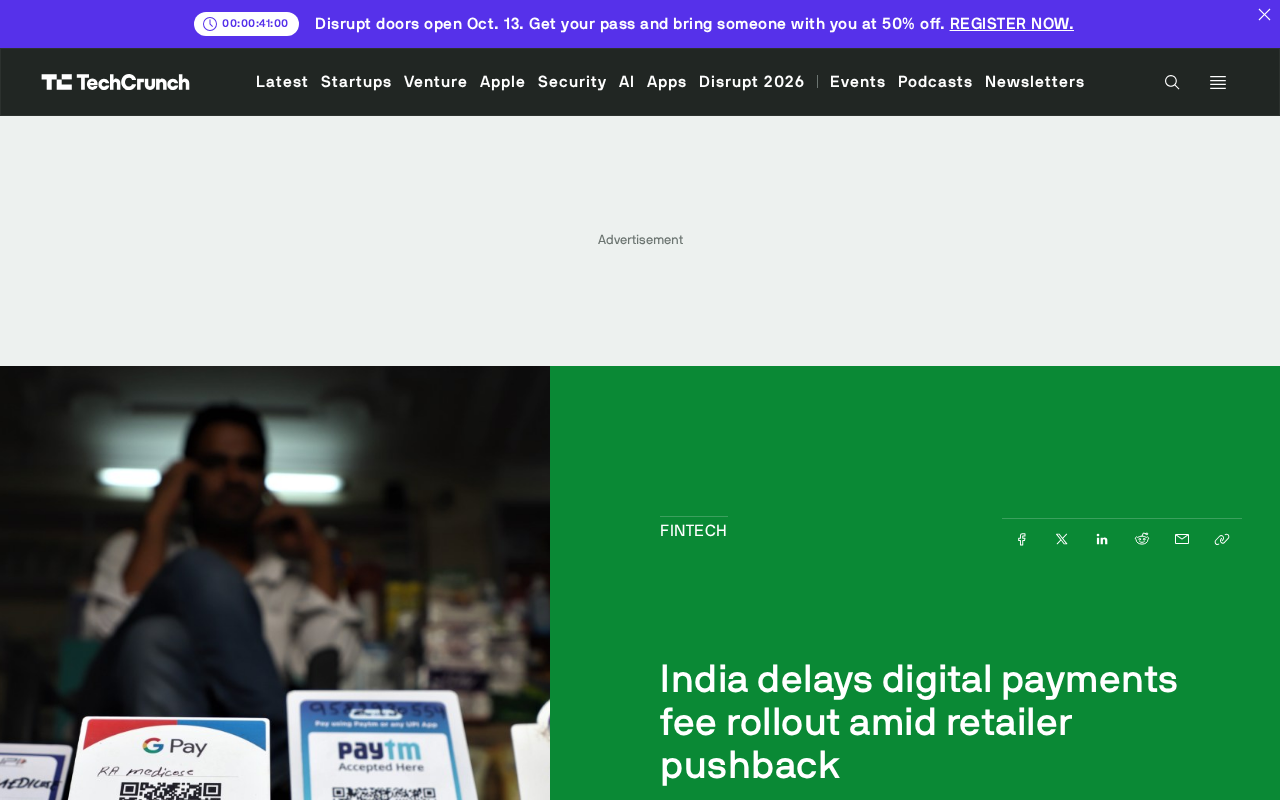
Why the UPI Fee Plan Sparked Controversy
UPI is India's most mainstream digital payment network, processing hundreds of millions of transactions daily, covering scenarios ranging from street-side stalls to large e-commerce platforms. NPCI had previously proposed charging a 0.4% fee on certain UPI transactions, aiming to provide financial support for the sustainable operation of the payment ecosystem.
However, this plan was quickly met with resistance from Indian retailer associations and small and medium-sized merchants. Merchants argue that the core reason UPI was able to spread rapidly across India is precisely the word "free." Once fees are introduced, they will directly erode already razor-thin profit margins, especially for small businesses operating on high volume and low margins.
From a business logic perspective, NPCI's considerations are not unreasonable—maintaining such a massive real-time payment network requires enormous costs, including servers, risk control, clearing, and customer service systems. But the problem lies in the fact that the timing and method of charging touched the most sensitive nerve of vested interests.
UPI (Unified Payments Interface) is a real-time payment system launched by the National Payments Corporation of India (NPCI) in 2016. It supports instant transfers between bank accounts and merchant payments, and has become the core infrastructure for India's digital payments. NPCI is a non-profit organization jointly owned by the Reserve Bank of India (RBI) and Indian banks, responsible for operating payment networks such as UPI and RuPay cards. Its positioning sits between a public institution and a market operator, which gives its fee decisions an inherent public policy dimension. UPI adopts a zero MDR (Merchant Discount Rate) model, meaning merchants do not bear processing fees for receiving payments, with costs mainly borne by banks and NPCI. This design is the key reason UPI was able to rapidly penetrate down to street-side stalls, but it has also led to a long-term lack of direct revenue sources for the payment ecosystem, with operational pressure continuously accumulating. Understanding UPI's quasi-public good attributes and zero-MDR tradition is the prerequisite for understanding this fee controversy.
The Festive Shopping Season Became the Key Variable for the Delay
In its statement, NPCI explicitly stated that the main reason for postponing the rollout was the festive shopping season. Traditional festivals such as Diwali in India are concentrated at the end of the year, a period that represents the peak of annual consumption, with retail transaction volumes typically surging significantly.
Introducing new fees during the festive period would not only increase the burden on merchants but could also affect consumer experience and even trigger broader public backlash. NPCI's choice to press the pause button at this time is essentially a risk-aversion strategy.
This decision also reflects the real dilemma in India's digital payment governance: operating a payment network requires funding, but any move to charge end users or merchants could shake the foundation of UPI's adoption.
Diwali is one of the most important Hindu festivals, typically held between October and November each year, lasting five days. During Diwali, Indian households generally make large purchases, including gold, home appliances, clothing, and gifts, with retail transaction volumes reaching annual peaks. For digital payment networks, this means a significant surge in transaction volume and value, with system stability and user experience facing severe tests. Introducing new fees at this time could not only technically increase the risk of transaction failures, but would also be interpreted in public opinion as "profiteering during the festival," further intensifying conflicts between merchants and regulatory authorities. Therefore, NPCI's choice to postpone fees on the eve of the festive shopping season is both a technical precaution and a hedge against political and public opinion risks.
Deep Impact on India's Digital Payment Ecosystem
Postponing the fees does not mean the problem disappears. UPI's transaction volume continues to grow, and operating costs will only keep rising. NPCI and the Indian government need to find a balance between "free universal access" and "commercial sustainability."
Possible paths include: government fiscal subsidies, tiered fees for high-volume merchants, or generating revenue through value-added services. But each option faces political and economic trade-offs.
For fintech companies, e-commerce platforms, and offline merchants that rely on UPI, this postponement provides a buffer period, but also reminds them: the "free lunch" of digital payments may eventually come to an end.
Digital Public Infrastructure (DPI) refers to digital platforms built under the leadership of governments or public institutions and open to society as a whole, such as India's UPI, Aadhaar identity system, and DigiLocker. The core characteristic of DPI lies in its public good attributes: low barriers to entry, broad coverage, and non-excludability. However, the construction and maintenance of DPI require continuous investment, and how to achieve financial sustainability while maintaining universal accessibility is a common challenge worldwide. India's UPI fee controversy is a typical manifestation of this contradiction—complete reliance on fiscal subsidies could increase the government's burden; charging merchants could weaken adoption momentum. Models such as tiered pricing, value-added service monetization, and government procurement of services are all being explored, but there are no mature precedents yet. India's practice therefore has global reference value.
The Game Between Retailers and Regulators Continues
Retailers' pushback has achieved a phased victory, but this is only the beginning of the game. NPCI has not yet announced a new fee timeline, nor has it indicated whether it will adjust the rate or scope of application.
It is foreseeable that discussions around UPI fees will continue to intensify. Merchant groups hope to maintain the free model, regulatory authorities need to ensure the stable operation of the payment system, and the government must choose between financial inclusion and fiscal burden.
The essence of this controversy is the global challenge of how to price digital public infrastructure. India's exploration will provide important reference for digital payment governance in other countries.
One-line Summary
India's NPCI postpones the UPI 0.4% fee plan, highlighting the contradiction between universal access and sustainability in digital payments.
Paragraph Summary
The National Payments Corporation of India (NPCI) announced the postponement of the UPI transaction 0.4% fee plan originally scheduled for October 15, due to strong opposition from retailers and the arrival of the festive shopping season. UPI is India's most mainstream digital payment network, processing hundreds of millions of transactions daily, and its free model is key to its rapid adoption. Merchants worry that fees will erode thin profit margins, especially impacting small and micro businesses. NPCI faces pressure from continuously rising operating costs. The postponement is a risk-aversion strategy, but it does not resolve the fundamental contradiction between UPI's free universal access and commercial sustainability. In the future, a balance may be found through government subsidies, tiered pricing, or value-added services. This game will continue, and India's experience has reference significance for global digital payment governance.
Related articles

iPhone Duo vs. Micro-Dramas: The Format Battle Between Foldables and Vertical Video
iPhone Duo and Samsung Z Fold's wide-aspect foldables are challenging vertical micro-dramas. The Verge finds creators already shoot dual-format, and the hardware-content battle is far from over.

Against Algorithms and Consumerism: How to Build a "Good Enough" Life
Vox editor Rachel Wilkerson Miller's four elements of a nice life—curiosity, beauty, joy, and meaning—and how to resist algorithms and consumerism.

Altman Declares: The Cybersecurity Crisis Is Unsolvable and There Are Too Many Vulnerabilities to Patch
OpenAI CEO Sam Altman publicly admits he can't fix all security vulnerabilities and that the cybersecurity crisis will keep worsening. This article analyzes the industry reality behind this statement: exploding software complexity, the double-edged sword of AI, and the need to shift security paradigms from "zero vulnerabilities" to resilient defense.