Indian AI Coding Platform Rocket Shuts Down: Investor Withdrawal Deals the Final Blow

Indian AI coding platform Rocket shuts down after its funding round was canceled and cash ran short.
Indian AI coding tool Rocket has announced its shutdown. Once seen as a localized competitor to Lovable and Replit, the startup had only months of runway after investors canceled a planned funding round. Despite backing from Accel and Salesforce Ventures, Rocket faced severe homogenization at the AI application layer and model capabilities constrained by upstream providers, making a regional story insufficient to support funding. The article analyzes the gap between funding commitments and actual cash, the weak moat of the AI application layer, and notes that user data migration and the team's fate remain undisclosed, urging developers to evaluate alternatives early.

Indian AI coding tool Rocket has announced its shutdown. The startup, once seen as a localized competitor to Lovable and Replit, now has only enough cash on hand to sustain a few months of operations after investors canceled a planned funding round. The news was disclosed via an RSS feed, with the screenshot showing the original report page.
Funding Breakdown: From Star Project to Cash Crunch
Rocket had previously secured investment from two well-known institutions, Accel and Salesforce Ventures, and was once regarded as the most promising contender in India's AI coding space to challenge Lovable and Replit. But according to the original report, a funding round that had been planned was canceled by investors, immediately plunging the company into a predicament of "only a few months of runway left."
For early-stage startups, a funding round being withdrawn near close is not uncommon, but for AI coding platforms that depend on continuous investment, such a blow is often fatal. Model calls, inference compute, and engineering teams are all hard costs; once the funding chain breaks, product iteration and user growth stall simultaneously.
Funding Rounds and "Runway"
In startup parlance, funding rounds typically refer to equity financings divided by stage, such as Seed, Series A/B, etc. "Withdrawn near close" means investors have already signed a term sheet or even entered the due diligence stage, but choose to exit before funds actually arrive. Most provisions of a term sheet are not legally binding, so there is a significant gap between "committed capital" and "cash on hand."
"Runway" is a key metric for how long a startup can survive: runway = current cash balance ÷ monthly net cash burn (burn rate). When a company says it has "only a few months of runway," it means that without financing or drastic cost cuts, cash will run out within months. For AI coding platforms, runway pressure is especially high because inference calls are billed by token—the more users, the higher the cost, and it is hard to amortize naturally through scale.
The Reality Gap in India's AI Coding Space
AI coding assistants have been one of the hottest startup directions globally. Lovable and Replit rapidly accumulated users with low-barrier natural language website building. India has a large population base and fast-growing developer community, theoretically leaving room for local competitors, and Rocket was aimed at this gap.
But hype does not equal revenue. AI coding products are highly homogenized, and leading products continue to double down on model capabilities, template ecosystems, and communities. Latecomers need more time and more capital to establish differentiation. Rocket's shutdown shows that in a tightening capital environment, a regional market story alone can hardly support a funding round.
AI Coding Assistants and the "Application Layer"
AI coding tools can be roughly divided into two categories: one is code completion and generation assistants embedded in editors (such as GitHub Copilot, Cursor), and the other is "natural language website/app building" platforms (such as Lovable, Replit, Bolt), where users can generate a runnable product by describing requirements in one sentence. The latter is closer to what this report calls "AI coding platforms."
From the industry chain perspective, these products sit at the "application layer": underlying model capabilities come from upstream model providers such as OpenAI, Anthropic, and Google, while application-layer companies create value through prompt orchestration, templates, deployment hosting, and workflow integration. This determines that the application layer's technical moat is relatively thin—once upstream models upgrade, multiple products can benefit simultaneously, and their differences can also be erased simultaneously. What truly forms a barrier is often the ecosystem: template libraries, communities, deep integration with version control and deployment, and workflow stickiness such as team collaboration.
Two Reminders for Founders
First, funding commitments are not the same as cash in the bank. Before formal signing and funds arrival, any "planned funding round" should be treated as uncertain, and cash planning needs to leave enough buffer for the worst case.
Second, the competitive moat at the AI application layer is thinner than imagined. Model capabilities are determined by upstream providers, product experience is easy to replicate, and what truly retains users is workflow depth and ecosystem stickiness. Rocket's case reminds latecomers that when competing head-on with mature products like Lovable and Replit, they need to figure out their differentiation earlier.
Workflow Depth and Ecosystem Stickiness
"Workflow depth" refers to how deeply a product is embedded in users' daily development processes: from requirement description, code generation, debugging, and version management to one-click deployment—the more complete the coverage, the higher the user migration cost. "Ecosystem stickiness" comes from network effects such as template marketplaces, plugins, community Q&A, and team collaboration—the longer you use it and the more you accumulate, the higher the cost of switching tools.
For latecomers, this means that simply competing on "quality of generated code" is unlikely to build a long-term advantage, because this capability is mainly determined by upstream models. More viable differentiation paths are deep cultivation of vertical scenarios (such as industry-specific compliance or specific tech stacks), localized services (language, payments, deployment environments), or deep integration with existing development toolchains. Rocket's predicament in the report is precisely that its regionalization story failed to translate into a defensible product moat.
After the Shutdown
Currently, public information only confirms the shutdown decision and the direct cause of the canceled funding. Follow-up arrangements such as how user data will be migrated and whether the team will be acquired have not been disclosed. For developers who have used Rocket, evaluating alternatives early is the more realistic choice.
This incident is also a footnote in the AI startup boom: hype can bring attention and early funding, but it cannot replace a sustainable business model.
One-line Summary
Indian AI coding platform Rocket announced its shutdown after a funding round was canceled and cash ran short.
Paragraph Summary
Indian AI coding tool Rocket has announced its shutdown. The startup, once seen as a localized competitor to Lovable and Replit, has only enough cash on hand to sustain a few months of operations after investors canceled a planned funding round. Rocket had previously received investment from Accel and Salesforce Ventures, but the AI coding application layer is severely homogenized, model capabilities are constrained by upstream providers, and a regional market story can hardly support funding on its own. The article analyzes the gap between funding commitments and actual cash arrival and the weak moat of the AI application layer, noting that user data migration and the team's fate have not been disclosed, and reminding developers to evaluate alternatives early.
Related articles

Iran Reportedly Used Starlink to Attack US Military Bases: The Double-Edged Sword of Tech Geopolitics
Iran allegedly used Starlink to help strike US bases in the Middle East, prompting SpaceX to enforce strict identity verification. An analysis of commercial satellite militarization risks and industry impact.

llama.cpp AMD Patch Tested: Generation Speed Jumps from 35 to 55 tokens/s
The llama.cpp RDNA Boost patch optimizes AMD GPUs: the author measured token generation rising from 35 to 55 tokens/s and prompt reading from 700 to 1300, without altering the model's expert selection logic.
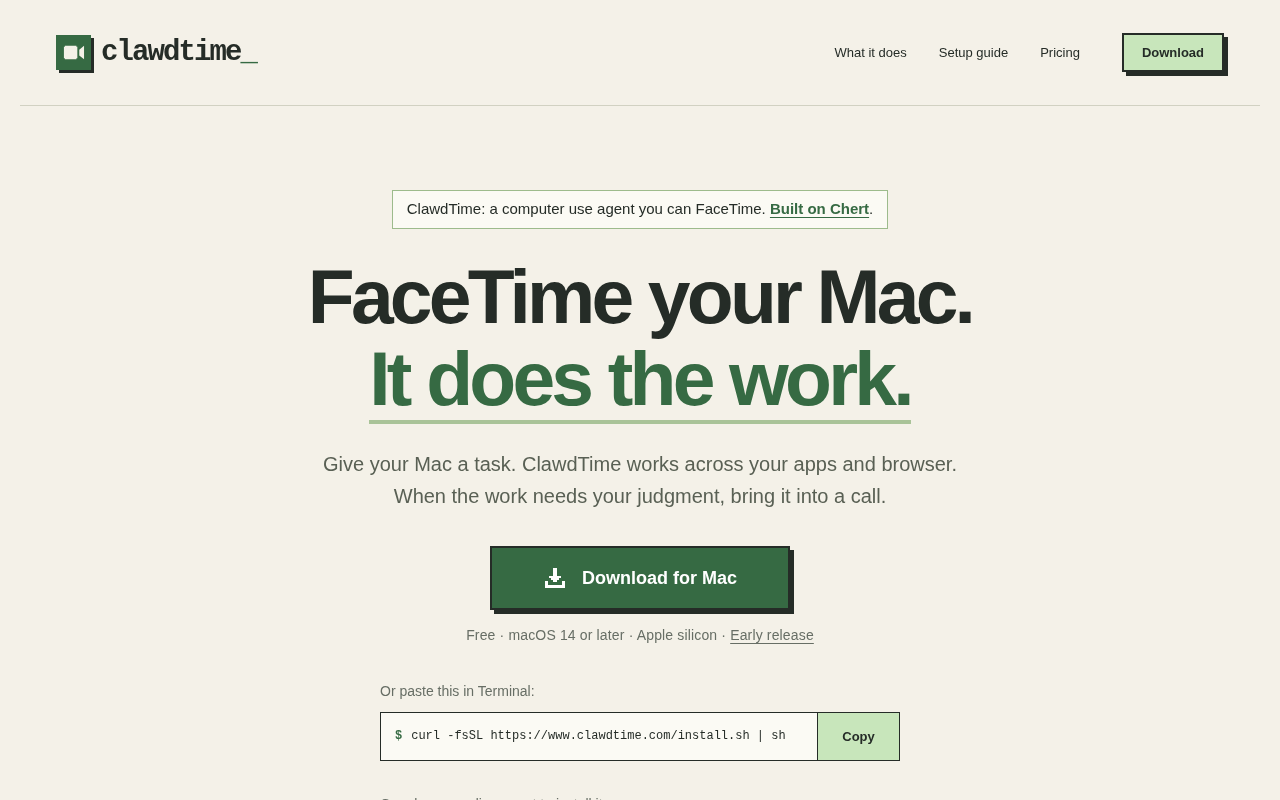
ClawdTime: The Long-Task CUA Agent That FaceTimes You When It Gets Stuck
ClawdTime is a long-task CUA Agent showcased on Hacker News that calls users via FaceTime when it gets stuck. This article examines its product thinking, the value of human-in-the-loop interaction design, and what to view cautiously given limited information.