Ink & Switch's Interactive Homepage: A Research Lab's Unconventional Statement

Ink & Switch's interactive homepage hit HN's front page, turning their research philosophy into a lived experience.
Independent research lab Ink & Switch recently launched an interactive homepage that earned 224 upvotes and significant discussion on Hacker News. Known for systematically articulating the "local-first software" concept and deep involvement in CRDT-based sync research, the lab's redesign is more than a visual refresh — it directly embodies their core belief that software should be an explorable medium, not a static display. The community's enthusiastic response highlights a broader question: how can technical research institutions use experience rather than explanation to communicate their values, offering a model worth studying for teams looking to build a meaningful technical brand.
A Research Lab Homepage That Sparked Discussion
Independent research lab Ink & Switch recently launched an interactive homepage that made it to the top of Hacker News, earning 224 upvotes and 25 comments. This seemingly simple redesign caught the attention of the tech community in large part because of Ink & Switch's distinctive position in software research.
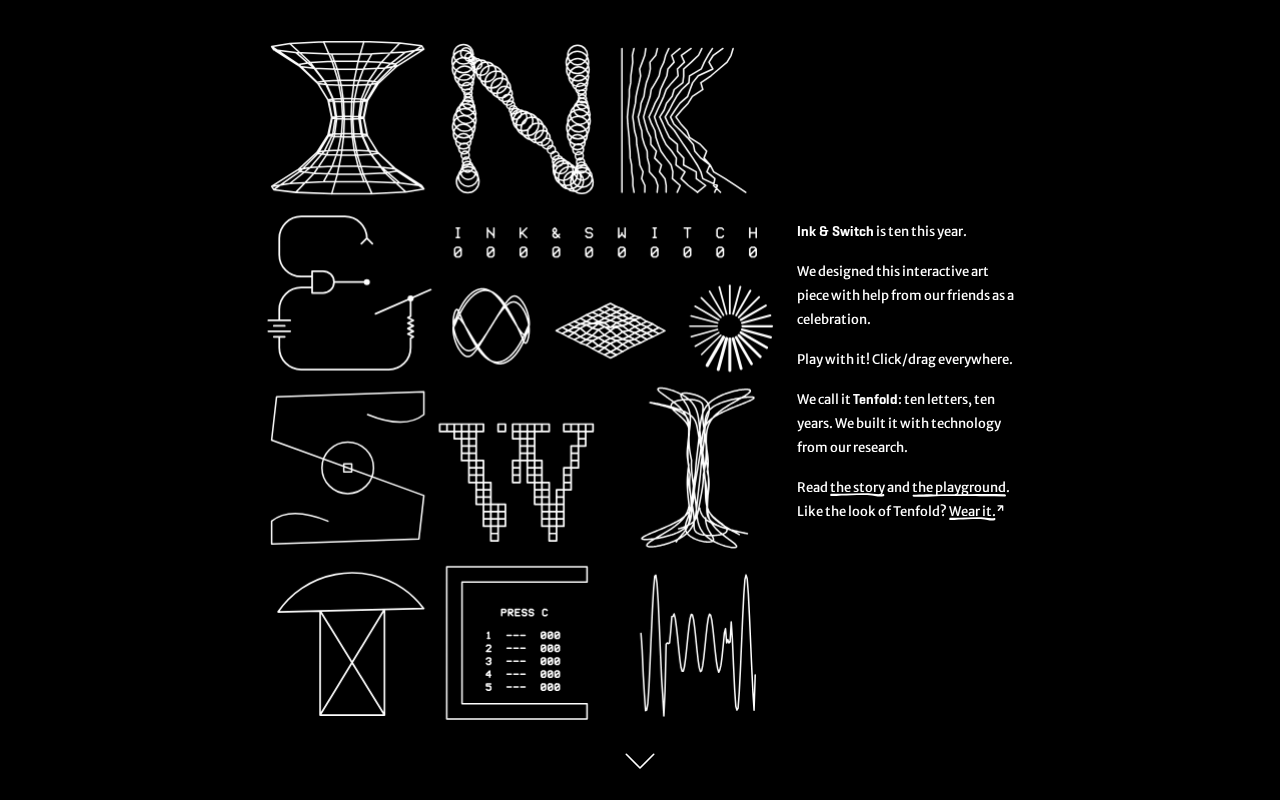
For readers unfamiliar with the organization: Ink & Switch is an independent research lab focused on exploring the future of software and human-computer interaction. They have a long-standing focus on local-first software, collaborative tools, and malleable creative media — and they've built a solid reputation in the developer community. Choosing to debut a redesign as an "interactive homepage" is itself a statement of values: how a research institution presents itself is inseparable from the software philosophy it advocates.
Why a Homepage Is Worth Paying Attention To
Most people expect a research lab's website to be static and text-heavy — a straightforward display of information. Ink & Switch's decision to rebuild their homepage around interactivity is, in effect, using the product itself to communicate their thinking about what software should be.
This approach echoes a position Ink & Switch has long held: software shouldn't just be a stack of features, but should serve as an explorable, extensible medium. By making their homepage — the first point of contact with the outside world — interactive, the lab puts its research philosophy on direct display. Visitors are invited to use it, not merely read it.
The discussion on Hacker News reflected a positive response to this approach. In an era of rampant product homogeneity, taking a differentiated stance at something as fundamental as a homepage is inherently noteworthy.
"Malleable / extensible creative medium" is a central concept in Ink & Switch's research agenda, rooted in computer pioneer Alan Kay's idea of the "metamedium" — the notion that computers shouldn't merely simulate paper or film, but should become a new kind of medium that users can freely shape. Within this framework, the ideal form of software isn't a black box with fixed functions, but a living tool that users can dynamically extend, reconfigure, and even program to fit their own workflows. Ink & Switch's prototype projects, including Capstone (which evolved into Pushpin) and more recent internal tool explorations, have all been attempts to put this vision into practice. Understanding this context helps explain why they'd insist on "let people use it, not just read it" even at the homepage level — it's a small-scale demonstration of the very principles they research.
The Research DNA Behind Ink & Switch
To fully appreciate the significance of this redesign, it helps to understand Ink & Switch's broader research trajectory. The lab is perhaps best known for its systematic articulation of the "local-first software" concept — the idea that data should be stored primarily on users' local devices while still enabling seamless multi-device collaboration and sync, thereby preserving privacy, performance, and collaborative capability all at once.
This philosophy has influenced a significant number of independent developers and startups in recent years, becoming an important intellectual counterweight to the trend of "everything in the cloud, data controlled by platforms." Ink & Switch has also done substantial exploratory work in areas like CRDTs (Conflict-free Replicated Data Types), end-to-end encrypted collaboration, and programmable canvases.
It's precisely because of this reputation — as a lab known for thinking seriously about the future of software — that the community treats a redesign of their own front door as a case study worth examining, rather than just another website update.
CRDT (Conflict-free Replicated Data Type) is a class of data structures from the distributed systems field. Their key property is that multiple nodes can independently modify the same piece of data without communicating with each other, and when those changes are later merged, conflicts are automatically resolved and eventual consistency is guaranteed — no central arbitration server required. Common examples include text merging in collaborative editors and syncing to-do lists across multiple devices. CRDTs are a natural fit for the local-first software philosophy: if data lives primarily on local devices and must remain usable even when offline, you need a mechanism that can sync after reconnection without losing any edits. Ink & Switch's 2019 paper Local-first Software provided a systematic overview of CRDTs in real-world collaborative tools, and directly helped drive the widespread adoption of open-source CRDT libraries like Automerge.
What This Tells Us About How Research Labs Communicate
This episode also reflects a broader question: how can technical research institutions effectively communicate their value proposition? The traditional approach is to publish long-form research papers and articles — something Ink & Switch has always done well, with their in-depth pieces frequently cited across the industry.
The interactive homepage offers a different answer: let experience replace explanation. When a visitor directly feels, on the homepage itself, that "software can work like this," that kind of communication is often more persuasive than words alone. For other teams looking to build a technical brand, there's a meaningful lesson here.
It's worth noting that because the available source material is primarily the link and community discussion data, specific details about the homepage's interactions and technical implementation haven't been fully disclosed. Interested readers can visit Ink & Switch's website directly at inkandswitch.com to experience it firsthand, or browse the Hacker News thread for community reactions and analysis.
Takeaway
The buzz around Ink & Switch's interactive homepage may look like a routine website refresh, but it's really an externalization of this research lab's core values. It's a reminder that the form and presentation of software itself carries value judgments. For readers interested in human-computer interaction, local-first software, and the future of creative tools, this is a team well worth following.
Related articles

Chain of Thought Isn't Just for AI: How Humans Can Use CoT to Improve Thinking Quality
Chain of Thought isn't just a prompt trick for large models. Starting from a Hacker News discussion, this article analyzes why CoT works for human thinking too, breaks down actionable ways to transfer it, and highlights the key differences between human CoT and machine CoT.
Cloudflare Teams Up with OpenAI: Closi…
Cloudflare Teams Up with OpenAI: Closing the Loop from Vulnerability Discovery to Defense with AI
Cloudflare uses OpenAI Daybreak to investigate security vulnerabilities and generate reviewable remediation plans, while developers use Codex to boost coding efficiency and quality.

Orca Multi-Agent Orchestration in Practice: A Guide to Parallel Collaboration with Claude and Codex
Orca is Stable AI's free open-source agent workbench supporting 34 agents like Claude Code and Codex in parallel. Learn its Git worktree isolation, multi-model orchestration, and mobile management.