Inside Liang Wenfeng's Closed-Door Meeting: DeepSeek's Philosophy of Restraint and Its AGI Strategy

Liang Wenfeng's closed-door meeting reveals DeepSeek's restraint-driven AGI strategy: no KPIs, open source, and continual learning.
DeepSeek founder Liang Wenfeng's leaked 4-hour closed-door meeting reveals a philosophy of restraint: no KPIs, earning only reasonable profits, open-sourcing even the strongest models, and treating consumer and enterprise businesses as mere byproducts of the AGI pursuit. He identifies continual learning as the next key breakthrough and backs domestic chips as a long-term direction.
A 4-Hour Closed-Door Meeting: Why It Sparked Industry Debate
In May 2026, DeepSeekAd founder Liang Wenfeng held a roughly four-hour closed-door session with investors. The complete transcript leaked two months later and quickly ignited discussion across the industry. Contrary to the commercialization roadmaps and growth targets outsiders had expected, the core theme of his remarks came down to a single word—restraint.
Liang repeatedly emphasized during the meeting that the company does not treat profitability or going public as its ultimate goal. It insists on a vision-driven, KPI-free management model, advocates earning only reasonable profits, and continues to open-source all of its achievements—including its most powerful models. The transcript clearly reveals DeepSeek's long-term focus and steadiness in pursuing artificial general intelligence (AGI), and it rarely discloses the company's judgments on the compute gap, domestic chips, and the endgame of competition.
This article is based on that recorded transcript, distilling the strategic logic and technical judgments most worth attention.
A Vision-Driven Organization: No KPIs, Not Much Overtime
DeepSeek's management philosophy stands in sharp contrast to mainstream Silicon Valley AI companies. OpenAI, Anthropic, and others all adopt strict OKR- or milestone-driven models, driven by venture capital's intense demand for growth speed. Liang's description of the company's culture is almost idealistic. He frankly stated that from its founding the company never thought about how much money to make or about going public; the initial few dozen people "wouldn't have joined if they thought that way."
He cited the views of former General Electric CEO Jack Welch, whom he admired twenty years ago: managing a large company relies not on rules and regulations, but on vision. Welch was famous for the "boundaryless organization," whose core was to break down bureaucracy and unleash employees' intrinsic motivation. His practices at GE from 1981 to 2001 are regarded as a benchmark of modern management. Transplanting this management philosophy from the manufacturing era into an AI research organization is itself a counter-mainstream choice.
More specifically, he described a dual-track management mechanism running in parallel: one top-down, one bottom-up. The bottom-up part means everyone works on whatever they want to, with no KPIs. The company hopes formal tasks won't take up more than half of an employee's time, with the rest left to the employee's discretion—"we generally don't work much overtime either."
His reasoning is very pragmatic: doing research requires a relaxed environment—"if you push too hard, you can't do research." At the same time, research itself doesn't consume much compute—"what it needs are ideas; the barrier is very low, and anyone can dabble." This mode of research—low resource consumption, high idea density—is precisely the underlying logic behind DeepSeek's ability to stay competitive even in a compute-constrained environment.
Open Source and Restraint: A Strategic Choice to Earn Only Reasonable Profits
On open source, Liang's stance is clear: even the most powerful model will be open-sourced, because I see no benefit to keeping it closed. He specifically distinguished his own open-source motives from those of other similar companies—some companies open-source because they "feel chased," not because they truly want to, whereas for DeepSeek "this is our genuine intent."
He offered a key argument that open source doesn't harm the business: "When we only earn six times the profit, open source won't have much impact. But if you want to earn a hundred times the profit, then open source really does have an impact." In other words, there is a natural contradiction between open source and windfall profits, and DeepSeek actively chose the former. He also stressed that the open-source model is completely identical to the self-deployed model—they will not "open-source a slightly worse one."
On pricing, this restraint is even more concrete. DeepSeek's API pricing logic is "buy a batch of equipment and recoup the cost in ten months," which he regards as reasonable profit rather than profit maximization. "If we were maximizing profit, we should set prices higher, because within this price range user demand is inelastic." He even revealed that when the team cuts prices, "many people in the company chat cheer."
Liang elevated restraint to the level of strategy: "Restraint is a strategy—sometimes you can give up some things to gain more of others." The deeper logic lies in the relationship between cost and scale—the lower the cost, the larger the model you can train, and that in itself is part of the vision.
The Consumer and Enterprise Businesses Are Just Byproducts on the Road to AGI
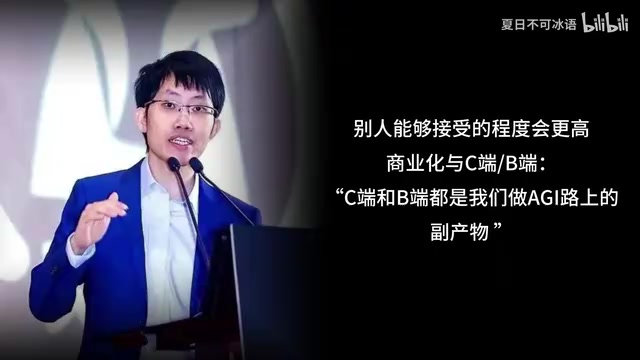
On commercialization—the thing outsiders care about most—Liang's framing is rather counterintuitive: both the consumer (C-end) and enterprise (B-end) businesses are byproducts on the road to AGI. "We do AGI for the sake of AGI; it just happens to produce this thing, so I took it and commercialized it."
He recalled his mindset when DeepSeek suddenly went viral: "That wasn't in our script; we never thought about it at all." Facing the flood of incoming users, the company did not pursue retention or monetization—"we didn't grab for users, we didn't chase money, but we worked very hard to figure out how to serve users well." He described consumer daily active users as "sesame seeds," "because there are watermelons behind them."
Even so, he described the business outlook as quite robust. He predicted that if demand keeps expanding and GPU supply keeps up, reaching several hundred million dollars in API and AI revenue is quite possible; if the company can hit a billion dollars, its cash flow would basically turn positive. He also gave a worst-case fallback plan: "If there's no further technical progress and things freeze here, then we'll go all in on selling APIs, and I think that would be enough to sustain a public company."
The AGI Roadmap: The Next Rung Is Continual Learning
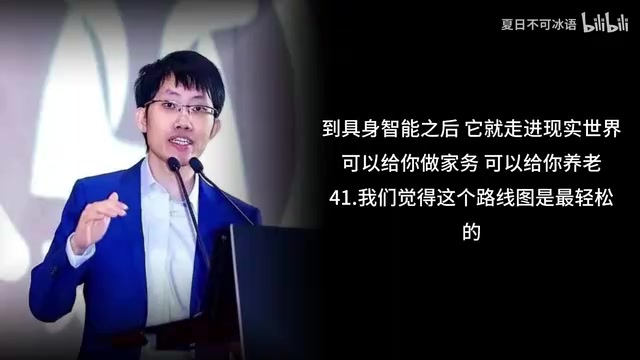
Liang described the development of AGI as a series of ascending "rungs": after CoT (Chain-of-Thought) comes Agent, and the next core problem to solve is continual learning.
This technical ladder maps onto the core evolutionary path of the AI research community in recent years. CoT (Chain-of-Thought) was systematically proposed in 2022 by Google researcher Jason Wei and others; by guiding models to break down their reasoning step by step, it significantly improved performance on complex tasks like math and logic—DeepSeek-R1 is one of the fullest realizations of this paradigm. Agent refers to AI systems capable of autonomous planning, tool invocation, and multi-step execution, though they are still constrained by context-length limits and error accumulation. And "continual learning" is a long-unsolved challenge in academia: how to let a model keep acquiring new knowledge while avoiding "catastrophic forgetting"—the sharp degradation of old knowledge after learning new tasks—is the key technical barrier to bridging the last mile from specialized tools to general intelligence. Liang positions it as the single most core research direction right now, a judgment closely aligned with that of Meta's chief AI scientist LeCun and others.
His judgment is crystal clear: "Right now we don't lack taste or intuition; what we lack is the ability for continual learning." In his view, getting a model to write with taste and intuition is no longer a problem; the real bottleneck is how to make a model engage in long-term continual learning like a human, rather than relying on one-off intensive training.
He painted a picture of what a continual-learning breakthrough would enable: the model would be able to do everything humans can do, and then "develop its own next version," building even stronger AI models. Only after completing this step do we reach what he calls "general intelligence"—only then does it truly enter the real world, "able to do your chores and take care of the elderly."
You may not have noticed the difference in perspective between investors and researchers. Liang pointed out: "Investors see Agent the most, but for us researchers, what we see more of now is learning, and how to solve the problem of learning." He also stressed that the primary goal of training the next version of the model is to "improve DeepSeek's own work efficiency," because "this is the fastest way to achieve AGI."
Compute and Chips: Only a Resource Gap With the US; Helping Huawei Complete Its Ecosystem
On the compute question, Liang gave a candid, quantified assessment. DeepSeek currently has roughly 20,000 equivalent units of compute, most of which arrived only in the past month or two. He stated clearly: "Our gap with the US is mainly in resources; on the people side there's almost no gap, because it's the same group of people." Talent is not the bottleneck; resources are the biggest bottleneck.
He gave a specific measure of the gap: about 12 to 18 months behind the US, "getting things done using one-twentieth of the US's compute." The future goal is to rewrite this narrative—using a fraction of the compute, shrinking the time gap to six months, three months, or even achieving superiority in some areas.
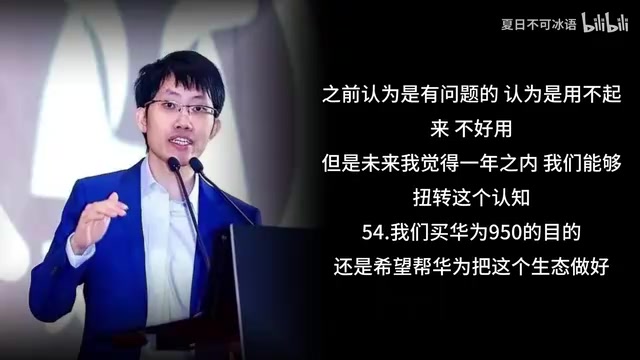
On domestic chips, Liang showed clear strategic support. He bluntly said the purpose of buying Huawei's Ascend 950 is "still to help Huawei build out its ecosystem." The Huawei Ascend 950 SuperPoD uses the Da Vinci architecture and achieves multi-chip coordination through high-bandwidth interconnects; it is Huawei's current flagship product for large-model training. He believes the Huawei 950 SuperPoD can fully substitute NVIDIA's GB200 in both performance and price, with the only cost being that "four Huawei cards equal one NVIDIA card," and it lags by about two years in timing.
A more critical judgment is the crumbling of NVIDIA's CUDA moat. Since its release in 2006, CUDA (Compute Unified Device Architecture) has built a software barrier competitors have found nearly insurmountable, thanks to a vast developer ecosystem, a mature compiler toolchain, and deeply optimized operator libraries (cuDNN, cuBLAS)—conventional wisdom holds that even if hardware performance catches up, over a decade of accumulated software ecosystem is an irreplicable competitive advantage. Liang listed three factors dismantling it: first, AI can write code to build ecosystems; second, TileLang—an open-source high-performance operator programming language developed by a Peking University team (with contributions from Chen Tianqi, the original author of the TVM framework, and others)—dramatically lowers the cost of cross-hardware operator development through declarative programming, and can quickly "rewrite all of NVIDIA's ecosystem"; third, the compute-card market has already surpassed the gaming-card market, and there's no reason for the two to stay coupled. He boldly predicted: "Within the next year, it will be verified that domestic chips will have absolutely no ecosystem problem."
The Endgame of Competition: Those Who Take More Will Be Beaten by Those Who Take Less
Liang has a distinctive game-theoretic view of the industry's endgame. He believes there are "too many" domestic companies building foundation models, and "it will definitely consolidate"—the US may have just three, whereas in China every company does the same thing, resources are spread thin, and each gets an even smaller share.
He proposed an intriguing "low-share wins" theory: "If my goal is to take 5% of all human GDP, I'll be beaten by someone willing to take only 1%; and if someone emerges who wants only 0.1%, they'll beat the previous ones. Those who take more will be beaten by those who take less." In economics this corresponds to a "generous equilibrium" game strategy—in winner-take-all platform economies, actively lowering profit margins and expanding ecosystem coverage often secures a stronger long-term market position than pursuing short-term profit maximization. Amazon AWS's long-running strategy of operating cloud services at extremely low margins until competitors couldn't catch up is a classic example. This is also the deeper reason he treats restraint as strategy—monopolizing AI, a market that could account for 10% of human GDP, is simply impossible.
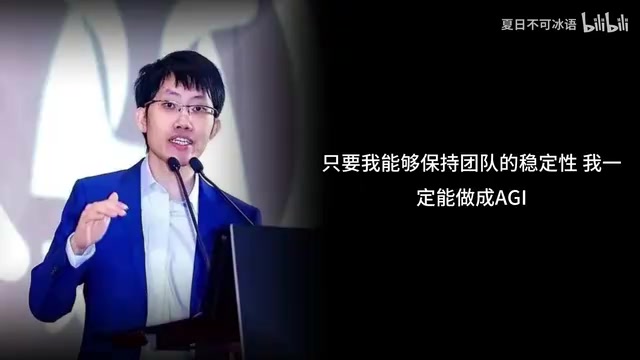
When asked about the company's core interest, his answer was concise and firm: "Maintaining the stability of the team—that's our biggest, perhaps even our only, core interest. As long as we can keep the team stable, I can definitely achieve AGI. Money is definitely not the problem; resources are not the problem."
On Scaling Law, he clearly stated he believes bigger scale yields better results. Scaling Law was systematized in 2020 by Kaplan and others at OpenAI; its core conclusion is that model performance improves as a power law with increases in parameter count, data volume, and compute, but with diminishing marginal returns. In late 2024, Silicon Valley began discussing "the end of scaling," rooted in the imminent exhaustion of high-quality pretraining data and stubbornly high inference costs. Liang distinguished between the "US-perspective scaling limit" and the "China-perspective view that there's still room"—the substance being that the two are operating in fundamentally different compute-scale regimes: what stops DeepSeek from scaling up is only compute, not the philosophy. "When Silicon Valley says scaling has hit its limit, that's for Silicon Valley; for us in China, we're still far from that—we haven't scaled to that degree at all." He revealed that, optimistically, training a 1.5T-parameter model could begin in the not-too-distant future.
What They Won't Do: No Video Generation, No World Models
Beyond the directions he's clearly committed to, Liang also drew clear boundaries. On video generation and world models, his attitude is "we won't do it," on the grounds that they "have nothing to do with the ceiling of intelligence."
He recalled how every company rushed in after Sora came out, but "the small companies later cut it." He acknowledged that video generation "is a good business commercially, but we won't do it just because it's good business." Likewise, world models "also don't have much to do with the ceiling of intelligence" and aren't the most important thing at this stage.
The only exception is multimodality—he positions it as "a component, not the main line itself," but because it matters for consumer products, they will definitely do it, and future versions will support native multimodality.
He also candidly admitted a little-known bottleneck: data labeling. "Labeling data in China has no cost advantage, especially labeling high-end data—it's just too expensive." Currently, "half of our most important people are labeling data," but he optimistically expects the high-quality data problem to be reasonably solved in the foreseeable future.
Conclusion: A Rare Strategic Confession
The reason this transcript sparked so much discussion is that it reveals a long-termism and restraint rarely seen in an AI company. In a context where the industry broadly chases traffic, monetization, and valuation, the values Liang repeatedly stressed—"reasonable profit," "vision-driven," "empowering rivals," and "team stability is the only core interest"—form a complete and self-consistent value system.
Whether or not these judgments ultimately come true, the path DeepSeek has chosen—with continual learning as its technical main line, open source and restraint as its strategy, and the domestic chip ecosystem as its long-term direction—offers a precious sample for observing another possibility for China's AI industry.
Related articles

Kimi K3.1 Hands-On Test: Open-Source Model Nears Opus, Video Generation Steals the Show
Kimi K3.1 completed motion graphics, 3D rendering, mini-games, and video generation in a live test. Analysis of its 2.8T MoE architecture, gap vs Opus/GPT, and hidden video generation.

Sam Altman: Why Life's Biggest Advice Should Still Come from Humans
OpenAI CEO Sam Altman on the limits of AI advice: AI can talk you out of an impulsive email, but life's biggest advice should still come from humans.

"Black October": Did AI Uncover 3% of All Critical Vulnerabilities Ever?
A Reddit post claims 3% of all critical software vulnerabilities ever were found in the past month, dubbed 'Black October.' We break down the statistical issues, how AI-assisted code auditing accelerates discovery, and how developers should respond.