Instagram Launches Content Protection: Creators Can Identify and Address Video Piracy
Instagram launches Content Protection, using visual fingerprinting to automatically detect video re-uploads, available to eligible creators.
Instagram has launched a new feature called "Content Protection," available to eligible creators. After creators opt in, the system automatically scans the platform for content that visually matches their original videos; upon detecting suspected piracy, it sends notifications, and creators can review match results within the tool and decide how to proceed. The capability is based on video frame fingerprint comparison rather than titles or description text, giving it stronger detection power against re-edited clips and re-uploaded content with new voiceovers—effectively automating the "discovery" step of rights protection. The article notes that this responds to short-video re-uploading as a major creator pain point, with an approach similar to YouTube's copyright identification system, but emphasizing human creator review rather than automatic system takedowns, leaving room between protecting originals and avoiding false positives. The feature currently has eligibility thresholds, making it unavailable to small and mid-sized creators in the short term, and its effectiveness against heavily modified re-uploads remains to be verified; in the competitive landscape for creators, this is a step toward strengthening creator tools and differentiated services.
Instagram is rolling out a new feature called "Content Protection" to help creators discover and review unauthorized re-uploads of their original videos on the platform. The feature is currently available to eligible creators, marking a substantive step forward in protecting the rights of original content on the platform.
How It Works: Automatic Visual Fingerprint Matching with Proactive Alerts
According to official documentation, once creators opt in, the Content Protection tool automatically scans Instagram for content that visually matches their original videos. When the system detects a suspected pirated video, the creator receives a notification and can review the match results within the tool and decide how to proceed.
This capability essentially performs fingerprint comparison on video frames rather than relying on titles or description text, giving it stronger detection power against common piracy forms such as re-edited clips and re-uploaded content with new voiceovers. For creators whose short videos are their core asset, this effectively hands part of the rights-protection workflow—previously requiring manual searching and one-by-one reporting—over to an automated system.
Visual fingerprinting (also known as video fingerprinting or content fingerprinting) is a technology that converts video frames into compact digital features. The system samples frames from a video and extracts visual features from key frames, generating a string of hash values or feature vectors as the video's "identity." When other videos are uploaded, the platform similarly extracts fingerprints and compares them against existing fingerprints in the database; if similarity exceeds a threshold, it is flagged as a suspected match. Unlike identification methods that rely on titles, tags, or audio, visual fingerprinting is more robust against evasion tactics such as changing titles, swapping thumbnails, or re-dubbing—though it may still fail against transformations like cropping, mirror flipping, or heavy color grading. YouTube's Content ID is a typical industrial-scale application of this technology, with a fingerprint database covering hundreds of millions of copyrighted works.
Why Now: Short-Video Re-Uploading Has Become a Major Pain Point for Creators
Content re-uploading on short-video platforms is a long-standing problem. After an original creator posts a viral video, it is often downloaded and re-uploaded by other accounts within hours—sometimes even garnering substantial views and engagement. Given the massive volume of platform content, manual patrolling is nearly impossible to cover, and even when creators discover piracy, they often give up on pursuing it due to cumbersome reporting processes.
Instagram's move is highly targeted: automating the "discovery" step to lower the barrier to rights protection for creators. From a product logic standpoint, this mirrors the approach of YouTube's long-running copyright identification system, but Instagram currently focuses on visual video matching and emphasizes creators' right to "review" match results rather than automatic takedowns by the system. This design leaves room for human judgment between protecting originals and avoiding false positives.
Content ID is a copyright identification and management system that YouTube has progressively built since 2007. Rights holders upload audio or video works to a fingerprint database in advance, and YouTube performs real-time comparisons during the upload process. Upon a match, the system handles it according to the rights holder's preset policy: blocking, monetization (ad revenue goes to the rights holder), or tracking/statistics. Its key design is "rights holder pre-declaration + system automatic enforcement," which differs from Instagram's current model of "notify creators after discovery, with creators deciding whether to review"—the latter being closer to "post-hoc alerting" than "automated enforcement." Understanding this difference helps assess that Instagram's Content Protection remains at a relatively light stage of automation; whether it will introduce automatic takedowns or revenue-sharing mechanisms in the future is worth watching.
Impact on the Creator Ecosystem: Improved Enforcement Efficiency, but Limited Coverage
On the positive side, Content Protection allows creators to centrally manage infringement leads, reducing the frustration of "piracy spreading wider than the original" and helping incentivize continued creation of original content. The platform proactively providing protection tools is itself a gesture of goodwill toward creator retention.
However, it is worth noting that the feature is currently only available to "eligible" creators, and the specific eligibility criteria have not been fully disclosed. This means small and mid-sized creators may not be able to use it in the short term, creating a threshold for protection coverage. Additionally, the tool identifies visual matches, so its effectiveness against re-uploaded content that has been heavily modified, mixed, or filtered remains to be seen.
Eligibility in platform products is typically determined by a set of not-fully-disclosed metrics, which may include follower count, recent activity level, participation in creator monetization programs, and account violation history. This kind of threshold-based gradual rollout is a common practice for platforms to control review costs and false-positive risks: first validating match accuracy and appeal pressure on a small scale, then gradually expanding. For small and mid-sized creators, short-term unavailability means rights protection still relies on manual reporting; for the platform, opaque eligibility criteria may also raise fairness concerns. How eligibility expands going forward—and whether it decouples from account size—is a key variable for assessing the feature's actual coverage.
Platform Competition Perspective: Creator Tools Are Becoming a Battleground
In the short-video competitive landscape, creators are a core resource. Platforms have been ramping up creator tools in recent years—from analytics and monetization channels to copyright protection—trying to retain top creators with more comprehensive services. Instagram's launch of Content Protection is both a response to long-standing creator demands and a move to differentiate itself from competitors at the creator-services level.
Whether this system can later expand to a broader creator base and whether it will extend matching across platforms will determine whether it is a symbolic update or genuine infrastructure that changes the short-video re-upload ecosystem. For creators, what's worth watching is the pace of eligibility expansion and the actual experience of the appeal-handling process.
One-line Summary
Instagram launches Content Protection, using visual fingerprinting to automatically detect video re-uploads, available to eligible creators.
Paragraph Summary
Instagram has launched a new feature called "Content Protection," available to eligible creators. After creators opt in, the system automatically scans the platform for content that visually matches their original videos; upon detecting suspected piracy, it sends notifications, and creators can review match results within the tool and decide how to proceed. The capability is based on video frame fingerprint comparison rather than titles or description text, giving it stronger detection power against re-edited clips and re-uploaded content with new voiceovers—effectively automating the "discovery" step of rights protection. The article notes that this responds to short-video re-uploading as a major creator pain point, with an approach similar to YouTube's copyright identification system, but emphasizing human creator review rather than automatic system takedowns, leaving room between protecting originals and avoiding false positives. The feature currently has eligibility thresholds, making it unavailable to small and mid-sized creators in the short term, and its effectiveness against heavily modified re-uploads remains to be verified; in the competitive landscape for creators, this is a step toward strengthening creator tools and differentiated services.
Related articles
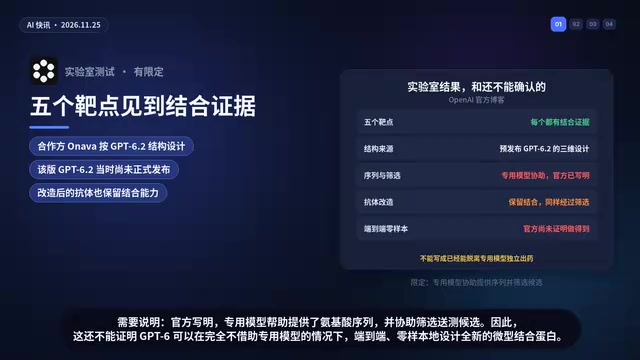
GPT-6 Designs Proteins, Claude Creations Become Apps with One Click, DeepMind Releases New Benchmark
OpenAI says GPT-6 can design protein 3D structures, Anthropic lets Claude creations install as desktop apps, DeepMind's HIP benchmark tests stability on simple questions, Google Workspace opens agent MCP interfaces.
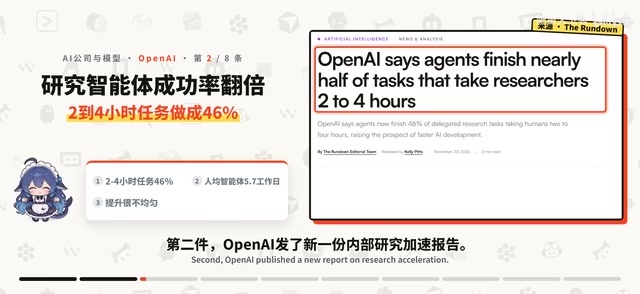
OpenAI Weekly Roundup: GPT-6.2 Rolls Out to ChatGPT, GPT-6 Designs Proteins
OpenAI's week: GPT-6.2 rolls out to ChatGPT, GPT-6 claims independent protein design, agent research share surges, perplexity proposed as a shared metric, and internal safety concerns surface.
Is the Crypto Industry About to "Turn Blue"? The Truth Behind Tech and Politics' Shifting Allegiances
Vergecast discusses whether the crypto industry will shift from the right to the Democrats, revealing the pragmatic nature of tech's politics and the costs of a crypto pivot.