Instagram Tests Long-Form Video Without Discussing Revenue Sharing — Why Creators Aren't Buying It

Instagram tests long-form video to attract creators, but the lack of a revenue-sharing plan sparks dissatisfaction.
Instagram is testing a long-form video feature called "Features" aimed at attracting creators from YouTube, but the platform has yet to determine how or whether to pay creators. Creators quickly expressed dissatisfaction on Threads and Reddit, focusing on the lack of monetization opportunities, in stark contrast to YouTube's mature ad revenue-sharing model. The platform faces a dilemma: long-form video brings higher bandwidth and moderation costs, while ad insertion and revenue-sharing mechanisms have yet to take shape. In the short term, the feature is better suited for brand marketing and creators with existing fan bases; in the long run, if the monetization problem is not solved, it may repeat IGTV's fate.
Instagram is testing a long-form video feature in an attempt to lure creators away from YouTube. But according to multiple foreign media reports, the platform has yet to determine how — or whether — to pay those creators. Instagram head Adam Mosseri announced the new feature, called "Features," on Monday, and creators immediately took to Threads and Reddit to express their dissatisfaction, focusing squarely on the lack of monetization opportunities — in stark contrast to YouTube's ad revenue-sharing model.
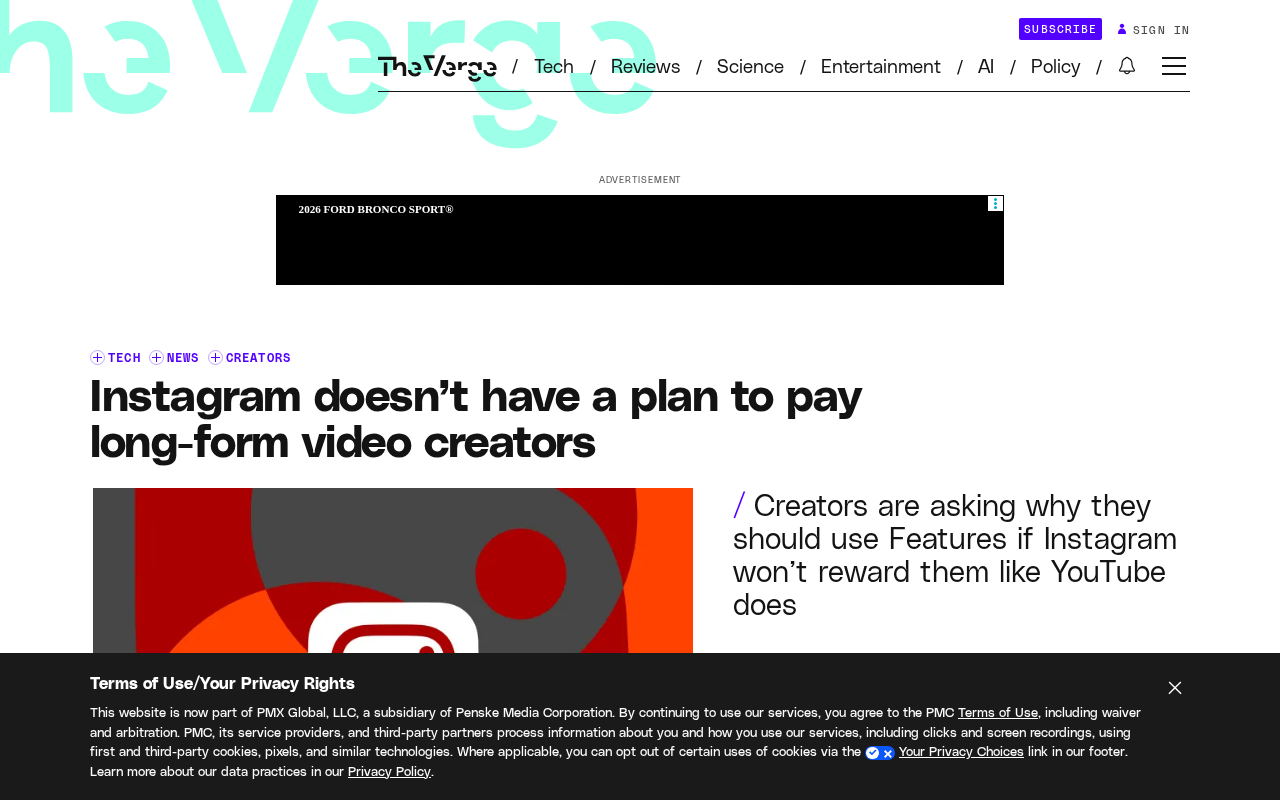
Long-Form Video Strategy: Another Attempt by Instagram
This is not Instagram's first foray into long-form video. From the early days of IGTV to the later Reels short-video format, the platform has been continuously exploring the boundaries of video content. The "Features" test is widely seen as a direct assault on YouTube's core territory. Mosseri's announcement sent a clear signal: Instagram wants longer content, and it wants the creators who have already matured on YouTube.
The problem is that creators need a reason to migrate platforms. YouTube retains long-form creators not just because of traffic, but because of its mature ad revenue-sharing system — creators receive a stable share of ad revenue. Instagram's answer so far, at least based on publicly available information, is missing.
IGTV was a standalone long-form video app launched by Instagram in 2018, supporting videos up to 60 minutes long (later adjusted to 10 minutes), aimed at competing with YouTube. However, due to its separate entry point, lack of creator incentives, and immature content recommendation mechanisms, IGTV failed to build a scaled creator ecosystem. In 2022, its features were integrated into the main Instagram app, effectively declaring the standalone long-form video strategy a failure. The IGTV lesson serves as important context for understanding the "Features" test: if a platform cannot solve creators' monetization and traffic distribution problems, feature innovation alone will struggle to retain professional creators.
Reels is Instagram's short-video feature launched in 2020, directly targeting TikTok. Reels received substantial traffic support from the platform and various monetization tools (such as tips and branded content tags), but its content format is primarily 15-90 second vertical short videos, which is fundamentally different from long-form video in terms of creative logic and ad insertion methods. Reels' success is more reflected in user growth and ad inventory rather than providing a revenue source for long-form creators. Therefore, Instagram still lacks mature monetization experience in the long-form video space.
Creator Dissatisfaction: Without Revenue Sharing, Long-Form Video Is Just "Labor of Love"
According to reports from tech media source rss, the creator community's reaction was swift and negative after Mosseri's announcement. On Threads and Reddit, complaints centered on one point: long-form video creation without a monetization path is unsustainable for professional creators.
A creator's post on Threads was cited by multiple media outlets, pointing out that Instagram's long-form video plan "lacks the most critical part" — compared to YouTube's ad revenue sharing, Instagram's silence leaves creators unable to see a return on investment. This sentiment spread through related Reddit discussions as well, with some users saying bluntly that the platform wants quality content but isn't willing to pay for it.
According to analysis from the same source, Instagram's hesitation may stem from differences between its business model and YouTube's. Instagram relies primarily on ad revenue, but its ad formats are mainly feed and short-video based. Ad insertion methods for long-form video, revenue-sharing ratios, and creator incentive mechanisms have yet to take shape. This means that even if creators are willing to try, they will struggle to achieve predictable income in the short term.
The YouTube Partner Program (YPP) is the core mechanism of YouTube's ad revenue-sharing model. After creators join YPP, the platform displays ads before, during, or after videos and distributes 55% of ad revenue to creators. The program has thresholds (such as 1,000 subscribers and 4,000 watch hours), but once met, creators can earn relatively stable and predictable income. YPP's success lies in binding the interests of three parties: creators are motivated to produce high-quality long-form videos, the platform gains content retention and ad revenue, and advertisers gain precise exposure. This model has become the industry standard for the long-form creator economy and is the benchmark against which Instagram's long-form video feature is being compared.
The Platform's Dilemma: Content or Cost?
From the platform's perspective, long-form video means higher bandwidth costs, more complex content moderation, and longer user dwell time — the latter is good, but the former two are burdens. YouTube solved this cycle with ad revenue sharing: creators earn money, the platform retains content, and advertisers gain exposure. If Instagram wants to replicate this model, it needs to restructure its existing ad system or find new monetization methods.
But Mosseri's announcement did not mention any revenue-sharing plan. This may indicate that Instagram is currently more focused on the richness of content supply than on the health of the creator economy. According to reports from source rss, the platform has "not yet determined" how or whether to pay creators — and this uncertainty itself is a signal: the long-form video feature may first run in test form, with monetization issues left for later.
This strategy is not uncommon among tech platforms — first use features to attract users and content, then consider commercialization. But for creators already accustomed to YouTube's revenue-sharing model, this "board first, pay later" approach lacks appeal. A creator who spoke out on Threads pointed out that without clear revenue expectations, professional creators will not make long-form video their primary focus.
Bandwidth costs are an unavoidable operational burden for long-form video platforms. The higher the video resolution, the longer the duration, and the greater the viewership, the more the platform must pay for CDN (Content Delivery Network) and storage. For a platform like Instagram that started with images and short videos, the large-scale introduction of long-form video means a structural increase in infrastructure costs. In addition, the complexity of content moderation also increases significantly with video length, requiring more human and algorithmic resources. These cost pressures explain why platforms tend to be cautious when launching long-form video features, and partly explain Instagram's hesitation on revenue sharing — before costs are covered by ad revenue, it is difficult for the platform to commit to a fixed percentage of creator revenue sharing.
What Does This Mean for Creators?
In the short term, Instagram's long-form video feature is better suited for brand marketing and trial content distribution by creators with existing fan bases, rather than as a revenue source. For professional creators who rely on video income, YouTube remains the safer choice.
In the long run, if Instagram does not address the monetization problem, the long-form video feature may repeat IGTV's fate — the feature launches, generates brief excitement, and is ultimately marginalized due to the lack of creator economy support. The platform needs to answer a fundamental question: why should creators invest in long-form video production costs here?
According to reports from source rss, there is currently no indication that Instagram has a clear timeline for launching a revenue-sharing plan. Creators' dissatisfaction has become public, and whether the platform will adjust its strategy as a result is worth continued attention.
One-line Summary
Instagram tests long-form video to attract creators, but the lack of a revenue-sharing plan sparks dissatisfaction.
Paragraph Summary
Instagram is testing a long-form video feature called "Features" aimed at attracting creators from YouTube, but the platform has yet to determine how or whether to pay creators. Creators quickly expressed dissatisfaction on Threads and Reddit, focusing on the lack of monetization opportunities, in stark contrast to YouTube's mature ad revenue-sharing model. The platform faces a dilemma: long-form video brings higher bandwidth and moderation costs, while ad insertion and revenue-sharing mechanisms have yet to take shape. In the short term, the feature is better suited for brand marketing and creators with existing fan bases; in the long run, if the monetization problem is not solved, it may repeat IGTV's fate.
Related articles

LangChain Retry Middleware Configuration: Practices and Selection Guide
Based on Reddit community discussion, this article analyzes LangChain ModelRetryMiddleware retry parameter configuration practices, covering the selection logic and alternatives for key options like max_retries, backoff_factor, and jitter.

Texas Senate Race in Trouble: Why Are Republicans Nervous?
Texas Senate race stirs Republican anxiety. Based on street interviews, this article analyzes the Democratic offensive in funding, organization, and running everywhere, and how Republicans are defending "Texas, Texas" amid the political pendulum effect.

Gemini Chat Now Generates and Edits Google Docs Directly, a New Breakthrough in Office Productivity
Google Gemini's chat interface now generates and edits PDF, Google Docs, Sheets, Slides, Markdown, TXT, and code files. Available to all users; web supports all formats, mobile only PDF for now.