Interview with Claude Code Lead: The Truth and Future Behind 80x Growth

Claude Code experiences explosive growth, with annual revenue surging from $4B to $45B.
Anthropic's Claude Code is experiencing unprecedented growth, with the company's annualized revenue surging from $4 billion to approximately $45 billion. Its core competitive edge lies in AI agent tool-use capabilities — editing files, controlling browsers, and more — transcending traditional chatbots. Addressing the Token Maxing controversy, lead Boris Cherny argued it doesn't represent a major share of demand, citing a 250% increase in engineer code output as proof of real value. The team continues to optimize model efficiency and rate limits while navigating competitive challenges.
Anthropic's Claude Code is experiencing unprecedented growth. In the latest episode of the Big Technology Podcast, Claude Code lead Boris Cherny sat down for an in-depth interview, sharing insights on the product's explosive growth, the Token Maxing controversy, the frontier of AI agents, and the critical question of whether any of this is sustainable.
A Growth Curve Never Seen Before: Annual Revenue Surging from $4B to $45B
Boris Cherny described Claude Code's trajectory with the words "I've never seen growth this steep." Usage "immediately skyrocketed" at the internal launch, and even before the public release, the team had a feeling this would be a breakout product.
Growth entered an exponential phase last May with the release of Opus 4 and Sonnet 4. Every subsequent model iteration — Opus 4.5 (November), 4.6 (February), 4.7 — brought a new inflection point. Anthropic CEO Dario Amodei revealed that product demand had grown 80x year-over-year, with annualized revenue surging from roughly $4 billion last year to approximately $45 billion.

Boris admitted: "We have many people on the team who've worked in tech for years and lived through all kinds of hyper-growth products, but even so, none of us have ever seen growth like this." Anthropic's current product portfolio includes Claude Code, Claude AI Chat, Claude Design, Cowork, and API products — and Claude Code has become the first point of contact with Anthropic for many users.
From Code Editor to General-Purpose AI Agent: Tool Use Changes Everything
Tool Use: The Fundamental Difference Between Claude Code and Chatbots
Boris boils down the core difference between Claude Code and traditional chatbots to one thing: tool use capability. A chatbot can only go back and forth in conversation, whereas Claude Code, as an AI agent, can use your tools — editing files, controlling a browser, logging into various services, organizing desktop files.
To understand this distinction, it helps to clarify the technical meaning of AI agents. An AI agent is an AI system capable of perceiving its environment, making autonomous decisions, and executing actions to accomplish goals. Its core capability lies in "tool use" (also known as Function Calling) — the model can not only generate text but also invoke external APIs, manipulate file systems, control browsers, and more. This is enabled by frameworks like ReAct (Reasoning + Acting), which allow models to interleave actual operational steps within their reasoning chains. OpenAI's Function Calling (introduced in 2023) and Anthropic's Tool Use API are key milestones in this paradigm, marking a fundamental shift from AI as a "conversational tool" to AI as an "acting agent."
"A year and a half ago, no AI product could actually edit files on your computer. But that's the first thing Claude Code could do. That tiny difference completely changed how people use the product."
Beyond Coding: Using AI Agents for Everyday Tasks
Boris shared his experience using Cowork to book flights: he needed to travel to London and Tokyo for events, with multiple stops in between. He told Cowork the rough itinerary and asked it to check his email and calendar for verification. Cowork not only caught two stops he had missed and several incorrect dates but also booked 8 flights and 5 hotels within an hour. One hotel was in the wrong location, so he asked Cowork to rebook it — done in minutes.
"That was the best result I've gotten with Cowork. Every time the model improves, you have to constantly recalibrate your expectations of what it can do."
The Token Maxing Controversy: Real Demand or Artificial Inflation?
Silicon Valley's "Token Maxing" Phenomenon Raises Questions
One of the sharpest topics in the interview was Token Maxing — companies requiring employees to use as many AI tokens as possible, even setting up leaderboards and usage targets. The Financial Times reported that Amazon employees were running unnecessary automation tasks to hit a weekly target of 80% developer AI usage.
To understand this phenomenon, you need to grasp the economics of tokens. A token is the basic unit by which large language models process text, roughly corresponding to 0.75 English words. Enterprise AI costs are typically billed by token consumption, so token usage naturally becomes a core KPI for measuring AI adoption. The Token Maxing phenomenon reflects the management dilemma companies face during the AI transition — KPI-driven usage targets may incentivize "gaming the numbers" rather than genuine productivity gains. This mirrors the distortion of "page views" as a metric in the early internet era, suggesting that companies need more sophisticated AI ROI evaluation frameworks focused on task completion quality rather than raw consumption.
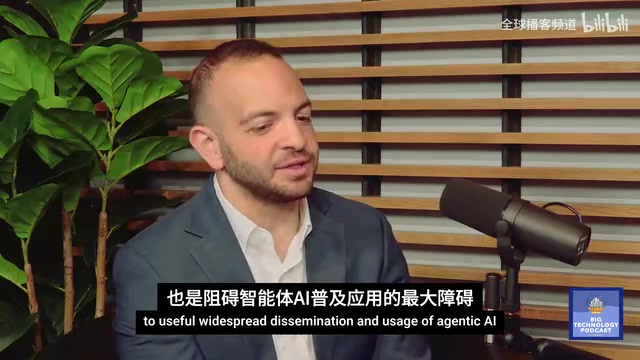
Boris argued that Token Maxing does not represent a significant portion of demand. He pointed out that Claude Code has a large and diverse customer base — "it's not one company driving the usage." He's more focused on how companies can genuinely benefit from AI, drawing an analogy from a 1990s Harvard Business Review article: when PCs became widespread, people also questioned why they couldn't see productivity gains. The answer was — you have to restructure your entire business processes around the new technology, not relegate it to the margins.
Engineers' Code Output Up 250% — Real Data
Boris contrasted his experience at Meta: it used to take a long time to achieve 1-3% annual productivity gains per engineer. After adopting Claude Code, Anthropic saw roughly a 250% increase in code output per engineer, while maintaining stable code quality and reliability.
His advice: give everyone tokens to experiment with, create psychological safety so people feel comfortable trying, because "innovation often comes from the person you least expect — it might be the accountant in the corner, a marketing person, or a fresh graduate."
Model Efficiency and Rate Limits: The Two Biggest User Pain Points
Can LLM Efficiency Issues Be Solved?
The host shared a typical example: asking Cowork to export a PowerPoint to PDF, only to watch the model get stuck in a loop, frantically calling tools yet unable to complete this simple task. Some commentators argued this is an inherent flaw in LLM technology that cannot be fixed.
Boris disagreed. He reflected on Claude Code's state a year and a half ago — "it wasn't very good, it would spiral, the quality was poor" — compared to today, where "Claude Code is 100% written by Claude Code itself, and Cowork is 100% written by Claude Code." At a Y Combinator talk, roughly half the founders raised their hands to say 100% of their code was written using Claude Code.

Regarding model optimization strategy, Boris said the team prioritizes intelligence first, with efficiency improvements following. Users can balance intelligence and token consumption by choosing different models (Opus/Sonnet/Haiku) and adjusting the "effort" parameter. This tiered design reflects Anthropic's careful planning of the model capability spectrum: the Opus series is positioned as the flagship for reasoning, the Sonnet series targets the performance-cost sweet spot, and the Haiku series handles high-frequency lightweight tasks — together forming a complete product matrix covering different use cases.
Rate Limits and Competitive Pressure from OpenAI Codex
Regarding the frequently complained-about rate limits, Boris revealed that in reality "only a very small percentage of users actually hit the rate limits." The team has already doubled the 5-hour rate limit, announced increases to weekly rate limits, and brought new Colossus compute capacity online to serve the surging user base.
Facing competition from OpenAI Codex, Boris said: "There will always be imitators and competitors. To me, it's a compliment — it pushes everyone to do better."
Rethinking Moats in the Software Industry in the AI Era
Which Business Moats Are Strengthening, and Which Are Weakening?
Boris referenced the "7 Powers" business moat framework to analyze the shifting dynamics of the software industry in the AI era. "7 Powers" is a strategic analysis framework proposed by Stanford business professor Hamilton Helmer, identifying seven sources of durable competitive advantage: scale economies, network effects, counter-positioning, switching costs, branding, cornered resources, and process power. In the AI era, this framework faces new stress tests: generative AI has dramatically lowered the barrier to software development, meaning advantages that once relied on "technical complexity"
Related articles
Meta Muse Hits 900K Downloads in Six D…
Meta Muse Hits 900K Downloads in Six Days: The AI Agent Era Has Officially Arrived
Meta's AI agent Muse hit 902K downloads in 6 days, topping US App Store and Google Play charts above ChatGPT and Claude. A deep dive into Muse's capabilities and the AI Agent race.
 Industry Insights
IRS Fully Embraces Claude AI, Accelerating Federal Government's AI Adoption
The IRS is recruiting staff with 24/7 Claude AI access, marking Anthropic's breakthrough into the federal government. Explore the strategic implications and tax use cases.
 Industry Insights
The IRS Mobile App Debate: A Trust Crisis in Government Digital Transformation
The IRS's proposed mobile app has sparked heated debate. This article analyzes the core arguments, exploring data security, privacy, and the trust crisis in government digital transformation.