iPhone 18 Pro Launches First as Apple Shifts Its Product Release Strategy
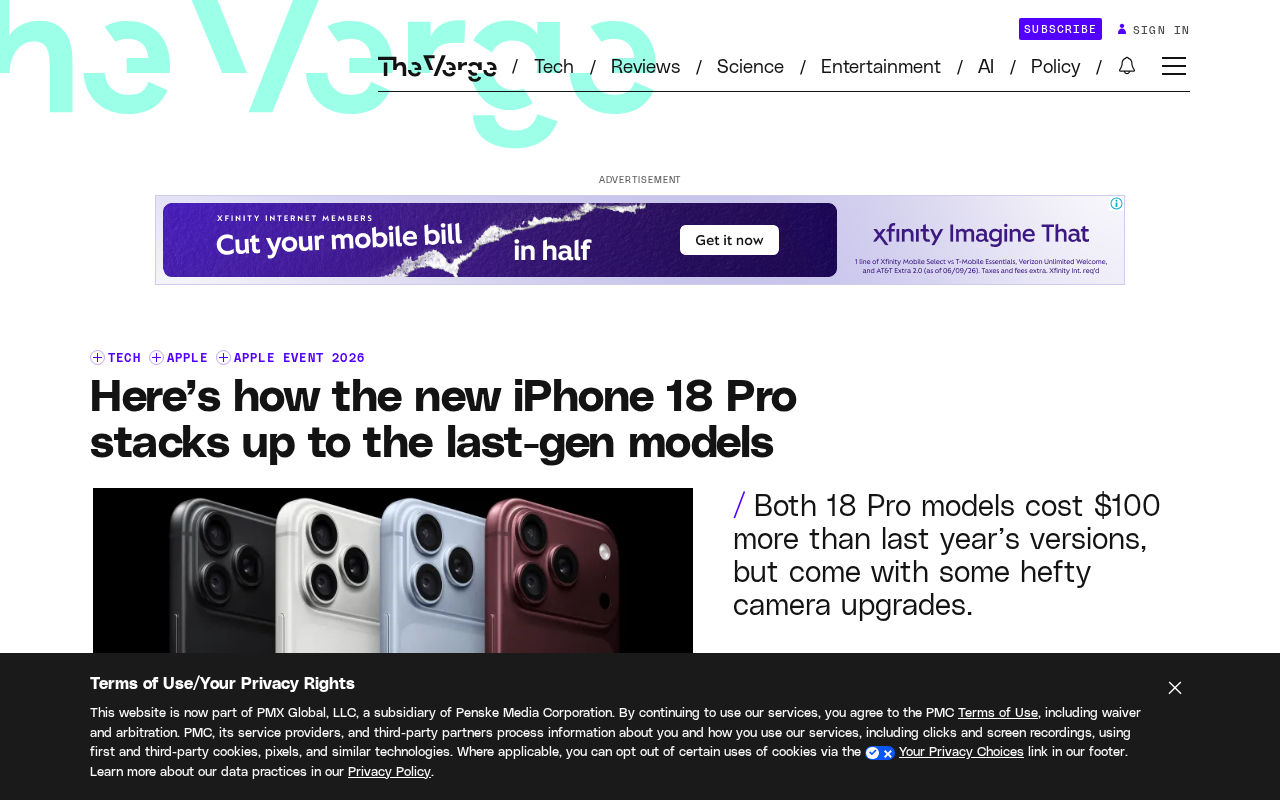
Apple breaks tradition by launching iPhone 18 Pro first, with foldable iPhone Duo and standard model to follow later.
Apple is shaking up its 2026 iPhone launch strategy by releasing the iPhone 18 Pro series first, followed by the $1,999 foldable iPhone Duo in October, while the standard iPhone 18 remains unscheduled. This staggered approach breaks over a decade of simultaneous launches, driven by supply chain optimization, premium market positioning, and the need to give the new foldable line its own marketing spotlight.
Apple Breaks Its Traditional Launch Playbook
Apple is taking an unusual product launch approach in 2026. Departing from its long-standing practice of unveiling the entire iPhone lineup at once, Apple has chosen to release the iPhone 18 Pro series first, followed by the foldable iPhone Duo at $1,999 in October, while the release date for the standard iPhone 18 remains undetermined. This staggered launch approach is extremely rare in Apple's history.
Looking back at Apple's launch history, the company established a fixed pattern of holding a fall event in September and selling new devices by the end of that month, starting with the iPhone 5 in 2012. The iPhone 6 era in 2014 introduced the dual-size strategy for the first time. The iPhone 11 series in 2019 expanded to a three-model simultaneous launch, and the iPhone 12 series in 2020 further scaled to four models debuting at once. Although the pandemic caused the iPhone 12 mini and Pro Max to ship a few weeks late, the overall announcement still took place during a single event. This time, splitting the Pro, foldable, and standard models across different launch windows breaks a tradition Apple has maintained for over a decade.
There are likely multiple considerations behind this strategic shift. First, prioritizing the high-end Pro series allows Apple to seize the initiative in the fiercely competitive flagship market. Second, the foldable iPhone Duo, as an entirely new product line, needs its own marketing cycle to build market awareness. Finally, the delayed release of the standard model may be tied to supply chain management or product differentiation strategies.
From a supply chain perspective, the staggered launch has deep industrial logic. Apple's initial production run for new iPhones typically ranges from 70 to 90 million units, involving major contract manufacturers such as Foxconn, Pegatron, and Luxshare Precision across dozens of production lines in mainland China, India, and Vietnam. Simultaneously launching four to five models of different form factors puts enormous pressure on component procurement, production line changeovers, and yield ramp-ups. In particular, the foldable iPhone Duo requires flexible OLED panels, precision hinge assemblies, and other components completely different from conventional slab-style phones, likely sourced from entirely different supplier ecosystems. Staggering the mass production timelines for each model effectively reduces peak supply chain pressure, improves yields and quality control, and allows Apple to dynamically adjust production ratios for subsequent models based on market feedback.
Market Positioning of the iPhone 18 Pro Series
As the core products of this initial launch, the iPhone 18 Pro and 18 Pro Max carry Apple's competitive mission in the premium market. Judging by the release cadence, Apple is placing greater emphasis on professional users and early adopters — users who typically have stronger demand for the Pro series' advanced features and are more willing to pay for new technology.
Compared to the previous generation, the iPhone 18 Pro series is expected to deliver significant upgrades in camera systems, chip performance, and AI capabilities. However, specific hardware specifications and innovations will have to wait for Apple's official event. What you might not have noticed is that the Pro series' early launch likely signals Apple's desire to establish market leadership well before the holiday shopping season arrives.
The Strategic Significance of the Foldable iPhone Duo
Priced at $1,999, the iPhone Duo will mark Apple's first entry into the foldable market. This price point is notably higher than the current Pro Max lineup, indicating that Apple is positioning it as an innovative product for the ultra-premium segment. The October launch timing is also carefully designed — it avoids competing for attention with the Pro series launch while completing market education before the year-end shopping season.
Looking at market data, the global smartphone average selling price (ASP) was approximately $340 in 2025, while the ultra-premium segment above $1,000 accounted for only about 8% of total shipments yet contributed over 35% of industry profits. Samsung's Galaxy Z Fold series is priced in the $1,799–$1,899 range, and Huawei's Mate X series similarly exceeds 10,000 RMB in the Chinese market. Apple's choice of the $1,999 price point both benchmarks against competing foldable products and leaves room for future price reductions. This "top-down" pricing strategy is not uncommon in Apple's product lines — both Apple Watch Ultra and Vision Pro adopted similar ultra-premium market entry strategies, establishing brand premium before gradually introducing more affordable versions.
Foldable technology has been evolving in the Android ecosystem for several years, with Samsung, Huawei, and other manufacturers accumulating extensive experience. The core challenge of foldable technology lies in the reliability of flexible display panels and hinge mechanisms. Samsung launched the Galaxy Fold in 2019 as the first mass-produced foldable phone, but early models suffered from noticeable screen creases and durability issues. After more than five years of iteration, Samsung's UTG (Ultra-Thin Glass) technology has advanced to its third generation, and hinge lifespan has increased from an initial 200,000 folds to over 400,000. Huawei took a different path — its Mate X series uses an outward-folding design that offers advantages in screen-to-body ratio when unfolded. Additionally, OLED panel suppliers such as Samsung Display, BOE, and Visionox have made significant progress in flexible AMOLED panel yields, gradually reducing foldable phone costs. Apple is reportedly said to have invested over five years in foldable R&D and holds multiple patents related to folding hinges, flexible screen protective layers, and adaptive UI.
Although Apple is entering the foldable space relatively late, the company has a track record of achieving breakthroughs through ecosystem integration and user experience optimization. Apple's late-mover advantage in foldables largely stems from its unique ability to integrate hardware and software ecosystems. Unlike the Android camp, Apple simultaneously controls iOS, its custom-designed chips (A-series/M-series), and the core app ecosystem. This means Apple can deeply optimize multi-window interactions, screen state transitions, app continuity, and other foldable-specific scenarios at the system level, rather than relying on Google's platform-level adaptations like Android manufacturers must. Previous technology investments such as iPadOS multitasking Split View, Stage Manager window management, and Universal Control cross-device coordination can all be directly ported to the foldable iPhone's interaction paradigm. Furthermore, the adaptation of over 1.8 million iOS apps in the App Store can be accomplished more efficiently under Apple's unified development frameworks (SwiftUI, UIKit's adaptive layouts). The launch of the iPhone Duo will be a crucial litmus test of Apple's innovation capabilities in new device form factors.
Impact on Consumers and the Industry
This staggered launch strategy is a double-edged sword for consumers. On one hand, users looking to buy the standard iPhone will have to wait longer, potentially affecting purchasing decisions. On the other hand, it gives consumers more time to evaluate the differences between product lines and make more informed choices.
From an industry perspective, Apple's strategy could prompt other manufacturers to follow suit. If proven effective, staggered launches can extend a product's market buzz cycle and avoid the attention fragmentation that comes with releasing all models simultaneously. At the same time, it tests Apple's supply chain management and marketing coordination capabilities.
The absence of the standard iPhone 18 is the biggest mystery of this launch season. Whether driven by technical reasons or strategic considerations, Apple needs to provide a clear timeline as soon as possible to stabilize market expectations and consumer confidence.
Key Takeaways
Related articles
Security Guide for AI/BI Dashboard Embedding: Multi-Tenant Data Isolation and Access Control in Practice
Explore security challenges in AI/BI dashboard embedding, covering multi-tenant data isolation, row-level security, identity propagation, and defense-in-depth architecture for embedded analytics.

Xbox Classic Startup Animations Return: Personalization and Cloud Gaming Experience Get Major Upgrades
Microsoft rolls out classic console startup animations, badge customization, cloud gaming background downloads, and more for Xbox Insiders. Remote Play quality and voice chat also improved.
AI-Assisted Programming Goes Mainstream: A Paradigm Shift in Software Development
How AI tools are reshaping software development: from FAANG adoption to workflow transformation. Explore AI coding assistants, intelligent code review, and the future of human-AI collaboration.