iPhone 18 Pro Max Hands-On: Is the Variable Aperture Worth the Upgrade?

iPhone 18 Pro Max is a polished but incremental S-tier upgrade — thermal and charging gains matter more than the camera.
The iPhone 18 Pro Max brings a mechanical variable aperture (F1.8–F4), a larger vapor chamber, 50W+ fast charging, and a smaller Dynamic Island in two new colorways. Yet the overall verdict is restrained: this reads more like a traditional "S" update than a generational leap. The variable aperture is an impressive engineering feat, but its F4 ceiling still falls short in bright sunlight, and the coexistence of hardware bokeh and Portrait mode software blur may confuse casual users. The genuinely impactful upgrades are in thermals, battery life, and charging speed. With Apple's foldable Duo arriving later this fall, most iPhone 17 Pro users are better off waiting.
Apple's new iPhone 18 Pro Max has arrived. As the largest, heaviest, and biggest-battery device in the entire lineup, it carries plenty of expectations. But after actually getting hands on with it, one YouTube tech reviewer delivers a remarkably measured verdict: this feels more like what Apple used to label an "S" update — a modest spec bump — rather than a true generational leap.
Design & Colors: What the New Finishes Signal
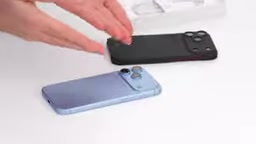
The review units on hand came in two new colorways: Burgundy and Glacier. Apple uses a signature color each generation to signal "this is the latest model," and this year is no different. Burgundy is the reviewer's pick for the flagship color — and his second choice overall. It's understated without being flashy, blending almost seamlessly into darker aesthetics. Paired with a slim case, it becomes a subtle detail rather than a statement.
Weight and thickness are worth noting. To accommodate the larger battery and the extra mechanical components required for variable aperture, this Pro Max is thicker than any previous generation. The reviewer confirms it does feel noticeably heavy — though not uncomfortably so. His recommendation: skip the bulky protective case and go with an ultra-thin option with built-in MagSafe to keep the device manageable in hand.
There's also one detail only a seasoned reviewer would catch: the Apple logo on the back has shifted slightly upward. The previous generation's logo placement always struck him as "too low," and while the adjustment is subtle, he calls it a "flagship-level discovery."
Variable Aperture: Engineering Marvel, Practical Limitations
The most talked-about camera change this cycle is the mechanical variable aperture. The camera module contains real physical aperture blades — you can watch the iris open and close like a professional lens — bringing a genuinely more "pro photography" feel to the experience. As an advocate for manual control, the reviewer appreciates it: having one more manual option is always a good thing.
But he's also candid about its ceiling. A traditional lens can stop down continuously from F1.8 all the way to F22, while the iPhone 18 Pro Max's physical aperture only ranges from F1.8 to F4. In bright outdoor conditions, F4 is often still not narrow enough to prevent overexposure — meaning users will still need to compensate with faster shutter speeds, which in turn sacrifices the natural motion blur you'd want when shooting video. In other words, you'll still need to put an "ND filter" on your camera in direct sunlight.
There's also a subtler tension: real optical bokeh from the physical aperture blades coexists alongside the software-simulated depth-of-field from Portrait mode, which can confuse everyday users. The reviewer noticed that the software blur sometimes kicks in prematurely, producing an unnatural-looking transition — whereas the hardware aperture's bokeh is visibly more pleasing. His advice: add aperture control to the long-press "Photo Controls" shortcut menu at the top and prioritize using the real aperture.
In indoor test shots, the shallow depth of field at F1.48 produced results that pure software processing simply couldn't replicate — the physical component delivers a difference that's visible to the naked eye.
Variable Aperture Explained: Variable aperture is a core mechanism in traditional camera lenses — an iris ring made of multiple metal blades controls the amount of light entering the lens. The smaller the F-number, the wider the opening, the more light comes in, and the shallower the depth of field. Professional camera lenses typically offer continuous adjustment from F1.4 to F22, giving photographers flexibility across lighting conditions. Fitting this mechanical structure into a smartphone camera module less than 1cm thick is a remarkable engineering challenge — requiring precise blade control in an extremely confined space without compromising optical alignment. Samsung previously experimented with a dual-position physical aperture (F1.5/F2.4) on devices like the Galaxy S9, but the iPhone 18 Pro Max is the first Apple product to bring a continuously variable physical aperture to a mainstream smartphone. ND (Neutral Density) filters are accessories commonly used by professional photographers in bright conditions. They uniformly reduce incoming light without affecting color — essentially "sunglasses" for the camera — allowing photographers to maintain a wide aperture or slow shutter speed in direct sunlight.
Audio, Display & the Hidden Front Camera
Previous Pro Max generations typically offered louder, better speakers than the standard Pro — and that holds true here, though the gap has narrowed to the point of being nearly negligible. Both devices perform excellently as smartphone speakers, and speaker quality is an area where Apple has made meaningful strides in recent years.
On the display front, the Dynamic Island on the Pro Max takes up proportionally less screen real estate — Apple shrank it specifically for this model, freeing up more usable display area. The trick is engineering the front camera into the upper-left corner of the screen in a way that's nearly invisible — a clever piece of engineering. It's a quiet but satisfying improvement, and one that reflects the overall tone of this device: a lot of effort went into what Apple considers the real star of the year.
The Real Upgrades: Thermals, Battery Life & Faster Charging
Looking past the camera headline feature, the reviewer argues the most genuinely useful improvements this generation are in areas people actually care about day-to-day: thermal performance and battery life. A larger vapor chamber makes extended gaming sessions and high-resolution video recording more sustainable — the chassis will get warm under heavy load, but that's an intentional thermal design choice.

Faster charging is also a meaningful quality-of-life improvement. With the right charger, power delivery now exceeds 50W — finally addressing one of Apple's long-standing weak points. If what you want is a massive battery, powerful performance, and a best-in-class large-screen flagship, this phone delivers.
Vapor Chamber Explained: A vapor chamber is a heat-spreading component based on phase-change heat transfer. Structurally, it's a sealed thin cavity containing a small amount of working fluid. When the chip generates heat, the fluid vaporizes at the heat source, and the steam rapidly spreads outward, condensing at cooler areas to release heat. The condensed liquid then returns to the heat source via capillary structures, creating a continuous cycle. Compared to traditional copper heat spreaders, vapor chambers are several times more efficient at conducting heat and can distribute it across a much larger area, preventing localized hotspots that trigger performance throttling. Apple's historical "overheating" issues have been partly attributed to limited vapor chamber area — the larger chassis of the Pro Max can theoretically accommodate a bigger chamber, which is one of the engineering reasons the Pro Max tends to outperform the Pro in sustained high-load scenarios. On the 50W charging front: Android flagships have long offered 100W+ fast charging, while Apple had been stuck around 27W for years. Breaking the 50W barrier is a perceptible improvement — though it still trails the competition in a head-to-head comparison.
Is It Worth the Upgrade?
The reviewer's core verdict is clear: for the vast majority of iPhone 17 Pro users, this upgrade probably isn't compelling enough. A smaller Dynamic Island, real physical aperture blades, faster charging, longer battery life — each improvement is incremental, not transformational. In his words, this is fundamentally an "S-series spec bump."
The price increase is primarily driven by component costs — particularly shortages in RAM and storage media — hitting the 1TB and 2TB configurations hardest, with prices now approaching the cost of a used car.
The bigger strategic question is the product roadmap itself: the reviewer repeatedly emphasizes that Apple's truly exciting announcement this year is the foldable "Duo" device, not the Pro or Pro Max. That raises an open question — will the people who would have spent thousands on a Pro Max choose to wait and see what the foldable looks like when it lands later this fall? If it were him, he'd almost certainly wait before dropping over two thousand dollars.
All told, the iPhone 18 Pro Max is a solid, polished large-screen flagship — just not a dramatically impressive one. And if you've been following the coverage, that's probably not a surprise.
Related articles

Chain of Thought Isn't Just for AI: How Humans Can Use CoT to Improve Thinking Quality
Chain of Thought isn't just a prompt trick for large models. Starting from a Hacker News discussion, this article analyzes why CoT works for human thinking too, breaks down actionable ways to transfer it, and highlights the key differences between human CoT and machine CoT.
Cloudflare Teams Up with OpenAI: Closi…
Cloudflare Teams Up with OpenAI: Closing the Loop from Vulnerability Discovery to Defense with AI
Cloudflare uses OpenAI Daybreak to investigate security vulnerabilities and generate reviewable remediation plans, while developers use Codex to boost coding efficiency and quality.

Orca Multi-Agent Orchestration in Practice: A Guide to Parallel Collaboration with Claude and Codex
Orca is Stable AI's free open-source agent workbench supporting 34 agents like Claude Code and Codex in parallel. Learn its Git worktree isolation, multi-model orchestration, and mobile management.