IrisGo: The AI Workflow Assistant That Learns From a Single Demonstration

IrisGo is an AI assistant for solopreneurs that automates workflows by learning from a single user demonstration.
IrisGo is an AI-powered automation assistant designed for one-person companies, debuting at #2 on Product Hunt. Its core feature, Watch & Learn, lets users demonstrate a task once and automatically converts it into a reusable workflow — bypassing the manual configuration required by tools like Zapier. The product integrates daily briefs, email triage, and to-do tracking to reduce context-switching across multiple apps. Currently in free beta, its defining open question is whether demonstration-based learning can generalize reliably across real-world, variable work scenarios.
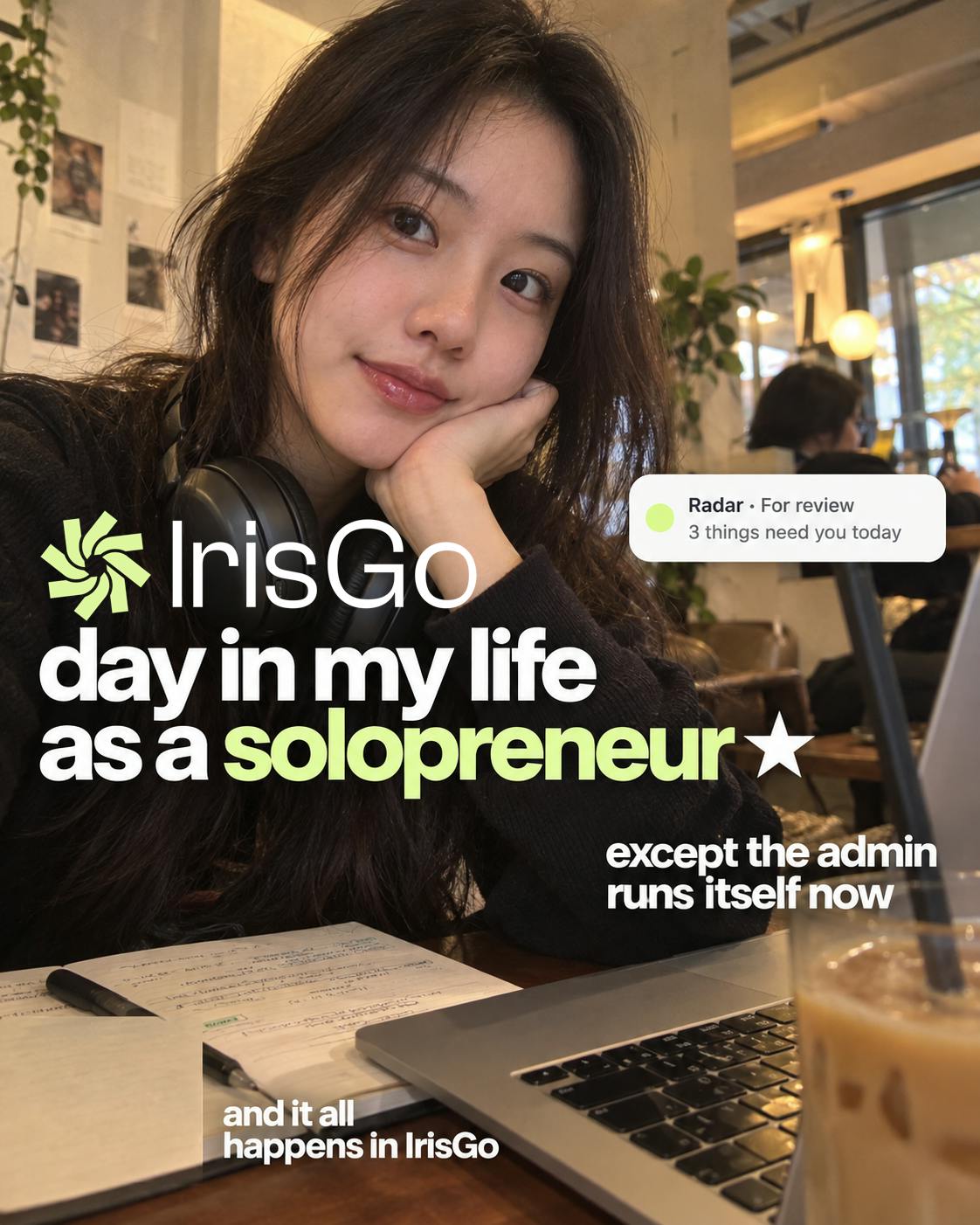
Tools for solopreneurs are getting smarter. IrisGo debuted at #2 on Product Hunt with 217 upvotes, targeting the classic one-person company dilemma: building a product while drowning in administrative busywork. Its core promise is refreshingly simple — show it once, let it run.
What Problem Is IrisGo Solving?
The biggest pain point for solopreneurs isn't a lack of ideas — it's time fragmentation. Every day brings a fresh cycle of scanning emails, sorting what needs a reply, organizing to-do lists, and chasing down scattered tasks. This repetitive administrative overhead constantly eats into the energy that should go toward actually building the business.
IrisGo positions itself as an automation assistant built specifically for this audience. According to its official description, it provides daily briefs, triages email, tracks to-dos, and converts demonstrated tasks into reusable workflows. The core logic: instead of performing the same actions manually every time, let recurring patterns solidify into automated processes.
Its category tags say a lot — Task Management, Artificial Intelligence, Virtual Assistants. At its core, IrisGo is an AI-powered personal assistant, not just another to-do list app.
The "solopreneur" segment has expanded rapidly over the past five years alongside remote work and the gig economy. Unlike freelancers, solopreneurs typically own their own product or brand and personally handle product development, marketing, customer service, and finance all at once. Research suggests this group spends an average of 2–3 hours per day on administrative tasks like email and scheduling — time pulled directly away from core business creation. This is why AI-powered "executive assistant" tools for solopreneurs have become a hot category for indie developers and startups over the past couple of years. Beyond IrisGo, players like Notion AI, Superhuman, and Reclaim.ai each approach the same pain point from different angles. The competitive question in this space is: who can genuinely lower the barrier to automation setup while remaining flexible enough to handle long-tail use cases?
Watch & Learn: The Real Differentiator
IrisGo's standout feature is called Watch & Learn. The idea is simple: the user demonstrates a task once, the system observes and learns the process, then locks it in as a reusable workflow that runs automatically going forward.
This is a meaningful departure from traditional automation tools. Platforms like Zapier and Make require users to manually configure triggers, actions, and conditional logic — a non-trivial learning curve. Watch & Learn shifts that configuration burden onto the AI. You just do the work normally once, and it abstracts the process into a repeatable rule. This "programming by demonstration" approach maps directly onto the reality that solopreneurs don't have time to master complex automation platforms.
That said, this is also where the biggest uncertainty lies. Demonstration-based learning demands strong generalization capabilities. Can a single demo cover edge cases? What happens when unexpected inputs arrive? How does the system recover when a workflow breaks? These questions determine whether the product is a toy or a genuine productivity tool — and the publicly available information doesn't yet answer them.
Programming by Demonstration (PbD) is a concept that has been discussed in academia since the 1990s, rooted in human-computer interaction research. The core idea is for a system to observe a user's actions, infer their intent, and generalize that into a repeatable program — bypassing the need to write explicit instructions. Early implementations appeared as macro recording tools; Excel's "Record Macro" feature is essentially the most basic form of PbD. Modern AI-powered versions introduce a semantic understanding layer: rather than mechanically replaying steps, the system attempts to understand the purpose behind each action so it can execute correctly even when the input data changes. This is precisely where the difficulty lies. Evolving from "record and replay" to "understand intent" requires a model with strong contextual generalization — a challenge that remains unsolved in unstructured, real-world work scenarios.
What This Means for Solopreneurs
Consolidating daily briefs, email triage, and to-do tracking into a single AI assistant addresses a real problem: too many tools, too much context-switching. For a one-person company, reducing the overhead of jumping between apps is a concrete efficiency gain in itself.
IrisGo is currently in beta and free to use, the standard strategy for lowering the barrier to adoption. For founders willing to be early users, this means a zero-cost way to test whether the "demonstrate once, automate forever" premise actually works for their specific workflows. The tradeoff is that beta-stage stability and long-term pricing are both still unknown.
Who It's For, and Who It Isn't
Based on its positioning, IrisGo is a better fit for:
- Solo operators with highly repetitive tasks and relatively standardized workflows;
- Users who don't want to invest time learning dedicated automation platforms like Zapier;
- Early adopters comfortable using unpolished products and willing to help shape them.
For use cases involving strong team collaboration needs, complex approval chains, or multi-person handoffs, a tool built around "single-user automation" isn't the right answer — at least not yet.
A Measured Take
The AI virtual assistant space is crowded. IrisGo reaching #2 on Product Hunt suggests that the "show it once, let it run" narrative genuinely resonates with solopreneurs' anxieties. But there's often a significant gap between Product Hunt launch momentum and actual long-term user retention.
The real test is whether Watch & Learn can reliably translate casual human workflows into dependable automated processes. If it can, IrisGo has a shot at becoming core daily infrastructure for one-person companies. If the learning accuracy falls short, it risks becoming yet another AI tool that dazzles in demos but disappoints in daily use. During the free beta period, that's exactly the question worth testing for yourself.
Note: This article is based on publicly available information from Product Hunt. Actual feature performance should be evaluated through direct use.
Related articles

Chain of Thought Isn't Just for AI: How Humans Can Use CoT to Improve Thinking Quality
Chain of Thought isn't just a prompt trick for large models. Starting from a Hacker News discussion, this article analyzes why CoT works for human thinking too, breaks down actionable ways to transfer it, and highlights the key differences between human CoT and machine CoT.
Cloudflare Teams Up with OpenAI: Closi…
Cloudflare Teams Up with OpenAI: Closing the Loop from Vulnerability Discovery to Defense with AI
Cloudflare uses OpenAI Daybreak to investigate security vulnerabilities and generate reviewable remediation plans, while developers use Codex to boost coding efficiency and quality.

Orca Multi-Agent Orchestration in Practice: A Guide to Parallel Collaboration with Claude and Codex
Orca is Stable AI's free open-source agent workbench supporting 34 agents like Claude Code and Codex in parallel. Learn its Git worktree isolation, multi-model orchestration, and mobile management.