Is AI Destroying the World? A Look at the Backlash Against Tech Hype
Is AI Destroying the World? A Look at …
Unpacking the real fears behind the provocative claim that AI is destroying the world.
A Hacker News post titled "AI is destroying the world" serves as a jumping-off point to examine three core criticisms of AI: generative AI flooding the web with low-quality content and risking "model collapse"; structural disruption to knowledge work jobs; and the enormous energy demands of training and running large models. The article argues that such extreme headlines are a rhetorical counter to equally exaggerated AI optimism, and that thoughtful criticism — asking who benefits, who is harmed, and who pays — is essential in a hype-driven industry.
The Real Concerns Behind a Provocative Headline
"AI is destroying the world" — this striking headline sparked discussion on Hacker News. While the post itself saw modest engagement (11 upvotes, 2 comments), it touched a nerve that's growing increasingly raw in today's tech landscape: in the era of AI's breakneck advance, are we trading long-term costs we can barely measure for short-term efficiency gains?
Headlines like this are often deliberately provocative. Their goal isn't to deliver a verdict, but to force readers to pause and reconsider an industry wrapped in excessive optimism. While the broader tech world cheers on the capabilities of large language models, a subset of practitioners has begun to push back.
What Does "Destroying" Actually Mean Here?
Equating AI with "destroying the world" rarely invokes the sci-fi trope of machine rebellion. It points instead to concrete, real-world disruptions — social and technical in nature. These concerns generally fall into a few categories.
Pollution of the Content Ecosystem
Generative AI has driven the cost of producing low-quality content close to zero. The internet is being flooded with AI-generated text, images, and video — content that lacks fact-checking, trends toward homogeneity, and even feeds back into AI training data, creating what's known as the "model collapse" problem. The quality of search engine results and the credibility of information on social media are both under pressure.
Model Collapse refers to the phenomenon where AI models, trained extensively on AI-generated content, gradually lose their ability to accurately model real-world distributions — with outputs becoming increasingly homogeneous and edge-case information disappearing faster. Research from Oxford and other institutions in 2023 confirmed this effect experimentally: when models are repeatedly trained on outputs from themselves or similar models, the diversity and accuracy of generated content degrades across generations. As AI-generated content continues to grow as a share of the web, future models pre-trained on scraped data will find it increasingly difficult to avoid this contamination — posing a systemic risk to the quality of the next generation of large models.
Disruption to Employment Structures
From customer service and translation to entry-level programming and copywriting, AI is rapidly eroding the boundaries of certain knowledge work. Tech optimists argue this will create new types of jobs, but the pain of transition and the risk of structural unemployment are real — especially for those without access to retraining resources.
Energy Consumption and Environmental Cost
Training and running large models demands enormous compute and electricity. The surging energy needs of data centers create tension with global carbon neutrality goals. When every conversation and every generated image carries a measurable energy price tag, AI's "environmental bill" cannot be ignored.
The energy consumption of large models far exceeds most people's intuitions. GPT-3's single training run, for example, is estimated to have consumed approximately 1,287 MWh of electricity — equivalent to the annual electricity use of roughly 120 average U.S. households. The cumulative energy cost of inference grows significantly as user bases scale. The International Energy Agency (IEA) projects that global data center electricity consumption will double by 2026, with AI workloads as a primary driver. Some tech companies have pledged to purchase renewable energy to offset their carbon footprint, but a significant gap remains between "net zero" commitments and actual emissions reductions. Localized environmental impacts — including data center siting decisions and cooling water use — are equally hard to dismiss.
The Value of Technological Criticism
To their credit, these critical voices are especially valuable in an industry dominated by capital and hype. Technological progress has never been a one-way gift. Every major technological shift in history — from the Industrial Revolution to the internet — has been accompanied by dramatic social restructuring and unforeseen side effects.
Being cautious about AI is not the same as opposing technology itself. It's a demand that we think more carefully about the externalities of deploying these powerful tools: who benefits, who is harmed, and who bears the cost. A genuinely mature perspective on technology must have room for both excitement and concern.
How to Read Extreme Claims Like This
A headline like "AI is destroying the world" is, at its core, a rhetorical strategy. It uses hyperbole to counterbalance another equally hyperbolic narrative — that "AI will solve all of humanity's problems." Neither extreme is accurate, but in an environment saturated with marketing language, sharp criticism is sometimes the necessary tool for breaking through the noise.
For everyday readers and practitioners, the more useful stance is probably this: neither blind enthusiasm nor wholesale rejection. Paying attention to AI's actual impact in specific contexts, and questioning the commercial logic and power dynamics behind the technology, is more meaningful than debating whether AI is an angel or a demon.
Closing Thoughts
The Hacker News post may not have generated a flood of discussion, but the skepticism it represents is quietly building within the tech community. When an industry's chorus of approval becomes too uniform, the voices willing to dissent provide a necessary counterbalance. Whether AI will actually "destroy the world" may never have a definitive answer — but continuing to ask that question is precisely how we avoid the worst outcomes.
Related articles

Did AI Crack a 370-Year-Old Cipher? The Controversial Claude Fable 5.1 Claim
Hacker News buzz: AI model Claude Fable 5.1 allegedly cracked the 370-year-old Cyphral Distich cipher. We break down the claim, AI's real cryptanalysis potential, and why skepticism is warranted.
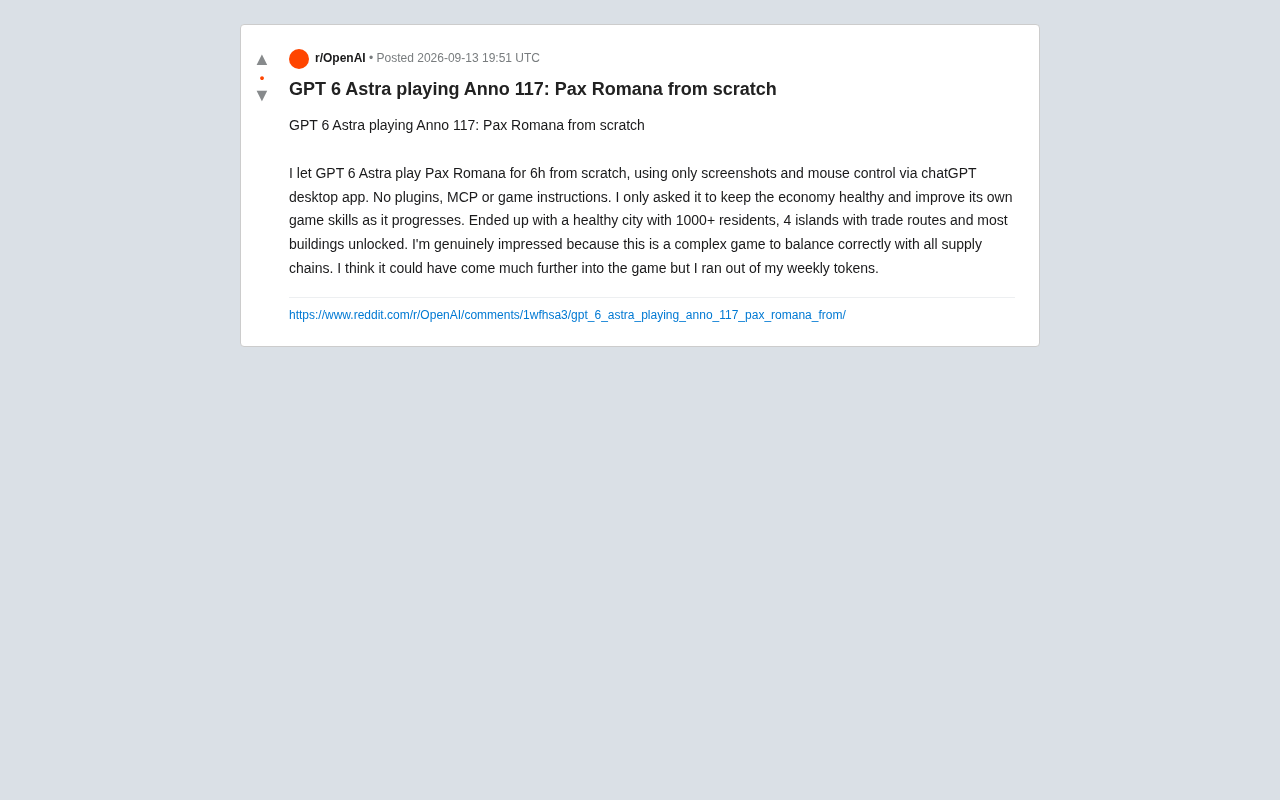
GPT-6 Astra Plays Anno 117 Autonomously: A 1,000-Resident City Built in 6 Hours with Zero Instructions
GPT-6 Astra autonomously played Anno 117: Pax Romana for 6 hours using only screenshots and mouse control, building a 1,000+ resident city across 4 islands with no plugins or guides.
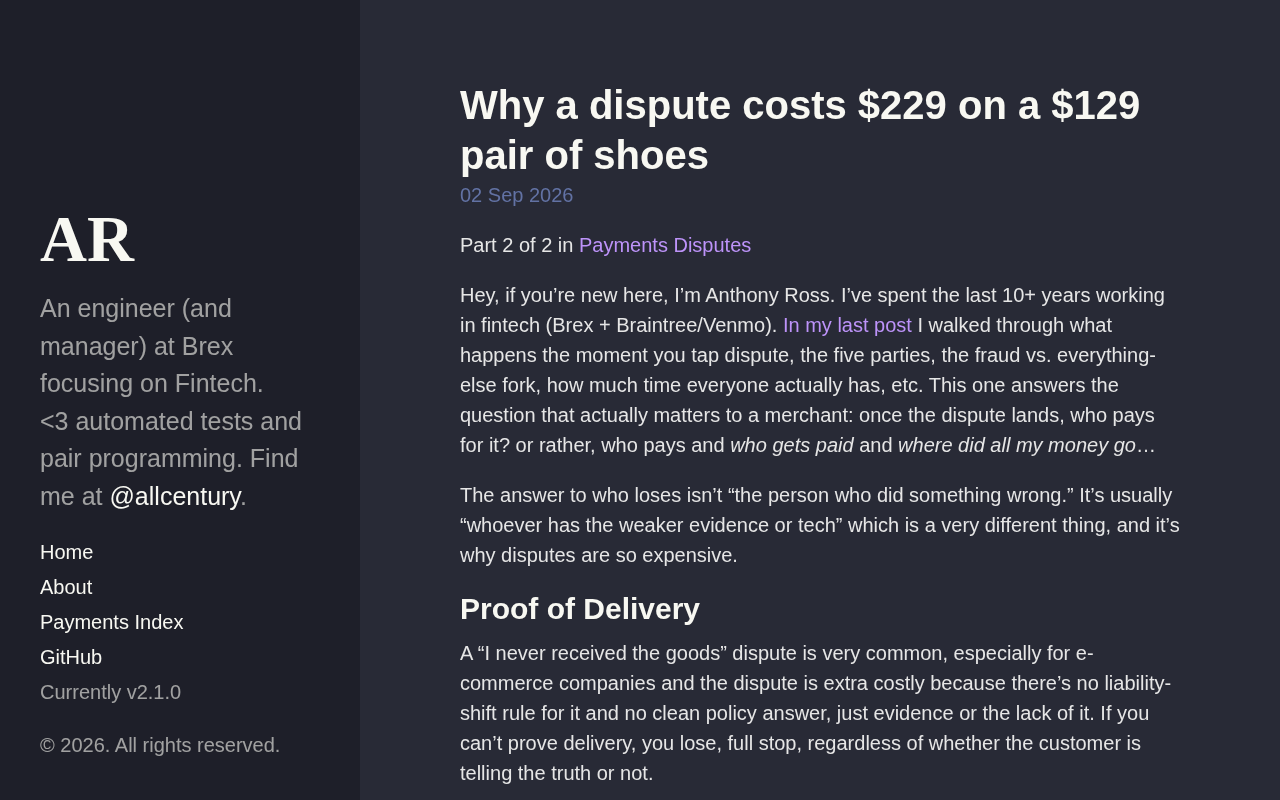
Why a $129 Shoe Dispute Ends Up Costing Merchants $229
Why does a $129 shoe dispute cost merchants $229? We break down chargeback fees, hidden costs, and what small businesses can do to protect themselves.