Is AI Doom Talk Just Marketing? Breaking Down Big Tech's 'Danger Narrative'
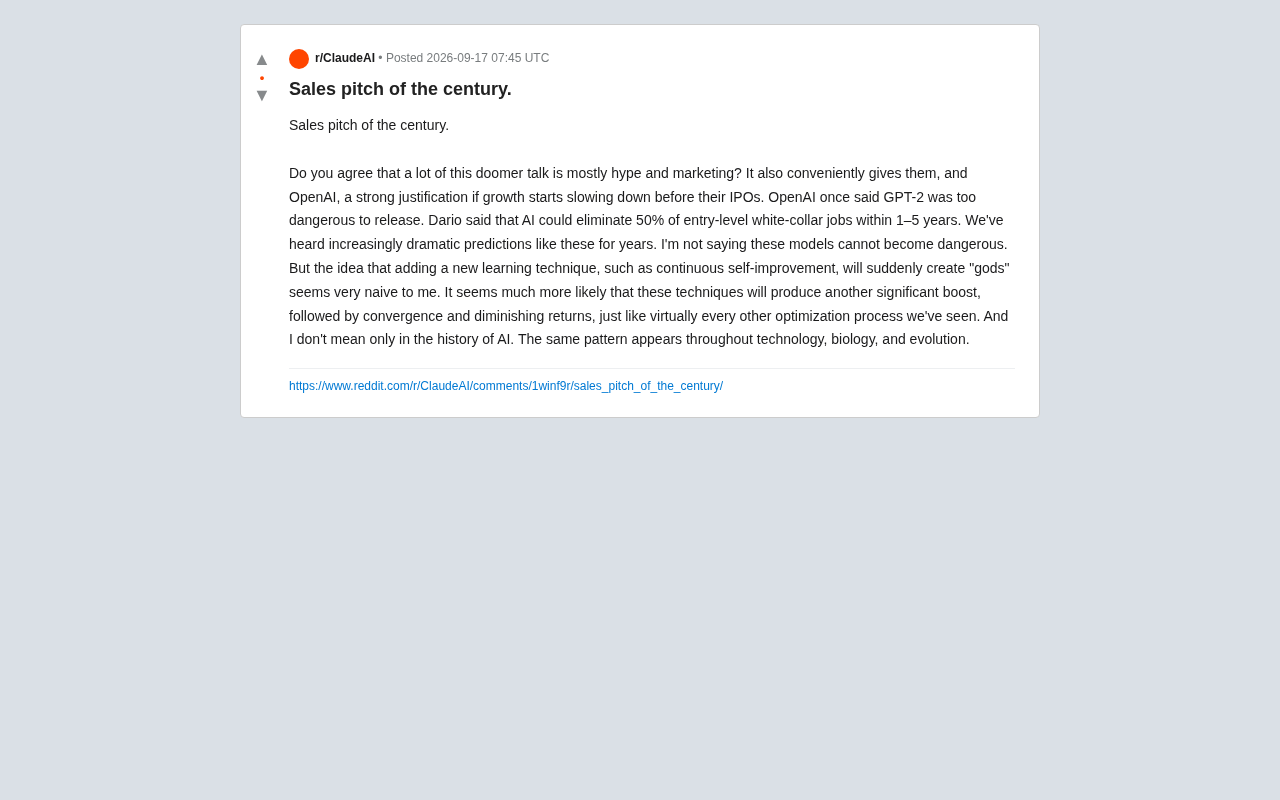
AI doom narratives may be marketing strategy: overstating danger doubles as advertising and a cover story for slowing growth.
A viral Reddit post argues that AI companies' grand 'end of the world' narratives are commercial strategy, not technical judgment. Claiming 'our technology is dangerously powerful' serves as both the ultimate product advertisement and a pre-built excuse for future growth slowdowns — far more dignified than admitting a technical ceiling. The post also challenges the assumption that new learning techniques would trigger god-like intelligence, arguing that technological leaps followed by convergence and diminishing returns is the universal pattern — from evolution to industry — and AI is unlikely to be the exception.
When "AI Is Too Dangerous" Becomes a Business
A Reddit post that sparked heated debate has taken aim at the increasingly loud chorus of AI doomsday rhetoric. The original poster put forward a sharp argument: the grand narratives about AI "destroying the world" or "reshaping civilization" may be carefully crafted marketing, not genuine technical judgment.
This skepticism isn't baseless. OpenAI once claimed GPT-2 was "too dangerous to release publicly," then gradually released the full model anyway. Anthropic CEO Dario Amodei has predicted that AI could eliminate 50% of entry-level white-collar jobs within one to five years. We've been hearing these kinds of dramatic forecasts for years.
The Business Logic Behind the 'Danger Narrative'
The post's central argument is worth sitting with: overstating AI's danger is doubly convenient for these companies.
On one hand, "our technology is powerful enough to be dangerous" is the ultimate product advertisement — it implies capability, leadership, and scarcity. On the other hand, the narrative plants a clever escape hatch: if growth starts to slow before an IPO, companies can attribute it to "deliberately pumping the brakes for safety reasons" rather than admitting the technology has hit a ceiling.
In other words, doomsday talk is both marketing and a hedging strategy. When growth curves flatten, "we could have moved faster, but we held back for the sake of humanity" sounds far more dignified than "we've hit a bottleneck."
The GPT-2 incident is a crucial case study for understanding this narrative. In February 2019, when OpenAI released GPT-2, it refused to publish the full model weights, citing "risks of misuse for generating disinformation," and instead adopted a staged "controlled release" strategy. The decision sparked widespread debate at the time — supporters called it responsible safety practice, while critics (including some AI safety researchers) argued the move looked more like a carefully orchestrated product launch that artificially manufactured scarcity and mystique, since GPT-2's actual capabilities at the time were nowhere near a truly dangerous threshold. Months later, the full model was released incrementally, without triggering the serious consequences that had been warned about. This episode became a key reference point for scrutinizing AI companies' "danger" narratives going forward.
Does Technological Progress Really Create Gods?
The poster doesn't deny that AI models could potentially become dangerous, but he strongly challenges one popular assumption: that introducing some new learning technique — such as continuous self-improvement — would suddenly give rise to a "god-like" intelligence.
He argues this kind of linear extrapolation is overly naive. The more realistic picture is that a new technique produces a significant performance jump, followed by a convergence phase, and ultimately diminishing returns. This is not only a recurring pattern in AI history, but a universal dynamic across technology, biology, and evolution.
The Universal Law of Optimization
From biological evolution to industrial technology, nearly every optimization process follows an S-curve: slow early accumulation, explosive mid-stage growth, and eventual saturation. Expecting a single technical breakthrough to shatter this pattern and enable unlimited self-reinforcement has little empirical support.
This perspective offers a much cooler-headed frame of reference. Rather than believing AI will spiral out of control exponentially toward "superintelligence," it's more reasonable to expect it will behave like other technologies — advancing in several leaps before gradually approaching a practical ceiling.
The key concept here is Recursive Self-Improvement, one of the core technical pillars of AI doom theory. The basic logic goes: once AI is sufficiently intelligent, it can optimize its own algorithms and architecture, producing a more capable version, which then self-optimizes further, and so on — ultimately surpassing human intelligence in an extremely short time. This hypothetical ignition point is commonly called the Technological Singularity, first systematically articulated by mathematician Vernor Vinge in 1993 and later popularized by figures like Ray Kurzweil.
Critics, however, point out several unproven premises embedded in this argument: whether self-improvement can truly circumvent physical bottlenecks like training data and compute; whether a smarter system is necessarily better at improving itself; and whether "intelligence" is even a single, infinitely stackable dimension. In practice, even the most advanced models still depend heavily on human-designed training pipelines and large amounts of labeled data — autonomous closed-loop self-improvement remains a distant prospect.
The S-curve (Sigmoid Curve) also has a specific application context in technology forecasting worth briefly unpacking. Technology economists commonly use it to describe the full lifecycle of a technology from birth to widespread adoption: slow growth in the nascent phase, near-exponential growth during the scaling phase, and saturation at maturity. This is fundamentally different from pure exponential growth, which assumes the rate of growth itself keeps accelerating without limit. The S-curve, by contrast, builds in real-world constraints like resource limits and diminishing marginal returns.
In AI, discussions around the Scaling Law have been highly relevant in recent years: researchers have found that as compute and data scale proportionally, model performance does continue to improve — but whether the magnitude of improvement will itself decay remains contested. Some internal data from leading labs has already shown that capability gains in newer large models are narrowing, which aligns with the S-curve entering a plateau phase and offers real-world support for the post's core argument.
How to Think Rationally About AI Risk
The value of this debate isn't in delivering a verdict on whether "AI is actually dangerous." It's in reminding us to distinguish between two types of information: judgments grounded in technical fact, and narratives that serve commercial objectives.
For those following the AI industry, a few principles may be useful:
- Be wary of grand predictions with precise timelines. Claims like "50% of jobs eliminated in one to five years" typically lack verifiable reasoning chains.
- Follow the money. When the "danger narrative" conveniently boosts valuations or masks slowing growth, an extra layer of skepticism is warranted.
- Return to the actual patterns of technology. Convergence and diminishing returns are the norm; breakthrough "god-mode" leaps are the rarest of exceptions.
Of course, maintaining skepticism doesn't mean dismissing everything. AI may well carry genuine risks — they're just more likely to be gradual, concrete, and manageable, rather than a Hollywood-style overnight apocalypse. The real challenge is learning to pick out the signals worth taking seriously from all the marketing noise.
Related articles
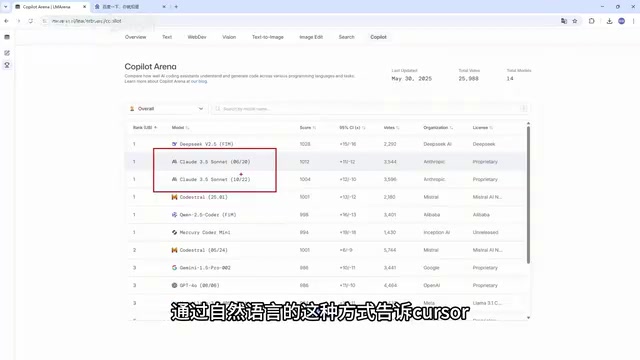
What Is Cursor? Core Differences Between This AI Coding Tool and Traditional IDEs
What is Cursor? This guide explains the AI-native code editor built on VS Code, how it compares to traditional IDEs, and its integration with Claude, DeepSeek, and Gemini.
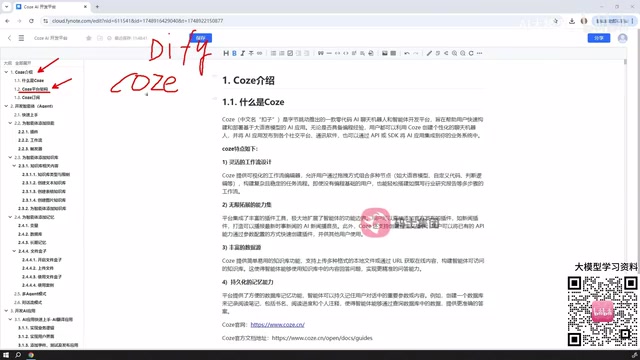
Coze 3.0 Beginner's Guide: A Complete Overview of Agents and AI Applications
A beginner's guide to Coze 3.0: covering agents, AI applications, workflows, and plugins on ByteDance's AI platform, plus a comparison with Dify.
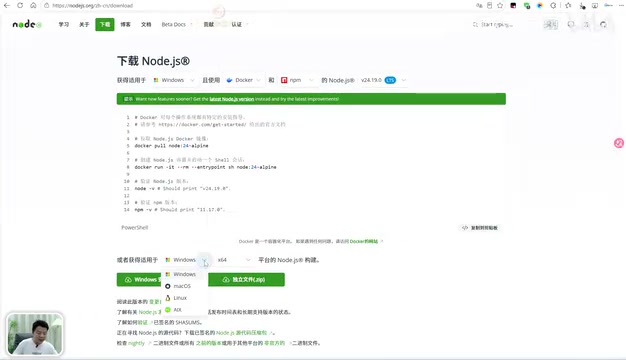
Setting Up the DeepSeek Harness Environment: A Complete Guide to Node.js Installation and Configuration
A beginner-friendly guide to setting up the DeepSeek Harness environment: Node.js installation, Add to PATH, redirecting npm global and cache directories, and configuring system environment variables.