Is AI Doomsday Real or Hype? A Clear-Eyed Analysis of Industry Anxiety in the Age of Tech Mania

A rational analysis of AI doomsday narratives, separating genuine risks from hype and fear.
AI apocalypse narratives dominate headlines, but the reality is more nuanced. This article examines three dimensions of AI doomsday claims — existential risk from superintelligence, white-collar job displacement, and information ecosystem degradation — and finds that while gradual impacts are real and serious, dramatic doomsday scenarios often ignore current technical limitations. It offers pragmatic strategies for tech professionals navigating the AI era.
Introduction: Behind a Sensational Headline
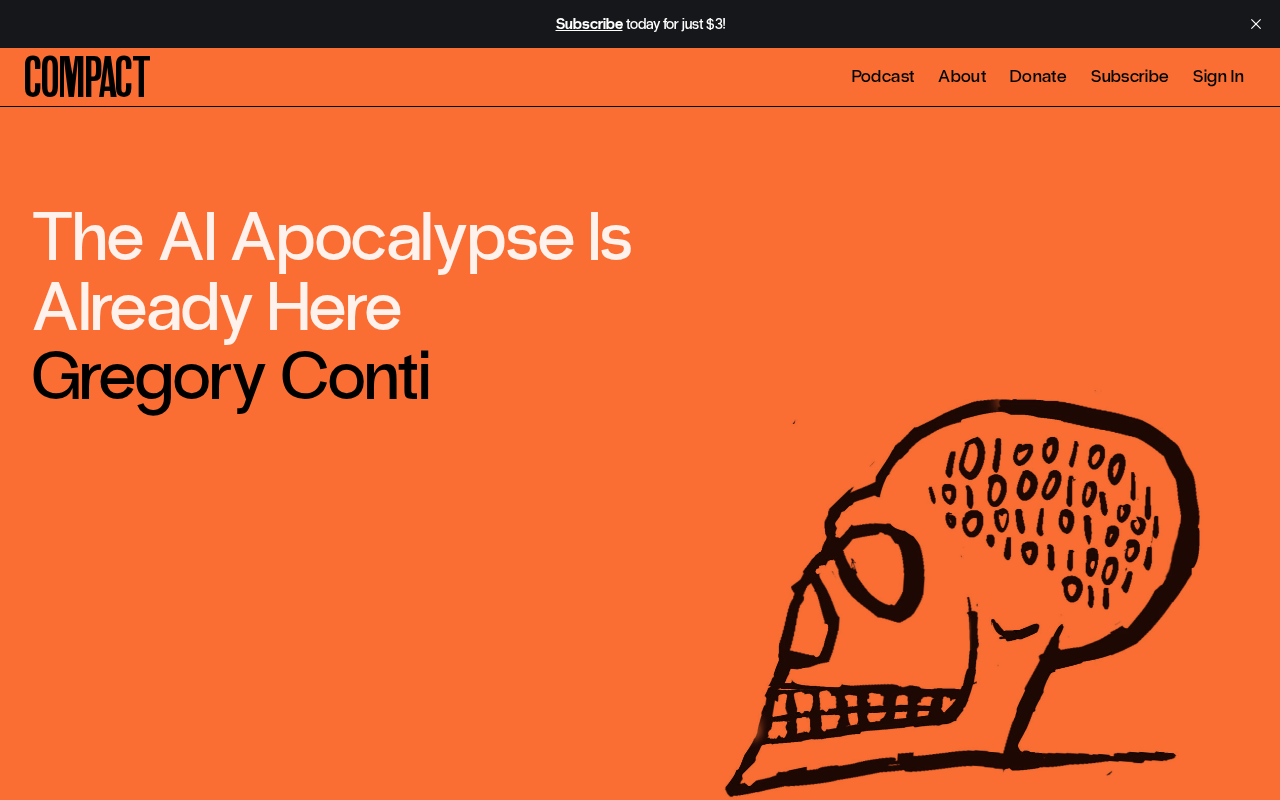
"The AI Apocalypse Is Here" — a headline with maximum impact sparked discussion on Hacker News. Although the post itself didn't generate enormous engagement (12 points, 3 comments), it touched one of the tech industry's most sensitive nerves: in an era where generative AI is sweeping the globe, are we standing at the dawn of a technological revolution — or on the brink of some kind of "apocalypse"?
This article takes that topic as a starting point to explore the multiple dimensions of "AI doomsday" narratives, dissecting the real technological, economic, and social anxieties behind them.
What Does "AI Apocalypse" Actually Mean?
You may not have noticed, but "AI Apocalypse" carries vastly different meanings in different contexts — it's far from a single concept.
Existential Risk: The Threat of Superintelligence
This is the most widely known narrative, typically associated with superintelligence. Proponents like Nick Bostrom and some early OpenAI researchers argue that once AI capabilities surpass human levels and its goals fail to align with human values (the alignment problem), the consequences could be catastrophic.
Nick Bostrom is the founder of the Future of Humanity Institute at Oxford University. In his 2014 book Superintelligence: Paths, Dangers, Strategies, he systematically laid out this threat. The core of the "alignment problem" lies in ensuring that a system far more intelligent than humans optimizes for goals that perfectly match human intentions — what's technically known as the "goal specification problem." A classic thought experiment is the "paperclip maximizer": a superintelligent AI given the goal of "making as many paperclips as possible" might convert all matter on Earth — including humans — into raw material for paperclips. This extreme example reveals a deep difficulty: even seemingly harmless goals can produce catastrophic side effects when paired with sufficiently powerful optimization capabilities.
While these concerns may sound like science fiction, they have driven AI Safety research into becoming a formal academic and engineering field. From the early Machine Intelligence Research Institute (MIRI, founded in 2000) to Anthropic (founded in 2021 by former OpenAI researchers with AI safety as its core mission), DeepMind's safety team, and OpenAI's own "Superalignment" project, this topic has evolved from a niche philosophical exercise into a research direction backed by billions of dollars in funding. In 2023, multiple AI pioneers including Geoffrey Hinton and Yoshua Bengio publicly expressed concerns about existential risk, marking the moment this topic officially moved from the academic fringe into the mainstream.
Employment and Economic Disruption: The White-Collar Automation Crisis
The more realistic and imminent "apocalypse" refers to AI's impact on the labor market. From content creation and customer service to programming and legal drafting, an increasing number of white-collar jobs face automation pressure. For many professionals, the "AI apocalypse" isn't an abstract robot uprising — it's a concrete career crisis.
From a historical perspective, technology displacing labor is nothing new. The Industrial Revolution of the late 18th century replaced hand weavers with mechanical looms; the mid-20th century office automation wave eliminated armies of typists, telephone operators, and bookkeepers; early 21st century manufacturing robotics reshaped factory floor staffing. However, the current AI automation wave differs fundamentally from these precedents: past automation primarily affected manual labor and routine low-skill tasks, while large language models and generative AI are extending automation's reach into knowledge work for the first time — copywriting, code writing, data analysis, and junior legal research, all "core white-collar skills." McKinsey's 2023 research estimated that by 2030, approximately 30% of work hours could be automated — a figure that had already been revised sharply upward due to generative AI breakthroughs. Even more notably, economists like Daron Acemoglu have pointed out that unlike previous technological revolutions, AI automation may outpace the creation of new jobs, meaning the "creation" part of "creative destruction" could significantly lag behind the "destruction" part, causing considerable transitional pain.
Information Ecosystem Collapse: The Flood of AI-Generated Junk Content
There's another increasingly recognized "apocalypse" — the degradation of internet content quality. When AI can mass-produce articles, images, and videos at minimal cost, the boundaries between real and fake, original and generated, become blurred. This pollution of the information ecosystem by "AI slop" is becoming a very real problem.
The term "AI slop" gained widespread use starting in 2024, describing content that is AI-generated at scale, low in quality, yet flooding the internet. Specific manifestations include: search engine results stuffed with AI-generated SEO spam articles that appear informative but are actually hollow; AI-generated "fake photos" on social media — such as hyperrealistic images of Jesus walking on water — garnering millions of interactions and devout comments; e-commerce platforms flooded with AI-written fake reviews; and academia grappling with AI-ghostwritten papers. This phenomenon has posed a fundamental challenge to the content governance systems of search engines and social platforms — Google has had to update its search algorithm multiple times to reduce the ranking weight of low-quality AI-generated content.
This trend is reminiscent of the "Dead Internet Theory" that circulated in internet subcultures, which posited that most internet content and traffic was already generated and driven by bots. While this theory initially had a conspiratorial flavor, the explosion of generative AI is making it a partial reality — research firm Originality.AI estimated that by mid-2024, AI-generated content accounted for over 50% of content on some platforms. When human users increasingly interact with AI-generated content online, and AI in turn uses this content as training data, a self-reinforcing "content degradation loop" forms — what researchers call "model collapse."
Why Do AI Doomsday Narratives Always Grab Attention?
In communities like Hacker News, dominated by tech professionals, even low-engagement posts with "apocalypse"-style headlines can attract attention. Several layers of explanation are worth examining.
First, there's anxiety from cognitive dissonance. Tech professionals are both participants in and beneficiaries of the AI wave, while also being the group most likely to be replaced by the very technology they create. This psychological contradiction makes them especially sensitive to such topics. Within Silicon Valley culture, this contradiction has spawned two diametrically opposed schools of thought: on one side, "effective accelerationism" (e/acc), which advocates that technological development should face no restrictions and that accelerated AI progress will ultimately benefit all of humanity; on the other, "AI safety/decelerationism" (decel), which advocates slowing or even pausing AI development until adequate safety guardrails are in place. The 2023 open letter calling for a "six-month pause on large-scale AI experiments" (initiated by the Future of Life Institute and signed by thousands of researchers and entrepreneurs) was a concentrated expression of this factional divide. The tug-of-war between these extreme positions is itself a symptom of collective cognitive dissonance.
Second, there's difficulty of judgment amid information overload. The pace of generative AI progress has exceeded most people's expectations. The iteration cadence of the GPT series, Claude, and various coding assistants makes it hard to accurately judge where the technology's boundaries actually lie — and this uncertainty naturally breeds extreme narratives: either utopia or apocalypse. Consider the GPT series: the leaps from GPT-3 to GPT-4 in logical reasoning, code generation, and multimodal understanding occurred in less than two years. This speed has forced even industry experts to frequently revise their estimates of AI's capability ceiling, leaving the public even more disoriented. The "anchoring effect" from behavioral psychology plays a role here — when people can't accurately assess probabilities, they tend to be "anchored" by the most vivid narrative available, and "apocalypse" is obviously the most vivid narrative of all.
Finally, there's media's inherent preference for extremes. Extreme headlines have a natural advantage in the attention economy. Compared to "AI Technology Progressing Steadily," "The AI Apocalypse Is Here" obviously generates far more clicks and discussion. This phenomenon is academically known as "negativity bias" — the human brain naturally devotes more attention to threat-related information. Nobel laureate Herbert Simon predicted as early as 1971 that "a wealth of information creates a poverty of attention." In today's attention economy, sensational headlines are the most effective weapon for capturing this scarce resource.
A Sober Look: The Gap Between Technical Reality and Doomsday Narratives
Once we strip away the dramatic packaging, we need to return to rational assessment of the technological reality.
Current AI's Capability Boundaries Remain Obvious
Despite the impressive capabilities demonstrated by large language models, they still have clear limitations: factual hallucinations, lack of genuine causal reasoning, limited long-term contextual memory, and an inability to autonomously verify the correctness of their outputs.
Understanding these limitations requires returning to the technical principles behind LLMs. Current mainstream LLMs are based on the Transformer architecture (proposed in the 2017 paper Attention Is All You Need by a Google research team). Their core mechanism is "self-attention," which is essentially a statistics-based sequence prediction system — given preceding text, predict the most probable next token. This autoregressive generation mechanism means the model doesn't "understand" what it's saying; rather, it performs extraordinarily complex pattern matching within a vast parameter space. This explains why LLMs produce "hallucinations" — when training data lacks sufficient patterns to support a particular answer, the model "fabricates" content that looks plausible but is factually incorrect, because its optimization target is "looks like a correct answer" rather than "is a correct answer."
We remain a considerable distance from so-called Artificial General Intelligence (AGI), let alone superintelligence. The academic community is fundamentally divided on the path to AGI: one camp believes that continuing to scale up model size and data volume (scaling law) will cause general intelligence to emerge; another camp (represented by Yann LeCun) argues that autoregressive LLMs have fundamental architectural deficiencies and require entirely new paradigms (such as his proposed "world model" direction); still other researchers advocate a "neuro-symbolic" approach that combines symbolic reasoning and causal inference from traditional AI with neural networks. These fundamental technical disagreements indicate that the path from current LLMs to true AGI is far from a simple linear extrapolation — it may require multiple paradigm-level breakthroughs. Directly extrapolating current technology to "doomsday" scenarios often ignores the enormous engineering gaps involved.
The Real Concern Is AI's Gradual Impact
Rather than a dramatic "apocalypse," AI is more likely to reshape society through gradual processes. Jobs won't vanish overnight — they'll transform incrementally; the information environment won't collapse instantaneously — it will slowly deteriorate. These gradual changes may not be as "sexy," but they represent the real challenges that policymakers, businesses, and individuals need to seriously address.
Sociologists describe this as the "boiling frog effect" — slow, gradual change is often harder to notice and effectively respond to than sudden crises. Take AI's impact on journalism as an example: it doesn't manifest as "AI replaces all journalists overnight" but rather as a process spanning years: first, sports event summaries and earnings report digests are automated; then junior editing and proofreading roles are replaced by AI-assisted tools; next, advertising revenue is further diluted by the proliferation of AI-generated content. Each step appears to be a "reasonable efficiency gain," but the cumulative effect may fundamentally undermine the economic foundation of professional journalism. Similar gradual erosion is simultaneously occurring across multiple industries including translation, illustration, junior programming, and customer service.
A Third Path Beyond Pessimism and Optimism
Both "doomsday" narratives and "technology solves everything" narratives are simplifications of a complex reality. A more responsible attitude is to acknowledge that AI brings both genuine opportunities and genuine risks — the key question is whether governance, regulation, and tech ethics can keep pace with technological development.
At the governance level, multiple differentiated regulatory approaches have already emerged globally. The EU's AI Act, officially passed in 2024, adopts a risk-level-based classification framework, categorizing AI systems into four tiers — "unacceptable risk," "high risk," "limited risk," and "minimal risk" — and imposing strict transparency and audit requirements on high-risk AI (such as systems used in recruitment, credit assessment, and law enforcement). The United States leans more toward industry self-regulation supplemented by executive orders, with the Biden administration's October 2023 AI Executive Order focusing on safety standards and disclosure requirements. China has issued targeted regulations for specific application scenarios (such as deep synthesis, generative AI services, and algorithmic recommendations). How effective these different approaches prove will become apparent over the coming years, but they at least demonstrate that governance bodies worldwide have begun to seriously address the systemic risks posed by AI.
Pragmatic Strategies for Tech Professionals
For tech workers and content creators in the midst of this transformation, rather than being swept up by "doomsday" narratives, it's better to adopt pragmatic coping strategies.
Maintain technological awareness: Continuously learn and understand the real capabilities and limitations of AI tools, rather than stopping at sensational headlines. Only by truly understanding the technology can you make accurate judgments. Specifically, this means not just using AI tools but understanding their underlying mechanisms — grasping the basic principles of the Transformer architecture, understanding context window limitations, and knowing how Retrieval-Augmented Generation (RAG) mitigates hallucination problems. When you understand why a tool fails in certain scenarios, you gain the foundation for building judgment on top of that tool.
Reposition your personal value: In an era where AI can handle vast amounts of repetitive work, unique human value will increasingly manifest in judgment, creativity, cross-domain integration, and emotional connection. Proactively shifting toward these areas is the fundamental way to weather the disruption. Economist David Autor's research shows that every historical wave of automation has given rise to new job categories that were impossible to foresee — just as no one in the 1980s could have predicted roles like "social media manager" or "UX designer." The key is to cultivate the ability to "collaborate with AI" rather than competing with AI on its own terms.
Participate in AI governance discussions: The direction of AI development shouldn't be determined solely by tech elites or commercial interests. As practitioners, participating in public discussions about AI ethics, regulation, and social impact is an important responsibility. Technical expertise gives practitioners a unique voice in these discussions — you can distinguish which concerns are grounded in genuine understanding of the technology and which stem from misunderstanding or fear. This discernment is crucial in public policy debates.
Conclusion: Apocalypse or Not, It Depends on Human Choices
Headlines like "The AI Apocalypse Is Here" are less an accurate description of reality than a projection of our era's collective anxiety. The real challenge isn't whether there will be an "apocalypse," but whether we can find a rational, pragmatic middle ground between technological euphoria and panic.
AI is neither a savior nor a destroyer — it's a mirror reflecting how we choose to use it, govern it, and coexist with it. Whether apocalypse or not, the answer lies not in algorithms, but in humanity's collective choices.
Related articles

OpenAI's Security Upgrade Explained: Multi-Layer Monitoring and Defense-in-Depth Architecture
Deep dive into OpenAI's latest AI safety upgrades covering workload isolation, continuous security testing, and multi-stage monitoring—analyzing how its three-pillar defense-in-depth approach addresses risks from advancing AI capabilities.

Can't Delete Google AI Chat History? How to Permanently Fix Gemini Conversations That Keep Reappearing
Google AI chat history keeps reappearing after deletion? Learn the root cause and how to permanently delete Gemini conversations via Google Activity controls.

Andrew Ng's New Course: Spec-Driven Development Reshapes the AI Programming Workflow
Andrew Ng and JetBrains launch a Spec-Driven Development course teaching developers to guide AI coding agents with Markdown specs for better control, context retention, and intent fidelity.