Is AI Stealing Engineers' Jobs? Stanford and Harvard Data Reveal the Truth

Stanford and Harvard research shows AI changes the entry points and rhythm of engineering work, not directly replacing engineers.
The article reviews two recent studies on AI's impact on engineering careers. Stanford found young workers in high-AI-exposure occupations have 19% lower employment, mainly due to fewer entry-level hires rather than mass layoffs, warning of a long-term talent pipeline gap. Harvard found coding agents increased code volume by 30% but actual work completed unchanged, with review time up 49%, showing faster coding does not equal faster delivery. Both point to structural change rather than displacement and are early-stage without established causality. The article offers four strategies: strengthen code review, use AI to assist judgment, measure features not lines, and prove judgment via real projects.
Is AI replacing engineers? This question has sparked a great deal of anxiety in tech circles and the job market. Two recent studies from Stanford and Harvard offer a calmer answer: change is indeed happening, but it is far from a simple case of "machines replacing people." The data points to a more subtle structural adjustment—fewer entry-level positions, code volume ballooning without a corresponding increase in output, and a heavier review burden.
Stanford Data: Entry-Level Positions Contracting, Not Mass Layoffs
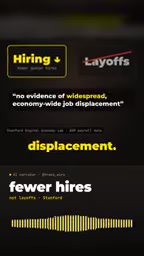
A Stanford University study found that in occupations with high AI exposure, the employment rate of young workers is 19% lower than it should be. This number looks alarming at first glance, but the researchers make clear that the decline comes mainly from fewer entry-level hires, not from existing employees being laid off en masse. Stanford did not find widespread job displacement.

In other words, companies are not pushing out incumbent engineers and replacing them with AI; they are becoming more cautious about adding new positions. Entry-level roles—the ones once used to train newcomers—are shrinking. This affects those who have just graduated or are transitioning into engineering the most, while mid- and senior-level engineers who have already accumulated experience are less impacted.
This pattern carries a long-term risk that is easy to overlook: if companies continue to reduce entry-level hiring, the supply pipeline for mid- and senior-level talent will narrow in a few years. Today's efficiency choice could turn into tomorrow's talent gap.
AI exposure is an indicator in labor economics that measures the degree to which an occupation is affected by AI technology, typically scored based on the overlap between occupational task descriptions and AI capabilities (such as language understanding, code generation, and data analysis). High exposure does not mean a job will be fully automated; rather, it means a larger proportion of the tasks in that occupation may be assisted or restructured by AI. The Stanford study grouped occupations by AI exposure and compared changes in the employment rate of young workers in high-exposure versus low-exposure groups, thereby estimating a relative gap of 19%. Note that exposure is a task-level measure, not a direct prediction of displacement probability—an occupation can be highly exposed yet still hire heavily; the key is which tasks are automated and which are augmented.
Harvard Study: Code Volume Up 30%, but Delivery Unchanged
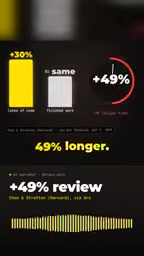
Harvard University's research approaches the question from another angle: after coding agents entered the development workflow, lines of code increased by 30%, but the actual work completed did not change. At the same time, code review time increased by 49%.

This set of data reveals a counterintuitive reality: AI makes writing code faster, but it does not make software delivery faster. The extra code needs to be understood, reviewed, and verified, and these steps actually consume more time. Lines of code have never been a good measure of output, and AI amplifies the misleading nature of this metric.
From an engineering management perspective, this means efficiency gains may be eaten up by review and coordination costs. If teams continue to measure performance by code volume or commit frequency, they are likely to reward the behavior of "generating more code" rather than "delivering more value."
Coding agents refer to AI systems that can autonomously plan and execute multi-step coding tasks, as distinct from code assistants that only perform inline completion. Typical examples include GitHub Copilot's Agent mode, Claude Code, and Cursor's Agent feature: they can read the codebase, modify multiple files, run tests, and iterate based on errors—not just suggest the next line while you type. This "agentic" way of working greatly lowers the barrier to generating code, but it also means the resulting code often lacks the author's full understanding of the context, and reviewers must reverse-engineer the generation logic. This is the important backdrop for the 49% increase in review time found in the Harvard study.
The Shared Signal of Both Studies: Structural Change, Not Replacement
Looking at the Stanford and Harvard findings together, the picture becomes clearer: AI is changing the entry points and rhythm of engineering work, not eliminating the engineering profession. The narrowing of entry-level roles is an entry-point problem; code bloat and slower review are a rhythm problem. Both point to the same conclusion—AI is a variable in how work is done, not a direct killer of job numbers.
It is important to emphasize that both studies are at an early stage and neither can prove that AI is the direct cause of these changes. The job market, the macroeconomy, and corporate hiring strategies are all changing at the same time, so attributing the entire 19% gap to AI is not rigorous. But these data at least provide a discussable baseline, which is more valuable than pure speculation.
Correlation is not causation is the principle to remember most when interpreting these two studies. Stanford's 19% gap comes from a cross-sectional or short-window comparison of employment rates, overlaid in the same period with a tech hiring contraction caused by rising interest rates, a post-pandemic correction to over-hiring, and a macroeconomic slowdown; Harvard's code volume and review time data may likewise be affected by team size, project type, and measurement definitions. The researchers themselves do not claim that AI is the direct cause. A more rigorous reading is this: these data outline structural changes that align with the timeline of AI adoption and provide a baseline worth tracking, but establishing causality would require longer time series, controlled experiments, and fine-grained analysis of specific tasks.
Four Actionable Response Strategies
Based on the above findings, four pragmatic action recommendations can be distilled.
1. Turn code review skills into a core competency
Harvard's data shows review time increased by 49%, which means review is becoming a key bottleneck in the development workflow. The ability to quickly and accurately review AI-generated code and identify logical flaws and hidden risks will become increasingly valuable. Review is not a formality; it is a new technical threshold.
2. Use AI to augment work, not to replace judgment
Treat AI as an accelerator, not a decision-maker. Let it handle repetitive, pattern-based parts, and reserve human judgment for architecture design, edge cases, and trade-off decisions. Tools amplify the user's abilities—including amplifying bad habits.
3. Measure features completed, not lines of code
A 30% increase in code did not lead to improved delivery, which shows that lines of code are a vanity metric. Both teams and individuals should shift to measuring by features completed, problems solved, and value shipped. This requires buy-in from management, but engineers can proactively reflect this in their reporting.
4. Early-career professionals should prove judgment through real projects
Entry-level positions are shrinking, and a course list on a resume has limited persuasive power. Real projects that demonstrate judgment—even if small in scale—are more convincing to recruiters than a record of solving coding problems. Projects should show how you make technical decisions, how you weigh trade-offs, and how you handle failure—the parts that AI cannot yet replace.
A Calm View of the Limits of the Data
Both the Stanford and Harvard studies deserve attention, but both also have clear limitations. The sample windows are short, causality has not been established, and industry coverage is limited. Treating a single study as conclusive is just as inadvisable as ignoring the data. For engineers, a more useful stance is this: acknowledge that change is happening, pay attention to structural signals, and focus energy on capability building that is within your control.
AI has not taken away engineers' jobs, but it is redefining what those jobs contain.
One-line Summary
Stanford and Harvard research shows AI is changing the entry points and rhythm of engineering work, not directly replacing engineers.
Paragraph Summary
The article reviews two recent studies on AI's impact on engineering careers from Stanford and Harvard. Stanford found that in occupations with high AI exposure, the employment rate of young workers is 19% below where it should be, but the main cause is fewer entry-level hires rather than mass layoffs, and it warns of a long-term talent pipeline gap. Harvard found that after coding agents entered the workflow, lines of code increased by 30% while the actual amount of work completed remained unchanged, and code review time increased by 49%, showing that faster code writing does not equal faster delivery. Together, the two studies point to structural change rather than job displacement, and both are early-stage and cannot establish causality. Based on this, the article proposes four strategies: strengthen code review skills, use AI to assist rather than replace judgment, measure output by completed features rather than lines of code, and have early-career professionals prove their judgment through real projects.
Related articles

Is the Agent Harness Dead? Cursor's Early Engineer Breaks Down the Real Architecture of AI Coding Agents
Cursor early engineer Jediah breaks down the real architecture of the agent harness: why "the harness is dead" is only half right, how the data flywheel lets the harness obsolete itself, and how Grokbot, software factories, and primitive design open new frontiers for agents.

Python Visitor Pattern and Better Alternatives Explained
A deep dive into Python's visitor pattern and four alternatives: method pattern, pattern matching, dictionary mapping, and functools.singledispatch. Choose the best decoupling design by change frequency.

357 Days of Deep Experience: Why Omarchy Made Me Stop Distro-Hopping
A 357-day deep dive into Omarchy: 59-second install, out-of-the-box audio and GPU support, the Quattro QuickShell rewrite migration pains, and why Arch users should try it.