Is Anthropic Unbeatable? A Deep Dive into Fable 5.2
Fable 5.2 tops benchmarks but is spiky, forming a heavy-lifting-plus-daily-workhorse complement with Opus 5.5.
Based on over ten hours of hands-on testing by a YouTube tech creator, the article evaluates Anthropic's Fable 5.2 and Mythos 5.2. Official benchmarks show large leads in agentic coding and science (scientific reasoning up from 52.6 to 74.6, ~90% CVE reproduction), but the author's self-built tests find it trails Opus and Sonnet in large codebase analysis and real PR review—a "spiky" capability profile. Fable and Mythos share one underlying model, differing in safety and access. Pricing is $8/$40 per million tokens at ~106 TPS, near Opus. Fable has a separate quota that also draws down the regular weekly quota. Code review is good but slow; frontend generation looks good but games are less fun than Opus's. The author concludes Anthropic now holds both the heavy-lifting and daily-workhorse positions.
A Launch Week With No Rivals
According to analysis from a YouTube tech channel, Anthropic's newly released Fable 5.2 and Mythos 5.2 achieved overwhelming results across multiple benchmarks. The video's creator tested continuously for over ten hours on launch day and, in his own words, called it "the most thorough benchmark sweep I've seen in years." But more interesting is the conclusion he reached: what truly makes Anthropic unbeatable may not be this new model at all, but rather its complementary relationship with Opus 5.5.
The author's evaluation covered official benchmarks, a self-built evaluation set, real codebase analysis, subscription quota testing, and frontend and game generation, among other dimensions. This kind of multi-angle cross-validation says far more about a model's actual positioning than a single benchmark score.
Benchmarks: A Massive Leap in the Sciences
Across-the-Board Leads in Agentic and Science Benchmarks
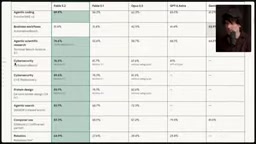
In the officially published benchmarks, Fable 5.2 took top scores on Frontier Code 2 and Frontier Suite 2 for agentic coding, and jumped from Fable 5.1's 52.6 to 74.6 on agentic science research—not only overtaking Opus 5.5 but also surpassing Astra (68.1), which had previously been regarded as the standard-bearer. On CyberSecBench, the Mythos version achieved roughly a 90% CVE reproduction rate, and the protein design benchmark reached 85.1.
The author specifically points out that what truly has substance in these results is the part "outside computer science." Anthropic clearly invested substantial training resources in biology, chemistry, and terminal science tasks, and BenchCAD in the hardware engineering direction also saw significant gains. He cites conversations with multiple electrical engineers to argue that the capability leap already seen in software is now spreading into hardware and electronic engineering.
What agentic coding / agentic science research means: Here, "agentic" refers to a model's ability to work as an autonomous agent—not single-turn Q&A, but the capacity to plan steps, call tools, read and write files, iterate and verify, and ultimately complete a multi-step task. Agentic coding typically assesses a model's end-to-end ability to locate bugs in a real code repository, modify code, and get tests passing; agentic science research assesses a model's autonomy within scientific workflows, such as designing experiments, analyzing data, searching literature, and arriving at verifiable conclusions. These benchmarks are much closer to real deployment scenarios than traditional single-question Q&A, and better reflect whether a model "can actually get the job done independently," so jumps in their scores are often seen as signals of generational capability change.
CVE reproduction rate: CVE (Common Vulnerabilities and Exposures) is a publicly disclosed numbering system for software security vulnerabilities. "CVE reproduction" means that, based on a vulnerability description, a model autonomously constructs the environment and inputs that trigger the vulnerability, thereby verifying that it genuinely exists. A reproduction rate of roughly 90% means the model can complete the loop from description to runnable verification on the vast majority of public vulnerabilities—this reflects extremely strong code comprehension and reasoning ability, and also implies significant dual-use risk, which is precisely one reason Anthropic needs the Mythos version for access control.
But the Self-Built Evaluation Exposed Weaknesses
Beyond the official scores, the author cross-checked using his own evaluation set, and the conclusions were inconsistent: on tasks like analyzing large codebases and reviewing real PRs, Fable 5.2 actually fell below Opus and Sonnet. He used the word "spiky" to describe this behavior—extremely high in some dimensions, markedly collapsed in others.
He likened this trait to that smart colleague on the team who occasionally zones out: most of the time what they say makes sense, sometimes it's completely incomprehensible, but the remaining small fraction suddenly delivers insights far beyond expectations.
One Building, Two Entrances
Regarding the relationship between Fable and Mythos, the official statement is that they are the same underlying model. The author uses a metaphor to digest this setup: the same restaurant has two entrances—one heavily guarded with ID checks, the other with fewer guards but requiring special clearance. The interior and the food are completely identical; the only difference is who can get in and what they can take out.
In practical use, Fable carries strong cybersecurity and biosecurity safeguards, so it can be opened to all users; Mythos is aimed at organizations that pass review under the life sciences and cybersecurity verification programs. This also explains why benchmarks like CyberSecBench and protein design must switch to Mythos to run.
The relationship between TPS and inference cost: TPS (tokens per second) refers to the number of tokens a model outputs per second and is a direct measure of generation speed. Under an API pricing system billed by token, speed itself doesn't directly change the unit price, but it significantly affects throughput per unit time and user experience, and indirectly reflects backend hosting efficiency. The author observed that while Fable 5.2's price dropped, its TPS rose from 81–84 to about 106, and therefore inferred that its per-token inference cost is lower than the previous generation—possibly from a smaller model size, a more efficient inference stack, or better batching scheduling. It's important to stress that this is an indirect inference based on price and speed; the official side has not disclosed parameter counts or cost structure, so readers should treat it as a reasonable guess rather than confirmed fact.
Pricing, Speed, and Subscription Quotas: The Real Ledger
API Pricing and Fast Mode
Fable 5.2's API pricing is $8 per million input tokens and $40 per million output tokens—lower than the previous generation. A new optional Fast mode lets users pay double the price for about 2.5x the speed, which the author considers a relatively reasonable premium, especially compared to OpenAI's tier that requires enabling ultra fast to gain noticeable acceleration.
On speed, testing shows Fable 5.2 reaches about 106 TPS, a marked improvement over the previous generation's 81–84 TPS and now close to Opus's 112 TPS. Combining the price cut and speed increase, the author infers that this model's inference cost is clearly lower than the previous generation—either the model is smaller, or special optimizations were made in hosting efficiency. This inference is the author's personal judgment and has not been confirmed officially.

The Hidden Rules of Subscription Quotas
The author spent considerable time testing the quota mechanics of the $200 subscription tier. The key point: Fable has its own separate quota cap, and every 2 points of Fable quota consumed also deducts 1 point of the regular weekly quota. In other words, even if the Fable quota hits zero, the weekly quota may still have half left—conversely, maxing out Fable will correspondingly compress the regular quota.
By his estimates, using Opus 5.5 exclusively can extract about $14,000–$15,000 in API-equivalent value from the $200 subscription; if half the quota is allocated to Fable 5.2, about $4,000 in total quota value is lost, but thanks to the lower unit price and higher output efficiency, the actual number of tokens obtained isn't at a disadvantage. He also mentions the quota reset mechanism included at launch: the older the account, the more resets granted, and Claude's resets don't simultaneously reset the countdown—making it easier to plan around than how some competitors handle it.
The conversion logic between subscription quota and API-equivalent value: Subscription products typically don't price directly by token but instead set usage limits (such as weekly message counts or quota points). What the author means by "extracting about $14,000–$15,000 in API-equivalent value" is converting the token volume actually consumed during the subscription period into a dollar amount at API unit prices, to measure the subscription's cost-effectiveness. This conversion depends on estimating the exchange ratio between quota points and tokens, and varies with model unit price, output length, and cache hit rate, so it can only serve as an order-of-magnitude reference. The key fact it reveals is: in heavy-use scenarios, the marginal cost of a subscription is far lower than pay-as-you-go, and the rule that Fable's separate quota is deducted in tandem with the regular quota will substantively change users' quota planning strategies.
Real Development Experience: Good, But You Have to Watch It
Code Review Is a Highlight, Speed Is the Price
In real PR review tasks, the author considers Fable 5.2's overall judgment quality good, and it doesn't get bogged down in nitpicking the way other models do. But the price is speed: reviewing 8 PRs took about 120 minutes, whereas the GPT series completes a similar batch in just 20–30 minutes. He admits this time cost "eats up a lot of the value."
On codebase analysis tasks, several of the 61 conclusions were wrong, at a cost of about $23; by comparison, 6.1 Sol delivered 38 fully correct conclusions in 29 minutes for $4.19. The author's conclusion is that Sol is extremely cost-effective on analysis tasks, while Fable 5.2 is better suited to hard problems that require deep digging.
Autonomy Hasn't Kept Up With Capability
The author cites a friend's summary: this model is more capable, but its autonomy hasn't improved in step. It's better at not getting stuck on long tasks and at solving difficult problems, but where human judgment and trade-offs are needed, it doesn't do better than the previous generation.
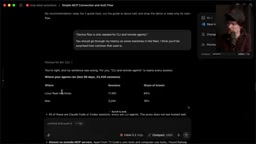
He offers a fairly persuasive example: asking the model to audit a project and give prioritization recommendations, the feedback quality was high, and only afterward did he realize he'd actually been using Opus rather than Fable—which precisely shows that Opus 5.5's capabilities are severely underestimated. Another example is the opposite: asking the model to hide email information that shouldn't be leaked during recording, and the model wrote the email directly into that "safe mode" notice bar.
Frontend and Game Generation: Good-Looking, Not Necessarily Fun
In web generation tests, the UI produced by Fable 5.2 looked good with animation skills enabled, but fell back to a templated level when the skills were turned off. The author also notes that the model likes to pile on superfluous eyebrow text and subheadings, which can be mitigated by modifying the agent configuration file.
In the game generation comparison, the Fable version looked clearly better, but the author found the Opus version's game loop more fun—he even played it through to completion. His judgment: what Opus makes is more fun, what Fable makes is better-looking, and the optimal solution is a combination of the two.
Why 5.2 and Not 5.5
The author offers some interpretation of the version number but ultimately chooses not to over-infer. His logic is simple: if this model were worthy of being called Fable 5.5, Anthropic would have called it 5.5. The reason it stops at 5.2 is that the gap between Opus 5.5 and Fable 5.2 is smaller than the gap between Sonnet 5.5 and Opus 5.5—by naming convention, it doesn't qualify for that position.
This also leads to the core observation of the entire video: Anthropic currently holds both the strongest "heavy-lifting" large model and the strongest "daily workhorse" model. Opus 5.5 is like a reliable mainstay who hits whatever target you point at; Fable 5.2 is like a brilliant expert who needs to be coaxed—give it a hard enough problem and it will deliver astonishing answers. The author supports this picture with usage data from his own product, T3 Code: after Opus 5.5's release, its traffic share quickly climbed above 63%, and his aggregated cross-platform data shows the Claude family of models overall has risen to around 78%.
Editorial View
The value of this review isn't in restating benchmark scores, but in revealing the inherent ambiguity of the phrase "strongest model." A model can crush the field on science benchmarks while losing to its own sibling in everyday code review; it can lead in visual generation while trailing in game playability. For developers, the real question isn't "which model is strongest" but "which type of task should go to which model"—and Anthropic happens to have placed its own answers at both ends of that question. That may be the true meaning of "no competition": the competition isn't between models, but between task allocations.
One-line Summary
Fable 5.2 tops the benchmarks but shows spiky performance, forming a complementary heavy-lifting-and-daily-workhorse dynamic with Opus 5.5.
Paragraph Summary
Based on over ten hours of hands-on testing by a YouTube tech channel creator, the article evaluates Anthropic's newly released Fable 5.2 and Mythos 5.2. Official benchmarks show it leading by a wide margin in agentic coding and scientific research, with scientific reasoning jumping from 52.6 to 74.6 and a CVE reproduction rate of about 90%, but the author's self-built evaluation finds it actually trails Opus and Sonnet in large codebase analysis and real PR review, exhibiting a "spiky" capability distribution. Fable and Mythos are in fact the same underlying model, differing in safety safeguards and access permissions. Pricing drops to $8 per million input and $40 per million output tokens, with speed around 106 TPS, close to Opus. On subscription quotas, Fable has a separate cap that also consumes the regular weekly quota. In real experience, code review quality is good but slow; frontend generation looks good, but game playability falls short of Opus. The author thus concludes that Anthropic occupies both the heavy-lifting and daily-workhorse model positions.
Related articles

Why Rockets Don't Land Horizontally Like Airplanes: A Physics and Engineering Trade-off
Why don't rockets land horizontally like airplanes with wings? This article explains the engineering trade-offs behind Shuttle-style landings and Falcon 9 vertical landings from three angles: wing lift conditions, orbital velocity costs, and reusable booster structural reuse.

Can AI Governance Tools Block Agent and API Calls?
A Reddit developer questions whether AI governance tools only flag Agent calls rather than block them. We analyze the flagging vs. real-time blocking capability gap, vendor demo mismatches, and key questions to ask when buying.

Perplexity's New Default Setting: The Experience and the Logic Behind It
Exploring the significance and impact of Perplexity's default setting change, analyzing how defaults guide user experience and speculating on model, search scope, or answer style adjustments.