Is Free GPT5.6 a Trap? The Truth Behind AI Mirror Sites Exposed

"Free GPT5.6" videos are a trap—the model doesn't exist and the sites are risky third-party proxies.
Viral "free GPT5.6" videos exploit users' AI curiosity with a fictional model and shared proxy mirror sites. GPT5.6 doesn't exist, and these third-party proxies pose serious risks to data privacy, account security, and legal compliance. This article exposes how shared-account mirror sites work and offers safe, compliant ways to use large AI models.
Reflections Sparked by a "Freebie" Video
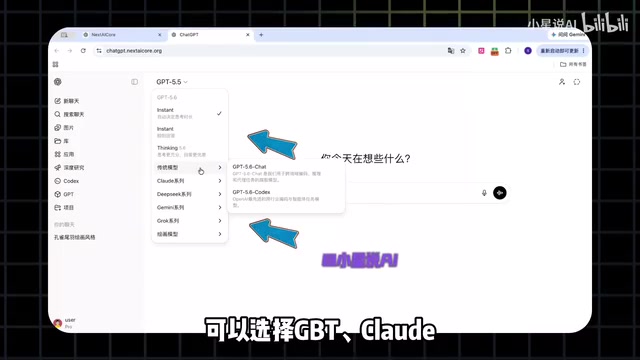
Recently, a genre of videos flying the banner of "Use the latest GPT5.6 for free" and "Connect directly to major AI official sites without a VPN" has been spreading rapidly across platforms like Bilibili. Such content typically claims to have discovered a "treasure site" that supposedly lets domestic Chinese users access top-tier large models—like the full-strength GPT, all Gemini models, the Claude Opus series, and Grok—for free and without limits, all wrapped up with the usual "like, comment, and follow" call-to-action.
As tech content creators, we have a responsibility to calmly dissect this kind of information—because it involves not only the authenticity of the technology, but also users' account security, privacy protection, and even legal risks. This article restores the truth from multiple angles to help you build a sound framework for judgment.

The "GPT5.6" Model Simply Doesn't Exist
Let's clarify a basic fact first: OpenAI has never released a model called "GPT5.6." To understand this, you need to know OpenAI's model naming conventions—which have followed a clear evolutionary path backed by a rigorous logic of technical iteration.
GPT stands for "Generative Pre-trained Transformer," an architecture that gradually became the mainstream foundation for large language models after Google introduced the Transformer paper in 2017. From GPT-1 (2018, 117 million parameters) to GPT-3 (2020, 175 billion parameters), each major version iteration came with fundamental breakthroughs in training data scale, parameter magnitude, and alignment techniques—hardly a linear series of minor version bumps. The "o" in GPT-4o (omni, meaning all-capable) marked OpenAI's shift from a single text model to a natively multimodal architecture; the o1 and o3 series, meanwhile, represent an entirely new product line introducing "Chain-of-Thought Reasoning," running parallel to the GPT series rather than succeeding it. After the release of GPT-4o in 2024, OpenAI actually shifted toward distinguishing models by capability dimensions (such as reasoning, speed, and multimodality) rather than by version numbers, further departing from the "x.y" naming paradigm. Therefore, a decimal version number like "5.6" completely violates its official naming logic—not only does the model not exist, but the naming convention itself is entirely at odds with OpenAI's official system.
The video's description of "stronger reasoning capabilities and higher-quality output, from multi-step agentic workflows to analysis and content creation" is nothing more than a patchwork of marketing phrases from various real AI products, slapped onto a fictional model number to manufacture a sense of scarcity around being "the latest and exclusive." This is a classic case of marketing spin—using a version number that sounds brand new to trigger a user's anxiety that "everyone else is using it but me."
When a technical term can't be verified through official channels, heightened caution should be your first reaction.
What Exactly Are These "Direct-Connect" Mirror Sites?
The video repeatedly emphasizes that through a certain site's "channels," you can "log directly into major global AI official sites without a VPN," with each channel being an "official GPT Plus account." This precisely exposes how these sites really operate.
The Technical Nature of Shared Accounts
So-called "channels" are, in essence, batches of paid accounts (like ChatGPT Plus) obtained by the operator through some means, then shared with a large number of users via reverse proxy technology.
A reverse proxy is a network architecture pattern that inserts an intermediary layer between the client and the target server. It's widely and legitimately used in scenarios like load balancing and CDN acceleration. In the mirror-site scenario, however, it essentially constitutes a "Man-in-the-Middle" deployment—the proxy server not only forwards traffic but also has full capability to decrypt, read, and tamper with it. Critically, HTTPS encryption offers no protection here: the HTTPS connection between the user and the proxy server uses a certificate held by the proxy, meaning the proxy can see the full plaintext content and then forward it to OpenAI over a new HTTPS connection. This means what users mistake for a "direct connection" is actually placing unconditional trust in a completely unknown third party—the security assumption of end-to-end encryption has entirely collapsed. To the user, the interface looks like the "official site," but in reality all traffic passes through the intermediary layer—every message a user types and every file they upload is, in theory, within the operator's field of view.
Tellingly, the video itself admits that "many domestic mirror sites and wrapper sites are neutered versions," warning users to "keep their eyes open and distinguish carefully"—yet the site it recommends belongs to that very same category of mirror/proxy service, just repackaged with a different pitch that presents itself as "the original."

Why "Free Forever" Deserves Suspicion
GPT Plus, Claude, and Gemini Advanced are all paid services, and maintaining large numbers of accounts costs the operator money on an ongoing basis. When a service claims to be "free forever with unlimited use," you have to think through one thing: how does it make money?
Common monetization paths include: driving traffic to convert users into paid members, page advertising, harvesting user input data, and even luring users into paying up down the line. Mirror sites also frequently monetize by injecting ad scripts or tracking code into the returned content—usually without the user noticing at all. There's no such thing as a free lunch, especially when it comes to AI compute that has to be paid for in cold, hard cash.
The Three Layers of Risk in Using Mirror Sites
The biggest problem with these sites isn't "whether they work," but "what happens when you use them."
Data and Privacy Risks
When you use AI through a third-party proxy site, everything you input—work files, code, personal information—passes through the operator's server. This risk is far more severe than people usually realize: in large-model usage scenarios, user input often contains highly sensitive information, such as internal corporate code, contract text, financial data, or personal medical records. Even official channels like OpenAI provide an option to "turn off training data usage" so users can control their privacy; third-party proxy sites, by contrast, are bound by no privacy agreement whatsoever. Operators can log, analyze, and even sell user input data, entirely free from the effective constraints of regulations like GDPR or China's Personal Information Protection Law—because no legitimate data processing agreement exists between the user and the operator in the first place. In 2023, Samsung drew widespread attention when employees entering internal source code into ChatGPT led to a data leak; the risks with third-party proxy sites are only higher. The "file analysis" and "script writing" features demoed in the video mean that the files you upload are equally, fully exposed at the intermediary layer.
Account Ban Risks
Using shared accounts violates the terms of service of platforms like OpenAI. OpenAI's Terms of Use explicitly stipulate that accounts must not be shared, resold, or used for unauthorized multi-user access. Anthropic, the operator of Claude, and Google Gemini have similar clauses.
From a legal standpoint, third parties operating shared accounts face multiple simultaneous risks: on breach of contract, OpenAI can unilaterally terminate the account and seek damages; on trademark infringement, using the official UI mirror and impersonating the "official site" may constitute confusingly similar use under trademark law; on data compliance, they could face fines of up to 4% of global revenue under the EU's GDPR framework, and administrative penalties under China's Personal Information Protection Law. For users, accounts can be detected and banned at any time, causing the "channel" to fail. Users have no guarantees whatsoever, and knowingly using a service that violates the rules itself carries a degree of legal risk.
The Compliance Gray Zone
Bypassing official channels to access overseas services carries inherent compliance-level risk. Domestic Chinese users accessing overseas platforms through unregistered overseas proxy services also implicate compliance requirements under domestic regulations like the Cybersecurity Law and the Data Security Law. For ordinary users, shouldering all this uncertainty for the sake of being "free" offers a terrible cost-benefit ratio.
The Demos Look "Real," But That Proves Nothing
The video showcases examples like generating a promotional poster for iced tea and building a 3D shipwreck-sailing HTML mini-game, with results that are genuinely impressive—easily fostering the belief that "this site really works."
But it's important to understand that these capabilities are simply the real functions that mainstream large models already possess. Whether it's text-to-image, code generation, or file analysis, models like GPT-4o, Claude, and Gemini can do the same through official channels. Authentic demo results only prove that this proxy site is indeed forwarding the output of real models—but they cannot prove its safety or legitimacy.

In other words, how powerful the model is, is the model's business; the channel through which you use it is what matters.
Practical Advice for Using Large AI Models Safely and Compliantly
For users who want to use domestic and international large AI models, here are a few pragmatic suggestions:
- Prioritize official channels: ChatGPT, Claude, and Gemini all have official websites and apps, offering better guarantees for account data.
- Make good use of compliant domestic products: In early 2025, DeepSeekAd-R1 achieved performance on par with OpenAI o1 across multiple international standard benchmarks—including the AIME math competition and the comprehensive-capability MMLU—and did so at a training cost far below GPT-4. Its fully open-source strategy (including model weights and training technical reports) lets developers worldwide freely deploy and research it. Alibaba's Tongyi Qianwen (Qwen) has likewise entered the top international tier in code generation and multilingual understanding, offering free API quotas. Kimi has distinctive strengths in long-context processing. ByteDance's Doubao and Baidu's Ernie Bot both have mature consumer products. All these models have passed the "generative AI service" algorithm filing with the Cyberspace Administration of China (CAC), meeting the compliance requirements of the Interim Measures for the Management of Generative AI Services. Their local data storage complies with the cross-border transfer restriction clauses of the Data Security Law, their privacy protections have a legal basis, and they are entirely sufficient for everyday needs.
- Businesses and developers should use official APIs: You can integrate stably and reliably through official APIs or domestic cloud providers (Alibaba Cloud, Volcano Engine, etc.), which is compliant and dependable.
- Stay wary of "free and unlimited": Any content that claims to offer paid models for free while also demanding you "like, comment, and follow" deserves a question mark.
Conclusion
Videos like "Use GPT5.6 for free" exploit users' curiosity about cutting-edge AI and their anxiety about "falling behind," combining a fictional model with a shared proxy site to manufacture the illusion of an "exclusive perk." The core facts are clear: the GPT5.6 model does not exist, and the so-called treasure site is a third-party proxy fraught with multiple risks—it poses a substantial threat to users across three dimensions: data privacy, account security, and legal compliance.
Today, with an ever-richer array of AI tools, we have entirely safer and more compliant ways to use these powerful models. Maintaining rational judgment and safeguarding your own data and account security matters far more than chasing after a fictional "latest version."
Key Takeaways
Related articles

Gmod TTT: Boba's Winning Streak and Game Design Insights
An in-depth analysis of Gmod TTT's role system, creative items, and social gameplay mechanics, exploring the relationship between randomness design and game balance through Boba's winning streak phenomenon.

FlexBudget: Fair Comparison of KV Cache Eviction Strategies Under a Unified Compute Budget
AMD engineer proposes FlexBudget at PyTorch Conference: a training-free fair comparison method for KV cache eviction rules using fixed kernels and memory budgets, all in core PyTorch.
