Is Gemini 4 Argon Really Number One? Comparing Claude Opus 5.5 and GPT-6 Astra

Gemini 4 Argon isn't an all-around winner: strong at long-document writing, weak at coding — choose by scenario.
Based on YouTube channel Prom's side-by-side testing, the article compares Gemini 4 Argon, Claude Opus 5.5, and GPT-6 Astra. Argon wins 13 of Google's 19 chosen tests but ranks second on Artificial Analysis behind Opus, then first again on VALS — so rankings depend on test selection. It ties Opus 40-40 on office tasks at lower cost and higher honesty, but loses all six app-building showdowns with heavy code-review false positives. Its low unit price is offset by high token use, and December price hikes make it costlier than Astra per task.
Is Gemini 4 Argon Really Number One? Comparing Claude Opus 5.5 and GPT-6 Astra
When Google released Gemini 4 Argon on September 30, its tagline was just one line: first place in 13 out of 19 tests. But oddly, almost no one could use it at first — Google only gave access to the network defense teams responsible for stopping hackers. It wasn't until October 13 that the doors opened to everyone. So, is it really number one? The YouTube channel Prom put Argon in front of the camera, seated alongside Claude Opus 5.5 and GPT-6 Astra, and delivered an independent answer backed by a large amount of hands-on data.
On-Paper Specs: Million-Token Context and Pricing Strategy
The first line of Argon's resume reads: read 1 million tokens at once, equivalent to several thick books. Now it can also write 1 million tokens at once, whereas the previous generation stopped at 64,000. There is a catch, though: writing the full 1 million requires enabling a special long mode, and the cap for ordinary responses remains around 65,000 tokens. Its vision capabilities are equally sharp — it can read charts, watch long videos, and process piles of documents, scoring 91.7 on long-video tests.
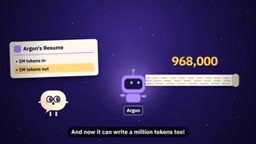
On pricing, as of the end of November, Argon's input price is $2 per million tokens and output $10. Starting in December the price doubles, putting it on par with Opus. Astra is $10 input and $50 output.
Context window refers to the total amount of tokens a model can "read" simultaneously in a single conversation or call, including the system prompt, conversation history, uploaded documents, and the content to be generated. It determines whether the model can digest an entire book, long-video subtitles, or a large codebase in one pass without losing detail through chunked summarization. Google's advertised 1-million-token input capability is at the top of the current industry, but note that "can read" and "can effectively use" are not the same: a model's recall of information in the middle of an ultra-long context often drops, which is why vendors set up separate items in long-context benchmarks. On the other hand, the output limit and input limit are two independent parameters; long-output mode usually requires a special switch and may affect generation speed and billing.
Google's Table vs. Independent Evaluations
In Google's own published scorecard, Argon indeed takes first place in 13 of 19 subjects. In legal work tests, Argon scores 19.6 while Opus scores only 3.8. But the key question is: who made this table? Google chose the subjects and picked the opponents itself.

In terminal coding tests, Opus wins with 66.4 points while Argon scores only 57.4. So Prom brought in external rating agencies. The composite index from the independent lab Artificial Analysis shows: Opus 58, Argon 53, Astra 50. But in another independent test, the VALS index, Argon takes first place with 68.9. The same model, a different test, a different winner.
Independent evaluation agencies and composite indices are the core backdrop to the current controversy over model rankings. Third-party organizations such as Artificial Analysis and VALS run the same set of benchmarks against models from multiple vendors using unified prompts, standardized scoring scripts, and fixed-version snapshots, then weight sub-items like coding, math, instruction following, and multilingual ability into a composite score. Their value relative to vendor self-tests lies in reproducibility and cross-comparability, but their limitations are equally obvious: the weighting is set by the agency itself, the question bank may be contaminated by training data, and a composite score cannot reflect strengths and weaknesses in specific scenarios. So it is normal for the same model to swap places across different indices; readers should treat an index as "a sample of results on one set of tasks" rather than an absolute capability ranking.
Real Office Tasks: Argon Ties Opus and Costs Less
Setting scores aside, look at actual work. Other YouTubers have already tried the same tasks, and Prom collected more than 50 review videos. Across four office tasks — such as reading receipts and doing chart math — Argon and Opus tie 40 to 40. But Argon is cheaper: $0.21 per task versus $0.37 for Opus.
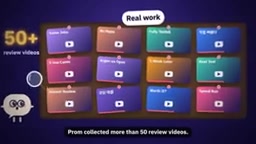
Comparisons also found that Argon performs best at turning interviews into news briefs and at medical research tasks. It is like a new employee with excellent writing skills. But building apps is another matter: in six app-building showdowns, Opus swept every one. One developer reported that of 78 findings in Argon's code review, 56 were wrong. Opening the model list in anti-gravity on Prom's own computer, Argon wasn't even there yet — Google says that in anti-gravity it is available only to the top-tier Ultra plan.
Code review is a typical task for testing a model's coding ability: it requires the model to read a diff or a repository snippet, judge whether the change introduces logic errors, missed edge cases, security vulnerabilities, or style problems, and give actionable fix suggestions. It differs in emphasis from "writing code": code generation focuses on correctness and structure when building from scratch, while code review focuses on precise understanding of existing code semantics and control of false positives. The industry typically measures this with precision (the proportion of reported issues that actually exist) and recall (the proportion of real issues that are found); counting only the number of findings without human verification easily overestimates a model's practical usability.
The Cost Bill: Low Unit Price Doesn't Mean Low Total Price
Argon's unit price is indeed low, but it is verbose: each task consumes an average of 62,000 tokens, while Astra uses only 27,000. All told, completing one task today costs $1.99 with Argon and $5.98 with Opus. But at full December pricing, Argon's cost will be $3.98 higher than Astra's $3.26.

The real twist comes in the honesty test: how often does a model pretend to know something? Argon is 15%, while Astra is as high as 51%. But on accuracy, Argon is 50% and Astra is 63% — Astra knows more. Argon is more like the new employee who says "I don't know."
Conclusion: No All-Around Champion, Only Scenario Fit
So where exactly does Argon rank? Long-document processing, research, report writing, long-video summarization — this is Argon's turf, cheap and honest. Terminal code fixing and app building — Opus is still stronger. If you want the most correct answers, Astra is the first choice, but at the highest cost.
Prom likens the three models to three desks in an office: Argon handles writing, Opus handles coding, and Astra handles looking up answers. Tests decide who is number one. But be sure to test all three models on your own tasks. Remember, prices double on December 1, and in the end a human still has to sign off.
One-line Summary
Gemini 4 Argon is not an all-around number one: strong at long-document writing, weak at coding — choose by scenario.
Paragraph Summary
Using the YouTube channel Prom's side-by-side hands-on testing as its thread, the article compares Google Gemini 4 Argon, Claude Opus 5.5, and GPT-6 Astra. Argon takes first place in 13 of the 19 tests Google chose, but ranks only second on the Artificial Analysis composite index, behind Opus; switching to the VALS index puts it back on top, showing that rankings depend heavily on test selection. In real office tasks Argon ties Opus 40 to 40 with a lower per-task cost and higher honesty, but Opus sweeps all six app-building showdowns, and Argon's code-review false positives are severe. On cost, Argon's unit price is low but its token consumption is high, and after the December price increase its per-task cost will overtake Astra. The conclusion is that each of the three models has its strengths and should be chosen by task scenario and tested yourself.
Related articles

Workbuddy for Absolute Beginners: How a Desktop AI Agent Fits Into Real Workflows
A beginner's guide to the Workbuddy desktop AI agent: installation, claiming credits, file management, and building automated workflows—compared with CodeX for fit and cost, helping professionals shift from AI question-askers to AI managers.

OpenAI's New Agent Stack: Computer Use, Decisions API, and Ultra-Fast Workflows
OpenAI Dev Day unveiled a new agent stack: Computer Use outperforms humans, Decisions API delivers ultra-low-latency classification via Luna, Agents API opens the same Computer Use capabilities, and GPT-6.1 Sol costs only one-seventh of Astra. Core updates, benchmark data, and developer insights.

Liang Wenfeng Open-Sources DeepInfo Inference Framework, Takes On U.S. Ban
DeepSeek open-sources its DeepInfo inference framework after its models, featuring GPU/CPU cross-pipelining, small-model prediction with large-model verification, and full Huawei Ascend and NVIDIA chip support—facing the U.S. federal ban head-on. This article analyzes its significance for AI deployment and open-source strategy.