Is Gemini 4 Neon Worth Paying For? A Practical Guide to Agentic Workflows

Gemini 4 Neon focuses on long-running agent orchestration and multimodal input but is paid-only; whether it's worth it requires production-grade pilot evaluation.
Google DeepMind launched Gemini 4 Neon, positioned as a long-running, tool-intensive agentic workflow model with architecture adapted from Carbon, able to run independently or collaborate with frontier models. It scores 61% on the Artificial Analysis Intelligence Index under X high effort settings, supports multimodal inputs including text, image, audio, and video, and targets complex coding, scientific research, and knowledge work. Currently only available to paid enterprise and premium subscribers, with free access unconfirmed. The article recommends piloting on tasks close to production environments and evaluating total cost of ownership across completion quality, token consumption, latency, and manual review effort, rather than making a paid decision based solely on benchmark scores or subscription price.
Google DeepMind has launched Gemini 4 Neon, focused on long-running, tool-intensive agentic workflows. However, the model is only available to enterprise and premium subscription users, with free access not yet confirmed. Based on public information, this article analyzes whether it is worth paying for from three dimensions: capability positioning, use cases, and cost evaluation.
Core Positioning: Built for Agent Orchestration
According to the video source, Gemini 4 Neon's architecture is adapted from Carbon and is specifically designed for orchestrating long-running, highly tool-dependent agentic workflows. It can run independently or collaborate with frontier models.
On the Artificial Analysis Intelligence Index, Gemini 4 Neon scores 61% under the X high effort setting. This score provides a benchmark for horizontal comparison, but a single metric cannot reflect actual productivity. Google states that the system can handle multimodal inputs including text, images, audio, and video, targeting complex coding, scientific research, and knowledge work scenarios.

Agentic Workflow refers to a working mode in which a large model autonomously plans steps, invokes external tools (such as code executors, search engines, APIs, databases), and iteratively executes them to complete complex tasks. Unlike traditional "question-and-answer" invocation, agentic workflows often require the model to maintain state over longer time spans, adjust plans based on intermediate results, and handle error recovery across multiple rounds of tool calls. The term "long-running, tool-intensive" means a single task may involve dozens of tool calls and long contexts, placing significantly higher demands on instruction following, context management, and stability than ordinary conversation scenarios.
Artificial Analysis Intelligence Index is a leaderboard metric formed by third-party evaluator Artificial Analysis after comprehensively scoring mainstream large models. It typically aggregates multiple benchmark categories such as reasoning, coding, and knowledge Q&A, and converts them into a single score for easy horizontal comparison. This index is suitable as an initial screening reference, but different evaluation weight settings and question distributions affect rankings, and it is difficult to reflect real performance in specific business scenarios. Therefore, it should not be the sole basis for a paid decision.
Payment Barrier and Usage Restrictions
Currently, Google restricts the model to paid enterprise and premium subscription users, and free access has not been confirmed. This means individual developers and small-to-medium teams who want to try it need to first evaluate subscription costs and potential returns.
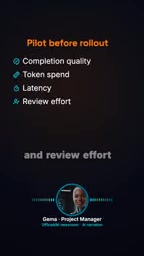
The video source suggests piloting the model on tasks close to production environments before deciding to pay. Comparison dimensions include completion quality, token consumption, latency, and manual review effort. This pragmatic evaluation approach is more informative than simply looking at benchmark scores.

Total Cost of Ownership (TCO) in the context of model selection is not just the subscription price, but also includes token costs from inference, manual review and rework costs invested to ensure output reliability, and process waiting costs caused by latency. Because agentic workflows involve many calls per task and long contexts, token consumption often grows by orders of magnitude; at the same time, errors in long-chain tasks amplify level by level, and manual review effort cannot be ignored. Therefore, evaluation should be based on the actual cost per task, rather than simply comparing token unit prices or monthly fees.
Production environment pilot refers to controlled testing conducted under conditions close to real business data, real tool interfaces, and real load, rather than a demonstration on sample datasets. Pilots should set clear acceptance metrics (completion rate, rework rate, end-to-end latency, cost per task) and maintain an A/B comparison with existing solutions, so that the conclusions drawn are transferable.
Practical Value of Multimodal Input
Gemini 4 Neon supports text, image, audio, and video input, giving it an advantage in tasks requiring cross-modal understanding. For example, processing technical documents containing charts, analyzing operation steps in video tutorials, or extracting action items from audio meeting records.
For complex coding tasks, multimodal capabilities can help the model understand visual information in interface screenshots, architecture diagrams, or error logs. Google positions it as a tool for handling complex coding, science, and knowledge work, rather than a general-purpose chat assistant.
Collaboration Model for Agentic Workflows
The model can run independently or in conjunction with frontier models. This flexibility means teams can allocate resources according to task complexity: simple orchestration goes to Gemini 4 Neon, while complex reasoning is handled by stronger frontier models.
The video source emphasizes comparing the performance of current models and Gemini 4 Neon on production-grade tasks, focusing on completion quality, token cost, latency, and review workload. These four dimensions directly relate to total cost of ownership, not just the subscription price.
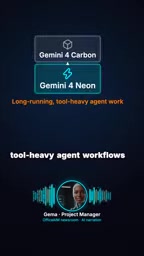
Model Routing / Orchestration refers to combining models with different capabilities and costs: a model skilled in orchestration and tool calling handles process control, while links requiring deep reasoning are handed to stronger frontier models, thereby balancing quality and cost. The price of this layered design is increased system complexity, requiring handling of context passing between models, error fallback, and consistency verification, so the routing strategy itself also needs to be monitored and tuned.
Is It Worth Paying For: A Decision Framework
To judge whether Gemini 4 Neon is worth paying for, consider the following:
- Task fit: Does your workflow involve long-running execution, multi-tool calls, and cross-modal input? If so, the model's positioning closely matches your needs.
- Cost structure: In addition to subscription fees, you also need to calculate token consumption and manual review effort. The video source suggests comparing token cost and review workload, two items that are often overlooked.
- Alternatives: Do existing models already meet your needs in terms of completion quality and latency? If the gap is small, the marginal benefit of paying is limited.
- Trial feasibility: Free access has not been confirmed. If you cannot try it, the risk of a paid decision is higher.
Conclusion
Gemini 4 Neon's differentiation lies in agent orchestration and multimodal input, not general conversation capability. The 61% intelligence index score provides a reference, but is not sufficient on its own to support a paid decision. The video source's advice is pragmatic: pilot on tasks close to production environments, compare completion quality, token consumption, latency, and review effort, and then decide whether to turn subscription costs into productivity gains.
Background Note
About the "Carbon" architecture: The original text mentions that Gemini 4 Neon's architecture is adapted from Carbon but does not elaborate. If Carbon is an internal codename or a specific technical route, its exact meaning should be based on Google's official technical documentation; until official information is disclosed, readers should treat it as a background clue rather than a verifiable technical detail, and avoid inferring the model's parameter scale or training method from it.
Related articles

Michael Nielsen Takes Down His Classic Neural Network Textbook, Sparking Community Discussion
Michael Nielsen's classic free textbook Neural Networks and Deep Learning has been taken offline, sparking discussion on Hacker News about the reasons and impact.

Inside the AI Training Data Market: The Trade-off Between Exclusivity and Discounts
G2i founder Gabe Greenberg reveals the dual-track pricing of the AI training data market: labs pay a premium for exclusive data or accept discounts that allow others to buy it.

SessionGraph: Unifying All Coding Agent Sessions in One Interactive Graph
SessionGraph aggregates coding agent sessions into an interactive graph, helping developers review, debug, and manage AI coding workflows across sessions. This article examines its positioning, value, and open questions.