Is It Really Wrong to Use AI-Assisted Translation for Posting? The Debate Over Language Barriers and Community Authenticity

Exploring whether using AI to overcome language barriers in online communities is legitimate or problematic.
A Japanese Reddit user used ChatGPT to translate and participate in English-language discussions, sparking debate about AI-generated content. This article examines the crucial distinction between AI-assisted expression and AI-replaced thinking, explores why communities resist AI content, and argues that using AI to overcome language barriers is a legitimate and equitable use of technology — as long as the ideas remain genuinely human.
A Japanese User's Genuine Dilemma
Recently, a post by a Japanese Reddit user sparked widespread discussion. Reddit is one of the world's largest community forum platforms, with over 1 billion monthly active users. Known for its unique subreddit system and voting-based ranking mechanism, the platform is overwhelmingly dominated by English, which accounts for over 80% of its content. This user openly admitted that while he had long known about Reddit and always found it fascinating, his limited English proficiency had prevented him from comfortably reading discussions or expressing his views.
"I'm Japanese. In Japan, most people live their lives almost entirely in Japanese. So even though the internet connects us to the whole world, a lot of online discussions still stay within the Japanese-speaking world."
This statement reflects a long-standing characteristic of the Japanese internet known as "Galápagos syndrome" — the formation of a relatively insulated domestic ecosystem within the global internet landscape. Japanese users are more accustomed to platforms like 5ch (formerly 2ch), Yahoo! Chiebukuro, and X (formerly Twitter), which are either homegrown or Japanese-friendly. While Japanese-language online communities are rich in content, their information exchange with the English-speaking world is extremely limited, creating a kind of "linguistic filter bubble."
Everything changed when ChatGPT came along. He began using AI to help him understand posts and comments, and to transform what he wanted to say in Japanese into natural-sounding English. In his own words: "For the first time, I felt like I could truly understand what people around the world were discussing, and I could actually join the conversation."

However, he also noticed a pattern: whenever someone suspected a post was written with AI, negative reactions would follow. This led him to ask a sincere question — Is it really wrong to use AI to overcome language barriers and participate in community discussions?
The Essential Difference Between AI-Assisted Expression and AI-Replaced Thinking
This question deserves deep exploration because it touches on a critical fault line in how AI is used today: Is AI helping humans express themselves, or is it replacing human thinking?
The Legitimacy of Translation and Writing Assistance
From this user's description, his usage was actually quite restrained. The opinions were still his own — he wasn't asking AI to decide what to think. He was primarily using AI as a translation tool and writing assistant.
This approach is fundamentally no different from traditional translation software, but the capability has undergone a generational leap. Traditional machine translation evolved from rule-based systems to Statistical Machine Translation (SMT) and then to Neural Machine Translation (NMT). Google Translate achieved a qualitative breakthrough when it adopted Transformer-based neural networks in 2016; DeepL distinguished itself with its refined handling of European languages. However, these tools still operate at the "sentence level," lacking deep understanding of context, register, and cultural nuance. The breakthrough of Large Language Models (LLMs) like ChatGPT is that they don't just translate language — they understand conversational context, adjust tone, supplement cultural background information, and can even emulate the expression style of specific communities. For example, Reddit comments often carry distinctive humor patterns and abbreviation conventions (like TL;DR, IIRC, etc.) that traditional translation tools struggle to capture at the pragmatic level, while LLMs handle these conversions much more effectively.
From this perspective, non-native English speakers using AI to overcome language barriers is precisely a manifestation of technology's democratizing value.
Why Do Communities Push Back Against AI-Generated Content?
So why do some Reddit users react negatively the moment they detect "AI traces"? Behind this reaction is actually a mix of several distinct concerns:
- Vigilance against AI slop: AI slop has been one of the core challenges facing internet communities since 2024. The term was coined by tech commentators to describe low-quality content mass-produced by AI that lacks substantive value and exists solely to capture traffic or manipulate search rankings. On Reddit, this manifests as bot accounts flooding Q&A subreddits with plausible-sounding but unreliable answers, marketing accounts using AI-generated "fake personal experiences" to promote products, and political operatives manufacturing artificial "public opinion" with AI. Reddit updated its content policy in 2024, explicitly restricting misleading AI-generated content and strengthening bot account detection. Users' sensitivity to the "AI feel" is largely a defensive stress response to this entire content pollution ecosystem.
- Valuing authenticity: The value of community discussion lies in genuine human experiences and perspectives. When people suspect they're engaging with AI rather than a real person, the meaning of the exchange seems diminished.
- Natural aversion to "ghostwriting": If a piece of text is entirely AI-generated and merely posted under someone's name, many people see it as lacking sincerity.
The Key Standard: Who Is the Subject of the Thought?
When debating whether AI-assisted posting is legitimate, a useful criterion is: Who is the subject of the thought?
Assisting Expression vs. Replacing Thinking
If AI merely helps a user translate and polish their existing thoughts into fluent English, then the subject of the thought is still the human, and AI plays the role of an "amplifier." This is ethically no different from hiring a translator or asking a friend with better English to help refine your wording.
In academia and publishing, ethical discussions around AI-assisted writing have already produced a relatively mature framework. Academic journals Nature and Science both released AI usage policies in 2023, with the core principle being: AI may be used for language polishing and translation, but it cannot be listed as an author, and its use must be disclosed. The key to this framework is the attribution of "intellectual contribution" — whether the ideas belong to the credited author. Philosophers trace this issue back to the older "ghostwriting" debate: throughout history, many politicians and business leaders have had their speeches and books written by professional ghostwriters, and society's tolerance of this practice depends on whether the core ideas originated from the credited individual. AI-assisted translation sits at the end of this ethical spectrum closest to "completely legitimate."
But if someone puts in zero thought and simply has AI generate opinions, fabricate experiences, and mass-produce posts for traffic or opinion manipulation, that crosses the red line. At that point, AI is replacing human thinking and sincerity — and that is the behavior communities should truly resist.
This Japanese user clearly falls into the former category. He explicitly stated that "the opinions are still my own" — AI simply helped him cross the threshold of language.
The Perspective of Linguistic Equity
Interestingly, English's dominance on the global internet itself constitutes a form of invisible inequality. Linguists call this phenomenon the "digital language divide." Although native English speakers make up only about 5% of the global population, over 60% of web content is in English. This means non-English speakers — the vast majority of the world's population — face a systemic disadvantage in accessing information, participating in discussions, and building cross-cultural connections.
UNESCO has repeatedly pointed out that this linguistic inequality is exacerbating the unfairness of global knowledge access. In academia, non-native English-speaking researchers often spend enormous additional time translating papers into English for publication in international journals. This "language tax" drains energy that could otherwise be devoted to the research itself. The widespread adoption of AI translation tools is becoming an important technological pathway for alleviating this structural inequality — lowering the barriers created by linguistic privilege and enabling more diverse voices to enter the global conversation.
In this light, criticizing a user who is genuinely trying to cross the language barrier to participate in discussions seems rather narrow-minded.
How to Use AI for Cross-Language Communication with Grace
If you're like this Japanese user and want to use AI to participate in international communities, the following tips may help:
Keep Your Content Authentic
- Make sure the ideas are your own: AI should serve your expression, not generate your thoughts.
- Include personal details: Real personal experiences and specific examples are the kind of "human touch" that no AI can fake, and they resonate most with readers.
Avoid Sounding Too "AI-Like"
- Adjust the tone: AI-generated text tends to be overly polished and lacks personality. Consciously make the language more conversational and closer to your own style. A practical approach is to review the AI translation afterward, identify expressions you would never use yourself, and replace them with phrasing that better fits your personal voice.
- Don't aim for perfection: Slightly accented, imperfect English can sometimes come across as more genuine. In internet communities, a simple "Sorry, English is not my first language" can instantly create rapport — people appreciate the sincerity of effort in communication, not flawless grammar.
Be Transparent When Appropriate
- Being upfront about using AI-assisted translation in the right context usually earns understanding rather than backlash. In fact, this user's honesty in his post itself garnered a great deal of goodwill in the responses. This aligns with the academic principle of disclosing AI usage — transparency is itself an expression of sincerity.
Conclusion: Technology Should Connect People, Not Create Divides
The value of this discussion goes far beyond the surface-level question of "Is it right or wrong to post with AI?" It invites us to reconsider: In an era where AI is everywhere, what is it that we truly value?
The answer is perhaps this — genuine human thought, sincere desire to communicate, and the possibilities for connection that technology enables. When a Japanese user can, for the first time, engage smoothly in conversation with the world, AI is accomplishing exactly what the internet originally promised but failed to deliver due to language barriers: truly connecting people.
The question was never whether to use AI, but how we use it. When AI serves authentic human expression, it is a bridge. When it is used to fabricate, manipulate, or replace sincerity, it becomes a wall. Distinguishing between the two is what we should truly be focused on.
Related articles
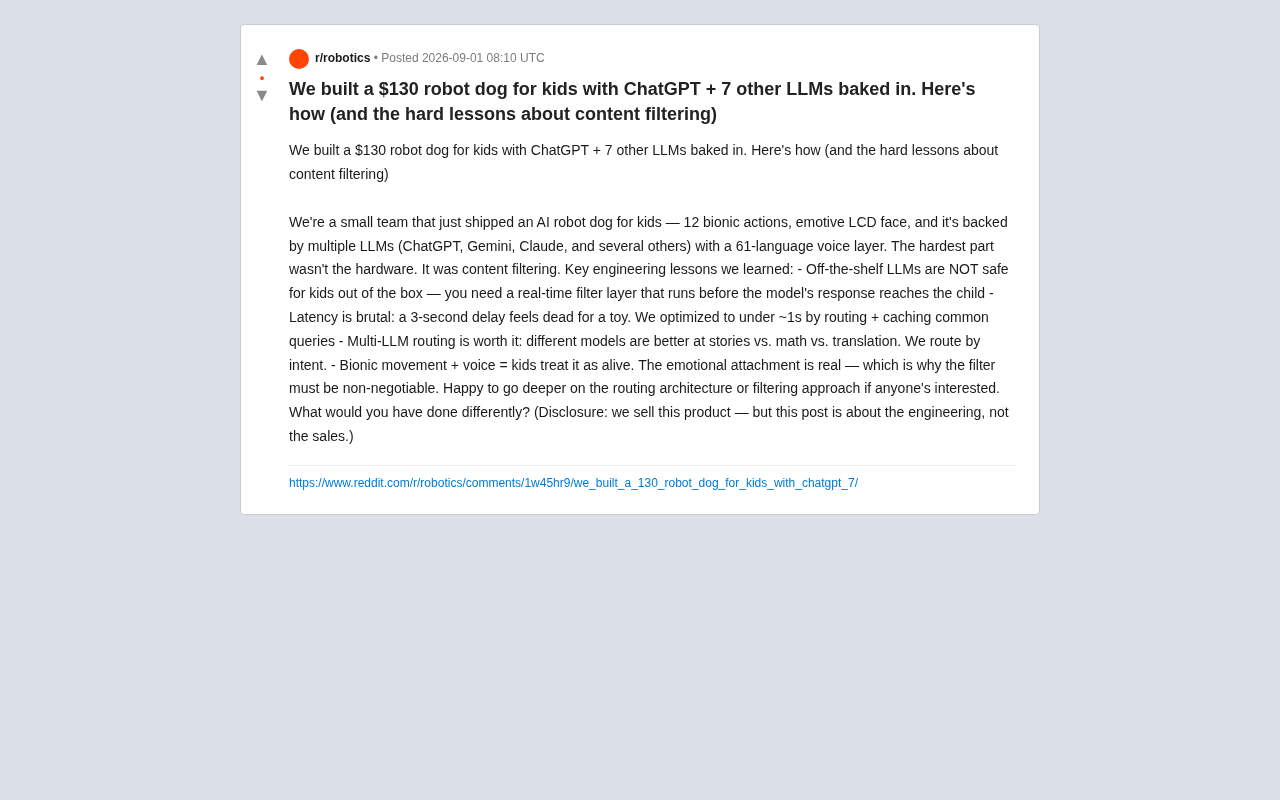
Building an AI Robot Dog for Kids: Multi-Model Routing, Content Filtering, and Latency Optimization
A $130 AI robot dog for kids integrates 8 LLMs with 61-language voice interaction. The team shares key engineering lessons on content safety filtering, multi-LLM intent routing, and sub-1-second latency optimization.
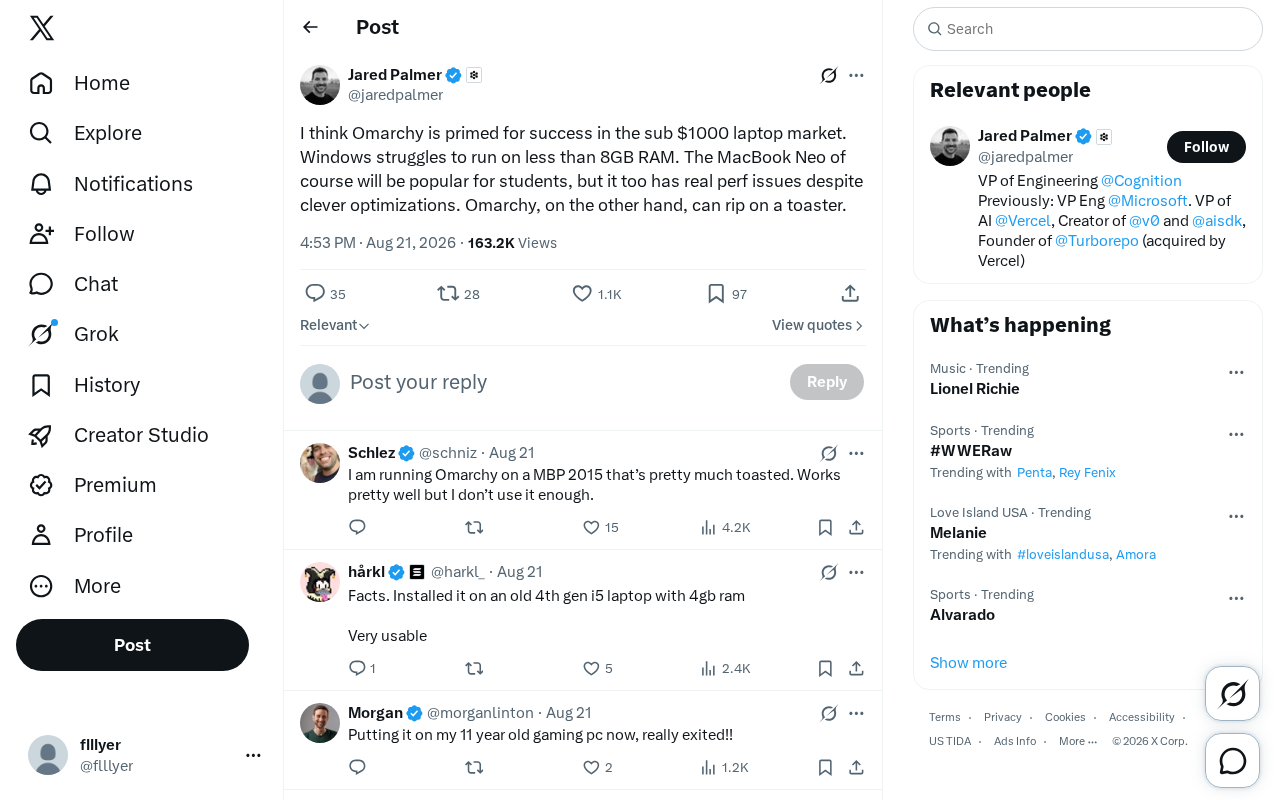
Can Omarchy Dominate the Sub-$1000 Laptop Market? An In-Depth Analysis
Omarchy, based on Arch Linux, shows unique advantages in the sub-$1000 laptop market. This analysis compares Windows and MacBook performance bottlenecks on low-spec hardware and examines why Omarchy enables cheap laptops to run smoothly, plus the ecosystem challenges and market prospects it faces.
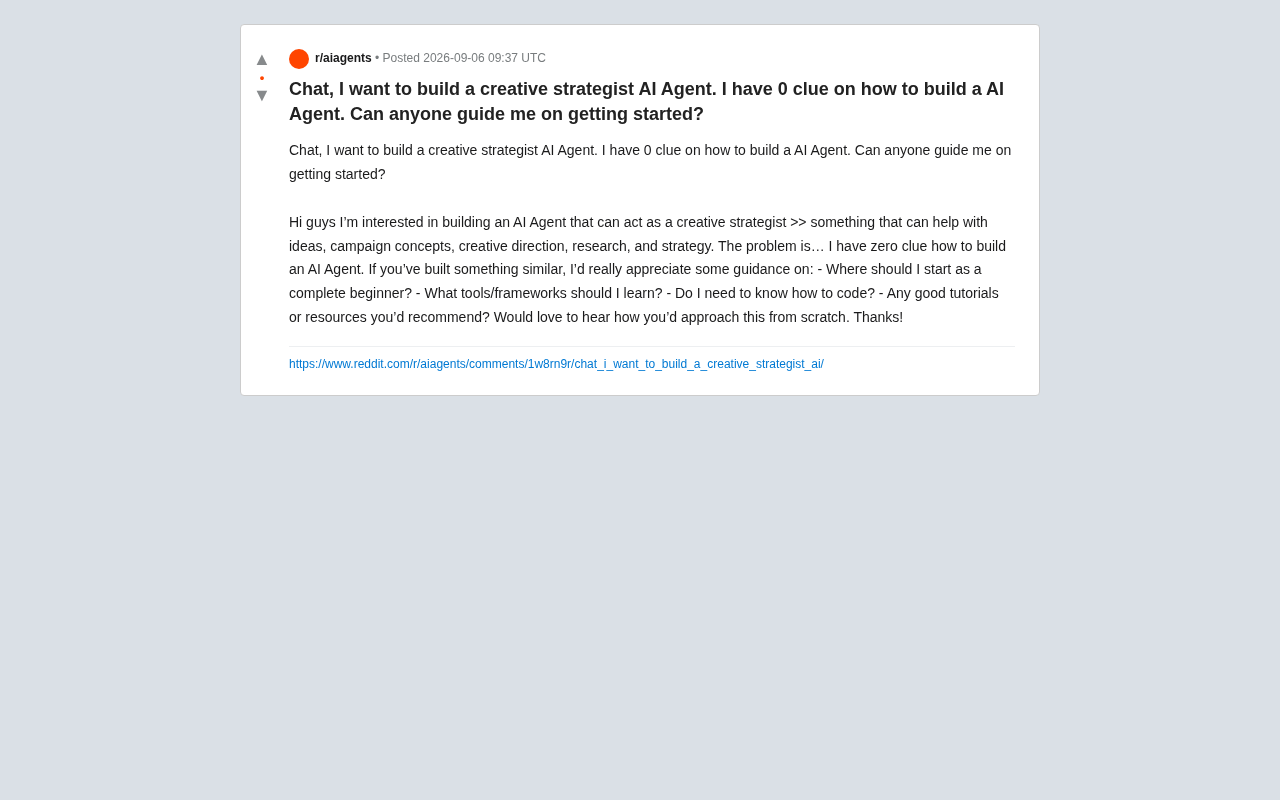
AI Agent Beginner's Guide: Building a Creative Strategy Intelligent Assistant from Scratch
A complete guide to building a creative strategy AI Agent from scratch. No coding required — use tools like Dify and Coze to quickly build an intelligent assistant.