Is Local AI the Future? Developer Community Debates the Cloud AI Dilemma

A developer distinguishes cloud AI's centralized model from AI technology itself, arguing for scenario-based layering of local and cloud to preserve choice.
A developer on r/LocalLLaMA describes his shift from "both disgusted by and dependent on AI" to a clear stance: what is uncomfortable is cloud AI's business model and power structure, not AI itself. The post critiques the cloud on economic, privacy, and power-concentration costs, and frames local AI as a win-win narrative. The community agrees on privacy and cost advantages but remains divided on hardware barriers, model gaps, and maintenance. The author advocates scenario-based layering rather than binary opposition.
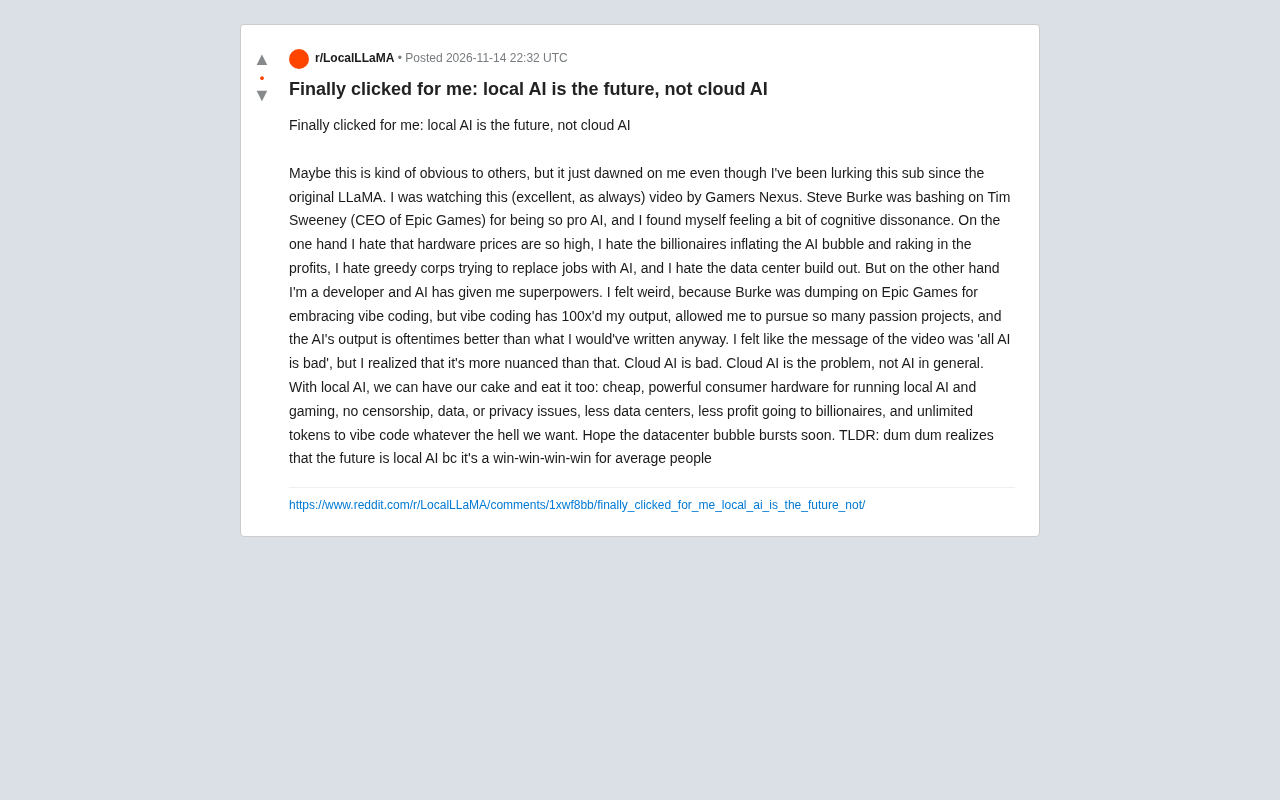
A developer posted on the Reddit community r/LocalLLaMA, admitting that after a long time of lurking, they finally figured something out: the problem isn't AI itself, but the centralized model of cloud AI. The post resonated widely and reflects a growing sentiment in the AI community—unease about the cloud vendors' AI development path, and a view of local operation as a way to balance efficiency and autonomy.
From Cognitive Dissonance to a Clear Stance: A Developer's Confession
The poster described a typical conflicted mindset. While watching a Gamers Nexus video, he saw host Steve Burke criticize Epic Games CEO Tim Sweeney's enthusiastic embrace of AI, and felt torn: on one hand, he disliked high hardware prices, billionaires inflating the AI bubble, companies replacing jobs with AI, and the unchecked expansion of data centers; on the other hand, as a developer, AI greatly boosted his productivity, and the code quality was often better than what he wrote by hand.
This "both disgusted and dependent" tension was eventually untangled by the poster himself. His conclusion: what makes people uncomfortable is the business model and power structure of cloud AI, not AI technology itself. This distinction seems simple, but it precisely captures a boundary that is often blurred in current discussions.
The Three Costs of Cloud AI: Cost, Privacy, and Centralization
The problems with cloud AI listed in the post can be roughly grouped into three categories.
Economic cost: Compute power is concentrated among a few cloud vendors, token consumption is continuously billed, and every inference run by a developer adds to the capital expenditure of data centers. The poster bluntly said he "hopes the data center bubble bursts soon," and behind this emotion is concern about resource misallocation—large amounts of capital flowing into centralized infrastructure rather than consumer-grade hardware affordable to ordinary users.
Privacy and censorship cost: Cloud inference means data leaves the local machine, and content must be filtered through the service provider's policies. For developers who need to handle sensitive code or data, this is a structural risk. Local operation naturally avoids this layer.
Power concentration cost: Profits flow to a few giants, and the technology roadmap is defined by the platforms. The poster sees this as a trend the AI community needs to be wary of, and local AI as a way of "voting with your feet."
Token billing is the mainstream business model of cloud vendors: users pay based on the number of input and output tokens, with each token corresponding to a portion of a forward pass through the model. Because large model inference requires substantial memory bandwidth and compute, cloud vendors fold the depreciation, electricity, and operations costs of GPU clusters into the unit price. This model is friendly to low-frequency calls, but for high-frequency, long-context, or repeatedly trial-and-error workflows, costs can accumulate quickly. By contrast, the marginal cost of local inference is mainly electricity, with hardware as a one-time investment, so the economic structure is completely different in high-frequency scenarios.
The Appeal of Local AI: A Win-Win-Win-Win Narrative
The post used "win-win-win-win" to describe what local AI means for ordinary people. On the hardware level, consumer-grade graphics cards and unified memory devices can both game and run models, serving two purposes in one machine; on the privacy level, data does not leave the device, and there is no need to trust third-party policies; on the economic level, one-time hardware investment replaces continuous token bills; on the ecosystem level, open-source model weights can be freely fine-tuned without being constrained by platform terms.
The poster specifically mentioned "unlimited tokens to vibe code freely," which touches on the core friction of the cloud's pay-as-you-go model—when every token has a price, the psychological cost of exploratory programming and repeated trial and error is amplified. Local inference pushes marginal cost close to zero, changing developers' behavior patterns.
Unified Memory refers to an architecture where the CPU and GPU share the same physical memory pool, typically represented by Apple Silicon as well as some AMD APUs and NVIDIA Grace Hopper. Traditional discrete graphics cards have fixed and limited VRAM capacity, while unified memory allows model weights to occupy larger capacity as needed, enabling consumer-grade devices to run models with larger parameter counts. The trade-off is that memory bandwidth is usually lower than high-end discrete graphics cards, limiting inference speed. This trend is raising the upper limit of models that can run locally, and it is also the technical basis for the post's claim of "one machine, two uses."
Community Consensus and Unresolved Divisions
The fact that this post gained attention on r/LocalLLaMA itself shows the direction of community sentiment. In multiple independent discussions, developers gave high weight to the privacy advantages and cost structure of local AI, which forms the community's basic consensus.
Divisions also exist. Some argue that the one-time investment in local hardware is still too high for most users, that model capabilities lag behind cloud flagships, and that maintenance costs (drivers, quantization, VRAM management) cannot be ignored. Another camp emphasizes that cloud AI remains irreplaceable in elastic scaling and access to frontier models, and that local and cloud are not binary opposites but layered by scenario. The poster himself did not deny the value of the cloud in some workflows; his core claim is refusing to let the cloud become the only option.
Quantization is the technique of compressing model weights from higher precision such as FP16 to lower-precision representations such as INT8 and INT4, which can significantly reduce VRAM usage and improve inference speed, but brings some precision loss. Local developers commonly use quantization formats such as GGUF, GPTQ, and AWQ to run larger models on limited hardware. Quantization requires repeated tuning for different models and hardware, which constitutes part of the "maintenance cost" mentioned in the post and is one reason why the barrier to local deployment is higher than cloud APIs.
Practical Implications for Developers
Setting aside the stance debate, this discussion offers several practical reminders for developers. When evaluating AI tools, use data sensitivity as a selection dimension rather than looking only at benchmark scores; for high-frequency, low-sensitivity tasks, the marginal cost advantage of local inference will grow over time; pay attention to the unified memory trend in consumer-grade hardware, as it is changing the upper limit of locally runnable model scale. As for the claim that "the cloud is dead," it currently looks more like an emotional expression than a technical judgment—the real signal is that the choice between local and cloud is expanding, and that itself is what the poster welcomes.
The value of the post is not in giving a conclusion, but in organizing a vague intuition into a discussable framework: opposing centralization does not mean opposing technology, and supporting localization does not mean rejecting the cloud. At a time when AI infrastructure is developing at breakneck speed, this ability to distinguish is more useful than taking sides.
One-line Summary
A developer distinguishes the centralized model of cloud AI from AI technology itself, arguing for scenario-based layering of local and cloud to preserve choice.
Paragraph Summary
A developer posted on r/LocalLLaMA, laying out his shift from the cognitive dissonance of "both disgusted by and dependent on AI" to a clear stance: what is truly uncomfortable is the business model and power structure of cloud AI, not AI technology itself. The post criticizes the cloud model from three dimensions—economic cost, privacy and censorship cost, and power concentration cost—and summarizes local AI as a win-win narrative of hardware reuse, data privacy, one-time cost replacing continuous billing, and open-source ecosystem freedom. The community has consensus on the privacy and cost advantages of local AI, but divisions remain over hardware barriers, model capability gaps, and maintenance costs. The author advocates scenario-based layering of local and cloud rather than binary opposition, with the core being to preserve choice.
Related articles
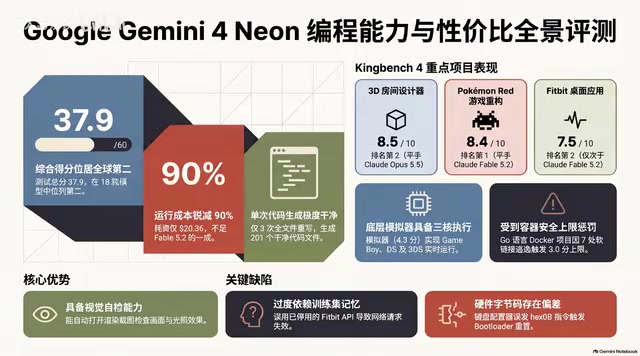
Gemini 4 Neon Hands-On: Value King or Confident Catastrophe?
Gemini 4 Neon review: 1M-token context, four thinking levels, 201 files in one KingBench4 pass at one-tenth Fable 5.2's cost—but it hallucinates fake data, leaves 7 symlink escapes, and bricks keyboards.

Google Gemini 4 Neon Hands-On: 6 3D Works That Impress and Fail
Hands-on with Google Gemini 4 Neon on a 3060 laptop: 6 3D works tested. Sunshower Fishing Harbor and mechanical keyboard impress; soft-body physics and faces fall short.
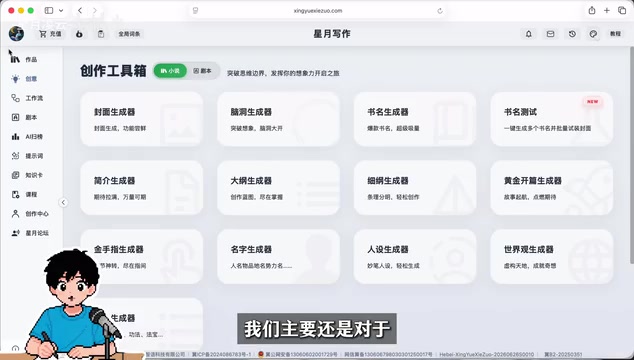
Gemini 4 Neo Web Novel Writing Test: Faint AI Flavor, Textured Dialogue
Bilibili creator's first-look review of Gemini 4 Neo for Chinese web novel writing: testing a Three Kingdoms transmigration opening with faint AI flavor, emotionally textured dialogue, and strong crisis building, plus comparison of 4A/4H/4C models and full workflow demos.