Is REA a Tool or a Workflow? The Truth Behind YouTube's Viral "Killing Software" Claim

REA isn't a new engine that kills software—it's a scheduling layer connecting existing reverse engineering tools to an agent evidence loop.
The so-called "software-killing" REA doesn't actually produce reverse engineering capability; it merely connects existing tools like Ghidra, IDA, and Hopper to an LLM agent, letting the agent repeatedly request decompilation evidence until it can reproduce a feature. Ghidra was open-sourced by the NSA back in 2019, so the reverse engineering tools themselves are nothing new—the real variable is the agent's scheduling and questioning ability. The resulting trend: software replication costs keep falling, moats built on single features grow shallower, and value is migrating to "what you build on top"—data, ecosystem, compliance, and iteration speed. Meanwhile, REA officially disclaims: permission and legal responsibility for reverse engineering always rest with the user, and automation only amplifies the consequences of decisions.
What Exactly Is REA? A Connector Obscured by the "Kills Software" Label
Recently, across YouTube and other platforms, a tool called REA (Reverse Engineer Anything) has been tagged with an explosive label—"kills software." In short videos, commentators declare in near-proclamatory tones: Everyone's saying this tool just killed software. But strip away that emotional shell, and REA's true form is far more modest.
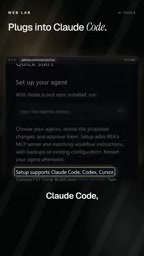
It inserts itself into an agent like Cloud Code, then calls the reverse engineering tools already installed on your machine—Ghidra, Hopper, IDA—feeding decompiled pseudocode and evidence back to the agent. If the agent isn't satisfied, it keeps asking, until it can piece together enough information to reproduce a given feature.
In other words, REA itself does not produce reverse engineering capability. It is a scheduling layer and a feedback loop. The 88,000+ GitHub stars show the community's enthusiasm, but star counts measure attention, not the magnitude of a technical breakthrough.
Reverse engineering refers to the process of analyzing compiled binaries without source code to reconstruct their structure, logic, and behavior. Common methods include disassembly (converting machine code back to assembly instructions), decompilation (further reconstructing into high-level-language-like pseudocode), dynamic debugging, and memory analysis. Reverse engineering itself is a neutral technology, widely used in security research, malware analysis, vulnerability discovery, compatibility development, and legacy system maintenance; but in scenarios like cracking commercial software, bypassing licensing, or copying features, it may cross legal and licensing red lines. Understanding this is important: the core of the REA discussion is not "can you reverse engineer"—that has long been a mature field—but rather how the efficiency and barriers of reverse engineering and replication have changed once LLM agents take over scheduling.
These Tools Aren't New—Ghidra Was Open-Sourced Back in 2019
The most valuable reminder in the video is: These tools aren't new. Ghidra was released by the NSA in 2019 and has been a public tool for the reverse engineering community ever since. IDA and Hopper are even more established players in the commercial reverse engineering space.
REA's key design is that it does not bundle or distribute Ghidra or IDA. What it does is connect the agent to the tools already installed on your machine. This is something many people overlook.
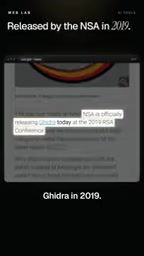
This means the thing "killing software" is not some specific binary artifact, but an integration approach: letting an LLM agent directly drive professional reverse engineering tools and complete the "decompile → understand → reproduce" loop in natural language. The real variable is the agent's scheduling capability, not the reverse engineering tools themselves.
Positioning differences between Ghidra, IDA, and Hopper: Ghidra is a reverse engineering suite open-sourced by the NSA in 2019, feature-complete and free, supporting disassembly, decompilation, and script extension—a common choice in academic and security communities; IDA Pro is the long-standing benchmark among commercial reverse engineering tools, with mature decompilers and a plugin ecosystem, widely used in professional security analysis, and expensive; Hopper is a lightweight commercial disassembler/decompiler for macOS, known for its user-friendly interface and cost-effectiveness. What all three share is that they provide high-quality decompiled pseudocode and symbol information, which is exactly the "raw material" an LLM agent needs. The reason REA chose to "connect existing tools" rather than build its own engine is that these tools have accumulated decades of parsing capability—reinventing the wheel offers extremely poor cost-effectiveness.
How the Agent Uses an Evidence Loop to Approach a "Can Build" State
Another line in the video worth pondering is: the agent keeps asking until it can build the feature. This is not a one-shot call, but a continuous evidence-gathering process of repeated questioning.
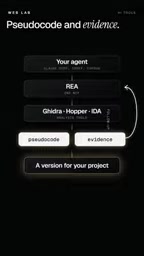
Traditional reverse engineering workflows rely on engineers manually reading pseudocode, cross-referencing, and guessing data structures. In the REA model, the agent repeatedly requests more decompiled snippets, symbol information, or runtime evidence, until it believes the reconstructed logic is sufficient to support reimplementation. The termination condition of this loop is not "looks right" but "can build."
This creates an implicit barrier: whether the agent can ask the right questions. In reverse engineering, asking the right question is often harder than getting the answer. REA's value ceiling depends on the underlying model's depth of understanding of code semantics.
The LLM agent's "evidence loop" refers to an iterative process in which the model does not output an answer in one shot, but actively collects information, validates hypotheses, and corrects reasoning through multiple rounds of tool calls. In the REA scenario, the agent first requests a segment of decompiled pseudocode and judges whether the information is sufficient to reproduce the target feature; if not, it specifies new functions, data segments, or runtime behaviors to continue requesting, until it pieces together the complete logic. This pattern depends on two capabilities: first, tool scheduling (knowing when to call which reverse engineering tool and what parameters to pass), and second, semantic understanding (reading the design intent behind pseudocode). Its biggest difference from traditional "humans reading code" is convergence speed—the agent can trial-and-error at high frequency, but if the questioning direction is wrong, it will also rapidly consume rounds on invalid paths. Therefore, the agent's capability ceiling is essentially limited by the underlying model's depth of understanding of code semantics and program structure.
Replication Is Getting Cheaper, and the Moat Is Moving Upward
The video author's judgment is quite measured: the shift isn't one tool. The real change is—copying software is getting cheap. As the cost of reverse engineering and understanding continues to fall, pure feature replication will find it increasingly difficult to constitute a barrier.

What you build on top is what matters. This line pulls the discussion back from "can REA kill software" to a more realistic level: the value of software is migrating from "what features are implemented" to "what is layered on top of features"—data, ecosystem, reliability, compliance, user experience, and continuous iteration speed. Replicating a feature is easy; replicating a product's entire context is hard.
Compliance Reminder: Permission and Responsibility Are Yours
At the end of the video, REA's own disclaimer is mentioned: permission is on you, check before you ship. This point easily gets drowned out in the excitement of short videos, but it is a genuine risk point.
Reverse engineering sits in a gray or restricted zone in most jurisdictions, depending on the target software's license agreement, local laws, and use case. Agents make the process faster, but they will not bear the legal consequences for you. Handing reverse engineering capability to automated tools means the execution speed of bad decisions is also amplified in sync.
The compliance boundaries of reverse engineering vary by jurisdiction. In the United States, DMCA Section 1201 generally prohibits circumvention of technological protection measures, but there are limited exemptions for interoperability and security research; many EU countries allow reverse engineering for interoperability and learning purposes; China's Copyright Law and Computer Software Protection Regulations have relatively limited exceptions for "study and research" and "necessary interoperability." In addition, the target software's End User License Agreement (EULA) often separately prohibits reverse engineering, even if the law itself does not. This means "technically possible" and "legally permissible" are two different things. When an agent automates the reverse engineering process, the risk does not disappear; instead, because execution speed increases, it is amplified: a single misjudgment may be batch-applied to multiple targets within minutes. Before use, you should confirm the scope of authorization, the regulations of your jurisdiction, and the target software's terms, and retain the basis for your decisions.
Conclusion: Not a Victory of Tools, but a Restructuring of Workflows
REA being labeled with the headline "kills software" is essentially short-video narrative compressing a complex change. It did not invent a new reverse engineering engine, nor does it bundle Ghidra or IDA. What it does is connect existing professional tools to the agent's evidence loop.
There are two signals truly worth watching. First, the cost curve of reverse engineering and replication is shifting downward, and moats built on a single feature will become shallower. Second, value is migrating to "above the feature"—whoever can build something on top of replication that cannot be easily transplanted will hold the initiative in the next phase. As for REA itself, its disclaimer has already written the answer clearly: tools are neutral, and judgment and responsibility always rest with the user.
Related articles

How Big Can Stars Really Get? The Physical Limits of the Largest Stars
Red supergiants are the largest stars by volume, with radii up to 2,000 times the Sun, engulfing the inner solar system. But there is no precise upper limit on stellar size—models predict up to 15,000 solar radii. The most massive blue stars are far smaller than red supergiants—biggest and heaviest are two different things.

Apple HomeView Smart Display Full Feature Breakdown: Wall-Mount or Desktop, $299
Apple launches HomeView, a $299 smart display with wall-mount and desktop options, 12MP camera for facial recognition, smart home control, music playback, and recipe step-by-step cooking. Full breakdown of watch faces, apps, privacy, and cooking integration.

Where Did the Promised New Studio Go? Craft Computing Answers After Five Years
Craft Computing's host responds to viewer questions: the new studio promised five years ago was shelved as construction costs soared from $30,000 to $75,000, and was replaced by a 168-square-foot garage conversion.