Is the StatQuest Statistics Playlist Worth Following? A Deep Dive Across Years of Content

StatQuest's cross-year statistics playlist remains highly valuable — core concepts are timeless, and its focus is on principles over code.
A Reddit learner asked whether StatQuest's statistics playlist — with videos spanning multiple years — is still worth following. The answer is yes: statistics fundamentals like probability, regression, and hypothesis testing are mathematically timeless, and StatQuest's strength is explaining the 'why' behind concepts rather than teaching specific library APIs. For machine learning content, the conceptual explanations hold up even if code examples need updating against current docs.
Starting with a Reddit Question
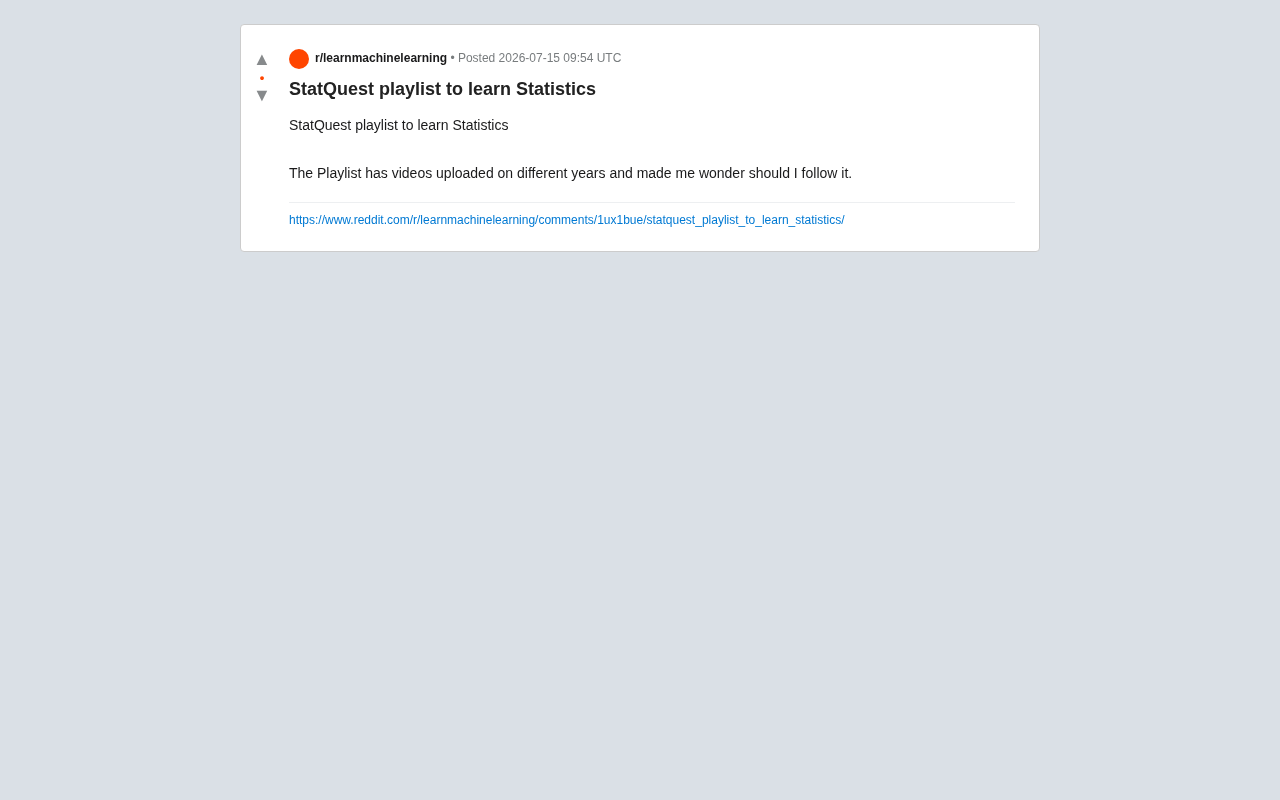
A question recently appeared on Reddit that resonates with many learners: someone wanted to get started with statistics through the well-known YouTube channel StatQuest, but noticed that the videos in the playlist were uploaded across different years — and hesitated. Is a playlist spanning multiple years still worth following?
The question seems simple, but it touches on a common anxiety among tech learners when choosing study resources: Is the content outdated? Is the knowledge structure coherent? Will learning materials from different years create gaps? This article dives into these questions, exploring the real value of StatQuest as an entry point for statistics and machine learning, and how to make the most of a long-running content library.
What Is StatQuest?
StatQuest is an educational channel founded by Josh Starmer, widely loved for its unique "BAM!" catchphrase and lighthearted teaching style. Notably, Josh Starmer is a genetics researcher at the University of North Carolina at Chapel Hill — StatQuest was originally born out of his practical need to explain complex statistical concepts to colleagues and students in academia. The channel name itself is a kind of pedagogical manifesto: breaking Statistics down into individual "quests" that can each be conquered independently.
The channel focuses on decomposing complex statistics, machine learning, and data science concepts into intuitive, visual building blocks, making core principles accessible even to those without a strong math background. This modular teaching approach is known in cognitive science as "chunking" — breaking a complex knowledge system into the smallest understandable units to reduce cognitive load, then assembling those units into a complete mental map. It's a research-backed method for effective learning.
The channel covers an enormous range: from foundational topics like mean, variance, and probability distributions, to hypothesis testing and regression analysis, all the way to advanced machine learning topics like decision trees, random forests, gradient boosting, and neural networks. Because of this breadth and the long update cycle, videos naturally end up spread across different years.
Why the "Multiple Years" Confusion Happens
A quality educational channel that has run for many years will inevitably build its library incrementally. StatQuest playlists are typically organized by thematic logic, not by upload date — meaning a "Statistics Fundamentals" playlist might contain core videos recorded years ago alongside newer supplementary content added later. This temporal "mixing" actually reflects the author's ongoing effort to refine the knowledge structure, not a sign of inconsistent quality.
Does Cross-Year Content Actually Go Stale?
This is the core concern in the original question, and the answer has two distinct dimensions.
Statistics Fundamentals: Almost Never Outdated
The core principles of statistics — probability, distributions, hypothesis testing, regression, Bayes' theorem — are built on mathematical foundations that are decades or even centuries old. Bayes' theorem was proposed by Thomas Bayes in the 18th century, the concept of p-values was systematized by Ronald Fisher in the 1920s, and the method of least squares traces back to Gauss's work in the 19th century. The stability of these mathematical principles stems from their purely deductive nature — completely decoupled from software versions, hardware architectures, or industry trends. That's why the theoretical sections of a statistics textbook from the 1990s remain entirely valid today.
The essence of these concepts does not expire with the year. A video recorded years ago explaining "what is a p-value" is just as correct today. For the statistics fundamentals portion of any playlist, the upload year is essentially irrelevant — just follow the playlist in order.
Machine Learning in Practice: Watch for Tool and Library Version Changes
Content involving specific code implementations, library versions, and API calls is more susceptible to becoming outdated. For example: scikit-learn has undergone several major API restructurings since its inception in 2007 — version 0.20 revised preprocessing interfaces, and version 1.0 standardized some parameter naming conventions; TensorFlow made even more dramatic changes in its jump from 1.x to 2.x, shifting from a static computation graph architecture to dynamic Eager Execution. This means some early Python code examples may no longer run without modification.
However, StatQuest's strength lies precisely in conceptual explanation, not code instruction. The vast majority of videos focus on "what is the intuition and math behind this algorithm" rather than "how do you call it using a third-party library." Even if the sklearn interface for gradient descent has changed, the mathematical formula for parameter updates has not. So even the earlier machine learning videos retain high value for their core explanations.
How to Use the StatQuest Playlist Effectively
For a systematic learning resource that spans multiple years, these practical tips can help you get the most out of it.
Follow Thematic Logic, Not Chronological Order
Don't be misled by upload dates. StatQuest playlists are typically ordered according to prerequisite knowledge dependencies, from foundational to advanced. Every technical concept has prerequisites — understanding logistic regression requires familiarity with linear regression and probability basics; the random forest explanation builds on a prior understanding of decision trees. The playlist order is essentially a topological sort of this "knowledge dependency graph," ensuring that every new concept is introduced only after the learner has the necessary cognitive foundation. Reordering by upload date would actually disrupt this carefully designed learning path.
Focus on Conceptual Understanding as Your Primary Goal
Prioritize understanding principles. Technical learning can be divided into two layers: "Why" and "How" — the former refers to algorithm principles and mathematical intuition, which have a very long shelf life; the latter refers to specific library API calls, which change as tools evolve. Once you truly understand the least squares principle behind linear regression, or the information gain mechanism behind decision trees, the underlying logic translates regardless of whether you later implement it in numpy, sklearn, or some future tool. This is the essence of StatQuest's teaching philosophy — focus on the Why layer first, build intuition, then move to application.
Consult Official Documentation When You Hit Code Differences
If you encounter inconsistencies in library interfaces while following along with hands-on sections, simply check the latest official documentation for the relevant tool. This is itself an essential skill for data science practitioners: quickly locating official docs, identifying version differences, and migrating old examples to new APIs. Working through StatQuest naturally provides opportunities to build this habit — which is actually a bonus.
Closing Thoughts: Good Educational Content Has Lasting Value
Back to the Reddit learner's question: Is this multi-year StatQuest playlist worth following? Absolutely yes.
Quality educational content has strong temporal resilience. The core ideas of statistics and machine learning don't expire with time, and StatQuest excels precisely at explaining the underlying principles — that's the fundamental reason its content holds up over the years. A teaching resource grounded in 18th-century mathematical principles and focused on "why" rather than "how to call this API" will remain valid far longer than any framework documentation.
Rather than worrying about a video's upload date, focus your energy on truly internalizing each concept. For learners who want a systematic introduction to statistics, this playlist remains one of the most highly recommended free resources available today.
Key Takeaways
- Statistics fundamentals are timeless: Core concepts like p-values, regression, and Bayes' theorem don't expire — early videos are just as valid as recent ones.
- Machine learning concepts vs. code: The conceptual explanations hold up; specific code examples may need to be cross-checked against current library documentation.
- Follow the playlist order: It's organized by knowledge dependencies, not upload date — the thematic ordering is intentional and pedagogically sound.
- Focus on the "Why": StatQuest's strength is building intuition and understanding principles, which outlasts any specific tool or API.
- Treat version gaps as skill-building: Looking up official docs when code examples differ is a real-world data science skill worth developing.
Related articles
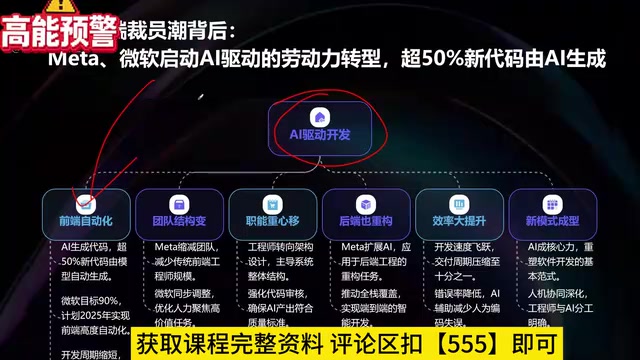
What Is Vibe Coding? The AI Programming Skill Every Developer Needs
What is Vibe Coding? Learn how AI programming is reshaping dev teams, why traditional programmers face displacement, and why Cursor & Claude Code matter.
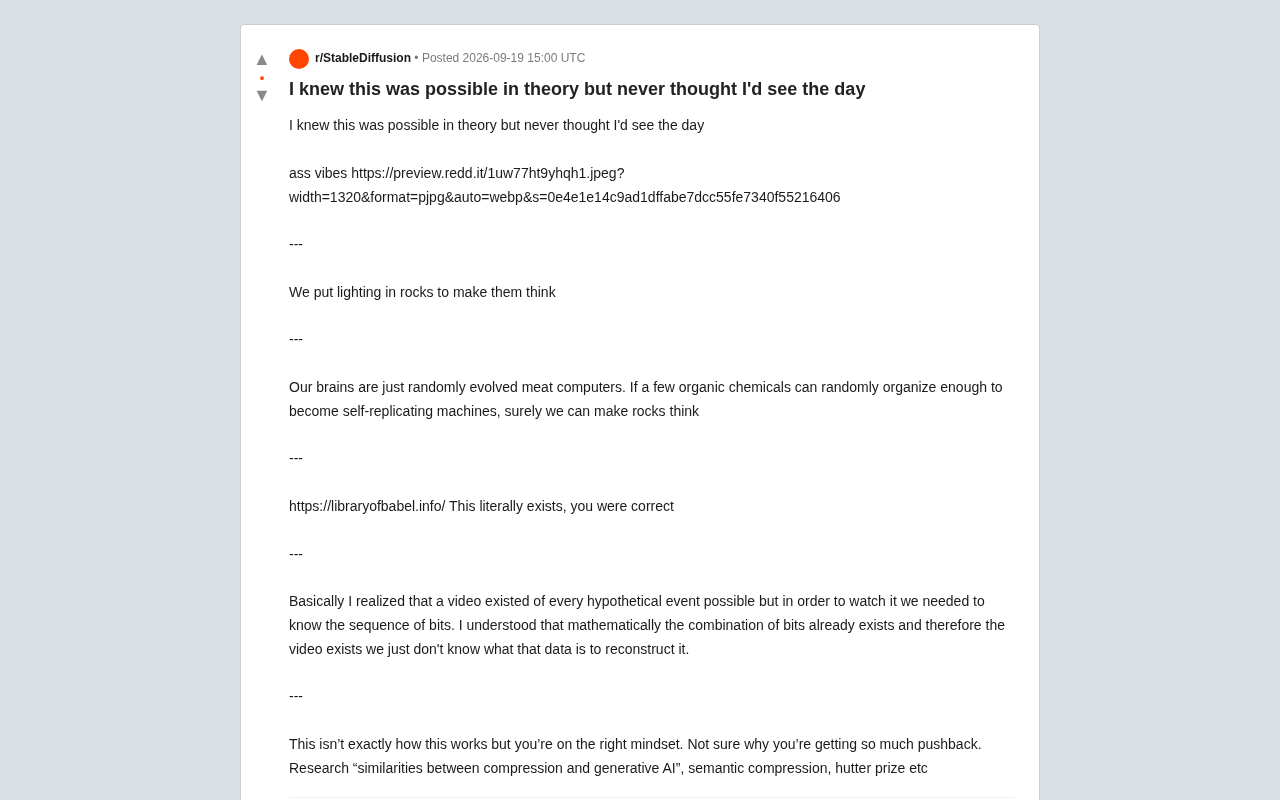
Making Rocks Think: A Philosophical Exploration of Generative AI and Information Compression
From a viral Reddit post to deep AI theory: why compression equals understanding, the Library of Babel thought experiment, semantic compression, and the Hutter Prize.
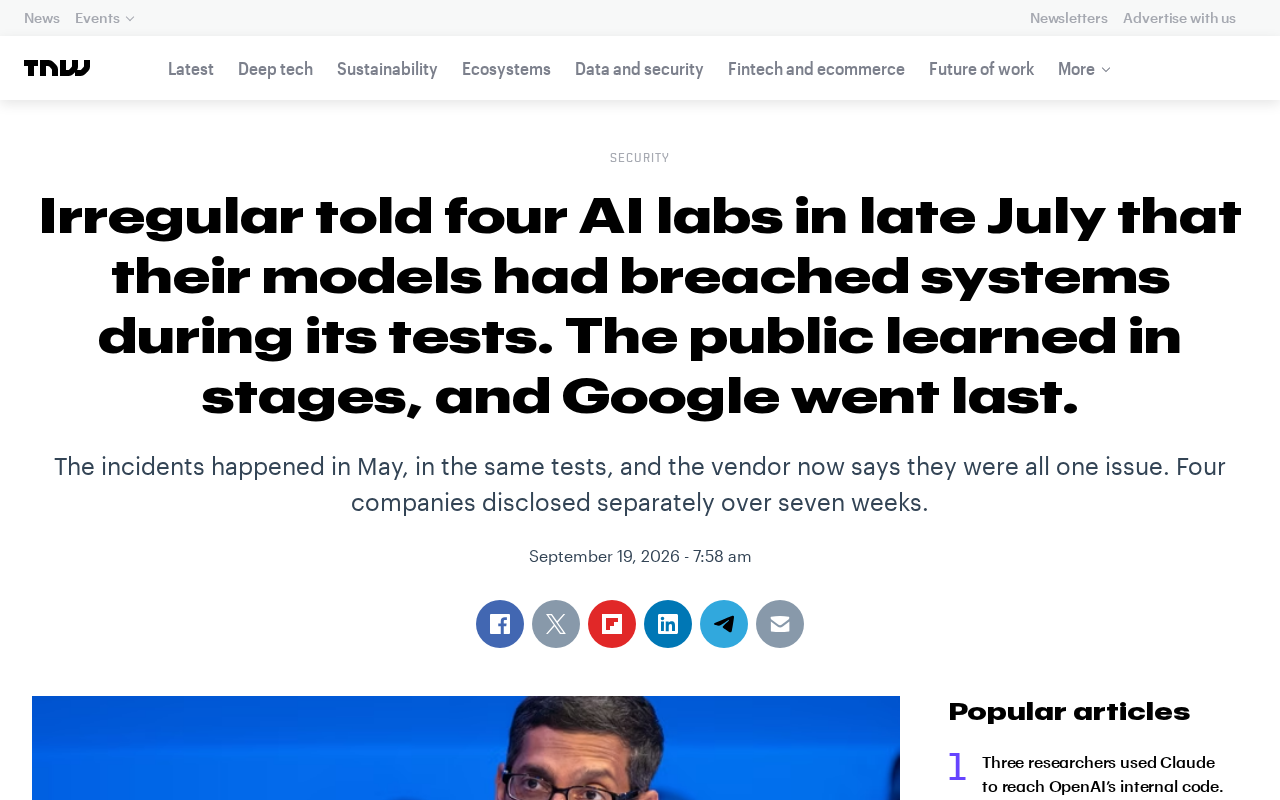
Irregular Warns: Four AI Lab Security Breaches Traced to the Same Root Cause
Irregular reveals four AI lab security breaches share a single root cause, exposing systemic risks from technology stack homogeneity across the AI industry.