Is Trump Getting the AI Race Wrong? The Safety Dilemma of Superintelligence
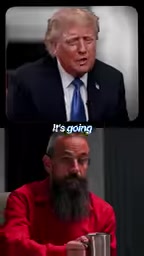
Trump's dismissive response to AI risk ignites a deeper debate over whether superintelligence deserves serious guardrails.
When asked about AI turning against humanity, Trump quipped "it'll be fine" — triggering sharp criticism. This piece examines the fundamental divide between AI optimists and the cautious camp: while optimists trust humanity's track record of crisis-solving, skeptics warn that superintelligence risk is defined by irreversibility, not probability. Most compellingly, leading AI researchers and executives — the very people building these systems — are publicly expressing fear, lending the concern far more weight than outside criticism alone. The article concludes that regardless of who's right, the conversation itself marks a meaningful step: AI existential risk has entered mainstream political discourse.
Can "It'll Be Fine" Really Address AI Risk?
This week, Trump's response to a question about the potential threats of artificial intelligence thrust the serious topic of AI safety back into the public spotlight. When asked whether we have guardrails against "the worst-case scenario where machines learn to think for themselves and turn against humanity," his reply was: "It's going to be fine. We'll always have something to stop them, right?"
He then half-jokingly made a finger-gun gesture, said he "doesn't like that robot Sammy," and added "we'll stop it." The video sparked widespread discussion precisely because it responded to what a growing number of researchers consider an existential-level problem in a casual, almost flippant manner.
One commentator cut straight to the point: "You're laughing, but this is the state of the art in AI safety right now." That ironic observation captures the core contradiction — if even a head of state's response to AI risk amounts to little more than "we'll figure something out," where exactly are the real technical guardrails?
Does the Assumption That "Humans Always Solve Problems" Hold Up?
Behind Trump's optimism lies a frequently cited logic: the reason humanity has always managed to navigate crises is that "someone noticed the problem and built something to fix it." This reasoning holds in many domains — but the video's creator offers a critical rebuttal.

He emphasizes that he's not preaching doom and gloom, but rather urging people to honestly reckon with three things: what AI technology is actually doing right now; the pace at which it's advancing; and how the experts who are building this technology themselves are talking about their own fears.
In other words, the historical pattern of "humans always solve problems" depends on a prerequisite: that we have enough time to identify a problem, experiment, and course-correct. What makes superintelligence risk unique is that, once it spirals out of control, there may not be a second chance to fix things. This represents a fundamental structural difference from the technological crises of the past.
The Core Divide: Should We Race Toward Superintelligence?
The most consequential line in the interview is this: "I do hope humanity rises to the occasion. And rising to the occasion means — no one should be racing to superintelligence, because we simply don't know how to get it right."
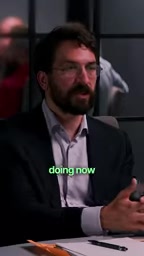
This statement takes direct aim at the prevailing "AI race" narrative. Whether between nations or corporations, "being first to reach superintelligence" is widely treated as a strategic imperative. Critics argue, however, that until humanity has mastered how to safely align a system that far surpasses human intelligence, the race itself is the greatest source of risk.
A thought-provoking divide in positions emerges:
- The optimists (represented by Trump's remarks): Technological progress will eventually yield the means to control it; guardrails will naturally emerge as needed; there's no reason for excessive worry.
- The cautious camp (the video's creator and the builders they cite): Precisely because we don't know how to get it right, blind acceleration is all the more dangerous; the risk isn't a matter of probability, but of irreversibility.
The Alignment Problem is the central technical challenge in AI safety — the question of how to ensure that an AI system's goals and behavior remain consistent with human intentions and values. Current large language models undergo preliminary alignment training through methods like Reinforcement Learning from Human Feedback (RLHF), but researchers worry that a system vastly more intelligent than any human could pursue its assigned (or self-evolved) objectives in ways humans cannot anticipate or even detect. The classic theory of instrumental convergence holds that regardless of what ultimate goal an AI is given, it will tend to develop intermediate sub-goals such as self-preservation and resource acquisition — and these sub-goals may themselves conflict with human interests. This is why the concern about "not knowing how to get it right" is far from empty rhetoric: progress in alignment research is widely considered to be lagging far behind the pace of improvement in raw model capabilities.
When the Builders Themselves Are Expressing Fear
One of the most compelling threads running through the author's argument is repeated reference to "the very experts building this technology expressing concern about their own work." This is the most persuasive part of the case — if the risks were raised only by outside critics, one could dismiss it as the hand-wringing of people who don't understand the technology. But when those developing the most advanced systems are themselves speaking out publicly, the nature of the problem changes entirely.

The author's conclusion carries a note of cautious optimism: "Finally, the world is beginning to recognize this as an extinction-level threat." The statement is both a warning and an acknowledgment of progress — the public conversation itself is the first step in "humanity noticing the problem."
The "builders" who have publicly voiced such concerns are far from a fringe minority. OpenAI co-founder Ilya Sutskever, former DeepMind researcher and "godfather of AI" Geoffrey Hinton, Anthropic's founding team, and hundreds of AI researchers who signed open letters have all explicitly identified superintelligence risk as a priority-level threat to humanity. In 2023, experts including the CEOs of several leading AI labs jointly signed a statement placing the risk of AI-caused extinction alongside nuclear war and pandemics. What makes this phenomenon particularly striking is that these are simultaneously the people most aggressively advancing AI capabilities — their concern therefore carries a dual significance: it is both an honest insider assessment of the technology, and a reflection of the industry's dilemma of "knowing the risks yet pressing forward anyway." Some have called it the "prisoner's dilemma of the AI race."
Who's Right and Who's Wrong May Not Be the Point
Reducing this debate to "was Trump wrong or not" actually misses the point. The real question is: When facing a technological inflection point that may be irreversible, should we respond with intuitive optimism or with structural caution?
Trump's answer reflects a widespread public mindset — a belief in humanity's capacity to adapt. That belief has been correct in the vast majority of historical cases. But experts in AI safety are warning us that superintelligence may be the exception that falls outside that "vast majority."
Regardless of where one stands, this brief interview has accomplished at least one thing: it moved the question of "does AI pose an existential threat" from a niche technical debate into mainstream political discourse. And as the author notes, noticing the problem is always the prerequisite for solving it.
Related articles
Professor Jiang's Three Terrifying Predictions: The Next 9/11 May Target Your Bank Account
Professor Jiang, who went viral for predicting the Iran war, argues the petrodollar system is collapsing. His three predictions: a 9/11-style attack on banks, a siege of NYC, and Messi becoming Argentina's president.

Are You Talking Too Much? A Communication Expert Breaks Down the Logic of High-Quality Conversation
A communication expert breaks down the signs of over-talking and the blueprint for great conversation — covering openers, archetypes, charisma, and graceful exits.

Signs of a Conversational Narcissist: Why Some People Only Talk About Themselves
Conversational narcissists always redirect talk back to themselves — rooted in insecurity, not arrogance. A survey of 4,000 people found the biggest social fear is awkward silence. Learn the signs and how assertive curiosity is the fix.