Are You Talking Too Much? A Communication Expert Breaks Down the Logic of High-Quality Conversation

Great conversation is a learnable skill — and in the age of AI, it's becoming a rare competitive advantage.
This article explores a communication expert's methodology on the art of conversation, arguing that as technology increasingly replaces human interaction and loneliness spreads globally, skilled conversationalists hold a growing competitive edge. Starting with a self-assessment for over-talking, the piece covers research-backed opening lines from a 500-person speed networking study, five conversation archetypes, the secret to charisma, and the often-overlooked art of closing a conversation gracefully — all framed as learnable skills with a clear blueprint.
The Social Signal Most People Miss: You Might Be Over-Talking
In our everyday interactions, many of us make the same unconscious mistake — we talk too much and listen too little. A communication expert who specializes in the art of conversation points out that the first step to recognizing whether you're an over-talker is to observe the other person's nonverbal cues.
She describes one telling detail: when the other person opens their mouth as if to speak, only to be cut off by your continuous output, that expression of interrupted intent is what she calls the "open fish" look. It's a subtle but unmistakable signal — you've taken up too much conversational space.
This isn't a niche problem. According to research she cites, 95% of people have worked with a colleague who talks too much. In other words, over-talking is an extremely common communication barrier in both professional and social settings.
To address this, she designed a five-question self-assessment: "Are you an over-talker?" If you answer yes to more than three of the questions, there's a good chance you are one.
Over-Talking vs. Under-Talking — Which Is Worse?
A natural follow-up question: between over-talking and under-talking, which is the bigger problem?
The expert admits she spent twenty years studying "conversation masters" while personally being a "recovering awkward person" — someone long plagued by poor conversational experiences. Her conclusion: great conversation skills are the vehicle for getting what you want in life. Whether it's a promotion, building relationships, or finding a life partner, conversation is the unavoidable core tool.
Rather than simply judging one as worse than the other, she focuses on how to get better — which is the foundation of her entire methodology.
In the Age of Technology, Conversation Skills Are More Valuable Than Ever
She raises a thought-provoking observation about an emerging trend: the next generation may spend more time talking to technology than to other humans.
What follows is a growing scarcity of genuine human connection. She cites data showing that one in six people worldwide is affected by loneliness. As real conversations become less frequent, those who can truly hold a great conversation become increasingly rare.

She also points to a highly relatable modern phenomenon — voice messages. She admits she now sends friends voice notes as long as nine minutes more often than ever before. But she also makes a sharp observation: voice messages are actually the most selfish form of communication. They transfer the entire burden of processing information onto the recipient.
This insight reveals how technology can undermine the reciprocity of conversation even while appearing to connect us. It's precisely why she believes that in this era of rapid technological change, those who are genuinely skilled at conversation will have a distinct competitive edge.
The claim that "voice messages are the most selfish form of communication" touches on the issue of cognitive load transfer in communication. Text messages allow recipients to read, skim, or skip at their own pace; voice messages require the listener to process content in real time, linearly, with no ability to scan quickly — and they're hard to listen to in noisy environments. Psychology research refers to this pattern of unilaterally shifting processing costs onto the other party as "power asymmetry in asynchronous communication." Interestingly, senders often feel that voice messages are more "intimate" and "efficient," while recipients experience the opposite — especially when the message is long and unstructured, frustration levels rise significantly. This reflects a deeper blind spot in communication: we habitually design how we express ourselves based on our own needs, rather than the receiver's experience.
Conversation Has a Blueprint: From Opening Lines to Closing
The good news is that great conversation isn't a gift — it's a learnable skill. She emphasizes: conversation has a blueprint, and once you understand it, everything becomes easier.

She shares a specific finding from an experiment her team conducted: three rounds of speed networking events involving 500 participants. The results showed that the best conversation opener is: "What was the highlight of your day?"
By contrast, tired openers like "How are you?" or "What do you do?" quickly leave both parties with nothing to say, leading to awkward silence. She also mentions the existence of "the worst conversation question ever," along with a formula for quickly bypassing meaningless small talk.
"Speed networking" is a structured social format in which participants have brief, timed conversations (typically 3–5 minutes) with multiple strangers in succession — similar in format to speed dating. This design is naturally well-suited to conversation research because it allows researchers to collect a large number of standardized conversational samples in a short time with controlled variables. By comparing the effectiveness of different openers and questioning styles across hundreds of conversations, researchers can draw statistically reliable conclusions. This is what makes the finding about "What was the highlight of your day?" so compelling — it's not intuitive wisdom, but an empirically validated result from a 500-person study. Compared to identity-oriented questions like "What do you do?", emotion-oriented openers are more likely to trigger genuine sharing, lower defensiveness, and allow both parties to reach a meaningful conversation more quickly.
Five Conversation Archetypes and the Secret to Charisma
Her framework also includes more advanced concepts:
- The secret doorway to charisma — how to become more magnetic in conversation;
- Five conversation archetypes — different people have different communication styles, and identifying archetypes helps you better match the other person's approach;
- How to exit a conversation gracefully — how to end a bad conversation without offending anyone.

She highlights a common misconception: people tend to obsess over "first impressions" but rarely think about how a conversation ends. In reality, how you close a conversation matters just as much. These skills don't just affect social comfort — they directly impact career advancement, relationships, and major life decisions.
The concept of "conversation archetypes" originates at the intersection of personality psychology and communication research. Rather than simply dividing people into "introverts" and "extroverts," the archetype framework describes the habitual roles a person tends to play in conversation — such as the Questioner, the Storyteller, the Problem-Solver, the Listener, and the Performer. Recognizing your own archetype helps you understand why certain conversational settings feel natural while others drain you. More importantly, when you can identify someone else's archetype, you can actively adjust your communication style to match their rhythm, rather than applying the same approach to everyone. This is fundamentally aligned with the "style-matching" techniques widely used in sales, negotiation, and leadership training.
Final Thoughts
This content reads more like a preview and high-level overview of a systematic methodology, with a clear central argument: in a world where technology increasingly substitutes for face-to-face interaction and loneliness is spreading globally, the ability to hold a great conversation is becoming a rare and high-value skill.
Recognizing whether you talk too much, mastering strong opening lines, and understanding the full blueprint of conversation — from opening and breaking the ice, to projecting charisma and closing gracefully — this learnable skill set may have more power to reshape your personal and professional life than most people realize.
Related articles
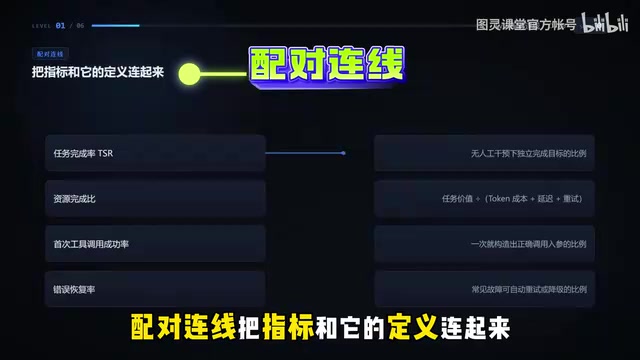
Six Hard Standards for High-Quality AI Agent Projects
Six hard standards for AI Agent projects from demo to production: quantifiable business value, tiered model scheduling, context engineering, skill engineering, RAG tool integration, and evaluation guardrails.
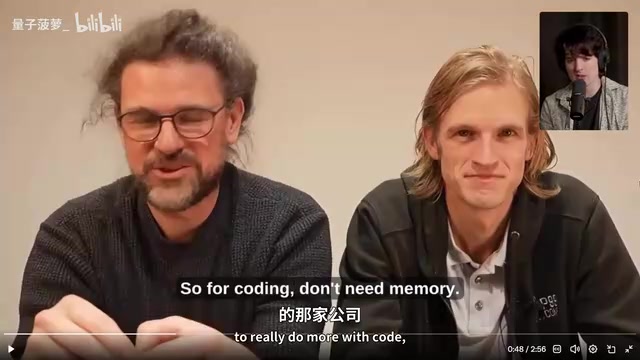
Claude Code Memory Feature Tested: 26 of 45 Entries Were Never Read — Should You Turn It Off?
Theo tested Claude Code memory: 26 of 45 entries never read, write-to-read ratio 3:1. Why codebases don't need memory systems, and how to use architecture, CI, and AGENTS.md instead.
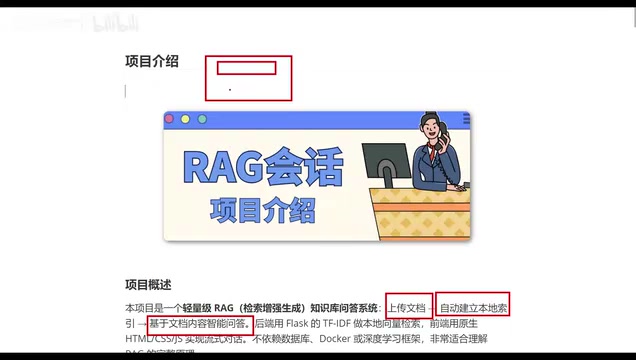
Building a RAG Knowledge Base Q&A System from Scratch: A Full Walkthrough with DeepSeek Integration
Build a RAG private knowledge base Q&A system from scratch with Python and DeepSeek. Learn document upload, vector indexing, and retrieval-augmented generation.