Is Windows Me Really the Worst Windows Ever? A Deep Dive into the 'Millennium Bug' OS

Windows Me was Microsoft's rushed 9X stopgap at a critical NT transition point — a product doomed by timing.
Windows Me (Millennium Edition) was a hastily assembled stopgap built on the aging Windows 98 codebase after the more ambitious Neptune project was cancelled. It debuted lasting innovations like System Restore, Automatic Updates, and Windows Movie Maker while also being the final consumer release shackled to the unstable 9X kernel. Removing Real Mode DOS caused widespread upgrade compatibility disasters, and the rise of internet communities — combined with Microsoft's antitrust scandal — turned Me into an early internet meme. Just 13 months later, the NT-based Windows XP replaced it, consigning this ill-timed release to history as a cautionary tale.
When it comes to the most reviled versions of Windows, many people's first instinct is Vista or Windows 8. But among veteran users, neither holds a candle to the troubled release from the year 2000 — Windows Me (Millennium Edition). It holds the record for the shortest lifespan of any Windows version, replaced by the far superior Windows XP a mere 13 months later. A quarter century on, it's worth taking a fresh look: what exactly happened with Windows Me, and does it truly deserve the title of "worst Windows ever"?
A Product Obsolete Before It Launched
Windows Me's awkward position was baked in from the very beginning. As far back as the Windows 98 release, Microsoft executive Jim Allchin and Bill Gates himself had publicly stated that Windows 98 would be the last consumer-grade Windows built on MS-DOS.
Microsoft's original plan was ambitious: a brand-new product codenamed Neptune, built on the same stable NT kernel as the business-oriented Windows 2000, targeting a March 2000 release. Neptune was bold — it aimed to bring the NT architecture to home users, complete with a web-style "Activity Center" for everyday tasks.
But Microsoft quickly discovered it had overreached. Neptune couldn't ship on time. And in the late '90s, that was a real problem — PC manufacturers needed new operating systems to drive holiday sales, and Microsoft couldn't go three consecutive years without a new consumer Windows release. So Microsoft went back to the aging Windows 98 codebase for one last ride. The result, codenamed Millennium, shipped as Windows Millennium Edition — Windows Me for short. Neptune was cancelled, and its team was folded into the group that would eventually build Windows XP.

Neptune's collapse reflected the strategic bind Microsoft found itself in around the turn of the millennium. The company was simultaneously maintaining two separate product lines: the consumer-facing 9X series (95, 98, 98 SE) and the enterprise NT series (NT 4.0, Windows 2000), with completely incompatible codebases and badly stretched development resources. The core challenge of bringing NT to home users was the driver ecosystem: NT's driver model was entirely different from 9X, and a huge number of gaming peripherals, consumer scanners, and early USB devices only had 9X drivers. Forcing the switch would have instantly bricked the existing hardware of millions of home users. Neptune's Activity Center concept was ahead of its time, but combined with these compatibility obstacles, the project was deemed too risky internally. That problem would ultimately be solved by Windows XP through a massive driver certification program and compatibility layer technology. Me was nothing more than a stopgap to buy time.
Same Old 9X Under the Hood
Strip away the branding and the codename, and Windows Me was still Windows 9X at heart. Even though virtually every operation could be performed through the graphical interface, the system still ran on top of MS-DOS, carrying all the inherent flaws of that architecture: a single crashing application could easily cascade into a Blue Screen of Death, and security was essentially nonexistent — every application and user ran with full administrator privileges.
Microsoft did make one significant under-the-hood change in Me, attempting to hide DOS more thoroughly than ever before: it removed Real Mode DOS — the ability to reboot directly into a DOS command line without loading any Windows components. The upside was faster, cleaner boot times and fewer risks from DOS applications grabbing hardware access prematurely.
But the cost was significant. Dropping into DOS had historically been a crucial escape hatch when the system couldn't boot normally. Once a driver failure or virus damaged the system, that fallback route was gone. The OS also ignored manually configured DOS files like autoexec.bat and config.sys, breaking countless power users' setups and driver workarounds. Microsoft's reasoning was simple: stop digging around in the command line and use our new graphical tools to fix your system instead.
The fundamental difference between the Windows NT kernel and the 9X kernel was one of architectural philosophy. NT used a layered protection model: user programs ran in low-privilege "user mode," while core system services ran in a protected "kernel mode," with a strict isolation barrier between the two — a crashing application typically couldn't bring down the whole system. The 9X kernel had no such barrier. Applications could directly access low-level hardware and system memory, meaning any program that wrote to the wrong address could corrupt the entire system's memory space and trigger a chain reaction of crashes. NT also had built-in user account privilege separation, while 9X ran every user with maximum privileges, leaving system files wide open to modification by malicious software or buggy programs. Microsoft had been using this more robust kernel in the enterprise market since Windows NT 3.1 in 1993. Windows 2000 was the first NT-based product aimed at the enterprise desktop, and Windows XP was the release that finally brought the NT kernel to ordinary home users — which is the fundamental reason XP represented such a qualitative leap in stability over Me.
Innovations That Survived to This Day
Windows Me actually debuted a number of features that would go on to have lasting influence. System Restore is the prime example — it still exists in Windows 11 today. The concept was straightforward: the system periodically creates snapshots of core files and the registry, so if something goes wrong, you can "rewind" back to a working state, whether the culprit was a misbehaving driver or a kid who accidentally deleted the printer from Control Panel.
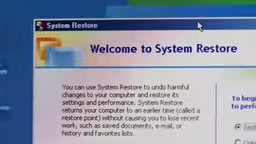
A companion System File Protection feature quietly prevented core files from being overwritten or deleted. Automatic Updates — a cornerstone of modern operating systems — also entered the Windows world with Me. Before that, you had to manually visit the Windows Update website through Internet Explorer to grab patches.
That said, System Restore was enormously expensive on the hard drives of the era. Restore points would rapidly devour precious disk space and generate constant disk reads and writes, causing noticeable slowdowns. It also wasn't smart enough to filter out malware — if your PC was already infected when a restore point was created, restoring to that point could bring the virus right back. To make matters worse, it shipped with a notorious bug: without a patch, all restore points created after September 8, 2001 would become invalid. A feature designed to rescue you during a system crisis had a crisis of its own.
Multimedia Ambitions: MovieMaker's Pioneering Role
If System Restore and file protection could keep your Me machine running long enough, a whole suite of new multimedia features aimed to turn it into the center of your digital life. The centerpiece on the audio-visual front was Windows Movie Maker, which gave ordinary people their first taste of capturing footage from a camcorder, editing clips together, and sharing the results — providing countless budding creators with their very first video editing experience.
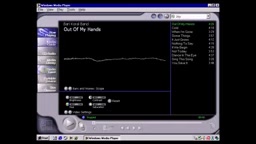
Windows Me also anticipated the digital camera boom, with built-in Windows Image Acquisition (WIA) to help import and organize photos. It also caught the MP3 wave right at its peak. The bundled Windows Media Player 7 was far more than just a media player — it supported CD burning and ripping, media libraries, playlists, streaming radio, and portable device sync, arriving a few months before Apple's first version of iTunes. Those unmistakably Y2K-era player skins became a nostalgic touchstone for an entire generation.
On the home networking front, Me introduced the Home Networking Wizard, which simplified file and printer sharing by creating setup floppy disks, and made Internet Connection Sharing easier to configure. Even if these user-facing features weren't always executed perfectly, they were genuinely forward-thinking ideas for the PCs of that era.
Why It Got Saddled with the "Worst" Label
Here's the irony: piling all that extra software on top of Windows 9X's already shaky foundation made the system bloated and sluggish.
Interestingly, early reviews of Windows Me weren't actually that bad. The Register thought it was worth upgrading for some Windows 95 or 98 users, and the Los Angeles Times called it "a more integrated, more friendly Windows." But the real collapse in public perception — much like Vista later — happened after it reached ordinary users: the people upgrading it onto aging Windows 95 and 98 machines, in environments far messier than the controlled labs reviewers worked in.

The core problem was upgrade baggage. Removing Real Mode DOS broke tools like antivirus software and disk utilities that hooked deeply into the system. Drivers were another minefield — just 12 days after launch, press reports were already surfacing about upgrade failures during Plug and Play detection, with older or obscure hardware simply having no compatible drivers at all.
New machines shipped with Me pre-installed generally ran fine, but not necessarily smoothly — System Restore's constant disk activity combined with pre-loaded bloatware made those machines feel noticeably slower than equivalent hardware running Windows 95 or 98.
Another key factor in cementing its reputation was the explosion of internet communities around 2000. Ordinary people had a public platform for complaining about software for the first time. Against the backdrop of Microsoft's antitrust troubles, Me became one of the early internet's favorite memes: "ME" was decoded as "Mistake Edition," "Malfunctioning Environment," and even "Microsoft Excrement," spawning Flash parodies like "Windows RG (Really Good)."
The formation of the online discourse environment around 2000 deserves special attention. Usenet newsgroups, early tech forums like AnandTech and Tom's Hardware, and dial-up-era BBS communities were transitioning toward broadband forums, giving ordinary users a low-barrier, high-reach channel to voice complaints publicly for the first time. Meanwhile, Microsoft was deep in an antitrust lawsuit brought by the U.S. Department of Justice (1998–2001), with court documents publicly exposing Microsoft's internal business strategies and driving its public image to rock bottom — criticizing Microsoft products was practically fashionable at the time. Me's release hit right in the middle of this window. Early tech media reviews were typically conducted on brand-new factory-installed machines supplied by manufacturers, while real users were dealing with forced upgrades onto aging hardware, creating a massive gap between review scores and real-world experience that generated enormous negative word of mouth. This same phenomenon — "review scores wildly diverging from actual user experience" — would repeat almost exactly with Windows Vista years later.
Conclusion: Timing Was Its Biggest Enemy
So is Windows Me truly the worst Windows ever? If the competition is Vista, the answer is probably yes. It was a compromise from the start — Microsoft itself knew it was a technological dead end, even as features like System Restore, Automatic Updates, and Movie Maker carried forward into XP and beyond.
Its biggest problem was timing. Sandwiched between the relatively solid Windows 98 Second Edition and the landmark Windows XP, Me arrived at precisely the moment Microsoft most needed to escape the 9X kernel — and chose to double down on the old codebase anyway. It was a flawed transitional product that survived just long enough to earn its bad reputation, before Windows XP finally delivered a Windows worthy of the new millennium.
Related articles

Chain of Thought Isn't Just for AI: How Humans Can Use CoT to Improve Thinking Quality
Chain of Thought isn't just a prompt trick for large models. Starting from a Hacker News discussion, this article analyzes why CoT works for human thinking too, breaks down actionable ways to transfer it, and highlights the key differences between human CoT and machine CoT.
Cloudflare Teams Up with OpenAI: Closi…
Cloudflare Teams Up with OpenAI: Closing the Loop from Vulnerability Discovery to Defense with AI
Cloudflare uses OpenAI Daybreak to investigate security vulnerabilities and generate reviewable remediation plans, while developers use Codex to boost coding efficiency and quality.

Orca Multi-Agent Orchestration in Practice: A Guide to Parallel Collaboration with Claude and Codex
Orca is Stable AI's free open-source agent workbench supporting 34 agents like Claude Code and Codex in parallel. Learn its Git worktree isolation, multi-model orchestration, and mobile management.