Island: Turning Phone-Detox Into a Farming Game

Island wraps screen time goals in a farming game, replacing restrictive tools with immediate concrete rewards.
YC-backed Island redesigns screen time management as a farming game: users who stick to self-set phone limits harvest crops and unlock animals on a virtual island. The design uses the immediate reward principle to turn "not using the phone" from passive endurance into active accumulation. Island's differentiation is narrative—users go from "the managed" to "island owner"—but it faces a structural tension between game and tool, plus novelty decay risk. It reflects digital wellbeing's shift from restrictive to incentive-based.
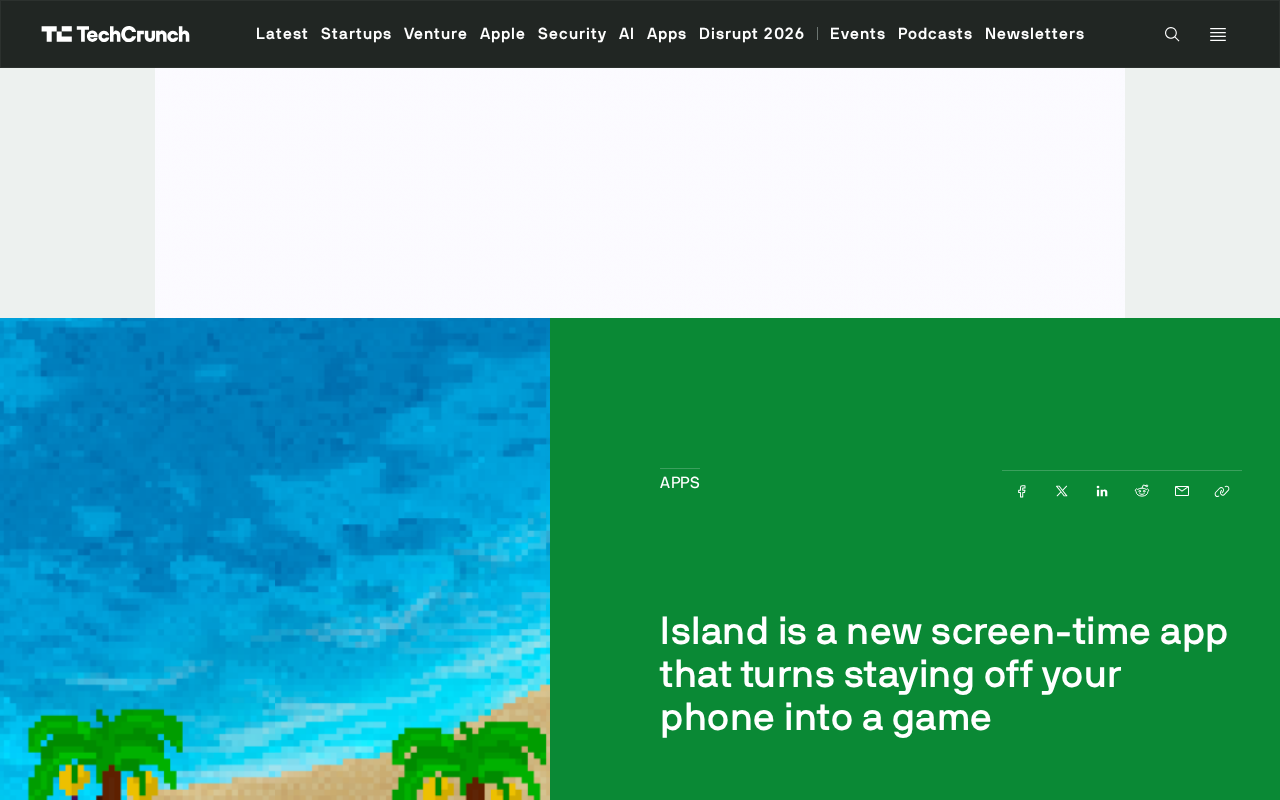
Most screen time management tools stay at the level of "restriction" and "warning"—pop-up reminders, forced lockouts, usage time tracking. These mechanisms assume users need to be constrained, but rarely consider how to make "spending less time on the phone" itself appealing. YC-backed Island takes a different path: it wraps screen time goals in a farming game, where users who stick to their self-set usage limits can harvest new crops and unlock animals on a virtual island.
Gamification Isn't Decoration—It's a Behavioral Feedback Loop
Island's core design idea is to turn "not using the phone" from passive endurance into active accumulation. Traditional screen time tools provide positive feedback through "looking at data"—you used 3 hours today, 20 minutes less than yesterday. This feedback is abstract, delayed, and lacks emotional stickiness. Island's feedback is concrete: the time you resist scrolling becomes a crop on the island, a new animal.
Behind this is the immediate reward principle in behavioral design. The rhythm of farming games is naturally suited to being tied to screen time—crops take time to grow, and the longer users stay away from their phones, the more visible progress the virtual island makes. A clear causal chain forms between game progress and real-world behavior, rather than relying on push notifications to remind users "time to put it down."
The immediate reward principle is a core concept in behavioral design, referring to giving positive feedback as soon as possible after a target behavior occurs to reinforce that behavior. Behavioral psychology research shows that the shorter the time interval between reward and behavior, the stronger the reinforcement effect; delayed rewards (such as viewing a monthly screen time report) are significantly weaker at shaping behavior than immediate feedback. Island converts every period of "being away from the phone" into crop growth progress in real time, precisely leveraging this principle—users don't need to wait until evening to check statistics, but can see visible changes on the island shortly after putting down their phone.
Product Positioning in the YC Context
Island has Y Combinator backing, a background worth noting. YC-backed products typically emphasize rapid growth and a clear market entry point, and the screen time management space is not short of players—system-level features (iOS Screen Time, Android Digital Wellbeing) already cover basic needs, and third-party tools like Opal and One Sec are also competing for the same users.
Island's differentiation isn't about stronger features, but a different narrative. It redefines "phone detox" as "running an island," transforming the user's identity from "the managed" to "island owner." This identity shift is especially effective for younger users—they may not want to be told by the system "you used too much today," but they might willingly put down their phone to unlock an animal.
Common Pitfalls of Gamified Screen Time Tools
These products face a structural contradiction: if the game is fun enough, users may open Island itself more frequently to play it; if the game isn't fun enough, the rewards lose their appeal. Island needs to find balance in this narrow gap—game progress should be strongly tied to "leaving the phone," not to "opening Island."
Another risk is novelty decay. The collection mechanics of farming games provide dense positive feedback early on, but as crops and animals are gradually unlocked, marginal incentives diminish. Whether enough stickiness can be established before users form habits determines whether such products become long-term tools or short-term toys.
Diminishing marginal incentive refers to the gradual decline in additional satisfaction from a reward as it is repeatedly obtained. In collection games, each new crop or animal unlocked early on comes with a strong sense of achievement, but when collectible content approaches saturation and unlock intervals lengthen, the same rewards no longer drive behavior. For Island, this means gamification design must introduce continuous updates or randomness mechanisms, otherwise users' novelty will fade before habits truly solidify, leading to the tool being abandoned.
The Directional Shift in the Screen Time Space
Island's emergence reflects a broader trend: digital wellbeing tools are migrating from "restrictive" to "incentive-based." Early screen time management relied on shame and anxiety—red warnings, usage time rankings, forced lock screens. A new generation of products tends to replace punitive mechanisms with gamification, social pressure, or positive rewards.
Whether this path works depends on the precision with which game design meshes with behavioral psychology. Island uses farming as its vehicle, which makes logical sense—planting itself is training in delayed gratification, isomorphic to the self-control required for "scrolling less." But whether it can retain users ultimately depends on whether it can maintain that delicate balance between game and tool.
Delayed gratification refers to the ability to actively forgo immediate satisfaction for a more valuable long-term outcome, with the classic experiment being Mischel's "marshmallow test." Farming games inherently contain a delayed gratification structure: after planting, one must wait for crops to grow and cannot harvest immediately. This is highly isomorphic to the psychological mechanism required for "resisting the urge to scroll"—both require users to trade present restraint for future gains. Island's choice of farming rather than instant-feedback games (such as match-3) as its vehicle has inherent consistency at the behavioral psychology level.
One-line Summary
Island wraps screen time goals in a farming game, replacing traditional restrictive tools with immediate, concrete rewards.
Paragraph Summary
YC-backed Island redesigns screen time management as a farming game: users who stick to self-set phone usage limits harvest crops and unlock animals on a virtual island. The article notes that this design leverages the immediate reward principle, turning "not using the phone" from passive endurance into active accumulation and forming a clear behavioral feedback loop. Island's differentiation isn't stronger features but a narrative shift—users go from "the managed" to "island owner." But such products face a structural contradiction between game and tool: too fun a game may induce users to open the app itself, and collection mechanics carry novelty decay risk. Island's emergence reflects the industry trend of digital wellbeing tools migrating from restrictive to incentive-based, and its success depends on the precision with which game design meshes with behavioral psychology.
Related articles

Michael Nielsen Takes Down His Classic Neural Network Textbook, Sparking Community Discussion
Michael Nielsen's classic free textbook Neural Networks and Deep Learning has been taken offline, sparking discussion on Hacker News about the reasons and impact.

Inside the AI Training Data Market: The Trade-off Between Exclusivity and Discounts
G2i founder Gabe Greenberg reveals the dual-track pricing of the AI training data market: labs pay a premium for exclusive data or accept discounts that allow others to buy it.

SessionGraph: Unifying All Coding Agent Sessions in One Interactive Graph
SessionGraph aggregates coding agent sessions into an interactive graph, helping developers review, debug, and manage AI coding workflows across sessions. This article examines its positioning, value, and open questions.