Isomorphic Labs Raises $5 Billion, AI Drug Discovery Enters a New Phase
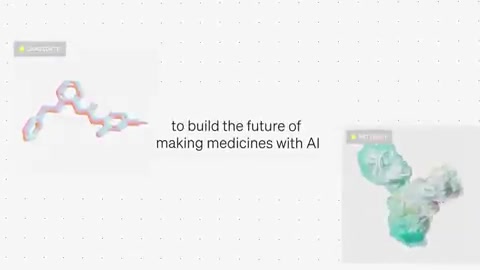
Isomorphic Labs raises $5 billion to reconstruct the drug design process with AI.
Isomorphic Labs announced $5 billion in funding to advance its mission to "Solve All Disease." Led by DeepMind founder Demis Hassabis, its core approach is to use deep learning to understand disease mechanisms at the molecular level and directly generate candidate drugs based on protein structures and biochemical principles rather than relying on high-throughput screening, aiming to compress the preclinical research cycle from years to months. The article notes that this funding scale sets a record in AI drug discovery and, thanks to AlphaFold's technological accumulation, the company has unique advantages—but it will also intensify industry competition for talent and data resources. Meanwhile, AI-designed drugs still need to pass rigorous clinical trials, and biological complexity, data quality, and regulatory approval pose real challenges, making short-term commercial results difficult to achieve.
Funding News and Strategic Significance
According to official news on Twitter, Isomorphic Labs announced it has raised $5 billion in funding to accelerate its mission to "Solve All Disease." Led by DeepMind founder Demis Hassabis, the company is dedicated to reimagining drug design from first principles using AI, dramatically reducing the time and cost of new drug development. This funding round is one of the largest single investments in the AI drug discovery field to date, signaling strong investor confidence in the AI-driven drug discovery model.

How AI Reconstructs the Drug Design Process
Traditional drug development takes an average of more than a decade, costs billions of dollars, and has an extremely high failure rate. Isomorphic Labs' core approach is to use deep learning models to understand disease mechanisms at the molecular level and directly generate candidate drug molecules rather than relying on high-throughput screening. Its technical approach emphasizes "starting from first principles"—that is, not relying on existing compound libraries but conducting rational design based on protein structures and biochemical principles. This approach is expected to compress the preclinical research cycle from years to months and significantly reduce trial-and-error costs.
AlphaFold and Protein Structure Prediction
AlphaFold is a deep learning system developed by DeepMind, whose core breakthrough lies in directly predicting the three-dimensional structure of proteins from amino acid sequences. In 2020, AlphaFold 2 achieved near-experimental accuracy in the CASP protein structure prediction assessment and was named Breakthrough of the Year by Science magazine. In 2021, DeepMind open-sourced AlphaFold's code and a large-scale structure database, covering nearly all known human proteins as well as the structures of hundreds of thousands of other organisms. For drug design, a protein's three-dimensional structure determines the shape of its active sites and druggable pockets, so accurate structure prediction means that structure-based virtual screening and molecule generation can be carried out without experimentally resolved structures. Isomorphic Labs is built precisely on this technological foundation, extending structure prediction capabilities to ligand design and binding affinity prediction.
Structure-Based Drug Design and Generative Molecular Modeling
Traditional high-throughput screening relies on testing massive compound libraries one by one, which is costly and covers only a limited chemical space. Structure-based drug design starts from the pockets of target proteins and works backward to design molecules that can bind stably. In recent years, diffusion models, autoregressive language models, and graph neural networks have been used to directly generate candidate molecules that satisfy multiple objective constraints (affinity, selectivity, synthetic accessibility, toxicity), forming what is known as generative drug discovery. These methods do not require an existing compound library; instead, they perform conditional sampling in chemical space, theoretically enabling exploration of regions not covered by existing libraries—this is the concrete engineering meaning of "first principles." However, the reliability of generative models depends heavily on the quality of training data and the accuracy of scoring functions, and still requires closed-loop validation through wet-lab experiments.
Industry Impact and Competitive Landscape
The $5 billion funding will be used to expand computing infrastructure, recruit interdisciplinary teams, and advance internal pipelines. The AI drug discovery track already has multiple players, including Schrödinger and Recursion, but Isomorphic Labs has a unique advantage in protein structure prediction thanks to DeepMind's AlphaFold technology accumulation. This funding round may intensify competition for industry talent and data resources while pushing more traditional pharmaceutical companies to establish partnerships with AI companies. One detail worth noting: AI-designed drugs still need to undergo rigorous clinical trial validation, so technological potential and implementation risks coexist.
Representative Players in the AI Drug Discovery Track
Schrödinger is known for combining physical chemistry computation with machine learning, has its own computational platform and internal pipeline, and is one of the earlier publicly listed computational drug design companies. Recursion, by contrast, generates proprietary biological data through large-scale cell imaging experiments and automated wet labs, then uses machine learning models to mine new biological relationships from that data—following a "data flywheel" approach. Compared with them, Isomorphic Labs' strengths are concentrated on the structural biology and deep learning foundation model side, while its weakness lies in the lack of its own large-scale wet-lab data and clinical development experience. The differences in the technological paths of these three types of players determine their complementary and collaborative space within the industry, and also explain why this funding round is seen as an important bet on the "foundation model route."
Challenges and Prospects
Despite the astonishing scale of the funding, AI drug discovery still faces challenges such as biological complexity, data quality, and regulatory approval. Isomorphic Labs' vision to "Solve All Disease" requires long-term investment, and commercial results will be difficult to see in the short term. But Demis Hassabis once said, "Gradually, then suddenly," suggesting that technological breakthroughs may occur in a nonlinear burst. This funding will accelerate that process and set a new benchmark for the industry.
Related articles
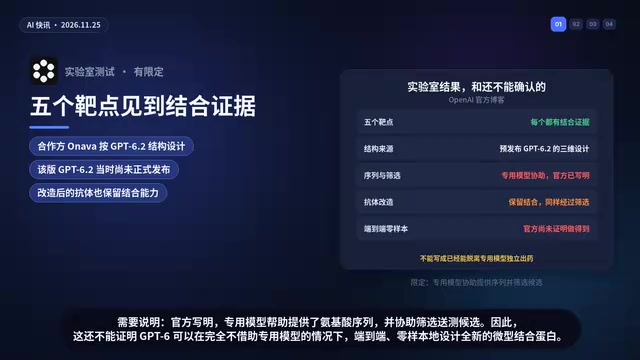
GPT-6 Designs Proteins, Claude Creations Become Apps with One Click, DeepMind Releases New Benchmark
OpenAI says GPT-6 can design protein 3D structures, Anthropic lets Claude creations install as desktop apps, DeepMind's HIP benchmark tests stability on simple questions, Google Workspace opens agent MCP interfaces.
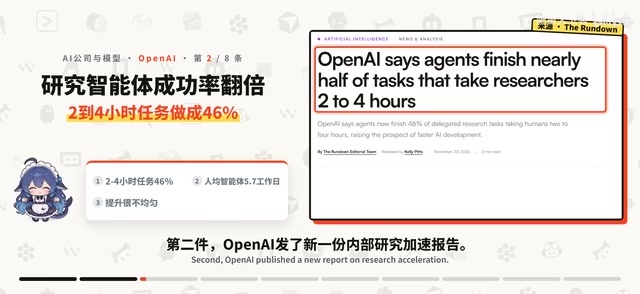
OpenAI Weekly Roundup: GPT-6.2 Rolls Out to ChatGPT, GPT-6 Designs Proteins
OpenAI's week: GPT-6.2 rolls out to ChatGPT, GPT-6 claims independent protein design, agent research share surges, perplexity proposed as a shared metric, and internal safety concerns surface.

Is the Crypto Industry About to "Turn Blue"? The Truth Behind Tech and Politics' Shifting Allegiances
Vergecast discusses whether the crypto industry will shift from the right to the Democrats, revealing the pragmatic nature of tech's politics and the costs of a crypto pivot.