Java Career Prospects in 2025: Will AI Replace Java Developers? Where Do Programmers Go from Here?

In 2025, Java developers should focus on leveling up skills rather than fearing AI replacement.
Based on a livestream by Yan Zhengtao from Mashibing Education, this article analyzes Java developer career development across dimensions including skill tiers, big tech barriers, the age-35 crisis, and training value. The core insight: salary ceilings depend on problem-solving ability rather than years of experience. Pure CRUD developers face replacement risk, but engineers with architecture capabilities and technical judgment remain scarce resources.
Introduction: Anxiety and Opportunity for Java Developers in 2025
In 2025, with the rapid advancement of AI technology, a perennial yet increasingly pressing question has resurfaced: Is learning Java still worth it? Will Java be replaced by AI?
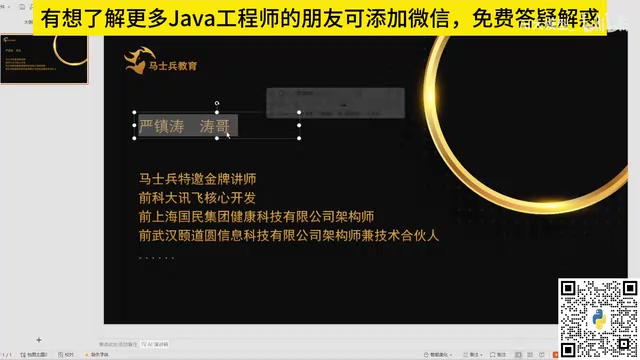
This content comes from a livestream by Yan Zhengtao (former developer at iFlytek, architect at Shanghai Guomin Group) from the Mashibing Education team. He offered his hard-hitting analysis from multiple dimensions including industry trends, developer skill tiers, and career planning. This article distills the core insights and provides in-depth interpretation alongside current industry conditions.
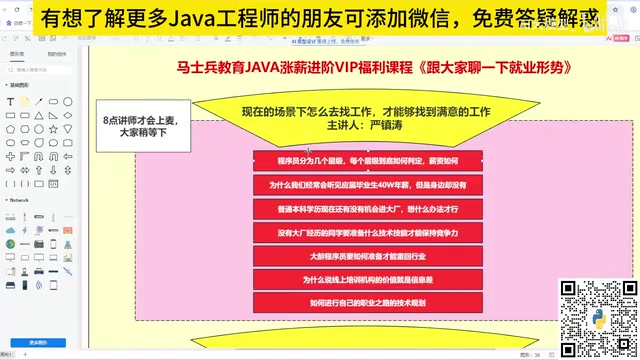
Developer Skill Tiers: Where Do You Stand?
Yan Zhengtao raised a critical issue in his talk: Many developers lack an accurate self-assessment. What level should you be at with three years of experience? What salary should you command with five years? Some peers earn far more, yet you can't pinpoint what sets them apart.
This is a universal pain point across the industry. Developer capability tiers can roughly be divided into the following levels:
- Junior Java Developer (1-2 years): Can complete basic business development, familiar with common frameworks like Spring Boot
- Mid-level Java Developer (3-5 years): Has system design capabilities, can independently own modules
- Senior Java Engineer (5-8 years): Outstanding architecture design skills, can lead technology selection and implementation
- Java Architect / Technical Expert (8+ years): Has a holistic technical vision, can drive technical infrastructure development
Notably, this tiering system has become relatively standardized across major Chinese tech companies. Alibaba's P-series (P5-P10+), Tencent's T-series, and ByteDance's L-series are well-known leveling frameworks that not only determine salary ranges but also define core competency requirements for each level. Taking Alibaba P7 as an example, engineers are expected to have cross-team technical influence and complex system design capabilities—not merely completing assigned tasks. The existence of these tiering systems makes the disconnect between "years of experience" and "actual ability" increasingly prominent—many developers accumulate years through repetitive work without truly improving their ability to solve complex problems, causing career ceilings to arrive prematurely.
Yan's own career path is a textbook example—from a development role at iFlytek, to architect (top technical position, 2M+ RMB annual package) at Guomin Group, to technical co-founder at a startup. This trajectory demonstrates: Your salary ceiling isn't determined by how long you've stayed, but by how significant the problems you can solve.
Big Tech Barriers and Opportunities for Ordinary Graduates
What Should Java Developers Without Big Tech Experience Do?
A very practical question: Do graduates from ordinary universities still have a chance to enter major tech companies?
Yan candidly admitted that his iFlytek experience "counts as mid-tier at best," but emphasized an important point: Having worked at a big tech company doesn't automatically qualify you to share expert insights. If you've stayed at P6 or P7 at Alibaba the entire time, what you can share may also be limited. The key is whether you've played the role of a technical decision-maker.

This viewpoint deserves reflection. For Java job seekers, rather than obsessing over the "big tech halo," focus on the following:
- Technical depth: Do you have sufficient depth in a specific area, such as high concurrency, distributed systems, or JVM performance optimization?
- Project complexity: Have you been through challenging projects where you can clearly articulate technical solutions and trade-offs?
- Systems thinking: Do you have the ability to view problems from a holistic perspective, rather than just writing business code?
How Can Developers Over 35 Get Back on Track?
The age-35 crisis is an unavoidable topic for Java developers, with deep structural causes behind it. During the internet industry's rapid expansion period (2010-2020), companies hired massive numbers of fresh graduates, creating an age concentration effect in talent supply. Meanwhile, Chinese internet companies generally prefer replacing higher-paid mid-career employees with younger, lower-cost engineers. From an economics perspective, when an engineer's marginal output growth rate falls below their salary growth rate, they face replacement risk.
Yan suggests that older developers need to reassess their tech stacks and clarify their core competitiveness. The key logic to breaking through this dilemma is: transitioning from a "trading time for money" labor model to a "experience and judgment" scarce resource model—becoming an architect or technical manager who can make high-value technical decisions and reduce organizational risk. In the AI era, pure CRUD developers do face replacement risk, but engineers with architecture capabilities, business understanding, and technical judgment remain scarce resources in the market.
The Value of Online Training: Information Asymmetry Is the Core Advantage
Yan specifically addressed a sensitive topic during the livestream: What is the real value of online training institutions?

His answer was straightforward: The core value of online training institutions is information asymmetry.
This viewpoint actually makes a lot of sense. In the age of information explosion, technical knowledge itself is not scarce—GitHub, Stack Overflow, and official documentation are all free. However, the following types of information do carry genuine value:
- Industry trend assessment: Which Java tech stacks offer the best ROI right now? Which technologies are declining?
- Learning path planning: Even when studying the same Java topics, the order in which you learn them can create efficiency differences of several times
- Interview strategy: What do big tech Java interviews actually test? How should you prepare to maximize results?
- Career planning: What choices should you make at different stages? When is the right time to switch jobs?
For beginners lacking industry connections and experience, this information does constitute a genuine "information asymmetry advantage."
Related articles
 Industry Insights
IRS Fully Embraces Claude AI, Accelerating Federal Government's AI Adoption
The IRS is recruiting staff with 24/7 Claude AI access, marking Anthropic's breakthrough into the federal government. Explore the strategic implications and tax use cases.
 Industry Insights
Nadella Introduces the Loopcraft Framework: Building AI Ecosystems Through Feedback Loops
Microsoft CEO Satya Nadella's Loopcraft framework explains how to build frontier AI ecosystems through nested feedback loops across technology, business, and ecosystem dimensions.
 Industry Insights
OpenAI's Internal Codex Usage Surges 56x — AI Coding Is Eating Everything
OpenAI reveals internal Codex usage data: Research up 56x, Customer Support 32x, Engineering 27x, Legal 13x since Nov 2025. AI coding tools are penetrating every department faster than expected.