Java + LLM Development: Transitioning from Traditional Programmer to AI Application Developer
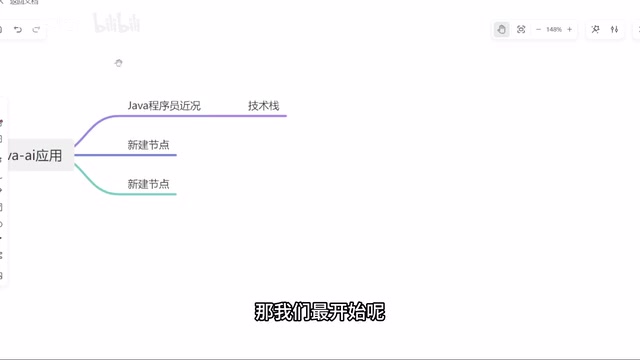
Java programmers transitioning to AI application development has shifted from a bonus to a necessity—master skills like Spring AI as early as possible.
Based on a Bilibili livestream, the article notes that Java hiring increasingly favors LLM development experience, turning it from a bonus into a standard requirement. The transition isn't about training models but integrating LLM capabilities into existing Java business logic, with core skills including Spring AI, Langchain4j, streaming output, prompt engineering, vector databases, RAG, MCP, and Tool Calling. Those with a Java foundation can get started in one to two months of systematic learning and hands-on projects.
Why Do Java Programmers Need to Embrace LLMs?
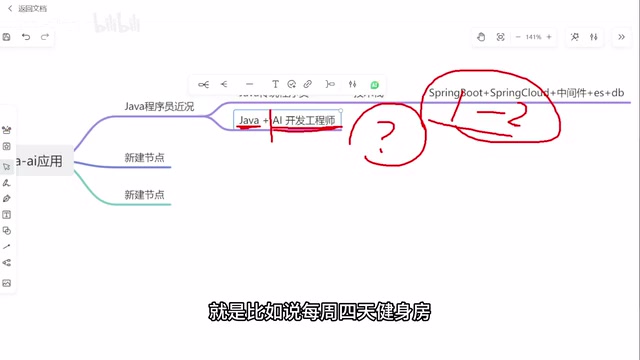
In a recent livestream on Bilibili, the instructor raised a pointed question: Is a Java programmer's current tech stack still sufficient? In the past, mastering Spring Cloud, middleware, Redis, and containerization was enough to land a good job, but the hiring market is now changing. The instructor saw on Boss Zhipin (a Chinese recruitment platform) that more and more Java positions list "familiarity with mainstream LLM development platforms" as a plus, and some even require AI application development experience. This sends a clear signal: the traditional Java tech stack is becoming the baseline, while LLM capabilities are becoming the new competitive edge.
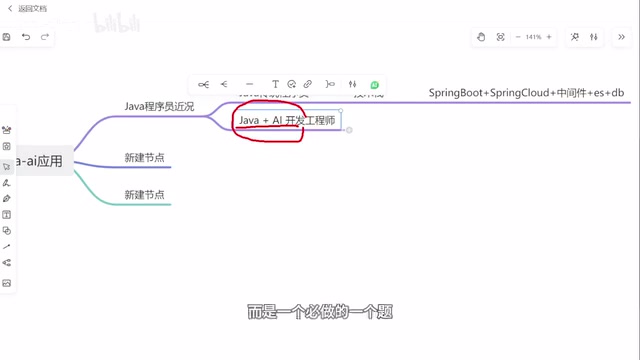
The instructor shared a real case: a graduate student in a combined bachelor's-master's program at Beijing University of Posts and Telecommunications attended a group interview for a Java position and found that nearly all the other candidates had prepared LLM-related projects—only he hadn't. When interviewers see that most candidates have relevant experience, they naturally assume it's a skill the team needs. When two or three out of ten people have LLM capabilities, it shifts from a bonus to a standard requirement. The instructor put it bluntly: "Transitioning to Java AI is no longer a multiple-choice question—it's a must-answer question."
What Core Skills Are Needed for Java AI Development?
So what exactly should Java programmers learn to transition into AI development? In the livestream, the instructor listed the key points: using Spring AI or Langchain4j to call LLMs, and mastering concepts such as streaming output, memory caching, prompt engineering, vector databases, RAG (Retrieval-Augmented Generation), MCP (Model Context Protocol), and Tool Calling. These technologies don't require you to train models from scratch—rather, they involve integrating LLM capabilities into existing Java business logic.
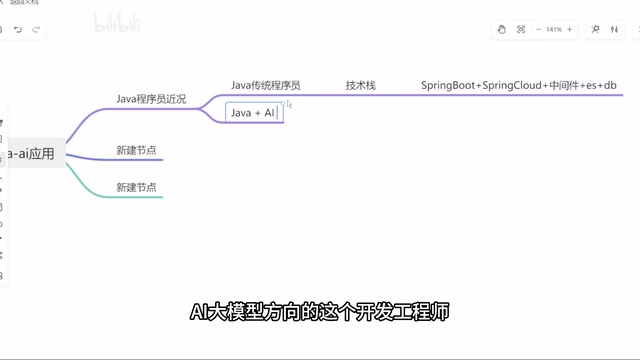
For people with a Java foundation, the entry barrier isn't as high as imagined. The instructor believes that if you can set aside time each day (for example, using the time you'd spend on four gym sessions a week to study instead), you can master basic LLM development skills in one to two months and put them on your resume. The course offers nearly 20 projects; students can pick any two and layer AI features onto their existing business logic to create a "Java + LLM" resume highlight.
RAG (Retrieval-Augmented Generation) is a technical architecture that combines information retrieval with LLM generation. The core process is: first split enterprise private documents (such as product manuals and knowledge bases) into chunks and vectorize them into a vector database; when a user asks a question, the system first retrieves the most relevant chunks from the vector store, then concatenates these chunks as context into the prompt and hands it to the LLM to generate an answer. The value of RAG lies in enabling LLMs to answer based on external real-time, private knowledge without retraining the model, effectively mitigating LLM "hallucinations" and outdated knowledge. It is one of the most common implementation forms in enterprise-level AI applications.
MCP (Model Context Protocol) is an open protocol proposed by Anthropic to standardize how LLM applications connect to external tools and data sources. You can think of it as the "USB interface for AI applications": whether the backend is a database, a file system, or a third-party API, as long as it's wrapped as a Server according to the MCP specification, LLM clients can discover and invoke these capabilities in a unified way. For Java developers, the significance of MCP is that it reduces the adaptation cost of connecting AI applications to existing enterprise systems, allowing the tool ecosystem to be reused.
Tool Calling refers to the ability for LLMs to autonomously decide to call external functions during a conversation. Developers provide function signatures and usage descriptions to the model in a structured form; the model outputs instructions on "which function to call and what parameters to pass" based on user intent, and the application layer executes them and returns the results to the model for further reasoning. It is the foundational mechanism for building Agents, upgrading LLMs from "only able to chat" to "able to query data, place orders, and operate business systems."
From Traditional Microservices to AI Applications: A Hands-On Path
The key to transition lies in hands-on practice. In the livestream, the instructor demonstrated how to build your first Java AI program and outlined a complete learning path. He suggested starting with simple AI applications—for example, using Spring AI to call an LLM for a chat feature—and then gradually adding modules like memory, RAG, and tool calling. This progressive learning approach helps Java programmers quickly build confidence.
A detail worth noting: frameworks like LangChain 1.3 and LangGraph also appeared in the course titles, as they provide support for building complex Agent applications. Although the livestream didn't dive into the details of these frameworks, it's clear that the Java ecosystem is actively embracing LLMs, and the related toolchain is maturing. For Java programmers, this means they can use familiar tech stacks (like Spring) to develop AI applications, with a relatively low learning cost.
Spring AI is the AI application development framework officially launched by Spring, aiming to abstract LLM calls into a programming model similar to Spring Data and Spring MVC. It provides a unified ChatClient interface to adapt to models from different vendors, and comes with built-in capabilities such as prompt templates, chat memory (ChatMemory), vector database integration, RAG support, and tool calling. For Java programmers familiar with the Spring ecosystem, Spring AI's biggest advantage is its gentle learning curve—habits like dependency injection, auto-configuration, and declarative programming can be directly transferred.
LangChain4j is the implementation of LangChain concepts in the Java ecosystem, positioned more as an "AI application orchestration layer." It abstracts components such as prompt templates, retrievers, memory, Agents, and tools into composable modules, making it suitable for building complex multi-step, multi-component AI workflows. Compared with Spring AI, LangChain4j's API is closer to LangChain's original design and offers richer components, but it falls slightly short in terms of integration convenience with Spring Boot. The two are not mutually exclusive; in actual projects, teams often choose one based on their technical preferences.
The Time Window for Transition and Action Recommendations
The instructor repeatedly emphasized that the transition is urgent. As more and more candidates gain LLM experience, companies' hiring thresholds will rise. If you're still hesitating, take a look at the requirements on job boards, or ask peers around you who have landed interviews.
Action recommendations can be summarized in three points: First, learn Spring AI or Langchain4j as soon as possible and understand basic concepts such as LLM calls, prompts, and streaming output. Second, build a RAG or Agent project by hand and integrate it into your Java business scenarios. Third, update your resume to highlight LLM-related experience. The instructor mentioned that the projects in the course can serve as resume material, but more importantly, you should understand the principles so you can handle follow-up questions in interviews.
Conclusion
Java programmers transitioning to AI development doesn't mean abandoning their existing tech stack—it means extending LLM capabilities on top of microservices. From hiring trends to interview cases, everything indicates that this is a direction worth investing in. If you have a Java foundation and are willing to spend one to two months studying systematically, you have every opportunity to seize this wave of technological opportunity. As the instructor said: "Once you've learned this, when you update your resume later, won't the opportunities come?"
One-line Summary
Transitioning from Java programmer to AI application developer has shifted from a bonus to a necessity—master skills like Spring AI as early as possible.
Paragraph Summary
Based on a Bilibili livestream, the article points out that the Java hiring market is changing: more and more positions list LLM development experience as a plus or even a hard requirement, and the growing proportion of candidates with AI capabilities will turn this skill from a bonus into a standard. The transition direction is not training models, but integrating LLM capabilities into existing Java business logic. Core skills include Spring AI, Langchain4j, streaming output, prompt engineering, vector databases, RAG, MCP, and Tool Calling. The author believes that those with a Java foundation can get started through one to two months of systematic learning and hands-on projects, and recommends progressively building RAG or Agent projects to enrich their resumes. The article concludes by emphasizing that the time window is narrowing and action should be taken as early as possible.
Related articles

Prospero: A Lightweight Native AI Coding Tool Built with ImGui
Prospero is a bloat-free native AI coding tool built with ImGui, emphasizing lightweight design, high performance, and low dependencies. This article analyzes its design philosophy, technical choices, and the divergence between platformization and toolization in AI coding tools.

WebRTC Abused: New Variant of Credit Card Skimming Scripts on Shopping Sites
Security researchers found skimming scripts on popular shopping sites using WebRTC data channels to exfiltrate credit card data. This article analyzes the technical原理, differences from traditional Magecart attacks, and defense strategies for e-commerce platforms in third-party script governance and CSP policies.

Single GB10 Card Hits 101 tok/s: Inkling 2 Mini Performance Tested on vLLM
A developer shared on Hacker News running Inkling 2 Mini with vLLM on a single GB10 at 101 tok/s. This article analyzes the technical context, the significance of vLLM with small models on single cards, and caveats for interpreting tok/s metrics.