Single GB10 Card Hits 101 tok/s: Inkling 2 Mini Performance Tested on vLLM

Running Inkling 2 Mini on a single GB10 via vLLM at 101 tok/s is a pragmatic but poorly-specified engineering data point.
The article discusses a low-traffic Show HN post where a developer ran the small model Inkling 2 Mini on a single GB10 via vLLM at 101 tok/s. The author argues the number itself isn't impressive, but its value lies in the reproducible combination of single card + small model + vLLM. It analyzes why PagedAttention and continuous batching are key to efficient single-card inference, the natural advantages of small models in memory and batching, and the significance of hundred-level tok/s on a single card for workstations and edge deployment. It also notes that tok/s is only a throughput metric and the original post lacks test conditions like input/output length, batch size, and quantization, so the result should be treated as a reference order of magnitude rather than a directly comparable benchmark; developers are advised to reproduce at small scale.
A Small Model, a Single Card, a Number Worth Noticing
In the Show HN section of Hacker News, a developer demonstrated running Inkling 2 Mini with vLLM on a single GB10, reaching an inference speed of 101 tok/s. This number itself isn't particularly dramatic in the field of model inference, but within the combination of "single card + small model + vLLM," it sends a more practical signal: efficient inference is moving from lab metrics toward reproducible engineering configurations.

Worth noting upfront: this post didn't gain much traction on HN—6 points, 1 comment. It reads more like an engineering-oriented share than a technical breakthrough sparking broad discussion. But for developers focused on local inference, edge deployment, and the vLLM ecosystem, first-hand empirical data like this often has more reference value than generic benchmark leaderboards.
Why vLLM + Small Model + Single Card
The Logic Behind Choosing an Inference Framework
vLLM has become a common vehicle for this kind of testing primarily because it has invested heavily in engineering optimizations around throughput and memory efficiency. PagedAttention's management of KV cache and continuous batching's scheduling of concurrent requests are the key mechanisms that let a single card achieve respectable tok/s. When a developer chooses vLLM over lighter-weight inference libraries, it usually means they care not just about "getting it to run" but about "running it efficiently."
PagedAttention is a KV cache management mechanism proposed by the vLLM team, whose core idea borrows from virtual memory paging in operating systems. Traditional inference frameworks typically pre-allocate a contiguous block of GPU memory for each request's KV cache, sized to the maximum context length, resulting in significant memory wasted on slots that are never actually used. PagedAttention divides the KV cache into fixed-size blocks, allocates them on demand, and uses a block table to map logical to physical locations, allowing memory utilization to approach full capacity. For single-card scenarios, this means the same card can hold more concurrent sequences or longer contexts, directly expanding the scheduling space for continuous batching. This is why the article lists PagedAttention alongside continuous batching as vLLM's key mechanisms—the former addresses "is there enough memory to hold it," while the latter addresses "how do the requests that fit get queued and run."
Continuous batching differs from traditional static batching: static batching waits for a batch of requests to accumulate before running them together, and the entire batch must wait for the slowest sequence to finish generating before being released—short requests get held up by long ones, causing obvious GPU idle time. Continuous batching uses "iteration" as its scheduling granularity: after each decoding step, completed sequences are removed and newly arrived requests are inserted, keeping the batch at a high occupancy rate. For single-card deployment, this mechanism means tok/s is no longer just the speed of a single request but closer to the device's effective throughput under mixed load. Understanding this is crucial: whether the 101 tok/s mentioned in the article comes from single-request decoding or multi-request aggregation can vary greatly depending on the batching strategy.
The Value Proposition of Small Models
Inkling 2 Mini, judging by its name, is a small-parameter-scale model. Small models have straightforward advantages in single-card scenarios: low memory usage, large batching space, and small per-forward computation, making it easier to push tok/s higher on limited hardware. The 101 tok/s result reflects a match between model scale and hardware capability rather than some kind of极限 squeezing.
tok/s (tokens per second) typically refers to the number of tokens a model generates or processes per second, but its meaning varies across contexts. Single-request decoding speed measures "how fast text emerges when a single user waits for a response"—a latency metric. Aggregate throughput measures "how many tokens the entire card produces per second under concurrency"—a capacity metric. The two trade off as batch size increases: larger batches yield higher aggregate tok/s, but single-request latency often worsens. Additionally, the prefill phase (processing input) and decode phase (token-by-token generation) have completely different speeds—the former is heavily influenced by input length, while the latter is constrained by memory bandwidth. So when you see 101 tok/s, you need to first confirm which phase it measures, whether it's single-request or aggregate, and what the input/output lengths are.
The Significance of a Single GB10
Looking at these three elements together, the real value of this test lies in the word "single." High throughput on multi-card configurations is no longer news, but a single card reaching the hundred tok/s level means real-time interactive inference is feasible on personal workstations, edge nodes, or cost-sensitive deployments.
GB10 is a Grace Blackwell platform chip NVIDIA introduced for personal workstations and compact devices, commonly found in desktop-class AI development machines like the DGX Spark. It integrates an Arm-based Grace CPU with a Blackwell-generation GPU through a high-bandwidth interconnect, paired with unified memory, positioning itself between consumer graphics cards and data center accelerators. The significance of such products is that memory capacity is typically larger than a single consumer graphics card, while power consumption and size are far lower than a full server—suitable for running medium-scale models on a desk or in an edge data center. The article's emphasis on the value of "single card" is precisely built on the premise that hardware like GB10 raises the deployable model scale by a notch.
How to Read This Number
tok/s Is Not the Only Metric
101 tok/s is a throughput metric, but it doesn't directly equate to user experience. In practice, time to first token, output stability, and latency distribution under batching are equally important. Single-request tok/s and aggregate tok/s under concurrency are two different things, and the original post doesn't elaborate on test conditions—this is something readers need to watch out for themselves.
The Interpretive Space Left by Missing Test Conditions
The post provides fairly minimal information: model, framework, hardware, speed—four elements plus a number. Missing information includes input length, output length, batch size, quantization method, context window, and more. These variables have a huge impact on tok/s, so this result is better treated as a "reference order of magnitude" rather than a directly comparable benchmark.
Implications for the Local Inference Ecosystem
The value of Show HN posts like this often lies not in the individual number but in lowering the psychological barrier for others to reproduce and verify. When someone publicly states that "a certain model can reach a certain speed on a certain framework and a certain card," subsequent developers have a starting point for tuning their own configurations.
From a trend perspective, vLLM's adaptation to small models and single-card scenarios continues to improve, and workstation-oriented hardware like GB10 is filling the gap between "consumer graphics cards" and "data center accelerators." Together, they make efficient local deployment of medium-scale models more realistic.
The original post has limited discussion activity, with only 1 comment, meaning community validation around this configuration is still very preliminary. For developers planning to reference this result, it's recommended to do small-scale reproduction on your own hardware, focusing on how batch size and context length affect speed, rather than directly applying the number 101.
Summary
Running Inkling 2 Mini on a single GB10 via vLLM at 101 tok/s is a pragmatic engineering data point. It has no grand narrative, but points in a clear direction: competition in inference efficiency is shifting from "can it run" to "how fast can it run at what cost." For developers focused on local deployment, first-hand empirical tests like this are worth following.
One-line Summary
Running Inkling 2 Mini on a single GB10 via vLLM at 101 tok/s is a pragmatic but poorly-specified engineering data point.
Paragraph Summary
The article centers on a low-traffic Show HN share: a developer running the small model Inkling 2 Mini on a single GB10 via vLLM, reaching 101 tok/s. The author considers the number itself unremarkable, but its value lies in the reproducible engineering configuration of "single card + small model + vLLM." The article analyzes why vLLM's PagedAttention and continuous batching are key to efficient single-card inference, the natural advantages of small models in memory and batching space, and the significance of single-card hundred-level tok/s for personal workstations and edge deployment. It also cautions that tok/s is only a throughput metric, and the original post doesn't disclose input/output lengths, batch size, quantization method, or other test conditions—so the result should be treated as a reference order of magnitude rather than a directly comparable benchmark, and developers are advised to reproduce it at small scale themselves.
Related articles

Prospero: A Lightweight Native AI Coding Tool Built with ImGui
Prospero is a bloat-free native AI coding tool built with ImGui, emphasizing lightweight design, high performance, and low dependencies. This article analyzes its design philosophy, technical choices, and the divergence between platformization and toolization in AI coding tools.

WebRTC Abused: New Variant of Credit Card Skimming Scripts on Shopping Sites
Security researchers found skimming scripts on popular shopping sites using WebRTC data channels to exfiltrate credit card data. This article analyzes the technical原理, differences from traditional Magecart attacks, and defense strategies for e-commerce platforms in third-party script governance and CSP policies.
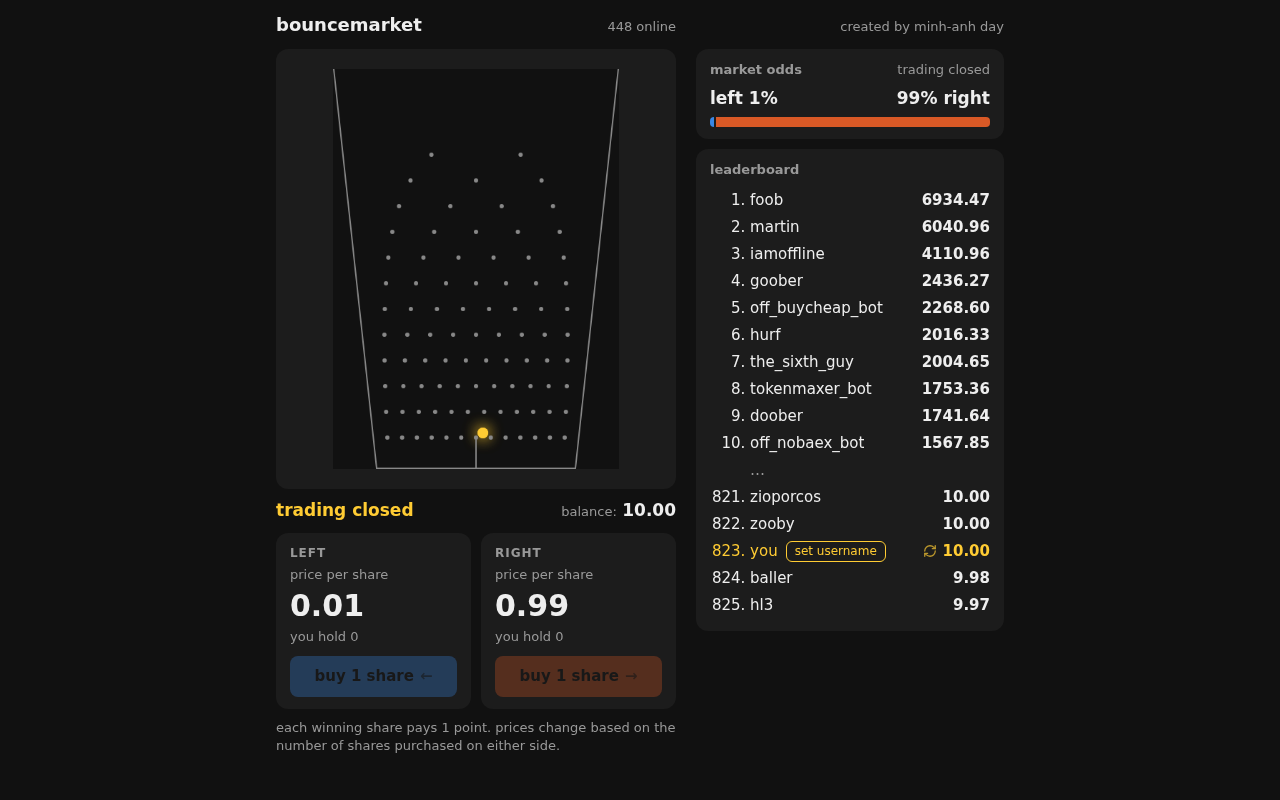
Show HN: Bouncing Ball Prediction Market Game with AI Traders as Counterparties
bouncemarket is a real-time bouncing ball prediction market game featuring deterministic server-side simulation with SSE push and AI traders who provide liquidity and exit when more than five real players join. This article breaks down its technical implementation and product design.