JavaGuide: Deep Dive into the 150K-Star Java Interview Guide

JavaGuide is a 155K-Star open-source Java interview and backend tech learning resource on GitHub.
JavaGuide is one of the most popular Chinese technical learning projects on GitHub with over 155K Stars. It covers computer science fundamentals, Java core, databases, distributed systems, high concurrency, system design, and AI application development. Known for systematic knowledge organization, practical orientation, and precise alignment with Chinese technical interview culture, it serves backend developers at all career stages.
Project Overview: The Java Interview Bible Behind 155K Stars
JavaGuide is one of the most popular Chinese-language technical learning projects on GitHub, created and actively maintained by developer Snailclimb. As of now, the project has accumulated over 155K Stars and 46K Forks, making it a benchmark-level open-source resource for Java backend developers preparing for interviews and advancing their skills.
GitHub Stars are one of the core metrics for measuring project popularity in the open-source community — users click the Star button to bookmark and express appreciation for a project. 155K Stars means at least 155,000 developers have actively followed this project, a figure that ranks among the top tier across the entire GitHub platform. For reference, the globally renowned frontend framework Vue.js has approximately 210K Stars, and the fact that JavaGuide — a Chinese-language technical documentation project — has reached 155K fully demonstrates the strong demand for high-quality technical learning resources in the Chinese developer community. The Fork count (46K) indicates that a large number of developers have copied the project to their own repositories for study or contribution.
The project positions itself as a "Java Interview & General Backend Interview Guide," covering everything from computer science fundamentals to cutting-edge AI application development — virtually all core knowledge domains that backend engineers need to master. For developers preparing for Java backend interviews, this project is essentially required reading.
Deep Dive into the Content System
Computer Science Fundamentals & Java Core
JavaGuide's content system centers on the Java language and radiates outward to cover the entire backend technology stack. At the foundational level, the project systematically organizes computer science fundamentals including operating systems, computer networks, data structures and algorithms, tightly integrating these theories with Java development practices.
The Java core section covers high-frequency interview topics such as JVM principles, concurrent programming, collection frameworks, and IO models, with each knowledge point accompanied by accessible explanations and analysis of common interview questions.
The JVM (Java Virtual Machine) is the core foundation of Java's "write once, run anywhere" philosophy. Understanding the JVM's memory model (heap, stack, method area, program counter, etc.), garbage collection mechanisms (GC, including the working principles of collectors like CMS, G1, and ZGC), class loading mechanisms (parent delegation model), and JIT (Just-In-Time compilation) optimization strategies are essential capabilities for senior Java developers. In interviews, JVM tuning (such as heap memory allocation, GC log analysis, and memory leak troubleshooting) is a classic differentiator for assessing a candidate's technical depth. Regarding concurrent programming, Java offers a rich set of concurrency tools ranging from low-level synchronized keywords and volatile semantics to Lock, ConcurrentHashMap, CompletableFuture, and other utilities in the java.util.concurrent package. Understanding thread safety, CAS (Compare-And-Swap) lock-free algorithms, and the AQS (AbstractQueuedSynchronizer) framework at the underlying level is crucial for writing high-performance backend services.
This dual-track approach of "knowledge points + interview questions" allows developers to both learn systematically and prepare for interviews in a targeted manner.
Databases & Distributed Systems
In the database domain, JavaGuide covers core principles and optimization techniques for mainstream databases like MySQL and Redis, including index design, transaction mechanisms, locking mechanisms, and caching strategies — all high-frequency interview topics.
MySQL, as one of the most popular relational databases, has an indexing mechanism that is a frequent interview topic. MySQL's InnoDB storage engine uses B+ trees as the default index data structure, and the multi-way balanced nature of B+ trees makes them exceptionally performant in disk IO-intensive database scenarios. Understanding the differences between clustered and non-clustered indexes, the optimization principles of covering indexes, and common scenarios where indexes fail (such as violations of the leftmost prefix matching rule) are fundamental skills for database optimization. The ACID properties of transactions (Atomicity, Consistency, Isolation, Durability) and the implementation mechanisms of four isolation levels (Read Uncommitted, Read Committed, Repeatable Read, Serializable) involve underlying principles such as MVCC (Multi-Version Concurrency Control) and undo log/redo log. Redis is currently the most mainstream in-memory database and caching middleware, supporting multiple data structures including String, Hash, List, Set, and Sorted Set. Its single-threaded model combined with IO multiplexing (epoll) achieves extremely high throughput. Cache penetration, cache breakdown, and cache avalanche are the three classic problems in Redis usage and are almost guaranteed to appear in interviews.
This content has high reference value for both daily development and interview preparation.
The distributed systems section covers key enterprise-level technologies including microservice architecture, message queues, distributed transactions, service registration and discovery, and load balancing.
A distributed system is a system architecture that distributes computing tasks across multiple independent computers for collaborative completion. In microservice architecture, a large application is split into multiple independently deployable small services, each responsible for specific business functionality. Spring Cloud and Dubbo are the most mainstream microservice frameworks in the Java ecosystem. Message queues (such as Kafka, RocketMQ, and RabbitMQ) play critical roles in distributed systems for asynchronous decoupling, traffic peak shaving, and data synchronization. Kafka is the preferred choice for big data scenarios due to its high throughput and partition mechanism, while RocketMQ has unique advantages in transactional and ordered messages. Distributed transactions are one of the most challenging problems in distributed systems. The CAP theorem (you cannot simultaneously guarantee Consistency, Availability, and Partition tolerance) and BASE theory (Basically Available, Soft state, Eventually consistent) form the theoretical foundation for understanding distributed transactions. Common solutions include Two-Phase Commit (2PC), TCC (Try-Confirm-Cancel) compensation patterns, and eventual consistency schemes based on message queues. Service registration and discovery (such as Nacos, Eureka, Consul) and load balancing (such as Nginx, Ribbon) are the infrastructure that ensures efficient communication between microservices.
These knowledge points are core barriers that distinguish junior from senior engineers, and they are must-test content in mid-to-senior level Java developer interviews.
High Concurrency & System Design
High concurrency is a key difficulty area in Java backend interviews. JavaGuide provides comprehensive guidance from theory to practice in this domain, covering thread pools, lock optimization, rate limiting and degradation, read-write separation, and other core solutions.
High concurrency refers to a system's ability to handle a large number of requests within the same time period, and it is a core technical challenge for backend systems at major internet companies. Thread pools (ThreadPoolExecutor) are fundamental components of Java concurrent programming — by reusing threads, they avoid the overhead of frequently creating and destroying threads. The proper configuration of core parameters (core pool size, maximum pool size, queue type, rejection policy) directly impacts system performance. Rate limiting and degradation are critical means of protecting systems from being overwhelmed during traffic spikes: rate limiting (such as token bucket algorithms and sliding window algorithms) controls request rates, while degradation (such as Sentinel, Hystrix) proactively disables non-core features when system pressure is too high to ensure core service availability. Read-write separation is a classic database-level optimization that distributes read requests to replica databases and write requests to the primary database, leveraging MySQL's master-slave replication mechanism to achieve horizontal scaling at the database layer. Additionally, CDN acceleration, multi-level caching architectures with local cache (Caffeine) + distributed cache (Redis), and database sharding (ShardingSphere) are also common solutions for high-concurrency scenarios.
The system design section takes a more macroscopic architectural perspective, helping developers understand how to design highly available, high-performance, and scalable backend systems. System Design Interviews are a core component of mid-to-senior engineer interviews, especially carrying significant weight at major tech companies. Unlike coding problems that test implementation skills, system design evaluates a candidate's architectural thinking and engineering judgment. Typical system design questions include: design a URL shortening service, design a push notification system, design a flash sale system, design a distributed file storage system, etc. Interviewers typically evaluate candidates across dimensions including requirements analysis and estimation capabilities (QPS, storage volume, bandwidth, etc.), high-level architecture design (component division and interaction), detailed design of core modules (data models, API design, algorithm selection), scalability design (horizontal scaling, sharding strategies), high availability design (failover, data redundancy, disaster recovery), and performance optimization (caching strategies, asynchronous processing, database optimization). There is no standard answer for system design — the key is demonstrating a clear thought process and the ability to make reasonable technical trade-offs.
For candidates targeting senior positions at major tech companies, system design capability is often the decisive factor in interviews.
AI Application Development: Keeping Up with Technology Trends
Notably, JavaGuide has recently incorporated AI application development into its content system. This update reflects a major shift in the technology industry — AI capabilities are becoming a bonus or even a hard requirement for backend engineers.
Whether it's integrating large model APIs, building RAG (Retrieval-Augmented Generation) applications, or developing AI Agents, JavaGuide provides introductory-level knowledge organization.
RAG (Retrieval-Augmented Generation) is one of the hottest technical paradigms in current large model application development. Its core idea is to retrieve relevant document fragments from an external knowledge base before the Large Language Model (LLM) generates a response, injecting the retrieval results as context into the Prompt, thereby enabling the model to generate answers based on the latest and most accurate information. This approach effectively addresses the LLM's "hallucination" problem (generating content that seems plausible but is actually incorrect) and knowledge timeliness issues. The RAG technology stack typically includes document parsing, text chunking, vectorization (Embedding), vector database storage (such as Milvus, Pinecone, Chroma), and similarity search. AI Agents take this a step further, granting large models the ability to autonomously plan, call tools, and perform multi-step reasoning. A typical AI Agent can autonomously decide to call search engines, execute code, query databases, and use other external tools to complete complex tasks based on user instructions. LangChain and Spring AI are mainstream frameworks for building RAG and Agent applications in the Java/Python ecosystem. For backend engineers, mastering these technologies means being able to seamlessly integrate AI capabilities into existing backend systems — this is becoming a new standard skill in the industry.
The addition of this content transforms JavaGuide from a traditional Java interview guide into a future-oriented growth roadmap for backend engineers.
Why JavaGuide Has Earned 150K Stars
Continuous Updates, Tracking Interview Trends
JavaGuide's success didn't happen overnight. Since its creation, the project has maintained a high frequency of content updates, closely following changes in technology development and interview trends. A large community of contributors also injects continuous vitality into the project, ensuring content accuracy and timeliness.
Structured Knowledge Organization
Compared to fragmented blog posts and scattered interview experience threads, JavaGuide's greatest advantage lies in its systematic knowledge organization. It provides Java developers with a clear learning path, avoiding the problem of getting lost in an ocean of information.
Practical Orientation, No Empty Talk
The project adheres to "practicality" as its core design principle. Every knowledge module is tightly focused on interview scenarios and real development needs, with no academic empty rhetoric — readers can quickly acquire actionable knowledge and problem-solving approaches.
Precisely Matching Chinese Technical Interview Culture
JavaGuide's success also reflects the unique ecosystem of the Chinese open-source technical community. For a long time, high-quality technical learning resources have been predominantly in English, and Chinese developers face language barriers and information gaps during their learning process. Projects like JavaGuide have effectively filled this void. In China's internet industry, Java remains the primary language for backend development, with core systems at major companies like Alibaba, Meituan, ByteDance, and JD.com heavily utilizing Java technology stacks. These companies' interview systems have also formed a distinctive "Chinese-style technical interview" approach — emphasizing deep probing of underlying principles (such as why HashMap's red-black tree conversion threshold is 8, the details of TCP's three-way handshake, etc.), which differs from Silicon Valley companies' focus on algorithms and system design. JavaGuide's content design precisely matches this interview culture, which is a key reason why it has gained such high visibility in the Chinese developer community.
Target Audience & Efficient Usage Recommendations
JavaGuide is suitable for the following types of developers:
- Fresh graduates: Systematically review computer science fundamentals and Java core knowledge to build a solid foundation for campus recruitment interviews
- Java developers with 1-3 years of experience: Fill knowledge gaps, break through technical plateaus, and target better positions
- Mid-to-senior backend engineers: Dive deep into advanced topics like distributed systems and system design to prepare for architect-level interviews
- Backend developers transitioning to AI: Learn foundational knowledge and practical paths for AI application development
Usage recommendations: Don't just stay at the level of "memorizing interview questions." Combine the knowledge explanations in the project to truly understand underlying principles and form your own technical knowledge system — only then can you think on your feet and respond flexibly during interviews.
Conclusion: More Than an Interview Guide — A Backend Growth Map
With 155K Stars, JavaGuide has proven the enormous demand and value of high-quality Chinese-language technical content. It is not merely a Java interview guide but a technical growth map for backend engineers. With the addition of new content like AI application development, this project continues to evolve, providing the Java developer community with up-to-date technical references.
Whether you're a newcomer just entering the industry or a veteran preparing to switch jobs, JavaGuide is worth bookmarking and revisiting repeatedly.
Related articles
 Product Reviews
The Programmer's Desk Setup Guide: Building a Workspace That Feels Like Home
Discover how programmers build productive, comfortable workspaces. From multi-monitor setups to ergonomic design, explore the desk philosophy that drives focus and flow.
 Product Reviews
Qoder vs Cursor Real-World Comparison: Which $20/Month AI IDE Is Better?
Hands-on comparison of Qoder vs Cursor AI IDEs: Agent autonomy, human interaction count, and architecture decisions. Qoder needed only 2 interactions vs Cursor's 8.
 Product Reviews
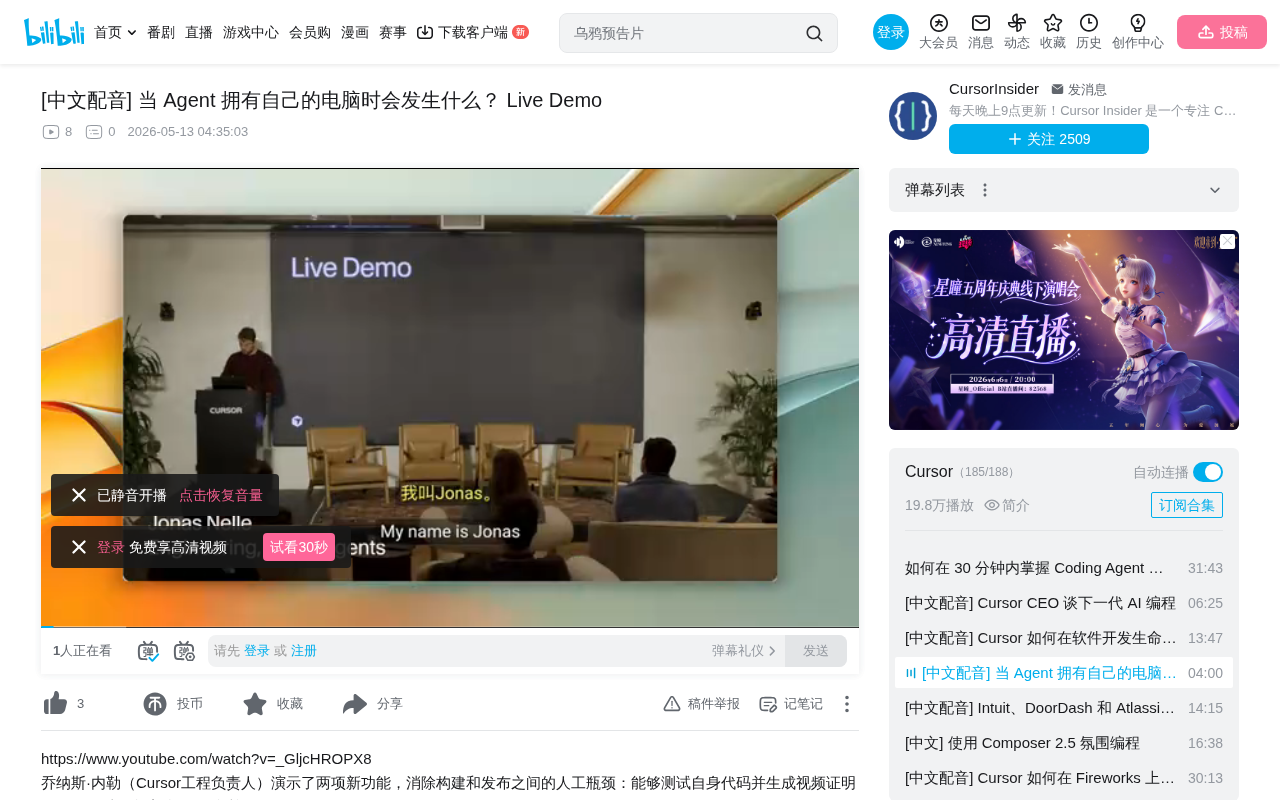
Cursor Cloud Agent Demo: Eliminating Bottlenecks Across the Entire Software Development Lifecycle
Deep analysis of Cursor's Cloud Agent demo showing how cloud VMs, automated test artifacts, and a full-chain control plane systematically eliminate human bottlenecks across the software development lifecycle.