Jensen Huang and Nvidia's Megaspeed Mystery: Questions Congress and the Board Must Answer

Jensen Huang faces questions from Congress and the board over his ties to a Megaspeed-associated individual, with scant details.
The article centers on the so-called "romantic relationship" between Nvidia CEO Jensen Huang and Megaspeed and its associated individual (accused of being a chip smuggler), noting that Huang still faces inquiries from the U.S. Congress and Nvidia's board. Original information is extremely limited, with no details on the nature of the relationship, smuggling allegations, or official responses. The article analyzes that congressional concerns may involve chip export control compliance and whether the executive's personal relationship affects compliance decisions; the board must assess whether the relationship constitutes a conflict of interest or violates ethics and disclosure obligations. The event highlights the sensitivity of executive behavior at leading chip companies amid export controls and geopolitics, and the test faced by corporate governance. Until key questions are answered, any conclusion is premature.
Jensen Huang and Nvidia's Megaspeed Mystery: Questions Congress and the Board Must Answer
Nvidia CEO Jensen Huang has recently found himself in a swirl of public scrutiny, needing to explain his relationship with a company called Megaspeed and its associated individuals to the U.S. Congress and his own board of directors. According to the original report, Huang still faces questions from Congress and his own board, centered on a "romantic relationship" with a figure accused of being a chip smuggler. This phrasing is extremely brief in the original text, yet it is enough to trigger multiple associations regarding Nvidia's corporate governance, the boundaries of executive behavior, and compliance with chip export controls.
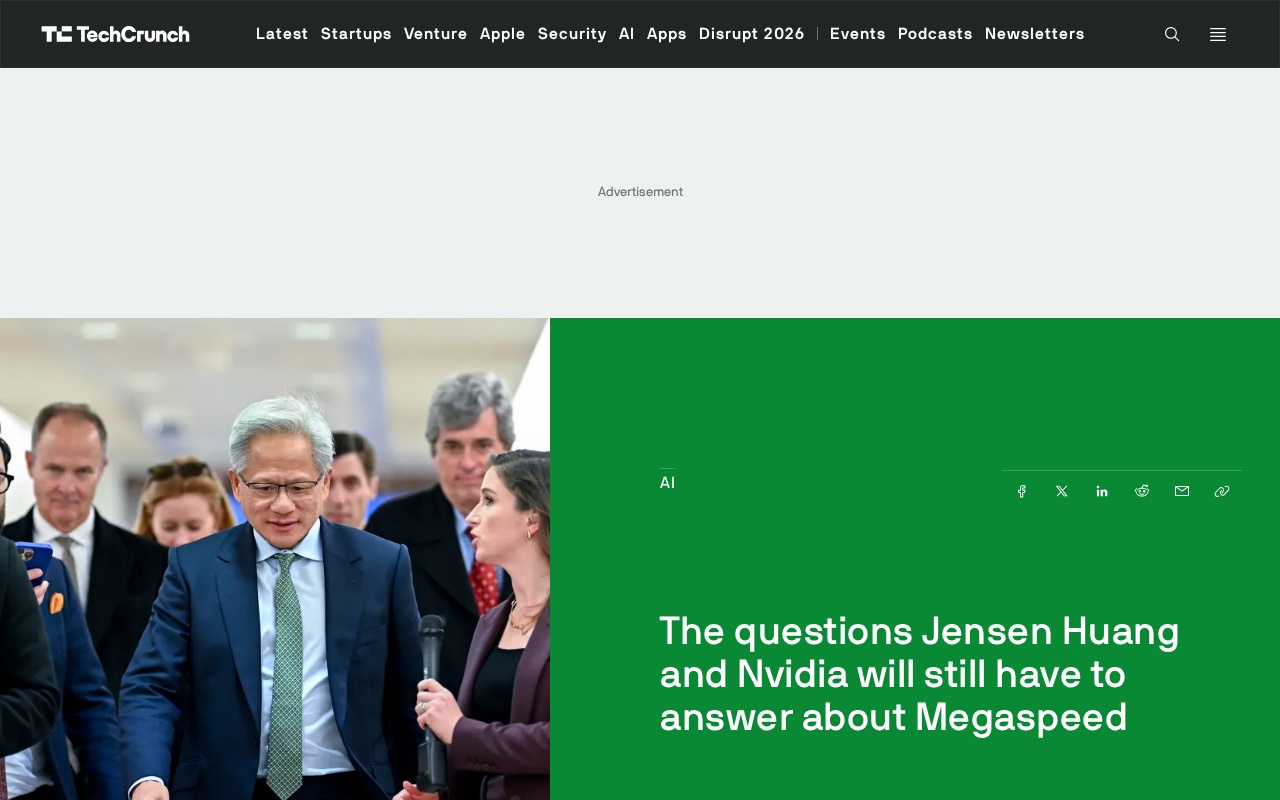
The Core of the Matter: Megaspeed and Unresolved Inquiries
The original information is only a few words, but its information density is extremely high. Megaspeed, as a company related to the chip business, has its name linked to accusations of "chip smuggling." Huang is said to have a so-called "romantic relationship" with a person associated with the company, a claim that directly triggered the attention of Congress and the board. Notably, the original text does not provide the specific nature of the relationship, a timeline, or evidentiary details, nor does it explain Megaspeed's business scope or its formal commercial dealings with Nvidia.
This scarcity of information itself constitutes the first layer of fact for analysis: what is currently public is merely the beginning of a "list of questions," not a complete narrative. Why Congress intervened, what was discussed within the board, and whether Megaspeed is involved in violating export controls—none of these questions have answers in the original material. Therefore, any further inference must be strictly confined to the framework of "unanswered questions."
Why Congress Is Paying Attention: The Sensitive Nerve of Chip Export Controls
Although the original text does not elaborate on the specific content of congressional inquiries, linking a "chip smuggler" to Nvidia's CEO naturally points to U.S. regulatory concerns over advanced chip exports. Nvidia's high-end GPUs are a key item on export control lists, and any allegation involving smuggling will touch a sensitive nerve among lawmakers. Congressional focus may include: whether Huang's personal relationships have influenced the company's compliance decisions, whether Nvidia has conducted sufficient due diligence on partners, and whether there are undisclosed conflicts of interest.
These questions currently have no public answers. The original material only confirms the state that "Congress still has questions to ask," while the specific list of questions, the form of inquiry (hearings, written inquiries, or informal communications), and the timeline are all unmentioned. For readers concerned with the geopolitics of AI chips, the value of this event lies in revealing the tension between executive personal behavior and corporate compliance systems, rather than providing any confirmed facts of wrongdoing.
U.S. export controls on advanced chips are mainly based on the Export Control Reform Act (ECRA) and the Export Administration Regulations (EAR) formulated by the Bureau of Industry and Security (BIS) of the Department of Commerce. Nvidia's high-end GPUs (such as A100, H100, etc.) are listed in specific classifications on the Commercial Control List (CCL), and exports to destinations of concern such as China require license applications. Violations of the EAR may trigger criminal and administrative penalties, including fines, embargoes, and even personal liability for executives. Congress's role on such issues typically includes legislative oversight, holding hearings, requiring administrative agencies to report on enforcement, and requesting information from companies through letters. Therefore, when a CEO's personal relationship becomes linked to a "chip smuggler," the core of congressional concern is not private morality, but whether the relationship could weaken the company's export compliance internal controls, whether it constitutes an undisclosed conflict of interest, and whether it hints at gaps in Nvidia's due diligence over distribution channels.
Governance Challenges at the Board Level
More delicate than congressional inquiries is the fact that "his own board" also still has questions. As fiduciaries for shareholder interests, the board needs to assess whether the CEO's personal relationship poses a risk to the company's reputation or operations. The original text uses the phrase "romantic relationship," which, if true, may involve conflict-of-interest disclosure obligations, the applicability of the company's code of ethics, and the示范 effect of CEO behavior on organizational culture.
From a corporate governance perspective, the questions the board needs to answer include: whether the relationship was identified in related-party transaction reviews, whether Nvidia's compliance and ethics policies cover such situations, and whether the board has initiated an independent investigation. The original material does not provide information that the board has taken any action, only indicating that "the questions remain." This means the event is at an early stage, and conclusions are far from formed.
Under the corporate governance framework of U.S.-listed companies, boards typically oversee executive behavior and potential conflicts of interest through audit committees, nomination and governance committees, and compliance committees. When a CEO has a close relationship with an external business partner or a sensitive figure, it may trigger conflict-of-interest provisions in the company's Code of Business Conduct and Ethics, requiring executives to proactively disclose and recuse themselves from related decisions. If the relationship involves a company counterparty, the board also needs to assess whether it constitutes a related-party transaction and, under SEC disclosure rules, determine whether it needs to be announced to investors. In addition, the independence of the board is particularly critical in such situations: if a majority of independent directors have close personal ties to the CEO, it may affect the objectivity of an investigation. The original report does not state whether Nvidia's board has initiated an independent investigation or established a special committee, but this governance path is an important observational indicator for the market to judge the severity of the event.
Information Gaps and Rational Interpretation
It must be acknowledged that the information content of this original material is extremely limited. It does not explain Megaspeed's background, does not specify the details of the smuggling allegations, does not provide any response from Huang's side, and does not give any statements from Congress or the board. Under such circumstances, a responsible interpretation should focus on the "questions that need to be answered" themselves, rather than making any substantive judgment about the unverified nature of the relationship or the smuggling allegations.
For observers of AI and the technology industry, this event highlights two long-term issues: first, the personal behavior of executives at leading chip companies is being placed under the magnifying glass of export controls and geopolitics; second, corporate governance mechanisms will be tested in terms of their independence and effectiveness when facing controversies at the CEO level. The value of these issues does not depend on the final outcome of a single event.
List of Unanswered Questions
Based on the original information, the questions Huang and Nvidia still need to answer include at least: what exactly is the nature of the relationship with Megaspeed and the associated individual; whether the relationship has triggered any compliance review or disclosure obligation; whether Nvidia's due diligence process for partners covers such risks; the specific scope of congressional inquiries and the progress of the board's independent investigation; and Huang's own public explanation of the above issues. Until these questions are answered, any conclusion is premature.
One-line Summary
Jensen Huang faces questions from Congress and the board over his relationship with a Megaspeed-associated individual, with scant details.
Paragraph Summary
The article centers on the so-called "romantic relationship" between Nvidia CEO Jensen Huang and Megaspeed and its associated individual (accused of being a chip smuggler), noting that Huang still faces inquiries from the U.S. Congress and Nvidia's board. The original information is extremely limited, providing no details on the nature of the relationship, the smuggling allegations, or any official response. The article analyzes that congressional concerns may involve chip export control compliance and whether the executive's personal relationship affects the company's compliance decisions; the board needs to assess whether the relationship constitutes a conflict of interest, whether it violates the code of ethics and disclosure obligations. The event highlights the sensitivity of executive personal behavior at leading chip companies against the backdrop of export controls and geopolitics, as well as the test faced by corporate governance mechanisms. Until key questions are answered, any conclusion is premature.
Related articles

Michael Nielsen Takes Down His Classic Neural Network Textbook, Sparking Community Discussion
Michael Nielsen's classic free textbook Neural Networks and Deep Learning has been taken offline, sparking discussion on Hacker News about the reasons and impact.

Inside the AI Training Data Market: The Trade-off Between Exclusivity and Discounts
G2i founder Gabe Greenberg reveals the dual-track pricing of the AI training data market: labs pay a premium for exclusive data or accept discounts that allow others to buy it.

SessionGraph: Unifying All Coding Agent Sessions in One Interactive Graph
SessionGraph aggregates coding agent sessions into an interactive graph, helping developers review, debug, and manage AI coding workflows across sessions. This article examines its positioning, value, and open questions.