Jensen Huang's 60 Direct Reports: The Truth Behind Nvidia's Org Structure

Breaking down Nvidia's "mission + single pilot in command" structure and its heavy reliance on Jensen Huang.
A YouTube tech creator examines Nvidia's org structure, separating legend from fact about Jensen Huang's management style. Claims of 36–60 direct reports, 1,000 daily emails, and no one-on-ones are partly true but exaggerated. Nvidia's real logic pairs a "mission" with a "single pilot in command": each project has one fully accountable leader, and direct reports are often project commanders. Huang's role is top-level alignment, not micromanagement. The key question: without Huang, can these dispersed commanders stay coordinated?
Nvidia's organizational structure has long been viewed as a mystery by outsiders. In his latest video, a YouTube tech creator calls it "the purest org-structure bait in history" and attempts to separate the legend from the fact behind Jensen Huang's management style.
The Legend: 36 to 60 Direct Reports and a Thousand Emails
According to reports cited by the creator, Jensen Huang has between 36 and 60 direct reports. He has publicly stated that he doesn't do one-on-ones and claims to read roughly 1,000 emails a day. These numbers circulate widely in Silicon Valley and form the basis of how outsiders imagine Nvidia's management style.
The creator, however, says that after speaking with several people close to the matter on the day the video was published, he concluded that some of it is true—but "a lot of it is just legend."
How It Actually Works: Missions and a Single Pilot in Command
The real management logic inside Nvidia lies in pairing a "mission" with a "pilot in command." Every project has a clear mission and is fully owned by a single accountable leader. That commander's core job is to keep the mission aligned, ensuring the project moves forward across the company as intended.
Those seemingly exaggerated direct-report counts are a product of this structure—each direct report is often the commander of some project. Huang brings them together for detailed discussion, maintaining organizational consistency through high-density information exchange.

The term "pilot in command" is borrowed from aviation, where it originally refers to the captain who holds final authority over flight safety and decisions—even if a higher-ranking passenger is on board, command does not transfer. Nvidia borrows this concept to emphasize that each mission has exactly one ultimately accountable person, avoiding the blurred responsibilities that come with multiple commanders. The accompanying "mission" is not a department or function but a project unit with clear goals, boundaries, and deliverables. Once the two are paired, the reporting lines on the org chart actually reflect mission ownership rather than a traditional functional hierarchy—which is why the number of direct reports looks unusually high.
In management literature, this design is often called "mission command," rooted in the military tradition of Auftragstaktik: superiors communicate only intent and objectives, and the front-line commander decides how to achieve them. The precondition is that intent must be communicated with extreme clarity—otherwise autonomy devolves into divergent directions.
What Jensen Huang Is Really Managing
The creator's key point: Huang is not micromanaging chip design. His role is to ensure alignment at the top. This means that as individual mission commanders push their projects forward, the organization as a whole still moves in the same direction.
This model places extremely high demands on a leader's information-processing capacity and judgment, and it explains why seemingly counterintuitive practices like "reading a thousand emails" and "no one-on-ones" can work—they serve top-level alignment, not day-to-day execution.

"Alignment at the top" means that units across the organization form a shared understanding of goals, priorities, and resource trade-offs without relying on layer-by-layer approvals to course-correct. In a traditional bureaucracy, alignment happens in coordination meetings among middle managers; Nvidia pulls that function up into direct conversations between the CEO and each mission commander. The cost is that the CEO must absorb an extremely high volume of information; the benefit is a shorter decision chain and less cross-departmental friction. This also explains why "no one-on-ones" makes sense: one-on-ones are suited to coaching and performance feedback, whereas top-level alignment requires group discussions where multiple parties are present at once and information is synchronized.
Can This System Run Without Jensen Huang?
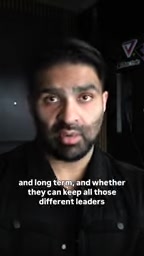
The creator's core question: in Huang's absence, can these mission commanders maintain alignment? He believes that since each of Nvidia's businesses is currently organized around a single directly accountable leader, those leaders will most likely keep pushing things forward.
The real new challenge falls to the successor management—how to make decisions over the medium and long term, and whether they can keep these dispersed leaders coordinated.
In-Depth: Lessons from a Mission-Based Organization
From an organizational-design perspective, Nvidia's model essentially concentrates "alignment cost" at the top and pushes "execution authority" down to the mission level. This stands in sharp contrast to traditional multi-layer approval management: the latter aligns at the middle, whereas Nvidia compresses it into direct conversations between Huang and his commanders.
This structure has clear advantages during high-growth periods—fast response times and clear responsibility boundaries. But it also depends more heavily on top leadership. The creator's judgment is that whether this system can survive after Huang leaves remains "a big question." For readers interested in AI chips and organizational management, Nvidia's case offers a sample worth watching: when organizational efficiency is tightly bound to individual capability, where does the boundary of institutionalization lie?
One-line Summary
Deconstructing Nvidia's "mission + single pilot in command" structure and its heavy dependence on Jensen Huang personally.
Paragraph Summary
The article centers on a YouTube tech creator's breakdown of Nvidia's organizational structure, separating legend from fact about Jensen Huang's management style. It's said he has 36 to 60 direct reports, reads about 1,000 emails a day, and doesn't do one-on-ones; the creator believes some of this is true but much is exaggerated. Nvidia's real management logic pairs a "mission" with a "single pilot in command": each project is fully owned by one leader, and direct reports are often project commanders. Huang's role isn't micromanaging chip design but ensuring alignment at the top. The core question is whether, without Huang, these dispersed commanders can stay coordinated—a real new challenge for successor management.
Related articles

Claude Code Pitfall Guide: Using CC Switch to Avoid Account Ban Risks
Claude Code installation failing in China? A Bilibili creator shares a stable NPM install + CC Switch login-bypass solution with no bans for months, plus spec-driven development and project memory to keep code from getting messier with each change.

Claude Code Ban Prevention and Memory Management: CLAUDE.md and ccswitch in Practice
How to avoid account bans when using Claude Code in China? This article summarizes a Bilibili creator's tested approach: install via NPM to bypass network restrictions, use ccswitch to bypass official account login, and covers CLAUDE.md project memory, MCP, Skills, Hooks, and other specification constraint practices.

Microsoft Foundry: How Enterprises Can Keep Runaway AI Costs Under Control
Microsoft Foundry, part of Azure, offers built-in security and governance with a unified view of model counts, credit usage, and total spend—helping enterprises prevent runaway AI agent token costs. This article analyzes its enterprise positioning, use cases, and cost-control value.