Jensen Huang's Exit from Nvidia: Why He Became China's Top Spy Target

Jensen Huang left after lying about an affair and a spy relationship; his triple role as an information hub makes him extremely valuable to intelligence agencies.
Based on Vox's *Today Explained* podcast, the article reports that Nvidia CEO Jensen Huang stepped down after an affair with a subordinate and a relationship with a woman accused of being a Chinese spy, about which he lied. It argues that Nvidia's GPU dominance, Huang's insider knowledge as an AI "kingmaker," and his direct ties to Trump and other leaders make him a prime target for intelligence agencies. The claim currently rests on a single source, but the rise of CEO conduct risk to national security is a reality worth watching.
Background: An Unusual Corporate Earthquake
Nvidia CEO Jensen Huang has been exposed for an extramarital affair and has consequently stepped down. According to Vox's podcast Today Explained, the impact of this news is comparable to "Steve Jobs being ousted from Apple right around the iPad launch." Normally, the soul of a company has to commit a serious blunder to lose their job—and Huang certainly did.
According to the program, on Wednesday we learned that he was carrying on an inappropriate relationship with a direct subordinate inside Nvidia, both of them married. But more critically, he was also involved with a woman whom the U.S. government has accused of being a Chinese spy—and he lied about it. For the man in charge of the most important chips underpinning the entire U.S. economy to be caught up in such a maelstrom is a plot even a screenwriter wouldn't dare invent.
Why He Became the "Perfect Target"
The whole world is working hard to find alternatives to Nvidia GPUs—Intel and AMD are both options—but Nvidia remains the dominant player. Any force that wants to compete with Nvidia, including the Chinese government, would find obvious value in accessing its "secret recipe" and design blueprints. This is one reason a so-called "spy honeypot" might have been delivered to his doorstep.
From a technical standpoint, if spyware could be implanted in his phone, the intellectual property and technological value obtained would be immeasurable.

The Geopolitical Value of GPUs and AI Chips
GPUs (graphics processing units) were originally designed for game rendering, but their massively parallel computing architecture happens to suit the matrix operations required for deep learning, making them the core hardware for training large models. Nvidia has built an extremely high migration barrier through its CUDA software ecosystem—even if competitors build chips with similar performance, developers find it hard to break away from the CUDA toolchain. For this reason, the U.S. has imposed export controls on advanced GPUs since 2022, treating compute chips as strategic goods. For countries trying to catch up, obtaining Nvidia's design blueprints or manufacturing process details is equivalent to shortening years of R&D; this is the background against which the term "chip war" went from metaphor to policy reality.
Information Hub: He Holds More Than Just Chips
Huang's value goes far beyond hardware. He maintains regular communication with heavyweights of all stripes and is a "kingmaker" in the AI field. He likely frequently calls Anthropic CEO Dario Amodei, OpenAI CEO Sam Altman, and others, learning the true state of these companies' operations—he knows business secrets that no one else in the world knows.
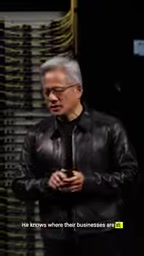
This means he has an excellent view of the competitive landscape of the AI race—who is rising and who is falling.
What "Kingmaker" Means in the AI Industry
"Kingmaker" originally referred to a powerful figure who decides behind the scenes who ascends the throne. In the AI context, it refers to someone who controls the allocation of key resources and can determine the life or death of startups. Nvidia GPUs have long been in short supply; who gets priority access to production capacity and who receives the first samples of a new-generation architecture directly determines model training progress and product launch timing. Huang can therefore learn in advance about AI companies' training scale, compute needs, and financial conditions—information that never appears in public financial reports yet is enough for outsiders to judge the true landscape of the AI race.
Political Proximity: Virtually Unmatched
Perhaps more valuable than business intelligence is his proximity to political power. Huang frequently speaks with Donald Trump and other world leaders. Just a few weeks ago, he was being interviewed at a conference when Trump called on the spot; he answered and put it on speaker. Trump said on the call: "Data centers are great. They make people rich, they make states rich. It's the oil of the next 20, 25 years—bigger than the internet."
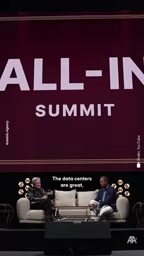
Huang responded on the program: "Because of that, we have to be careful and do things prudently. But that doesn't mean we should shut down an industry. I fully support you." It is almost impossible for anyone to be closer to the center of political power than Jensen Huang.
Risk Consensus Across Multiple Perspectives
It should be noted that the above content mainly comes from a single-source oral analysis by Vox's Today Explained, and no other independent source has yet cross-verified the details of the "Chinese spy" allegation. The program itself acknowledges that the speculation about spy infiltration "may be one of the reasons," not a definitive conclusion. But there is broad consensus that Huang's position—technological hegemony, a business information hub, and the inner circle of political power—objectively constitutes extremely high intelligence value, making him a prominent target for spy agencies in many countries, including China.
For readers following the AI industry and geopolitics, this incident reveals a deeper reality: in the era of the chip war, a CEO's personal conduct risk can directly escalate to the level of national security.
One-line Summary
Jensen Huang left after lying about an extramarital affair and a spy relationship; his triple role as an information hub constitutes extremely high intelligence value.
Paragraph Summary
Based on a oral analysis from Vox's podcast Today Explained, the article reports that Nvidia CEO Jensen Huang stepped down after an extramarital affair with an internal subordinate and a relationship with a woman accused by the U.S. of being a Chinese spy, about which he lied—an impact compared to Steve Jobs leaving Apple. The article argues that Nvidia's dominance in the GPU market, the business secrets Huang holds as an AI industry "kingmaker," and his direct communication with Trump and other world leaders make him a prominent target for intelligence agencies in multiple countries. It also notes that the claim currently has only a single source and that spy infiltration is merely one speculation, but the escalation of CEO personal conduct risk to the national security level has become a reality worth watching.
Related articles

Claude Code Pitfall Guide: Using CC Switch to Avoid Account Ban Risks
Claude Code installation failing in China? A Bilibili creator shares a stable NPM install + CC Switch login-bypass solution with no bans for months, plus spec-driven development and project memory to keep code from getting messier with each change.

Claude Code Ban Prevention and Memory Management: CLAUDE.md and ccswitch in Practice
How to avoid account bans when using Claude Code in China? This article summarizes a Bilibili creator's tested approach: install via NPM to bypass network restrictions, use ccswitch to bypass official account login, and covers CLAUDE.md project memory, MCP, Skills, Hooks, and other specification constraint practices.

Microsoft Foundry: How Enterprises Can Keep Runaway AI Costs Under Control
Microsoft Foundry, part of Azure, offers built-in security and governance with a unified view of model counts, credit usage, and total spend—helping enterprises prevent runaway AI agent token costs. This article analyzes its enterprise positioning, use cases, and cost-control value.