Jetson Edge Deployment of Inference Models: Quantization, Compression, and TensorRT Optimization in Practice

Deploy frontier reasoning models on Jetson edge devices using quantization, TensorRT, and distillation.
This article explores deploying advanced inference models on NVIDIA Jetson edge platforms through quantization (AWQ, GPTQ), TensorRT optimization, and knowledge distillation. Jetson's unified memory architecture and software stack enable local execution of reasoning-capable LLMs, unlocking low-latency, privacy-preserving, offline agentic applications.
For a long time, deploying AI models with multi-step reasoning capabilities to edge devices has been a formidable challenge. Models capable of complex reasoning and agentic tasks are typically massive, running only on high-performance GPUs in data centers. However, with advances in model compression techniques and hardware capabilities, this landscape is being reshaped. The NVIDIA Jetson platform is making "frontier reasoning at the edge" a reality.
Three Core Challenges of Edge Inference
Historically, edge AI has been largely confined to perception tasks—such as image classification, object detection, and speech recognition. These models are relatively lightweight, with manageable compute and memory requirements. Early edge AI relied primarily on lightweight convolutional neural networks (like MobileNet and EfficientNet) to perform such tasks, typically with millions of parameters and inference times of just tens of milliseconds. But true reasoning AI is different. It requires models to perform multi-step logical deduction, planning, and self-correction—tasks that correspond to large language models (LLMs) with massive parameter counts. These models range from billions to hundreds of billions of parameters, and inference requires autoregressive token-by-token generation where each step depends on the previous output, creating an inherent serial bottleneck. This scale difference has long confined edge AI to the perception layer, unable to reach true cognitive and planning capabilities.
Deploying such models to the edge faces three major challenges: first, memory constraints—edge devices have far less VRAM than data center GPUs; second, compute limitations—multi-step reasoning demands extensive serial computation; third, power consumption and thermal management—edge scenarios typically cannot sustain hundreds of watts of continuous power draw. For these reasons, reasoning AI has long remained in the cloud, with edge devices calling cloud services over the network, introducing a host of issues around latency, privacy, and availability.
Why Jetson Is Transforming the Edge AI Landscape
The NVIDIA Jetson series, as an embedded AI platform for edge computing, provides a practical path for running inference models at the edge through its GPU architecture, unified memory design, and complete software stack. With the advent of higher-performance Jetson modules, compute power has become sufficient to support local execution of optimized small-to-medium-scale inference models.
Jetson's Unified Memory Architecture is one of its key differentiators from traditional computing architectures. In conventional PCs or servers, CPU memory (system RAM) and GPU memory (VRAM) are physically separate, requiring data to be copied between them via the PCIe bus, which adds latency and wastes bandwidth. Jetson's unified memory design allows the CPU and GPU to share the same physical memory pool, eliminating the overhead of explicit data transfers. This is hugely significant for LLM deployment—LLM weights and KV cache (Key-Value Cache, which stores intermediate attention results to avoid redundant computation) consume substantial memory, and unified memory allows the entire available memory to be directly accessed by the GPU, effectively mitigating the memory shortage on edge devices. For example, the Jetson Orin series offers up to 64GB of unified memory, and combined with the high bandwidth of LPDDR5, provides a viable hardware foundation for running quantized medium-scale LLMs.
The key lies in hardware-software co-optimization. Jetson not only provides hardware compute but also comes with TensorRT, CUDA, and a toolchain for LLM inference acceleration. Developers can leverage these tools to compress and quantize models that would otherwise require cloud deployment, enabling truly offline agentic applications—completing complex multi-step reasoning tasks without an internet connection.
Three Core Technologies for Model Deployment and Optimization
To efficiently run inference models on Jetson, optimization is unavoidable. The following techniques are central to practical implementation.
Quantization and Compression: The First Priority for Edge Deployment
Quantization is the most fundamental and critical optimization technique for edge deployment. By reducing model weights from FP16 or FP32 to INT8 or even lower precision, memory footprint can be significantly reduced and inference throughput increased. Modern quantization techniques can dramatically compress model size while keeping accuracy loss within acceptable bounds, enabling models that would not fit in edge device memory to run.
Quantization has evolved from early Post-Training Quantization (PTQ) to a variety of refined approaches today. PTQ directly maps pretrained floating-point weights to low-precision integers—simple to implement but potentially causing accuracy degradation. Quantization-Aware Training (QAT) simulates quantization error during training, allowing the model to learn to adapt to low-precision representations and thus achieve better accuracy retention at deployment. In recent years, specialized quantization schemes for large language models have emerged, such as GPTQ, AWQ (Activation-aware Weight Quantization), and GGUF, which leverage statistical properties of weight distributions for adaptive quantization, maintaining excellent generation quality even at INT4 or lower precision. Particularly noteworthy is AWQ, which analyzes activation distributions to determine which weight channels are more important and should retain higher precision, achieving near-FP16 inference quality at 4-bit quantization—making it a mainstream choice for edge LLM deployment.
TensorRT Inference Engine Acceleration
TensorRT is NVIDIA's high-performance deep learning inference optimizer and runtime engine. Through operator fusion, kernel auto-tuning, and memory optimization, it fully unlocks the hardware potential of Jetson GPUs.
Operator fusion (layer/operator fusion) is one of TensorRT's core optimization strategies: it merges multiple consecutive small operators in the compute graph into a single large operator, reducing the number of GPU kernel launches and intermediate memory reads/writes. For example, a typical fusion combines convolution, batch normalization, and activation functions into a single GPU kernel call, avoiding three separate memory accesses and kernel launch overheads. Additionally, TensorRT automatically selects the optimal CUDA kernel implementation for the specific GPU architecture (kernel auto-tuning) and performs memory reuse optimization to reduce peak memory usage.
For large language model inference, NVIDIA has released TensorRT-LLM, which is specifically optimized for autoregressive generation in Transformer architectures, supporting advanced features like KV cache management, in-flight batching (dynamically inserting new requests during inference to improve GPU utilization), and tensor parallelism. Compared to running raw framework models directly, TensorRT-optimized models typically achieve multi-fold improvements in latency and throughput—critical for real-time agentic applications.
Knowledge Distillation and Model Selection Strategy
Not all reasoning tasks require the largest models. Through knowledge distillation, reasoning capabilities of large models can be transferred to smaller student models, dramatically lowering deployment barriers while retaining core capabilities.
Knowledge distillation, proposed by Geoffrey Hinton and colleagues in 2015, is centered on having a small "student model" mimic the output distribution of a large "teacher model" rather than just learning hard labels. The soft probability distributions (soft labels) output by the teacher model contain rich "dark knowledge" such as inter-class similarities. The student model absorbs this knowledge by minimizing the KL divergence (a measure of difference between two probability distributions) from the teacher's output. In the LLM domain, distillation has been widely applied: for example, by having small models learn the Chain-of-Thought output of large models, complex multi-step reasoning capabilities can be transferred to models with an order of magnitude fewer parameters. In practice, small yet capable models like Microsoft's Phi series and Google's Gemma have heavily leveraged distillation, enabling them to demonstrate impressive reasoning performance even on edge devices.
Sensible model selection—balancing capability and resource consumption—is often more pragmatic than blindly pursuing parameter scale. Developers should choose appropriate model sizes and quantization schemes based on the reasoning complexity of specific tasks and hardware budgets.
Three Application Values of Edge Inference
Bringing frontier reasoning capabilities to the edge delivers not just technical breakthroughs but substantial expansion of application scenarios.
First is low-latency response. Local inference eliminates network round trips, which is especially critical for scenarios with stringent real-time requirements like robotic control and autonomous driving. In these contexts, millisecond-level latency differences can be safety-critical, and the tens to hundreds of milliseconds of network round-trip latency in cloud inference is unacceptable. Second is data privacy protection—sensitive data can be processed locally without uploading to the cloud, meeting compliance requirements in healthcare, industrial, and other sectors. For instance, in medical imaging analysis or factory production data processing, local data processing inherently satisfies data protection regulations like GDPR. Third is offline availability—in environments with unstable or completely offline networks—such as mines, oceangoing vessels, or remote areas—edge devices can still independently run agentic tasks.
As agentic AI evolves from concept to deployment, these systems are progressing from simple "input-output" patterns to complete agent architectures capable of autonomously perceiving the environment, formulating plans, executing actions, and self-correcting based on feedback. A typical agent architecture includes a planning module (decomposing complex tasks into subtasks), memory module (maintaining context and historical information), tool invocation module (interacting with external APIs or sensors), and reflection module (evaluating execution results and adjusting strategies). In edge scenarios, this architecture is especially valuable: for example, a factory inspection robot needs to formulate inspection routes based on real-time observations, identify anomalies, and decide whether to escalate—the entire decision chain may require multiple rounds of LLM inference calls and tool interactions. Deploying this capability locally means the system can complete decision loops at millisecond scale without waiting for cloud responses. Systems capable of autonomous planning, decision-making, and execution at the edge will be at the core of the next wave of applications, and the Jetson platform is a critical piece of infrastructure for this trend.
Summary
Bringing frontier reasoning capabilities to the edge marks an important shift in AI deployment paradigms. Inference models that once could only run in data centers can now run efficiently on edge platforms like NVIDIA Jetson through techniques such as quantization and compression (including LLM-specific schemes like AWQ and GPTQ), TensorRT inference engine optimization (covering core techniques like operator fusion and kernel auto-tuning), and knowledge distillation. Jetson's unified memory architecture further eliminates the traditional CPU-GPU data transfer bottleneck, providing unique hardware advantages for edge deployment of large models. For developers, this means building truly autonomous, low-latency, privacy-conscious agentic applications. As edge hardware continues to evolve and optimization toolchains mature, edge agents will unlock enormous potential in robotics, industrial automation, intelligent terminals, and beyond.
Key Takeaways
Related articles
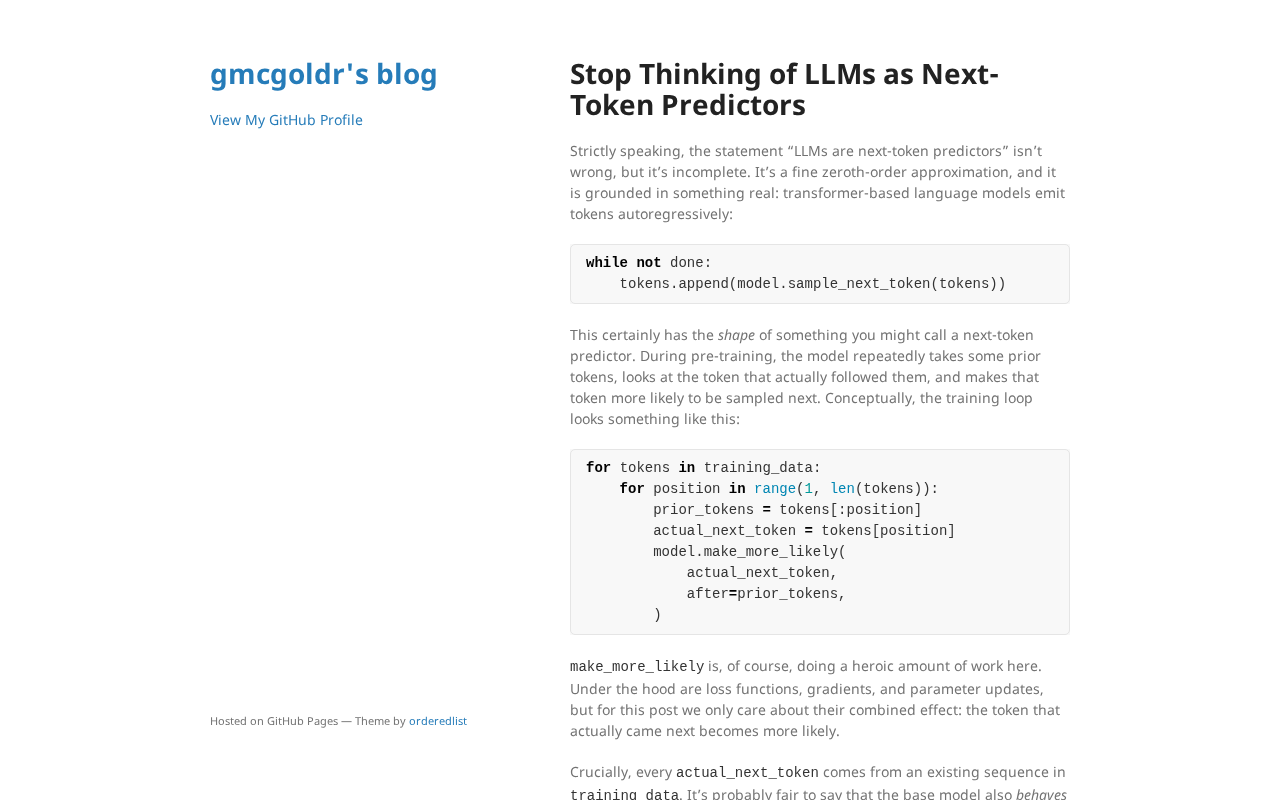
Why "Next-Token Predictor" Is the Wrong Mental Model for Understanding Large Language Models
Calling LLMs mere "next-token predictors" is a misleading mental model. This article explores the gap between training objectives and internal representations, and why we need a richer framework.

Generate an Anime Short in 5 Minutes on an RTX 5070Ti: Hands-On with the Minimax H3 Workflow
Hands-on test using Fast Minimax H3 workflow with Upscaler to generate a 12-second anime short in just 5 minutes on an RTX 5070Ti. Covers multi-reference image input, storyboard-style prompts, and 1990s cel animation style control.

MIT Breakthrough in Ammonia Production: New Progress in Fossil-Fuel-Free Green Ammonia Synthesis
MIT researchers develop novel catalytic materials for zero-carbon green ammonia production, potentially revolutionizing the Haber-Bosch process for fertilizer and hydrogen energy industries.