Jev Judgment Model in Practice: A Complete Guide to 6 High-Frequency Use Cases

Jev is a judgment model built for fast, cheap, large-scale pattern matching — not complex reasoning.
Jev, built by Typesafe, is a new type of AI model designed as a "judgment model" rather than a traditional LLM. Drawing on Kahneman's System 1 concept, it specializes in fast, instinctive pattern matching via three query types: Choice, Score, and Null. It runs 20–200x faster and costs 40–400x less than comparable models. This article covers six real-world use cases — data analysis, semantic search, input routing, rule checking, agent acceleration, and instant response — along with four practical criteria for evaluating whether a task is a good fit for Jev.
Not Another LLM — A Brand New AI Primitive
Jev (built by the Typesafe team) is one of the hottest models in the AI world right now — but its buzz isn't coming from competing with GPT-6, Opus, or Fable. It's doing something fundamentally different. Jev isn't built for writing, coding, or complex reasoning. Its creators call it a "judgment model."
That differentiation quickly translated into investor attention. According to The Information, Typesafe is in talks to raise up to $1 billion at a valuation of $10 billion or more — a dramatic leap from its $40 million seed round at a $200 million valuation. Within 10 days of launch, hundreds of posts flooded X, each racking up hundreds or thousands of likes and reposts.
So for someone who isn't a game designer or a developer — is Jev worth adding to your AI toolkit? This article draws on AI Daily Brief's roundup of real community use cases to answer that question.

System 1 Thinking: Fast, Instinctive Pattern Matching
Typesafe borrows a concept from Daniel Kahneman's Thinking, Fast and Slow, positioning Jev as a "System 1 model" — fast, instinctive pattern matching, or snap judgment. A good test for whether a task fits Jev: do you need to read something repeatedly, make a small judgment, and then take a predictable next step?
Here's an example: a file lands in your downloads folder. A standard rule might just classify it as a PDF. Jev goes further — is this an invoice? Which project does it belong to? Does someone need to review it? Once the judgment is made, the system can move predictably to the next step.
Jev supports three core query types:
- Choice (pick one): Answers "which option fits best" — you can list up to 255 options, and Jev returns the best choice along with probabilities for each. Example: "Should this ticket go to billing, technical support, sales, or another team?"
- Score (rate it): Rates something on a 2–10 scale described in plain language. Example: "On a scale from calm to extremely angry, how frustrated is this customer?" Jev returns a position and a confidence level.
- Null (yes or no): Named after the Bernoulli distribution, it answers "is this true?" and returns a probability from 0 to 1. Example: "Is this person explicitly requesting a refund?"
A vivid visual demo from Stefan Annex shows a pile of emoji at the bottom of the screen. Type "things you can wear" or "things you can wear in winter" into a text box, and matching emoji float up while non-matching ones fall away. The underlying mechanic: each emoji is asked the same yes/no question simultaneously — no one pre-labeled the emoji, there's no "winter" rule, and all emoji are evaluated at the same moment.
Daniel Kahneman's Dual Process Theory is key to understanding Jev's positioning. In Thinking, Fast and Slow, Kahneman divides human cognition into two systems: System 1 runs automatically, relies on intuition, and consumes almost no conscious effort — it handles things like recognizing faces, judging distances, and understanding simple sentences. System 2 is slow, deliberate, and effortful — it's used for solving math problems and evaluating complex arguments. Traditional large language models (like GPT-4 or Claude) are essentially designed to be System 2 tools — they reason, weigh options, and generate long-form answers. Jev makes the opposite bet: it's purpose-built for System 1 tasks, trading System 2 capability for extreme speed and cost efficiency. This explains why Jev doesn't return reasoning — only probabilities and choices — much like how a human instantly recognizes a familiar face without needing to "think through" why.
Fast and Cheap: Not Just a Better Version, a Different Species
Because Jev does a limited, specialized set of things, it can do them extremely fast. Typesafe claims it's 20–200x faster and 40–400x cheaper than comparable models. One million input tokens costs just $0.042, output tokens are free, and each call takes roughly 70 to 500 milliseconds.
The key insight: you can ask multiple questions about the same item simultaneously. Because questions run in parallel, adding a 9th or 10th question doesn't increase latency — only token count. Typesafe testing found that handling 13 questions in a single call is 12.2x cheaper and 10x faster than asking them one by one, with identical answers.
Matthew Berman analyzed 724 live ads across 37 brands, asking 12 questions per ad (hook archetype, format, offer, CTA intent, awareness stage, etc.) — a single request took just 173 milliseconds. That's where the model's real power lies: not just that it's good at judgment, but that it's fast and cheap enough to apply judgment to everything.
Jev's trade-offs are explicit: it doesn't write code, draft contracts, or handle nuanced decisions involving many unquantifiable factors. Its lane is large-scale, high-speed small judgments: which bucket does this go in? How urgent is this? Is this relevant? Is this safe?
The key to understanding Jev's pricing is the "free output tokens" design. Traditional LLMs charge separately for input and output tokens, and the high output token count from long-form answers is often the primary cost driver. Jev's outputs are extremely concise — a probability, an option number, or a value between 0 and 1 — so free output billing is really a structural reflection of its use case. The "parallel questions don't add latency" feature stems from Jev packing multiple questions into a single forward pass — similar to detecting multiple objects in one image scan rather than scanning each separately. This is architecturally different from traditional LLMs that require a separate call for each question, and it's the underlying reason Jev achieves both speed and cost advantages in batch judgment scenarios.
Six Real-World Use Cases
Use Case 1: Analyzing Existing Data Piles
The core idea: ask the same question across a batch of existing content, then aggregate the answers. This kind of analysis was previously cost-prohibitive to run at scale — now it takes seconds and costs pennies.
Matthew Berman analyzed 724 ads from 37 brands, breaking down each hook, format, offer, and CTA in 40 seconds for $0.09. Two days later he went further, running 723 ads past 30 buyer personas (gym owner, dental practice manager, mom with young kids, AI-curious engineer, etc.) and asking whether each persona would "stop and watch" or "keep scrolling" — 21,690 decisions for $0.22. He cautions: this isn't real data; it should be treated as a "hypothesis generator" for stress-testing ad angles before paid testing.
Ian Nuttall asked 8 questions each (topic, hook, tone) across ~3,300 historical X posts and cross-referenced them with engagement data — total cost: ~$0.13.
Use Case 2: Semantic Search
Describe what you're looking for in natural language and let Jev scan each candidate — even when there's no literal keyword match.
A16Z's Justine Moore used it to scan thousands of Zillow listings, filtering by architectural style, renovation status, proximity to highways, and other dimensions that standard search filters can't handle. Burhan used it to clip segments from a 90-minute video based on natural language descriptions — for example, finding "predictions about when AI will automate AI research."
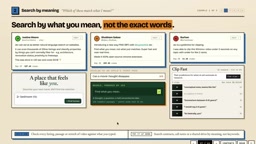
Borgia used it for an SEO audit, having Jev read all 586 pages of a website to rebuild an internal link map — done in 45.1 seconds for $0.21. Claude Opus 5 read only 21 pages and cost $1.43. Elvis Sananex had Jev scan 384 morning news items to identify which stories were relevant to each of 15 brands — 24.9 seconds, $0.19; Opus 5 read only 4 articles in the same time.
Use Case 3: Routing and Classifying Inputs
The core question: "What is this, and where should it go?" How important is this email? Is this downloaded file an invoice? Is this link harmful?
Jonathan Unikowski proposed an interesting vision: what if your inbox sorted by importance in real time instead of reverse chronological order? Jev scored 100 emails in 453 milliseconds at a fraction of a cent per email, and every score matched his own judgment.
Beyond Code CTO Marcel Pocchio built a macOS app that monitors the downloads folder: if it's an invoice, move it to the right folder and rename it correctly — powered entirely by Jev. Stephen Tay of the dub link-shortening service fed Jev 10,000 known malicious domains to flag harmful links, saying "this was a problem we'd been wrestling with since day one — Jev solved it in two hours."

If there's one area to try first — especially for companies where multiple people handle leads, customers, or contacts — routing and triage is likely to become an indispensable capability after integrating Jev.
Use Case 4: Checking Work Against Rules
Turn "please review this" into specific questions, then run every draft through them. Langchain's Harrison Chase noted that Jev is "a great fit for evaluations, especially evaluating large volumes of traces online." As more people move agents into production, building evaluation systems with Jev could become core infrastructure.
The Every team planted errors in 12 pieces of text — Jev caught 6 out of 7 (Claude Fable 5.1 caught all 7), but Jev did it in 0.35 seconds at roughly 580x lower cost, while Fable 5.1 took 8.83 seconds. That means you can run the same check many times over and still be fast and cheap.
In practice, you can convert a style guide or a list of phrases you never want to see into yes/no questions and check each paragraph of a long document individually. This touches on an important shift Jev enables — the ability to actually scan every sentence for "AI-speak" is qualitatively different from running one generic check over an entire document.
The "online trace evaluation" Langchain mentioned refers to the emerging practice of LLM-as-judge: after a large language model goes into production, another model monitors its outputs in real time, checking whether each call behaves as expected, triggers hallucinations, or violates formatting rules. As agent systems grow more complex, manual review of every output is no longer feasible, making automated evaluation standard infrastructure for production AI systems. Jev's advantage here isn't just cost — it's the ability to embed into real-time pipelines with minimal latency. Every output is evaluated the moment it's generated, rather than batch-sampled after the fact. This makes "every call gets checked" cost-viable, upgrading quality assurance from sampling to full coverage.
Use Case 5: Accelerating AI Agents
This use case skews more developer-facing. The core idea is using micro-judgments to route agents: which model can handle this task? How much reasoning does this step need? Which skill is the right match? Is the previous tool output still relevant?
Vichin used Jev to dynamically adjust GPT-6's reasoning intensity during Codex task execution — more thinking when stuck, less on routine steps — reducing costs by 50% and speeding up runs in tests. Daniel San built "Jev Skill Suggestion for Cloud Code," which categorizes each request to the best-matching skill and injects only that skill, reducing token usage and cost by 88%.

A.J. Asper built a new harness that reduces repeat task costs by 90% — the system learns as it runs, migrating steps from LLM calls to code. For compliance alerts, for example, cost per alert dropped from ~$2.95 to just $0.25 by the 1,000th alert.
Use Case 6: Instant Response
The core question: "What does this person want right now?" Marcus Lowe imagined "what if copy-paste were intelligent" — copy a resume, paste it into an application form, and fields auto-fill. Norman's implementation splits the pasted text, judges each field, matches it, and cross-checks against the original — only pasting high-confidence matches. Given how much work involves moving information from one format to another (emails and PDFs into CRMs, forms, and templates), this use case maps directly onto everyday reality.
When to Be Careful — and How to Tell If Jev Is the Right Fit
Exercise particular caution in high-stakes domains like hiring, finance, and security. When using Jev to rank large volumes of resumes, for instance, it returns a number with no attached reasoning. A safer approach is to build a hybrid system: use Jev to sort, then have another type of LLM review borderline candidates.
Typesafe is candid about Jev's weaknesses: it struggles with counting, math, and dates (it can extract facts, but actual computation should happen elsewhere), and has known issues with consistency and intent understanding.
Four criteria for judging whether a task is a good fit for Jev:
- The answer can be written in advance: Categories, yes/no, scales — all work. If the answer is a sentence or a calculation, it doesn't.
- There's volume: A pile or stream of data — hundreds of tickets, hundreds of emails.
- The risk is manageable: The cost of a wrong answer is low or easy to catch — don't fully delegate high-consequence decisions to it.
- The evidence can be provided as text within 32,000 tokens.
There's also a craft to writing good questions: one judgment per question. "Is this a good lead?" isn't one judgment — it's a bundle of judgments about industry fit, company size, purchase intent, and more. Break them into separate questions. When using a scale, describe each level. And like all AI systems, test before going to production — label 50 emails yourself and see if Jev agrees.
Typesafe's 32,000-token context window limit deserves a special note. Most mainstream LLMs today offer context windows of 100K to 200K tokens (roughly 75,000 to 150,000 English words), while Jev's 32K window (about 24,000 English words) is comparatively small. For very long documents — complete legal contracts, book chapters, or large codebases — Jev cannot process everything in a single call and requires chunking upfront. When designing workflows, this constraint should be treated as a primary technical limitation: if the context being judged requires a very long input, you'll need to introduce a text-splitting strategy at the architecture level, or consider using another tool to summarize and compress the content before passing it to Jev.
A New Primitive, Still Being Discovered
Ten days after launch, Jev has rapidly moved from a cool concept to genuinely valuable production use cases. But because it's fundamentally a new primitive — applying simple judgments at massive scale, at near-zero cost and extreme speed — it will likely take time to fully understand how deeply it can be woven into different workflows. That "change in kind, not just degree" quality is the core reason it's worth paying attention to.
Related articles

Python 3.15 New Feature: Is the sentinel Type Better Than None?
Python 3.15 adds the sentinel type, using named unique sentinel objects to replace None and bare object(), resolving confusion among missing values, explicit emptiness, and invalid input while avoiding type hint failures.

Deep Learning's Three Architectures and the Universal Approximation Theorem: A Complete Guide to MLPs, CNNs, and Transformers
Explaining the inductive bias differences among MLP, CNN, and Transformer, the existence meaning of the Universal Approximation Theorem (UAT), and the role of Taylor expansion in approximation analysis, while clearing up common misconceptions.

GitLab Emergency Patch Release: Analysis of Critical Security Fixes
GitLab releases critical patch 19.5.1, sparking 355 points of discussion on Hacker News. This article analyzes the background, upgrade steps for self-hosted instances, and verification points to help DevOps teams respond quickly to security updates.